
Navigating employee pay in today's market is a high-stakes balancing act. Getting it right helps you attract top talent, keep your best people, and stay compliant. But getting it wrong can lead to low morale, high turnover, and serious legal risks. This is where a compensation consultant becomes an invaluable partner, helping you transform pay from a simple expense into a powerful business tool.
A compensation consultant is an external expert who helps your business design and manage a pay strategy that is competitive, fair, and legally sound. They provide an objective, data-driven perspective to ensure your compensation practices support your company's goals. Think of them as a strategic partner dedicated to making your pay structure a competitive advantage.

Imagine you need to set a salary for a new, critical role. Is the number high enough to attract top talent without creating resentment among your existing team? A compensation consultant provides the data and framework to answer these questions confidently. They act as the architect of your company's entire pay philosophy.
They bring an objective, third-party perspective that is nearly impossible to achieve internally. While your HR team manages daily operations, a consultant focuses on the bigger picture. They analyze market data, interpret legal requirements, and align everything with your business goals to build a pay structure you can stand behind.
At its core, a compensation consultant’s job is to ensure your pay practices are built on a solid, data-driven foundation. This immediately lowers your exposure to legal risks like pay discrimination claims, which can be costly and damage your reputation. They help you make confident decisions backed by evidence, not just gut feelings.
This expert guidance covers every part of your total rewards package, ensuring all the pieces work together.
A great compensation consultant does more than crunch numbers; they translate data into a real business strategy. They help you build a system that meets legal standards and motivates your workforce. Their expertise often extends to sensitive issues like how to negotiate severance packages, ensuring a fair and legally sound process.
By linking pay to performance and creating clear paths for career progression, a well-designed compensation strategy becomes a cornerstone of your employee engagement and retention efforts.
Ultimately, they help you build a framework where every salary decision is objective, consistent, and supportive of your company’s growth. This proactive approach turns your pay strategy into an asset, not a liability.
Ready to build a compensation strategy that gives you a competitive edge? We can help you create a plan that aligns with your business goals. Find out how when you contact us today.
How do you know when spreadsheets and quick online salary searches are no longer enough? Many leaders reach a tipping point where compensation shifts from a simple administrative task to a major source of risk and confusion. Recognizing the early warning signs is the first step.
These signals often appear during periods of growth or increasing complexity. If any of the situations below sound familiar, it might be time to bring in a professional.
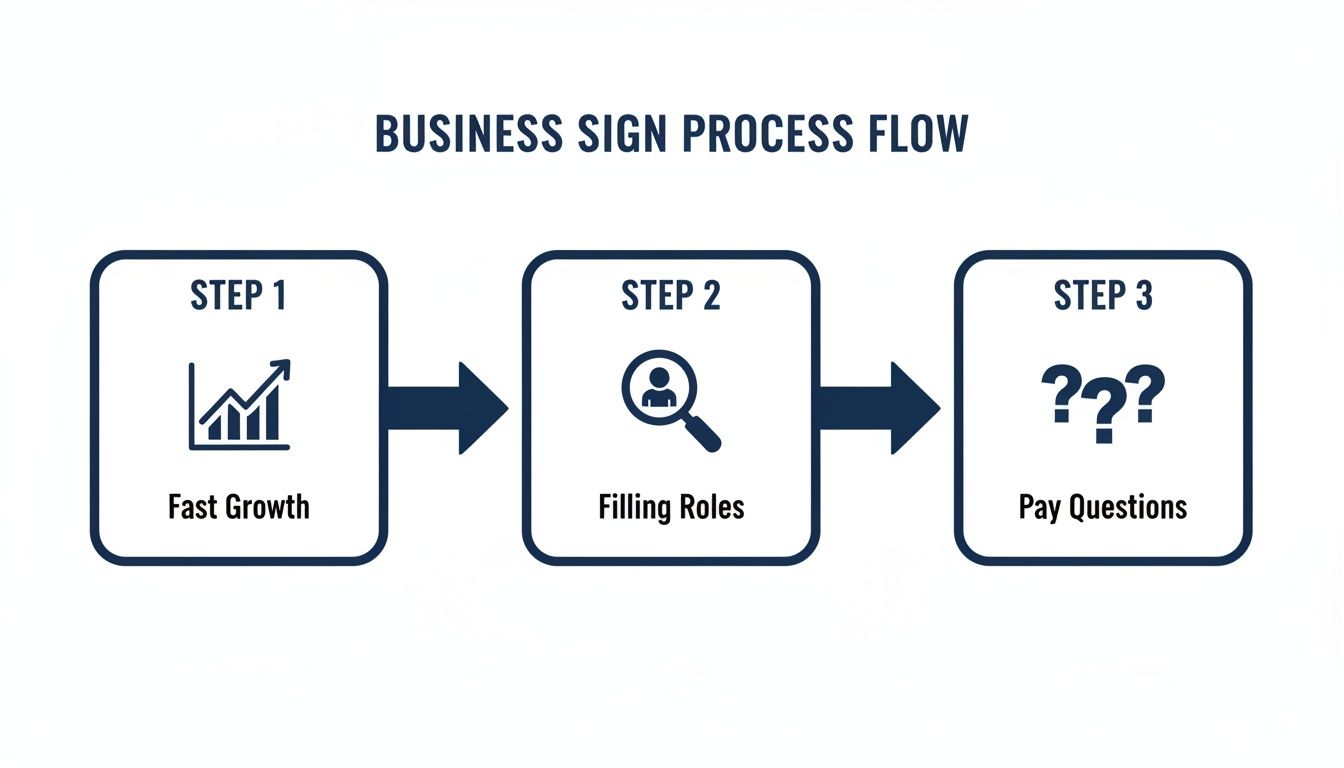
Rapid growth is a great problem to have, but it often breaks internal systems—especially how you pay people. As you add new roles or expand into different states, your initial pay practices can quickly become inconsistent and unfair. This can create a real drag on your progress.
A consultant’s job is to build a scalable pay structure that supports your growth instead of hindering it. If you are making one-off salary decisions or managers are complaining about inconsistencies, your current approach may be holding you back.
Are you constantly losing top candidates to competitors over salary? Are your star performers leaving for better offers elsewhere? These are clear signs that your pay is out of sync with the market. When you cannot attract or keep the people you need, compensation is almost always part of the problem.
A consultant brings validated, industry-specific data that goes far beyond what you will find on free salary websites. This ensures your offers are strong enough to land top talent and your current pay is enough to retain key employees. Getting this right is critical, as the importance of specialized consulting has been shown to reduce compliance risks.
A major red flag is when managers make special, one-off salary deals to hire or keep someone. This practice undermines your internal pay structure, creates serious pay equity risks, and sets a precedent that is nearly impossible to undo.
When your team starts asking pointed questions about how their pay is determined, you have a problem. Hearing comments like, "This doesn't seem fair," is a clear signal that trust and transparency are eroding. This confusion can lead to low morale and issues with what pay compression is and how to address it.
Ignoring these questions is not an option. A consultant helps you build a clear, documented pay philosophy that you can communicate with confidence. This turns tough questions into productive conversations about value and career growth. If these challenges sound familiar, it may be time to seek expert guidance.
Engaging a compensation consultant is a straightforward, step-by-step journey. Understanding the process helps you know what to expect and what your team needs to provide. It is a collaborative partnership designed to take you from broad questions about pay to a concrete, actionable strategy.
The entire engagement follows a logical flow. It begins with the consultant gaining a deep understanding of your business and ends with a clear plan you can implement and communicate. This systematic approach ensures the final recommendations are not just based on data but are truly practical for your organization.
The journey always begins with a discovery phase. The consultant learns about your business, culture, and specific challenges. They will ask about your growth plans, talent goals, and any pay practices you already have in place.
With that information, the consultant drafts a project scope. This critical document outlines the project's goals, deliverables, timeline, and costs. It ensures everyone is on the same page before the work begins, so there are no surprises later.
Once the scope is approved, the project moves into data collection and analysis. This is often the most intensive part of the process. Your consultant will need key information like current job descriptions, an employee census (with personal identifiers removed), and details on existing pay ranges or bonus plans.
Simultaneously, they perform a deep external market analysis. A professional compensation consultant subscribes to multiple premium data sources to benchmark your roles against the market. This provides a more accurate and defensible picture of competitive pay for your specific industry, size, and location.
A crucial part of this phase is job evaluation. The consultant analyzes the core responsibilities and relative value of each role within your company. This ensures the final structure has both internal equity and external competitiveness.
After analyzing the data, the focus shifts to strategy design. The consultant collaborates with your leadership team to build your compensation philosophy and a new pay structure. This usually includes defined salary ranges for every role, clear guidelines for promotions, and a solid approach to bonuses or other incentives.
The project concludes with a detailed implementation and communication plan. A new pay structure is only effective if it is rolled out properly. The consultant provides a playbook on:
This table outlines the key phases of a compensation consulting engagement, clarifying the consultant's activities and the client's role at each stage.
This structured process is designed to deliver clarity and confidence. If you're ready to bring this level of strategic focus to your pay practices, we can help you get started. Reach out to our team to learn more.

Hiring a compensation consultant is about getting a powerful toolkit for managing talent, not just a stack of reports. The real value is in the tangible outcomes that empower you to make confident, defensible decisions about pay. These deliverables are designed to move your business from analysis to action, solving your most pressing talent and compliance challenges.
By the end of a project, you are equipped with practical tools that fix real problems. Instead of guessing at salaries, you will have a clear, data-driven framework. This transforms compensation from a reactive task into a proactive business asset that fuels growth and minimizes risk.
The outcomes of a consulting engagement are built to provide lasting value. Each deliverable serves a distinct purpose, from attracting the right candidates to ensuring your pay practices are fair and legally sound. They give you the structure needed to manage compensation consistently as your company scales.
Here are the key outcomes you can typically expect:
These core deliverables are not just documents; they are operational systems. A well-designed salary structure becomes the foundation for your hiring, promotion, and performance management processes, ensuring consistency and fairness.
Beyond foundational work, a consultant can develop specialized programs to link pay directly with business objectives. These outcomes are tailored to motivate performance and align leadership incentives with your company’s long-term success. You get a complete blueprint for putting your compensation strategy into action.
Common specialized deliverables include:
Each of these outcomes gives you the tools and confidence to build a more engaged, competitive, and equitable workplace. They provide the clarity and structure you need to navigate today's complex talent landscape. If these outcomes could solve your organization's challenges, our team can help. Contact us today.
Choosing the right compensation consultant is a major business decision that will shape your talent strategy for years. You are looking for a partner who understands your specific challenges, not someone selling a one-size-fits-all solution. This means looking past the price tag to vet their industry experience, data methodology, and ability to create a practical, defensible plan.
A great consultant acts as an advisor, guiding your leadership team with objective, unbiased insights. Their recommendations must hold up under scrutiny from employees, executives, and sometimes, regulators.
When comparing firms, a few factors should be at the top of your list. First, ensure they have deep experience in your specific industry. A consultant focused on large tech companies may not understand the nuances of a multi-state manufacturing business.
Second, their methodology must be transparent and rooted in solid data. They should use multiple, validated salary data sources, not just free online tools. Finally, confirm they have proven expertise in navigating complex multi-state compliance laws, as this is a significant area of risk for growing businesses.
A consultant's independence is crucial for objective advice. The history of executive compensation shows that misaligned incentives can create significant risks, underscoring the value of a partner who provides defensible guidance. You can explore more on the evolution of consultant independence.
The interview is your best opportunity to see a consultant’s expertise in action. Ask questions that reveal their strategic thinking and problem-solving abilities. Thoughtful, confident responses are a great sign you have found a quality partner. For more ideas, see our tips on how to choose the right HR consulting partner.
Here are a few powerful questions to add to your list:
Asking the right questions helps you confidently find a compensation consultant who understands your business and can deliver a strategy that works. This careful vetting process ensures you find a partner who will help build a fair, competitive, and compliant compensation program. For a deeper discussion on your needs, contact our team.
For any business leader, the bottom line is a top priority when considering outside help. While it is easy to see a consultant as just another expense, a compensation expert is a strategic investment in the long-term health of your company. Your pay strategy directly impacts your ability to attract top talent, retain your best people, and ensure your practices are legally sound.
Getting compensation right reduces costly turnover and minimizes legal risks. The return on investment comes from building a more stable, engaged, and competitive workforce.
Compensation consulting fees are typically structured in one of three ways, depending on your needs.
Project-based fees are most common for well-defined goals, like building a new salary structure. If your needs are more fluid or you require ongoing advice, an hourly rate or a monthly retainer may be a better fit. You can get a better sense of typical costs by reviewing a guide to HR consultant hourly rates.
Investing in expert guidance delivers a significant return. For instance, data-driven compensation plans can improve employee retention by up to 25%, while poorly structured pay can contribute to higher turnover in growing companies.
The total cost is not one-size-fits-all. Several key factors will shape the final price:
Ultimately, the goal is to build a system that is both fair and compliant. Knowing the legal rules around pay cuts is just one small piece of the larger compliance puzzle that a good consultant helps you solve.
It is natural to have questions when exploring compensation consulting. Most leaders want to know about project timelines, the reliability of free online data, and how a consultant works with their existing HR or payroll provider. Getting clear, practical answers is the first step toward making a confident decision for your business.
This section tackles the most common questions we hear from business leaders. We provide straightforward answers to help you understand the process and what to expect.
A foundational project, such as building a new salary structure for a small or mid-sized company, typically takes about 8 to 12 weeks from start to finish. This timeline allows for thorough data gathering, market analysis, and collaboration with your leadership team to design the right strategy.
More complex projects may take longer. A detailed pay equity audit or a multi-layered executive compensation plan requires more time for in-depth analysis. In any case, your consultant will provide a detailed project plan with a clear timeline at the beginning of the engagement.
Free online salary data is useful for getting a general idea, but it is not reliable enough to build an entire pay strategy on. It lacks the precision and, more importantly, the defensibility needed for making critical pay decisions. Most public sources rely on unverified, self-reported data, which can lead to inaccurate benchmarks.
A professional compensation consultant uses multiple, validated data sources and applies a rigorous methodology specific to your industry, location, and company size. This ensures your pay practices are not only competitive enough to attract top talent but also compliant with today’s complex pay transparency laws.
The core difference is defensibility. A consultant’s analysis provides a documented, objective basis for your pay decisions, which is critical for mitigating legal risk and ensuring internal fairness.
Your PEO or payroll provider is an expert at execution. They are pros at running payroll, administering benefits, and ensuring operational tasks are handled correctly. A compensation consultant is a strategic advisor who designs the "why" behind what you pay.
Think of it this way:
A consultant’s job is to ensure your pay strategy actively drives your business goals, whether that is attracting key hires or minimizing compliance risks. They build the blueprint; your PEO executes it.
A well-designed compensation strategy is a powerful tool for sustainable growth. The expert team at Paradigm International Inc. can help you build a framework that is competitive, equitable, and legally sound. If you are ready to move forward with confidence, contact us to learn more.