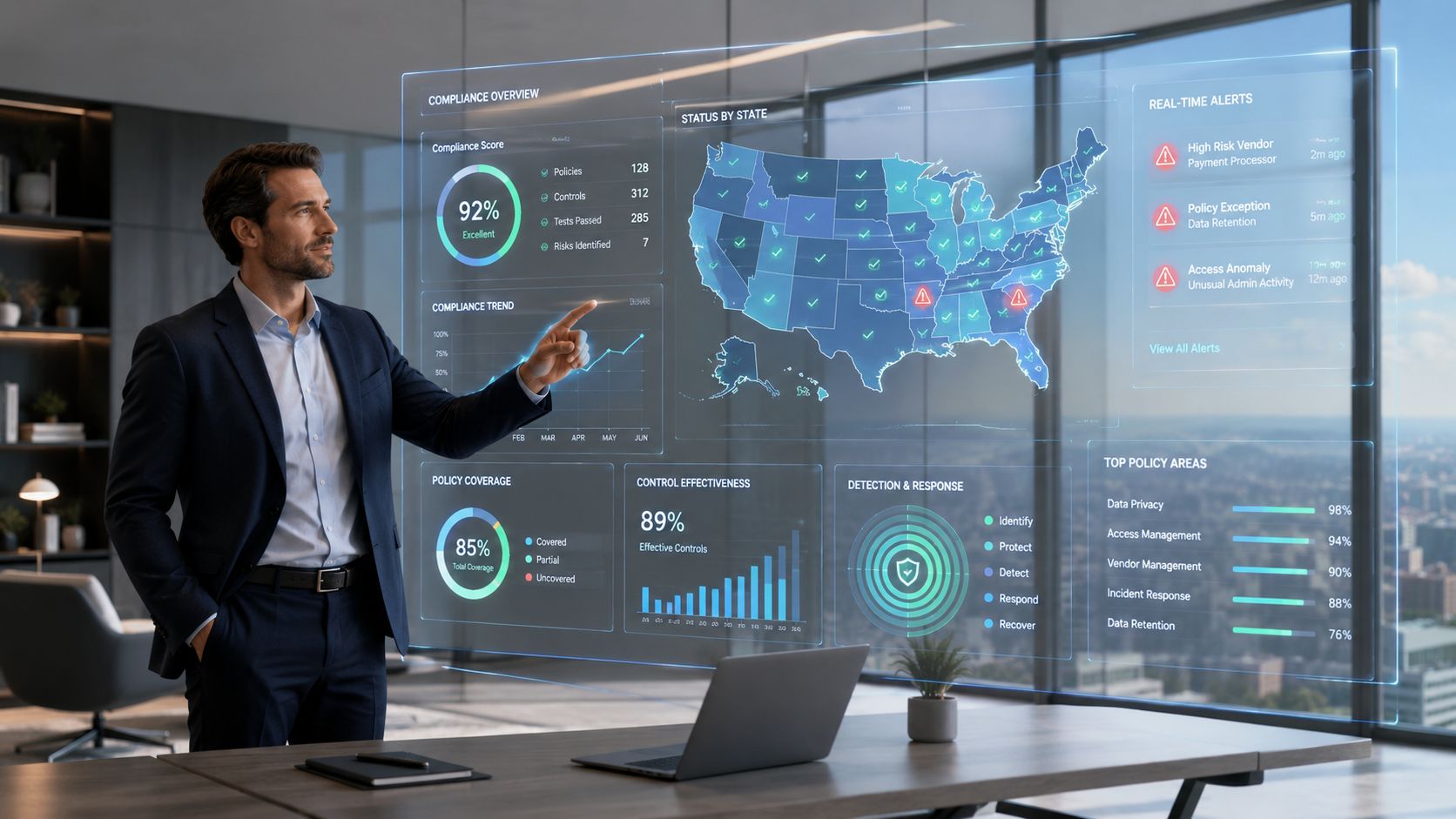
You're probably living this already. One location updates its leave practice, another manager handles breaks differently, and someone in payroll is still relying on a spreadsheet that made sense six months ago. Growth turns compliance into a moving target, especially when you operate across states or in regulated environments.
That's why continuous compliance monitoring matters. It's not a software trend. It's a better operating model. This is like the difference between a home security system that alerts you when a door opens and a patrol car that drives by once a month. If you're already thinking about security and governance from an operations standpoint, this overview from CloudCops GmbH on cloud security compliance is a useful parallel. The principle is the same. Ongoing visibility beats delayed discovery every time.
Most growing businesses don't have a compliance problem because leaders are careless. They have one because the business outgrows manual oversight before leadership redesigns the process.
A policy handbook, a few annual reviews, and a capable HR generalist may be enough when you operate in one state with a small team. That model starts to fail when laws change faster than your update cycle, managers make location-specific decisions, and documentation standards vary by office or department. At that point, periodic review becomes expensive guesswork.
Continuous compliance monitoring replaces that guesswork with ongoing oversight. It means your business checks whether day-to-day practices still match your policies, legal obligations, and internal controls on a recurring basis, instead of waiting for an annual audit or a complaint to expose the gap.
Leaders should care because this is about reducing uncertainty. It gives you earlier warning, cleaner documentation, and a more defensible record when someone questions how a decision was made.
A traditional audit tells you whether you had a problem. Continuous oversight helps you catch it while you can still do something about it.
That distinction matters more than most executives realize. An annual review may confirm that your processes looked acceptable at one point in time. It won't tell you whether a manager in another state started applying a leave rule incorrectly last month, or whether access rights changed in a way that undermines confidentiality controls.
Periodic audits create blind spots. You review, document, remediate, and then move on. Meanwhile, policies drift, managers improvise, systems change, and exceptions accumulate.
For a COO, the pressing issue is operational lag. If your business discovers a compliance issue months after it begins, you aren't managing risk. You're managing fallout.
A useful way to think about it is financial control. You wouldn't run a growing company by checking cash flow once a year. You'd want current visibility, exception reporting, and a clear path for action. Compliance deserves the same treatment.
Practical rule: If a control matters enough to explain to a regulator, plaintiff's counsel, insurer, or board member, it matters enough to monitor continuously.
This shift isn't just philosophical. It changes cost, speed, and accountability. Sirion reports that continuous compliance monitoring delivers a 285%+ return on investment over three years with payback periods ranging between 8 and 18 months. That's a serious business case, not a niche process improvement.
For organizations trying to move out of reactive audit cycles, tools that automate compliance audits can support the mechanics. But don't confuse the platform with the program. Software can help collect evidence, surface exceptions, and standardize checks. Leadership still has to decide what gets monitored, who owns remediation, and what escalation looks like.
If you're still relying on annual or ad hoc reviews, it's worth comparing that posture against a more structured HR audit approach. Many leadership teams discover they don't have a policy problem. They have a visibility problem.
Here's the practical difference:
| Approach | What it tells you | Leadership impact |
|---|---|---|
| Periodic audit | Whether controls looked acceptable at review time | Delayed discovery, rushed remediation |
| Continuous oversight | Whether controls are working now | Faster intervention, better documentation |
| Ad hoc response | Whatever someone notices or reports | Inconsistent handling, weak defensibility |
When businesses move to continuous oversight, they shrink the gap between error and response. That is the point. Shorter exposure windows mean fewer avoidable surprises.
A regional operator opens two new locations, promotes three frontline managers, adds a second payroll workflow, and starts hiring in another state. Six months later, nothing looks broken from the top. Then a leave request is mishandled, time records do not match scheduling data, and HR learns that one location has been using its own documentation process for disciplinary actions. That is how compliance risk grows. Through operating decisions that no longer follow one standard.
Growth creates complexity faster than informal oversight can control. The problem is not just more people or more transactions. The problem is more variation in how decisions get made, documented, approved, and corrected.
The first breakdowns are usually predictable, and they rarely start in the legal department.
Many leadership teams make the wrong call, treating compliance complexity as a tooling gap. It is a control gap.
A spreadsheet can track dates. It cannot enforce review rules, spot inconsistent handling across managers, or give counsel a clean record of who knew what and when.
At a certain size, compliance failures stop being one-off mistakes. They start exposing weaknesses in how the company operates.
One manager classifies time incorrectly. Another handles a similar issue differently. A third skips documentation because the workflow is slow. None of these failures looks catastrophic on its own. Together, they show that policy, training, approval, and recordkeeping are no longer working as one system.
That is why growing companies feel compliance drag even before they face a formal claim or audit. HR spends more time chasing records. Legal spends more time reconstructing decisions. Operations spends more time fixing preventable exceptions. The cost shows up in delay, rework, and weaker defensibility.
Businesses usually lose control through repeated exceptions, local workarounds, and undocumented decisions.
Once you have multiple locations, more layers of management, or state-by-state variation, compliance becomes an execution issue tied to accountability. If leaders cannot see where rules are breaking down, they cannot manage risk in a disciplined way.
That matters for three reasons.
First, inconsistent execution creates legal exposure. Plaintiffs' counsel and regulators do not just look at the written policy. They look at whether similar cases were handled the same way.
Second, weak oversight wastes operating time. Every missing record, late review, or off-process approval forces HR, legal, payroll, and managers to spend time cleaning up work that should have been controlled earlier.
Third, poor visibility weakens decision-making. A COO cannot allocate resources or fix recurring failure points if the business only finds out about problems after a complaint, payroll correction, or attorney letter.
Ask these questions at the leadership level:
If the answer is no, the issue is not awareness. The issue is governance.
A defensible program isn't one tool and one dashboard. It's a system built on four connected pillars. When one is weak, the whole structure becomes harder to defend.
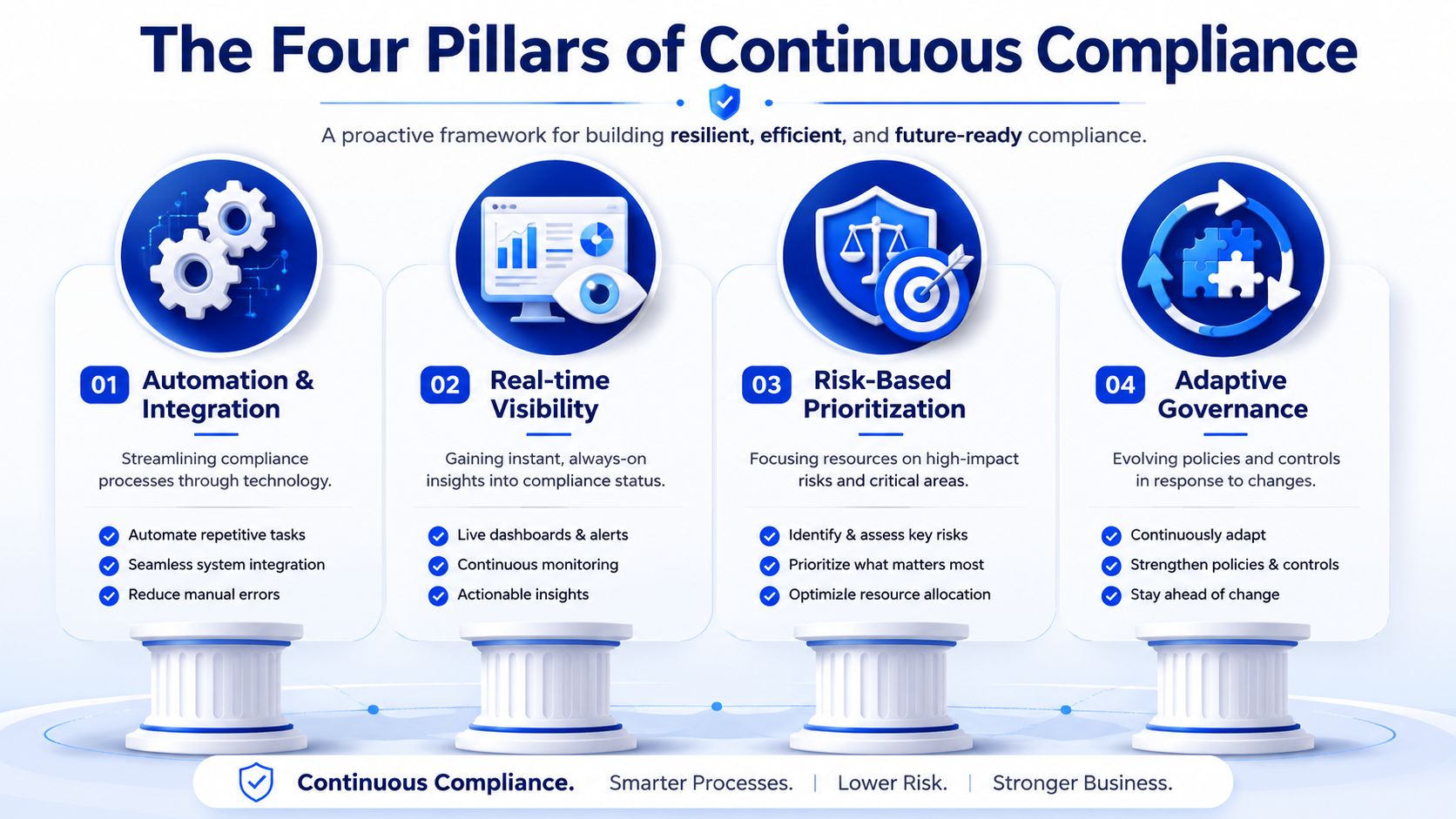
Policies are the written standard. They define what the business expects, what the law requires, and what managers are allowed to do.
If your wage and hour policy says nonexempt employees must record all time worked, that's the baseline. If your leave policy says certain requests require HR review, that creates a decision rule. Without clear policy language, monitoring has nothing meaningful to check.
A lot of companies skip this step by assuming past practice is enough. It isn't. Informal norms don't hold up under scrutiny.
Controls are the mechanisms that turn policy into action. Some are human. Some are automated. Good programs use both.
Examples include required HR review before changing exemption status, manager workflows that require a documented reason before a disciplinary action moves forward, or payroll validations that flag entries inconsistent with scheduling rules. If you're evaluating systems that support this kind of structure, a practical comparison of HR compliance software options can help frame the choices.
Consider a simple scenario. A manager hires a role as exempt because the title sounds senior. A control should stop that decision from moving forward without the right review. If no control exists, policy becomes suggestion.
Detection is where continuous compliance monitoring becomes real. This is the process that identifies when a control fails, a policy is bypassed, or a pattern suggests rising risk.
For example, a leave request may come through ordinary attendance reporting instead of a formal leave intake. A strong detection process catches the pattern and prompts review before the issue turns into an interference or retaliation claim. The same logic applies when employee classifications, access levels, training gaps, or documentation standards drift from the approved model.
Good detection doesn't wait for a complaint. It looks for the conditions that usually produce one.
Reporting gives leadership usable visibility. Not raw data. Not a flood of alerts. Usable visibility.
This should include trend review, open issues, aging remediation items, repeat violations, and accountability by owner or department. A best practice is to generate compliance reports on a monthly or quarterly basis to analyze trends and proactively detect potential compliance problems, rather than relying on annual snapshots.
A useful reporting model looks like this:
| Pillar | Practical business question |
|---|---|
| Policies | Do we have a current, clear standard? |
| Controls | What prevents noncompliant action from moving forward? |
| Detection | How quickly do we know when something drifts or fails? |
| Reporting | Who sees the issue, and who owns the fix? |
Without all four pillars, you may still have compliance activity. You won't have a mature compliance program.
The value of continuous compliance monitoring becomes obvious when you apply it to ordinary business situations. Most risk doesn't start with a dramatic event. It starts with a routine decision made too quickly, by the wrong person, without the right review.
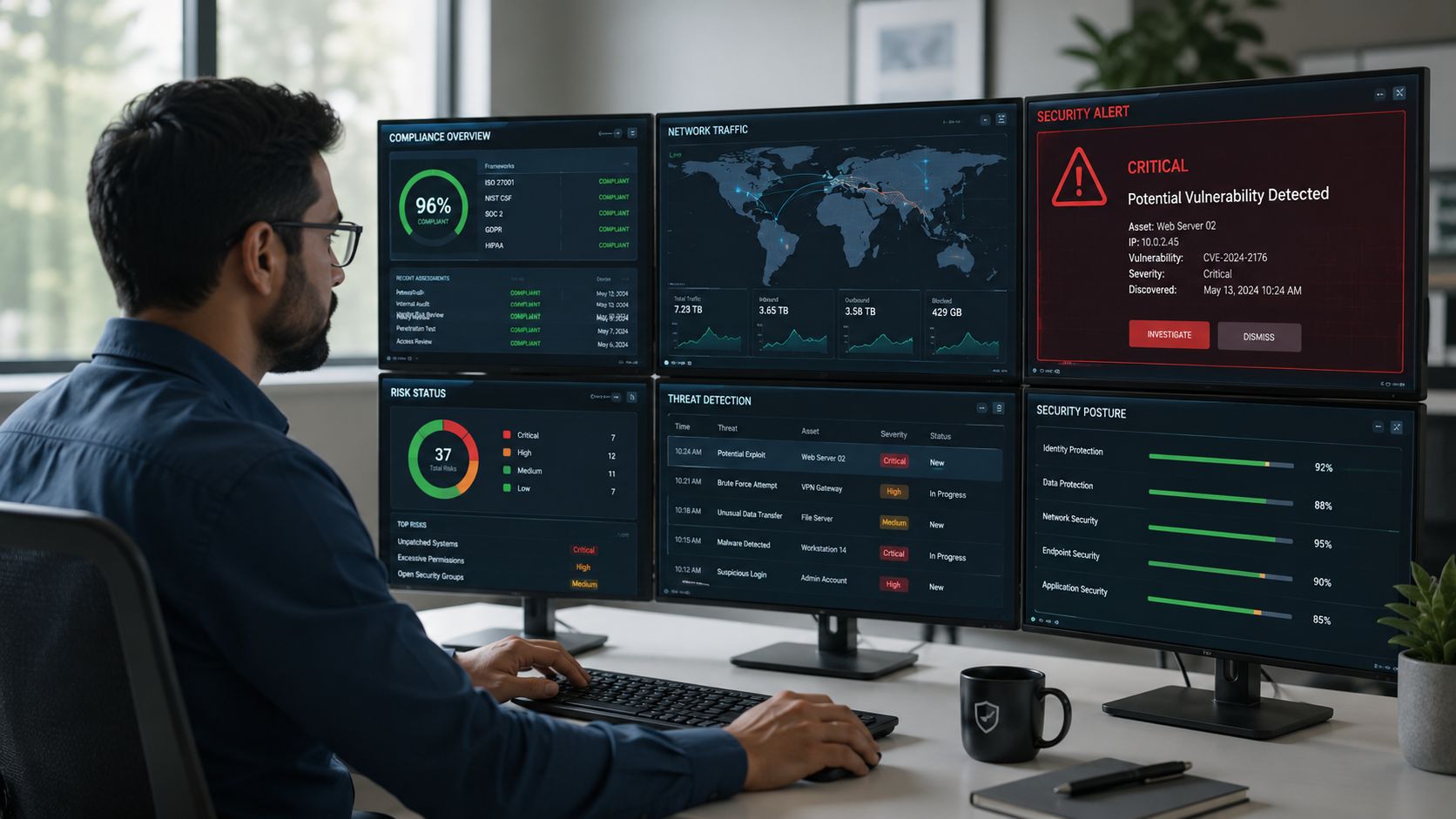
A regional manager opens a new role and marks it exempt because similar roles were handled that way in another office. The state where this employee will work applies a stricter standard, and the actual duties don't support exemption.
A continuous monitoring process can flag the mismatch between role design, pay practice, and approval pathway before payroll runs. That gives HR or legal a chance to correct classification, document the basis for the decision, and avoid creating a record of ongoing underpayment risk.
The point isn't speed for its own sake. It's interruption at the moment where correction is still simple.
An employee starts reporting repeated absences connected to a medical issue. The direct supervisor treats it as an attendance problem and starts drafting discipline.
A strong monitoring workflow recognizes a trigger pattern and routes the issue to the right review path. HR gets notified, the manager receives the proper next step, and the organization creates a record that it responded consistently and on time.
That changes the posture completely:
A location leader wants to terminate an employee for performance. The file contains scattered feedback, no consistent coaching record, and policy acknowledgments stored in different systems.
Continuous oversight doesn't make the termination decision for you. It does surface missing documentation, skipped review steps, or unresolved complaints before the action is finalized. That's often the difference between a managed employment decision and a preventable claim.
The strongest compliance programs don't just detect legal violations. They catch weak process before weak process becomes legal exposure.
These examples aren't edge cases. They're ordinary points of failure in growing organizations. That's why leaders should stop treating compliance monitoring as a technical layer added after the fact. It works best when embedded in everyday approvals, documentation, payroll handling, leave administration, and manager workflows.
A regional manager approves a pay practice in one state, HR handles leave differently in another, and six months later leadership is defending inconsistent decisions it never knew were being made. That is how compliance exposure shows up in a growing business. Not as a software gap, but as a governance failure.
Most implementation efforts go off course because leaders buy a platform before they set the rules for ownership, escalation, and review. Start in the opposite order. Decide how the business will govern compliance decisions first. Then configure tools to support that model.
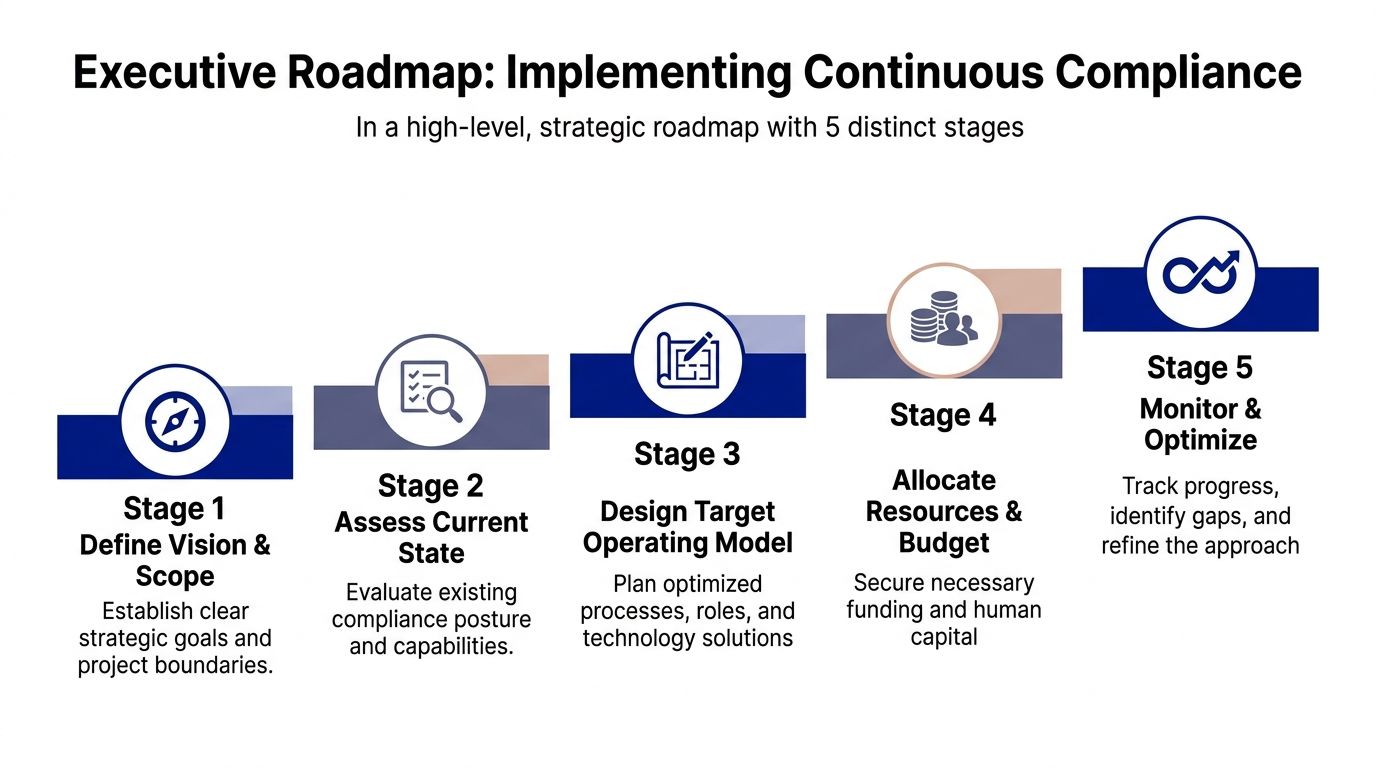
Begin with the areas where inconsistency creates the most exposure. For many SMBs, that means wage and hour practices, leave administration, documentation standards, manager conduct, and policy variation across states.
Do not monitor everything at once. Pick the decisions that create the highest legal, financial, or reputational risk when handled poorly. Then assign one accountable owner with authority to review issues, drive remediation, and report to senior leadership. Shared ownership sounds collaborative. In practice, it weakens accountability.
The first implementation step is simple. Identify where the company cannot defend its current process, then give one leader responsibility for fixing that weakness.
Continuous monitoring fails when alerts are built for activity instead of decision-making. A COO should insist on thresholds tied to operational risk, not system noise.
Set triggers around issues such as repeat manager exceptions, overdue policy acknowledgments, unresolved leave indicators, unreviewed classification changes, and open items nearing a remediation deadline. Those are early warnings of process failure. They give leadership time to intervene before the issue becomes a claim, agency inquiry, payroll correction, or credibility problem in litigation.
Use leadership review to answer a short set of questions:
A monitoring program should show up in the normal management rhythm, not once a year when audit prep starts. Monthly or quarterly reporting is useful for trend review, but real control comes from how issues are handled between those meetings.
That means HR, operations, legal, payroll, and line management need a defined path for intake, review, escalation, and closure. If an issue has no owner, deadline, or review forum, it stays open until it becomes expensive.
Use a practical rollout sequence:
Tool-first programs usually fail because they collect information without assigning responsibility. Governance-led programs work because leadership decides, in advance, what action the company will take when risk appears.
If leadership can't tell whether the program is working, the program isn't mature yet. The right metrics should show whether the organization detects issues early, resolves them consistently, and stays ready to defend its decisions.
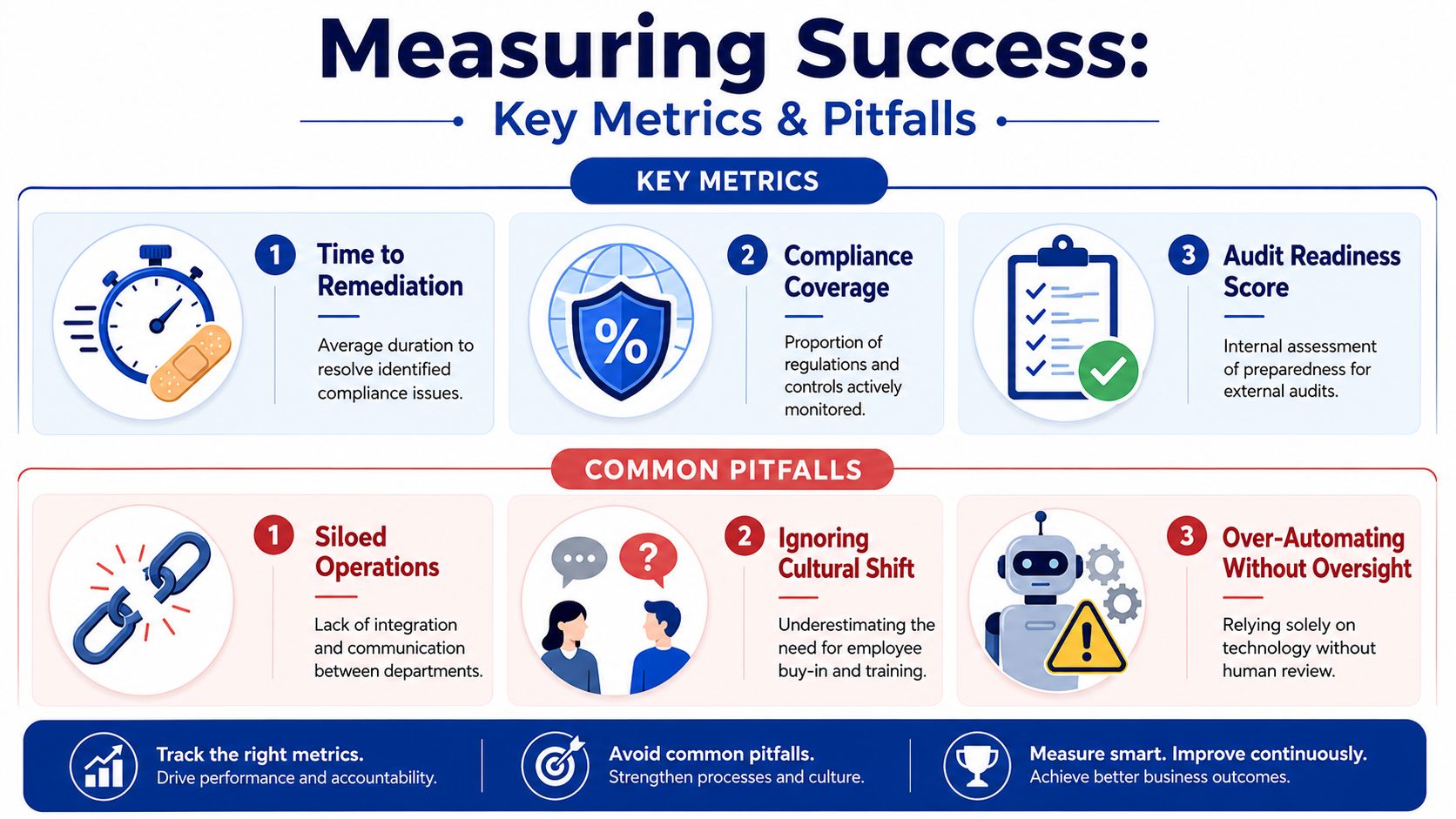
Track outcomes that tell you whether the process is functioning:
A simple benchmark tool for leadership discussions is this operational HR compliance checklist. It helps separate missing structure from one-off errors.
A mature compliance function doesn't just count violations. It measures how fast the business recognizes and corrects them.
The biggest implementation errors are strategic, not technical.
This is why I agree with a point often missed in vendor-led conversations. Telos argues that the most underserved angle in CCM is the shift from a technology initiative to a governance and operational discipline, which is especially critical for SMBs where mistakes carry real legal consequences.
That's the right framing. Continuous compliance monitoring is a marker of operational maturity. It shows that leadership has stopped hoping good intentions will carry the system and started building a business that can hold up under pressure.
A well-run business doesn't wait for an audit, complaint, or crisis to find out whether its compliance practices are working. It builds a structure that surfaces problems early, assigns ownership clearly, and creates a record of responsible action.
That's what continuous compliance monitoring should do. It should reduce uncertainty for leadership, improve operating discipline, and make employment decisions more defensible across locations, managers, and business units. The strongest programs aren't driven by fear of penalties alone. They're built because stable companies need repeatable, accountable processes.
If your organization is growing, expanding across jurisdictions, or operating in a higher-risk environment, this capability stops being optional. It becomes part of how a serious leadership team runs the business.
If your leadership team is dealing with multi-state employment complexity, inconsistent manager practices, or growing pressure to strengthen defensibility, Paradigm International Inc. can help you evaluate the gaps and build a more disciplined approach. You can contact the team here to continue the conversation in a practical, business-focused way.