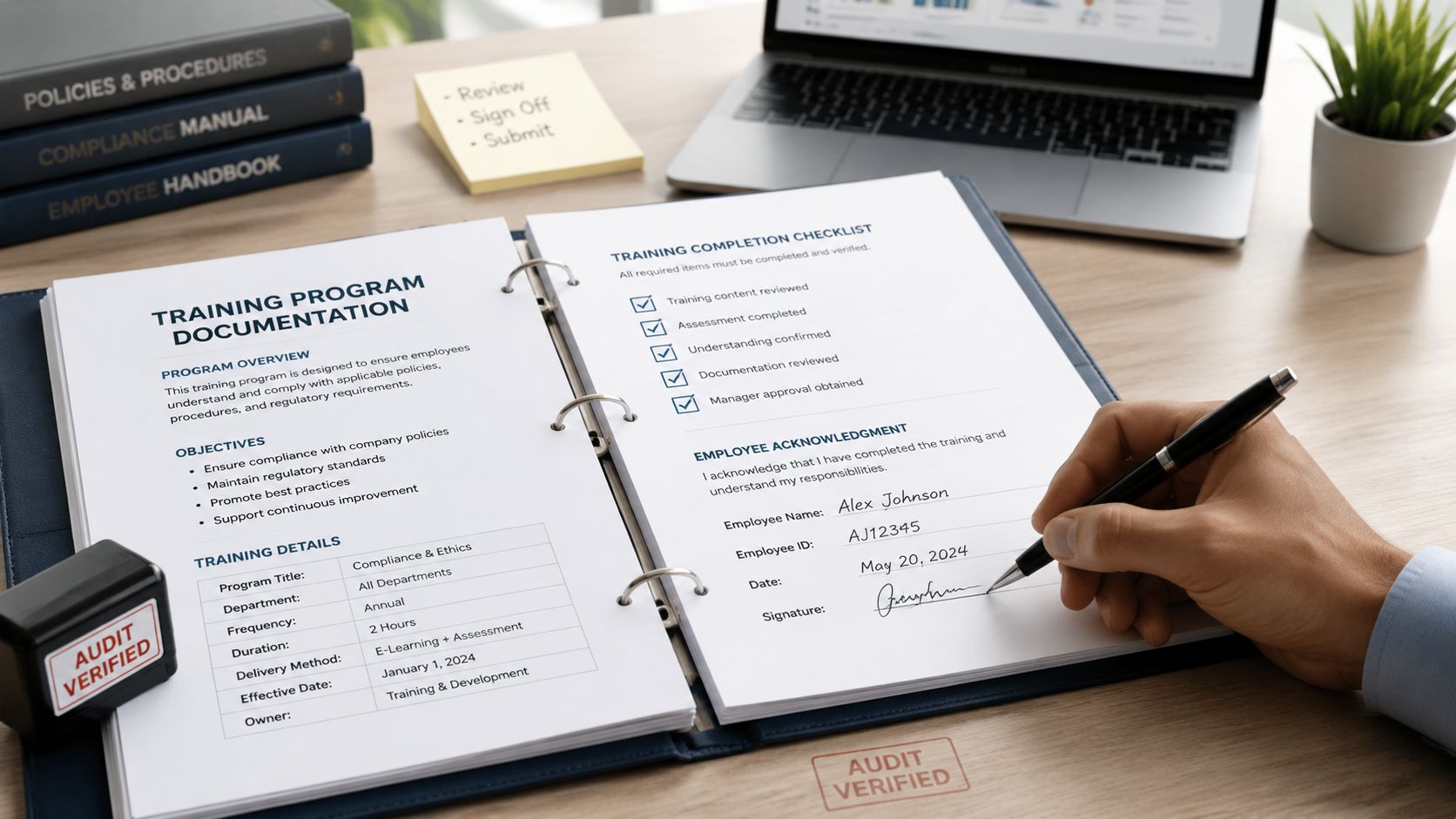
A common version of this problem lands on an owner or COO late in the week. A manager wants to terminate a long-tenured employee. Performance has slipped, the documentation is uneven, the employee recently raised a medical issue, and the business now operates in more than one state. The decision may still be right, but the path matters just as much as the outcome.
That's where an employment law consultation becomes a business decision tool, not just a legal expense. Leaders usually don't need abstract legal theory. They need clear guidance on what to do next, what to document, what to pause, and how to reduce avoidable risk before a routine people matter turns into a formal claim.
A COO may start with a simple question: can we let this person go now? In practice, that question is rarely simple. The employee may be in a protected class, may have complained about treatment, may have taken leave, or may work in a state with rules your headquarters team doesn't fully understand.
The core issue isn't whether leadership can make hard calls. It's whether the business can make them deliberately and defensibly.
In-house legal teams already spend significant time on labor and employment matters, and organizations face a steady volume of claims. On average, organizations receive 12 threats of litigation, 9 administrative charges, and 5 non-class action lawsuits annually, according to Proskauer's value insights study. For an SMB, you don't need many of those events for leadership attention to get pulled off operations and into damage control.
The riskiest moments usually don't look dramatic at first. They look like:
A lot of businesses try to solve this with more manager reminders or annual policy reviews. That helps, but it doesn't replace structured decision support. Many teams also strengthen understanding through effective compliance video content, especially when they need managers in different locations to hear the same message the same way.
Practical rule: If a people decision could later be described as rushed, inconsistent, or personal, it deserves review before action.
This is also why HR planning can't sit apart from business planning. When growth, restructuring, and risk are converging, leadership needs an operating model that connects workforce decisions to compliance discipline. A useful starting point is a more intentional strategic HR planning approach that treats people risk as part of execution, not an afterthought.
An employment law consultation is often misunderstood. Many leaders think it means calling a lawyer after a demand letter arrives. That is one use case, but it's the least efficient one.
A well-run consultation happens earlier. It functions like a pre-flight check for a high-stakes people decision.

A proactive consultation usually helps leadership do four things:
Spot risk before action
The advisor looks at facts, timing, documentation, policy language, prior treatment, and jurisdiction issues before the company commits to a move.
Pressure-test the rationale
A sound business reason can still be poorly executed. Consultation helps separate a valid decision from a weak process.
Build a defensible record
The point isn't to create paperwork for its own sake. It's to make sure your file shows who decided what, why, and based on which documented facts.
Choose the least risky path
Sometimes that means proceed. Sometimes it means wait, investigate, coach, revise a document, or change who delivers the message.
It isn't a magic shield. It won't make every termination or complaint disappear. It also isn't a substitute for competent management.
What it does is improve judgment under pressure. That matters because employment issues often unfold in grey areas, not obvious violations.
Good consultations don't just answer “can we do this?” They answer “what will this look like six months from now if someone challenges it?”
For small and growing employers, this work sits between legal interpretation and operational reality. That's especially true in businesses where HR is lean, managers are stretched, and executives need fast, usable guidance. If you want a broader foundation on the baseline issues employers face, this overview of employment law for small businesses is a helpful companion.
Reactive defense starts after the facts are fixed. Proactive consultation happens while leadership still has choices.
That distinction changes everything. Before action, you can revise language, pause a conversation, gather records, compare treatment, or restructure the process. After action, you're mostly explaining why the company did what it did.
A regional manager wants to terminate a sales employee in Texas on Friday. On Thursday, HR learns the employee asked for medical leave two weeks ago, works partly under a California supervisor, and already complained about commission calculations. That is the point to pause and get advice. For a multi-state SMB, an employment law consultation is often less about legal defense than decision support for leadership before a choice hardens into a claim.
Most employee issues do not require outside counsel or senior HR review. The trigger is not routine activity. The trigger is a decision with legal, operational, or reputational risk that crosses state lines, touches protected activity, or exposes inconsistent manager practice. If you are also weighing whether outside support makes sense for your team structure, this guide on when to hire an HR consultant for a small business can help frame that decision.
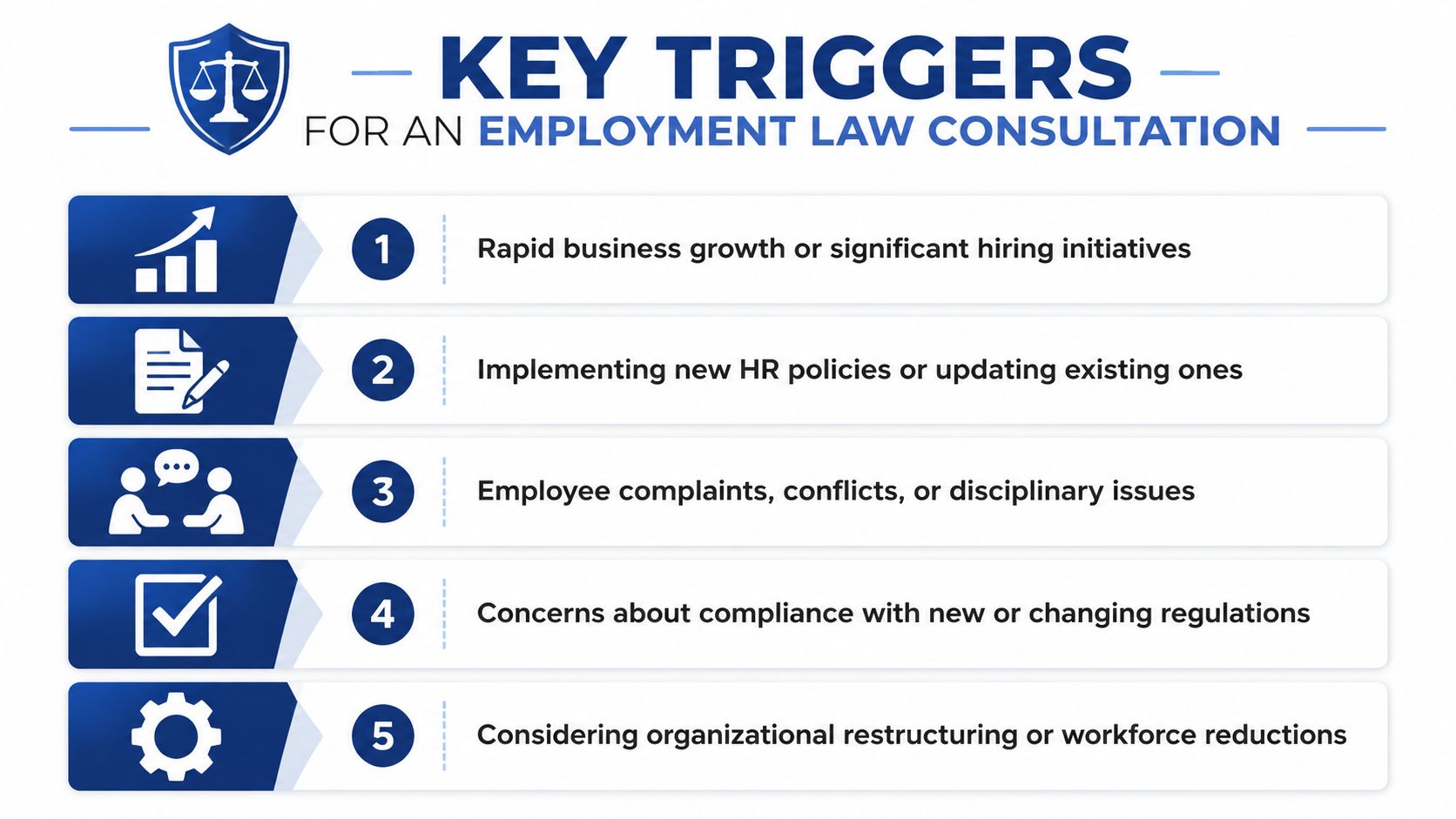
A termination tied to protected activity or protected status
Pause if the employee recently complained, requested leave, raised a wage issue, asked for an accommodation, or belongs to a group likely to face closer scrutiny in a dispute. The question is rarely just whether the decision is defensible. The question is whether the file, timing, and prior treatment support the reason leadership plans to give.
A formal harassment, discrimination, or retaliation complaint
Risk builds quickly when intake is sloppy, witnesses are coached, or the company reaches a conclusion before collecting facts. Early guidance helps preserve records, set scope, and keep the process credible.
Expansion into a new state
Multi-state growth is where otherwise competent employers get caught using policies and manager habits that worked in one state but fail in another. Wage notices, leave rules, final pay timing, reimbursement obligations, and handbook language often need revision before the first problem appears.
A reduction in force, reorganization, or manager-led restructuring
A sound business reason does not protect a weak selection process. Leadership should be able to explain who was chosen, why the criteria were used, and whether similarly situated employees were treated consistently across locations.
A policy change affecting pay, leave, attendance, scheduling, or discipline
These changes can create risk even before anyone complains. A consultation can test whether the policy fits state requirements, whether managers can apply it consistently, and whether the rollout creates avoidable employee relations issues.
A worker classification decision
Contractor arrangements often start as a practical shortcut and end as a payroll, tax, wage, and benefits problem. These HR insights for small business owners are useful for spotting classification risk before the company builds a role around the wrong model.
The highest-risk moments are often the quiet ones.
Pre-termination review after months of weak documentation
This is usually the last low-cost chance to fix a record that does not match the stated reason for termination.
Inconsistent manager responses to similar conduct
One manager coaches. Another writes people up. A third ignores the issue until it becomes serious. That pattern creates comparison problems fast.
Performance plans written after leadership has already decided to exit the employee
Investigators, agencies, and plaintiff's counsel read that sequence closely. So do juries.
Cross-state reporting lines
A manager in one state may apply attendance, break, leave, or discipline standards that do not fit the employee's work state.
Sudden urgency after a complaint or leave request
This is one of the most common fact patterns behind retaliation claims. Leadership may still have a valid concern, but the timing has to be examined before action.
The practical standard is simple. Seek a consultation when the company still has choices to make, not after managers have acted, documents are already issued, and the business is stuck defending a process it did not pressure-test.
A good consultation gives leadership something more useful than a legal answer. It gives the business a decision path.
For a multi-state SMB, that matters because the same employee issue can carry different risk depending on where the person works, which manager is involved, what technology touched the decision, and what the file shows. A modern consultation should pull those threads together before leadership acts.
Termination advice should test the full decision, not just the final script. That usually means reviewing the employee's job history, prior coaching and warnings, leave activity, complaint history, comparator treatment, decision-maker involvement, and timing.
The central question is simple. Can the company explain this decision with documents and facts that line up?
If leadership says the issue is performance, the record should show performance concerns before the termination meeting was scheduled. If the concern is misconduct, the company should be able to show what rule was violated, how the facts were verified, and whether similar cases were handled the same way. Where the record is weak, a credible advisor should say so plainly and explain the trade-off between delaying action to clean up the file, restructuring the exit, or accepting a higher claim risk.
Common work product includes:
An investigation consultation should address process design, not just witness questions. The business needs a clear scope, a defensible witness list, document preservation steps, neutral interview planning, and findings that can be explained later to an agency, opposing counsel, or a jury.
Speed still matters. So does discipline.
I often see employers create avoidable risk by rushing to closure before they have fixed the process. A fast interview sequence will not help if the wrong people led it, key messages were left in Slack, or the final findings memo reads like advocacy instead of fact analysis.
A useful consultation also covers remedial options. Substantiated conduct does not always require termination. Unsubstantiated conduct does not always mean no action. Leadership may need coaching, reporting-line changes, policy reminders, training, or monitoring controls, especially where the facts show poor judgment but not a clean policy violation.
Many organizations keep records. Fewer keep records that support a consistent business explanation.
This part of the consultation examines whether performance notes, attendance records, policy acknowledgments, compensation changes, manager emails, and investigation materials fit together. Advisors should look for missing dates, vague labels, after-the-fact language, emotional phrasing, and contradictions between what managers say happened and what they wrote at the time.
Some questions also require structured data review. Pay equity, promotion patterns, selection decisions, and reduction-in-force planning cannot be assessed from anecdotes alone. If the company may need statistical review, the consultation should identify what data exists, what is missing, whether job groupings are usable, and whether the business should pause a decision until the numbers are tested.
For multi-state employers, consultation often turns into policy triage. A handbook rule that looks reasonable at headquarters can create problems elsewhere if it collides with state rules on leave, meal and rest periods, final pay, off-duty conduct, reimbursement, or discipline procedure.
That is why modern consultations should be treated as leadership support, not just legal cleanup. The advisor should help the company decide whether one policy can be applied across states, whether state-specific addenda are enough, or whether the practice itself needs to change.
Technology review now belongs in that same conversation. The EEOC has stated that employers may be liable under Title VII when algorithmic decision tools create unlawful discrimination, as explained in the agency's guidance on assessing adverse impact from software, algorithms, and artificial intelligence used in employment selection procedures. Lawyers tracking this area have also noted rising agency attention to AI-related employment risk and growing SMB adoption of AI hiring tools, according to Loftus & Eisenberg's employment law summary. If your business uses AI-assisted screening, scheduling, monitoring, or performance tools, the consultation should cover who approved the tool, what it influences, whether outcomes are being tested for bias, where human review occurs, and how those controls are documented.
A Friday afternoon call from a manager changes the risk profile fast. An employee has complained, leave may be involved, discipline is already being discussed, and leaders in two states want an answer before Monday. If the facts are scattered across inboxes, chat threads, and half-remembered conversations, the consultation turns into document recovery instead of decision support.
Good preparation shortens that cycle. It also improves the quality of the advice, because the advisor can spend time testing options, spotting gaps, and pressure-checking the business impact of each path.
Bring facts in a form that lets the advisor see the sequence, the decision points, and the consistency issues quickly.
A clear timeline
List the key events in order. Include complaints, coaching, warnings, leave requests, pay changes, schedule changes, investigation steps, and any action already proposed.
The employee's core documents
Gather the offer letter, job description, handbook acknowledgment, performance reviews, prior warnings, compensation changes, and any active improvement plan.
Relevant communications
Pull the emails, Slack messages, text messages, calendar invites, and meeting notes tied to the issue. Include the documents that hurt your position as well as the ones that support it. Selective production creates bad advice.
Policies that govern the decision
Have the handbook sections, state addenda, leave rules, pay practices, investigation procedures, and discipline standards ready. For multi-state employers, the question is often whether the policy says one thing while local practice says another.
Comparator history
Be ready to explain how similar situations were handled before, by location, manager, and role level. Uneven treatment is often the issue that turns an ordinary personnel decision into a legal problem.
The decision-maker map
Identify who reported the issue, who investigated, who recommended action, who has final approval, and who should be kept out because they may be a witness later.
Some consultations rise or fall on records, not recollections. That is common in pay equity reviews, hiring outcomes, promotion decisions, reductions in force, and selection disputes. If pattern-based risk may be part of the analysis, bring the underlying data set in a usable format, along with the business factors that may explain differences, such as tenure, job level, location, performance history, certifications, and shift requirements.
As noted earlier, adverse impact and similar issues usually require structured analysis rather than broad statements about fairness.
Bring raw facts, not just conclusions. “We treated everyone the same” is a position. The records are the evidence.
One practical point matters here. Decide in advance whether you want a narrow answer to an immediate issue or advice that also tests whether the same problem exists elsewhere in the business. For a multi-state SMB, that trade-off matters. A narrower review costs less and moves faster. A broader review may expose larger policy or manager-training problems early, while there is still time to fix them on your terms.
Use the consultation to get decision-ready guidance, not a lecture on legal standards.
A strong consultation ends with a decision path, a documentation plan, and clear ownership. That is how legal advice starts serving leadership instead of just reacting to the last problem.
A founder with employees in Texas, California, and New York usually does not need another lawyer who can recite legal standards. The business needs an advisor who can tell leadership what to do next, what to stop doing, and where the same issue is likely to surface again.
That distinction matters more in a multi-state company because one employment decision often creates three separate risk questions. Is the action legal in each state involved? Is the process consistent enough to defend? Is the business building a repeatable approach, or solving one fire while leaving the system exposed?
One summary of SHRM survey findings, published by Lipsky Lowe, points in the same direction. Multi-state employers report recurring compliance problems tied to inconsistent state rules and preventable disputes that could have been reduced with better early advice. The exact percentages matter less than the operating lesson. General guidance breaks down fast when state-specific rules, manager discretion, and business timing collide.
| Criterion | What to Look For | Why It Matters |
|---|---|---|
| Multi-state experience | Direct experience advising employers across several state law regimes | A recommendation that works in one state can create wage, leave, or termination risk in another |
| Advisory mindset | Clear, preventive guidance tied to business decisions, documentation, and execution | Leadership needs judgment before a claim develops, not just legal analysis after the fact |
| Investigation capability | A structured method for intake, interviews, findings, and remedial steps | Complaints often turn into a second problem if the process is weak |
| Business fluency | Comfort advising owners, HR leaders, operations leaders, and frontline managers | Advice has to work in the real chain of command |
| Documentation discipline | Precision around records, timelines, policy language, and consistency | Good facts become hard to defend if the file is sloppy |
| Responsiveness and scope clarity | Specific expectations on turnaround, access, work product, and follow-up | Time pressure drives many employment mistakes |
Ask direct questions before you engage anyone. How often do you advise employers in our states? Who will handle the work? What do you need from us before you can give a recommendation we can act on? A capable advisor answers these without hedging.
Cost should be judged against risk reduction, management time, and decision speed.
Hourly arrangements
Usually a fit for occasional, high-complexity matters. They can become expensive if leaders call reactively, facts arrive in pieces, or the issue expands from one employee to a broader policy review.
Retainer models
Often a better fit for multi-state SMBs with regular hiring, terminations, leave questions, manager complaints, or pay practice changes. The value is not just predictable budgeting. It is faster access before a problem hardens into a claim.
Project-based fees
Useful for defined work such as handbook revisions, classification audits, investigation support, or reduction-in-force planning. These arrangements work best when scope, assumptions, and deliverables are written clearly at the start.
There is also a practical insurance angle here. If your outside advisor influences high-stakes people decisions, it helps leadership understand how professional liability for consultants is commonly framed, especially when judgment, documentation, and client reliance are part of the engagement.
Some warning signs are easy to miss early.
Advice that barely changes with the facts
Employment risk turns on details. State, tenure, prior complaints, protected activity, pay method, and manager history can all change the answer.
A dispute-only mindset
Trial skill has value. For day-to-day leadership decisions, businesses usually need someone who can reduce the odds of getting to litigation in the first place.
Little interest in operations
If the advisor does not ask who made the decision, how managers are trained, what records exist, or how the practice works across locations, the recommendation may fail in implementation.
Unclear billing or staffing
Leaders should know what is included, when extra work begins, and whether a senior attorney is advising or only reviewing after the fact.
The best advisor for a growing multi-state SMB is rarely the cheapest and rarely the most aggressive. It is the one who helps leadership make consistent, defensible decisions under time pressure, with enough business context to prevent the next problem as well as address the current one.
The consultation itself doesn't reduce risk. Your follow-through does.
Most employment issues improve when leadership turns advice into a documented internal plan. That means assigning ownership, confirming timing, and making sure managers understand exactly what changes now.
Write down the facts reviewed, the guidance received, the decision made, and any conditions attached to that decision. Keep the record concise and factual.
If the issue involved an outside advisor, preserve the internal action summary separately from informal manager chatter. Businesses often create confusion after a good consultation by letting side conversations reshape the plan.
Convert advice into tasks. That may include revising a warning, updating a handbook section, preparing an investigation outline, retraining a manager, or sequencing a termination more carefully.
If the situation also raises broader professional risk questions for outside specialists or advisors supporting your business, it can help to understand how professional liability for consultants is commonly framed, especially when sensitive judgment calls affect client outcomes and documentation expectations.
The cleanest post-consultation plans answer three things: what changes, who owns it, and when it must be done.
Execution should be controlled. Don't let a legally sensitive plan drift into ordinary manager improvisation.
That usually means:
A good employment law consultation should leave the business calmer, clearer, and more disciplined. If your organization is facing decisions like these and wants a steady advisory partner for long-term HR risk management, it may be time to keep that support closer at hand.
If your leadership team is navigating high-stakes people decisions and needs a steady partner in complex employment environments, Paradigm International Inc. helps SMBs build defensible HR practices and make better decisions before risk escalates. To start a conversation, contact the Paradigm team.