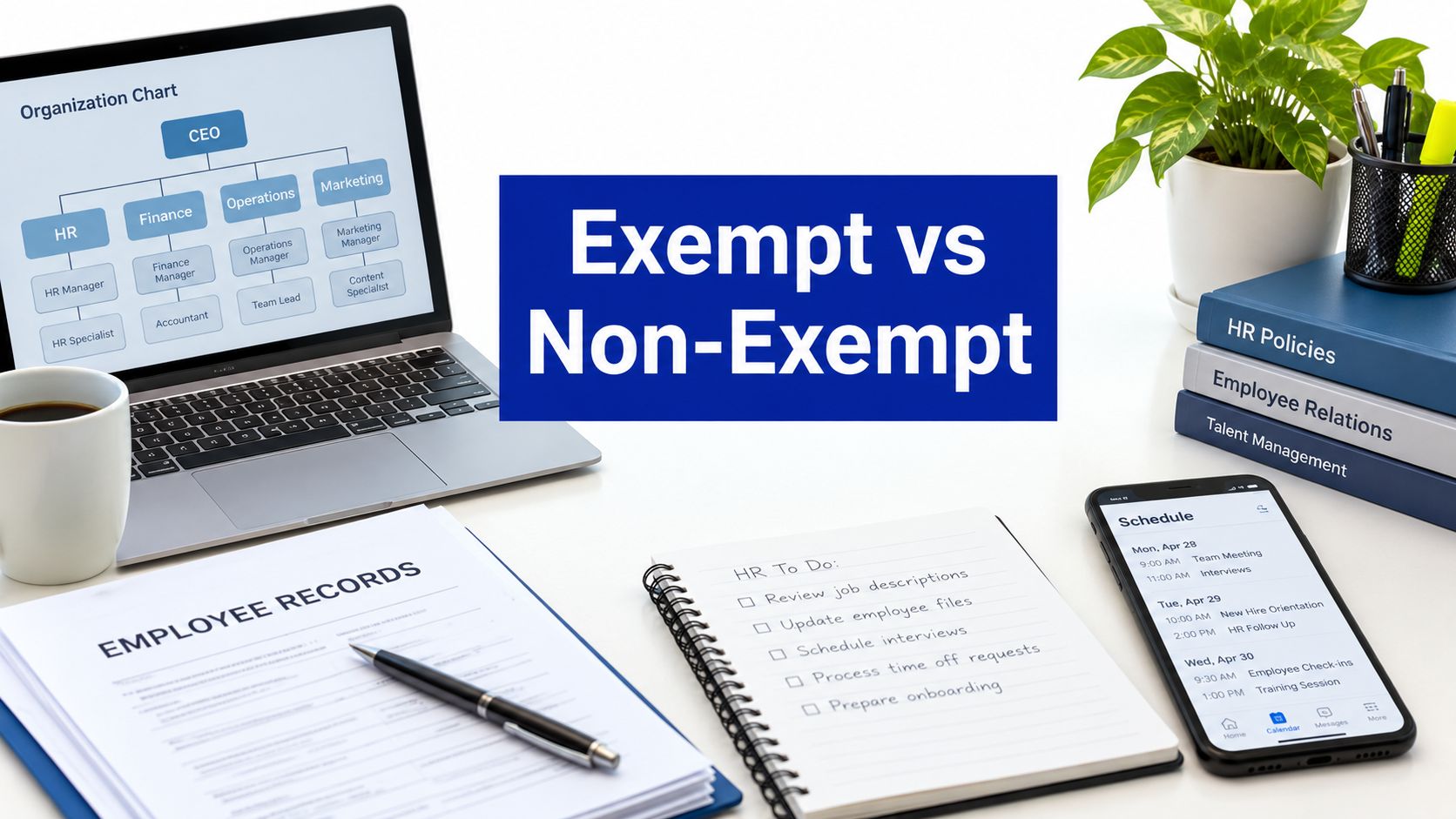
A senior operations lead has just been promoted. The salary is comfortably above the federal floor, the title includes “lead,” and the organizational chart shows several direct reports. Yet the employee still spends part of the week answering customer tickets and working in the same queue as frontline staff. The COO wants a clear answer: exempt or non-exempt?
The defensible answer doesn't come from the title or salary alone. For a specific role, start with the federal pay screens, then decide whether the employee's actual primary duties satisfy an exemption. After that, apply the stricter state or local rule wherever it changes the result. That role-by-role judgment is the only reliable approach for a growing, multi-state business.
A Colorado and Texas services firm may be deciding whether a senior operations lead should be exempt. The employee earns enough to pass the federal salary screen and sounds managerial on paper, but still spends two afternoons each week in the service queue. That fact matters more than the title. A role that combines supervision, customer escalation, scheduling, and routine production work needs an analysis of what the employee does and what work is primary.
Federal classification uses two connected tests. The employee generally must be paid on a salary basis at or above the applicable federal salary level, and the employee must satisfy the duties test for an exempt category. The Department of Labor's overtime guidance makes clear that pay is only one part of the decision. An executive, for example, must perform genuine management work and meet the applicable supervision and authority requirements.
Job descriptions and organization charts help establish the intended structure, but they don't prove the work is being performed that way. A “manager” who spends most of the week processing orders, entering data, or resolving routine tickets may fail the duties test even if the salary and reporting lines look appropriate.
The reverse can also happen. A role with an ordinary title may qualify if the employee leads a recognized department, exercises meaningful authority, or makes significant operational decisions. The analysis should follow the work, not the prestige of the title.
The federal rule is a baseline, not a universal payroll design. Colorado, California, Washington, and New York can impose requirements that are more protective of employees, while some jurisdictions use different overtime structures or salary standards. A role can pass the federal test and still need a different treatment in another state.
The risk isn't limited to correcting a paycheck. Misclassification can create unpaid overtime exposure, liquidated damages, and related penalties. The practical consequence is that an employer may owe double overtime plus liquidated damages, rather than merely issuing a wage adjustment. The business also may lack the time records needed to reconstruct what the employee worked.
COO rule: If you can't explain the role's primary duty using the employee's real weekly work, you aren't ready to classify the role as exempt.
Use the pay tests as the first screening gate for each role. They can rule out an obviously non-exempt classification, but passing them does not establish exempt status. The duties performed in the job still control the final decision.
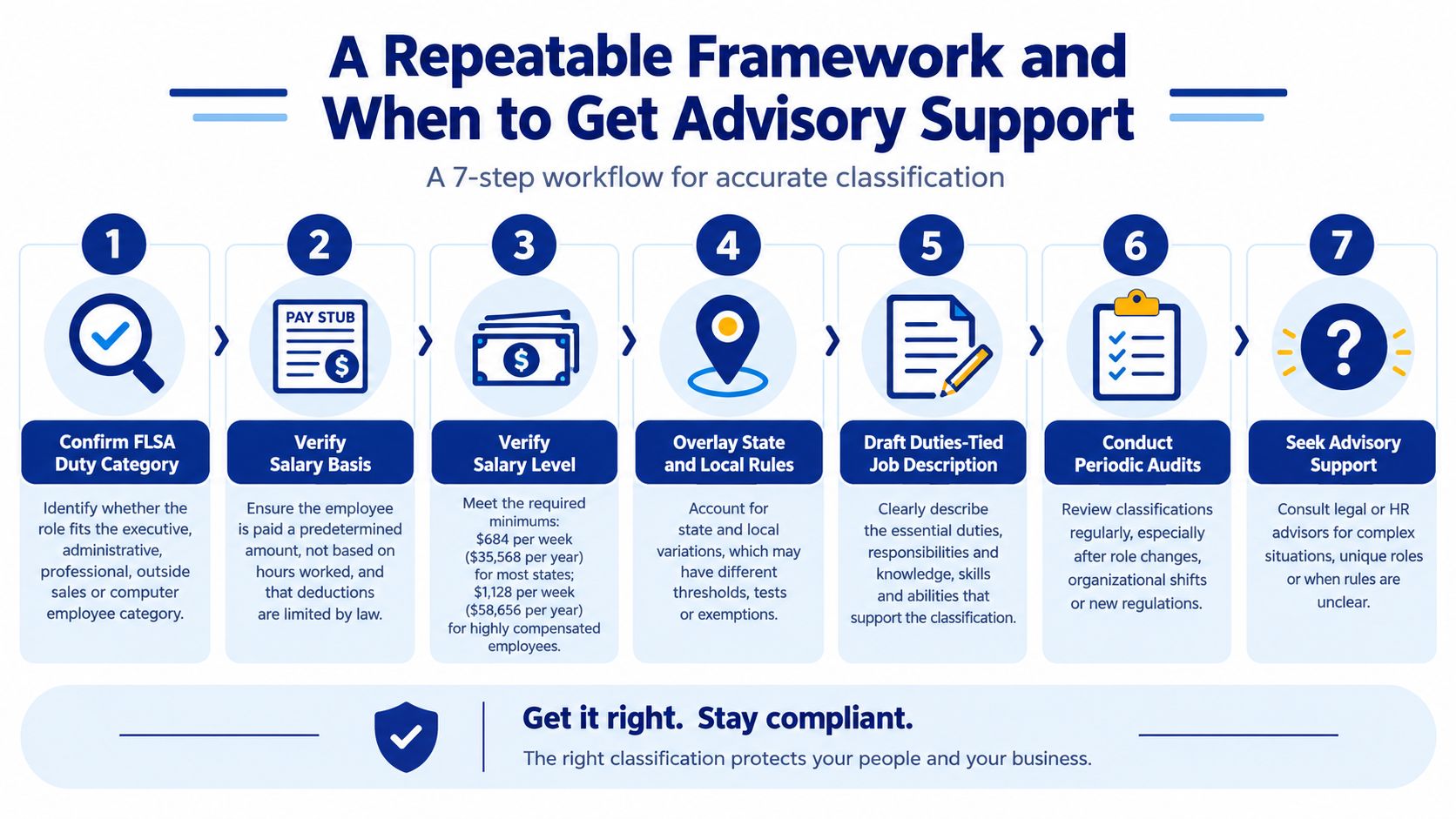
A salary-basis employee receives a predetermined amount each pay period that generally remains unchanged when the quality or quantity of work varies. A deduction because the employee worked fewer hours in a particular week can undermine the required salary basis. Limited deductions may be allowed in specific circumstances, including certain full-day disciplinary deductions, so payroll practices require careful review before the employer makes them.
The employer must apply the arrangement consistently, rather than relying on a “salaried” label in the offer letter. If payroll treats the employee like an hourly worker whenever schedules change, the written label will not repair the classification.
For the executive, administrative, and professional exemptions, the current federal standard is $684 per week, or $35,568 annually, under the level identified by the Department of Labor's salary-level guidance. The highly compensated employee threshold is $107,432 annually, with at least $684 per week paid on a salary or fee basis. The federal level became effective on January 1, 2020, following the Department of Labor's 2019 rule. A later 2024 attempt to raise the level was vacated, leaving the 2019 standard in force.
| Exemption Tier | Weekly Minimum | Annualized Equivalent | Additional Conditions |
|---|---|---|---|
| Executive, administrative, and professional | $684 | $35,568 | The employee must also satisfy the applicable duties test |
| Highly compensated employee | $684 on a salary or fee basis | $107,432 total annual compensation | The employee must satisfy the applicable HCE duties standard |
A role earning $900 per week can pass the salary-level screen and still be non-exempt. Routine production work, repetitive customer service, and clerical processing remain non-exempt work even when the employee receives a fixed salary.
Some workers qualify for payment on a fee basis instead of through a traditional weekly salary. Employers may also need to assess whether board, lodging, or another permitted compensation arrangement affects the analysis. Review the guaranteed pay first, then confirm that the role performs qualifying exempt work.
The pay arrangement must be documented role by role, especially when compensation or schedules change over time. A classification that passes the federal pay screen may still require review under state or local rules, which can impose a higher salary standard or different overtime requirements.
If the role falls below the applicable federal salary level, stop the exempt analysis unless a specific exemption operates differently. If the role passes, proceed directly to the duties test. Treat the threshold as a filter, not the conclusion.
The duties test asks what the employee primarily does, how much discretion the employee exercises, and whether the work fits a recognized exemption. The DOL administrative exemption guidance describes administrative work as office or non-manual work directly related to management or general business operations, combined with discretion and independent judgment on significant matters.
An executive classification requires more than people coordination. The employee's primary duty generally must be managing the enterprise or a recognized department, the employee must customarily and regularly direct at least two other employees, and the employee must have authority or meaningful influence over hiring, firing, promotion, or comparable status decisions. The DOL small-entity compliance guide emphasizes that actual duties, not title or salary, control the result.
A supervisor who assigns work but has no meaningful input on employee status may not satisfy the executive test. A team lead who spends most of the week doing the same production work as the team may also face difficulty, particularly when the management work is incidental rather than primary.
Administrative employees support management or business operations, not the employer's routine production output. They must make meaningful decisions using independent judgment, rather than just follow a procedure, update a tracker, or route requests.
A bookkeeping coordinator who enters transactions, a project tracker who updates schedules, or a service coordinator who follows predetermined escalation scripts may not meet this test. A business operations lead who evaluates workflow, sets operating procedures, resolves significant exceptions, and advises leadership may present a stronger case, provided the actual work supports that description.
Learned professionals generally apply advanced knowledge in a field of science or learning that is customarily acquired through prolonged specialized study. Their work is predominantly intellectual, involves judgment, and isn't limited to repetitive execution.
The professional category also includes creative professionals whose primary work requires invention, imagination, originality, or talent in a recognized creative field. Employers shouldn't assume that every experienced specialist qualifies. LPNs and paralegals in healthcare and legal settings, for example, don't automatically satisfy the learned professional test just because they work in professional environments.
Computer employees and outside sales employees have separate rules that can operate differently from the standard white-collar categories. Map the role to the correct regulatory category before analyzing pay and duties. A person who uses software every day isn't necessarily a computer employee, and a salesperson who communicates with prospects remotely isn't automatically engaged in qualifying outside sales.
For employees earning between the federal minimum and the highly compensated threshold, apply the standard duties test for the relevant category. Employees who satisfy the highly compensated employee compensation requirement may qualify under a relaxed duties standard, but they still must perform office or non-manual work and regularly perform at least one exempt executive, administrative, or professional duty.
For a practical explanation of how these categories affect smaller employers, review this guide to exempt employee classification for SMBs. Use it to support the analysis, not to replace a review of the employee's actual work.
Classification determines how payroll operates every week. It affects whether the company must capture all hours, how managers approve additional work, and how finance forecasts labor costs.
An exempt employee receives predetermined salary pay and generally isn't entitled to federal overtime under the applicable exemption. A non-exempt employee may be paid hourly or by salary, but the employee is entitled to overtime when the federal overtime standard is triggered. Under the federal rule, that means one and one-half times the regular rate for hours over 40 in a workweek, as explained by the DOL overtime fact sheet.
| Dimension | Exempt | Non-Exempt |
|---|---|---|
| Pay structure | Usually a predetermined salary or qualifying fee arrangement | Hourly or salaried, depending on the employer's payroll design |
| Overtime | Generally not entitled to federal overtime when the exemption applies | Entitled to overtime at 1.5 times the regular rate for hours over 40 in a workweek |
| Timekeeping | May still need time records for PTO, workload, project allocation, or state requirements | Hours worked must be recorded accurately |
| Benefits | No general federal requirement to provide greater or lesser benefits based only on status | Benefits can be designed separately, subject to applicable law and plan terms |
| Operational focus | Clear accountability for management, administration, or professional judgment | Accurate scheduling, approval, and control of hours worked |
| Primary risk | Misclassification when actual duties don't support the exemption | Unpaid overtime or inaccurate time records |
Benefits parity isn't required solely because one employee is exempt and another is non-exempt. Employers should still apply benefit plans consistently and check whether plan documents or state rules impose separate requirements.
Timekeeping also isn't optional for every exempt employee. An exempt employee may need to record time for paid time off, client billing, project allocation, workload monitoring, or a state-specific requirement. Treat time records as an operational control, not as proof that the employee is non-exempt.
A hybrid role demands a role-by-role judgment. The classification should reflect the work the employee performs, how that work changes over time, and the federal and state rules that apply to the position. A recent task-based Federal Reserve study found that about 50% of workers in 2025 were in occupations with no exempt tasks, while about 10% were in occupations with all tasks classified as exempt. Many jobs fall between those extremes, so task analysis is more reliable than title matching. Read the study's task-based findings.
An operations coordinator may build schedules, prepare management reports, and recommend workflow changes. The same employee may answer tickets, enter orders, and cover a queue when staffing is tight.
Classification turns on whether the role's primary work is qualifying administrative work, not merely whether exempt tasks appear somewhere in the week. If analysis and independent decision-making drive operations, an administrative argument may be supportable. If recurring queue work remains a regular and indispensable part of the job, classify the role as non-exempt unless the documented duties support a different conclusion.
A client-service lead may own client relationships, decide how significant escalations should be handled, and improve onboarding processes. Processing forms, entering information, and responding to standard client requests are separate duties, even when one employee performs them all.
Document the decisions the lead makes independently, the matters requiring approval, and the amount of time spent on each category of work. Client strategy and judgment on significant business issues strengthen the administrative analysis. A role centered on onboarding paperwork and routine requests is more defensibly non-exempt.
A team supervisor may direct staff while continuing to perform individual-contributor work. That combination can qualify, but the employer must show that managing the department is the primary duty and that the supervisor regularly directs at least two employees with meaningful influence over personnel decisions.
Practical rule: Routine work that the employee cannot delegate without disrupting service is a warning sign. Treat recurring production work as central to the classification analysis, not as an exception to ignore.
The duties test is qualitative, not a mechanical percentage calculator. Chronic data entry, order processing, and customer-ticket work can pull a role toward non-exempt status regardless of its title. Keep a dated duties record, review it when responsibilities shift, and reassess the classification before a changed role becomes an established payroll practice. That documented framework gives the COO a defensible basis for the call and makes clear why the classification matched the role at that time.
Federal law establishes a floor. A state or local rule can require a higher salary level, a stricter duties analysis, daily overtime, or payroll practices that change how the employer schedules and pays the role. The operational principle is simple: apply the rule that provides the greater employee protection wherever the requirements differ.
For each work location, check four areas:
California, New York, Washington, and Colorado are examples of states that can create a more demanding analysis than the federal baseline. California also uses stricter tests for certain classifications and has daily overtime rules. Nevada and Alaska may impose daily overtime requirements in applicable circumstances. Don't assume that a federal exemption travels unchanged across state lines.
Suppose a manager in Texas passes the federal salary and executive duties tests. The same manager works in California, where the applicable state salary requirement is higher. If the manager doesn't satisfy California's rule, the employer can't use the federal result to avoid the state obligation.
That may require changing the California payroll model, capturing hours, budgeting overtime, and reviewing whether the same job should have different classifications by location. It may also require separate job descriptions or state-specific compensation bands. Standardization is useful only when the underlying legal requirements are aligned.
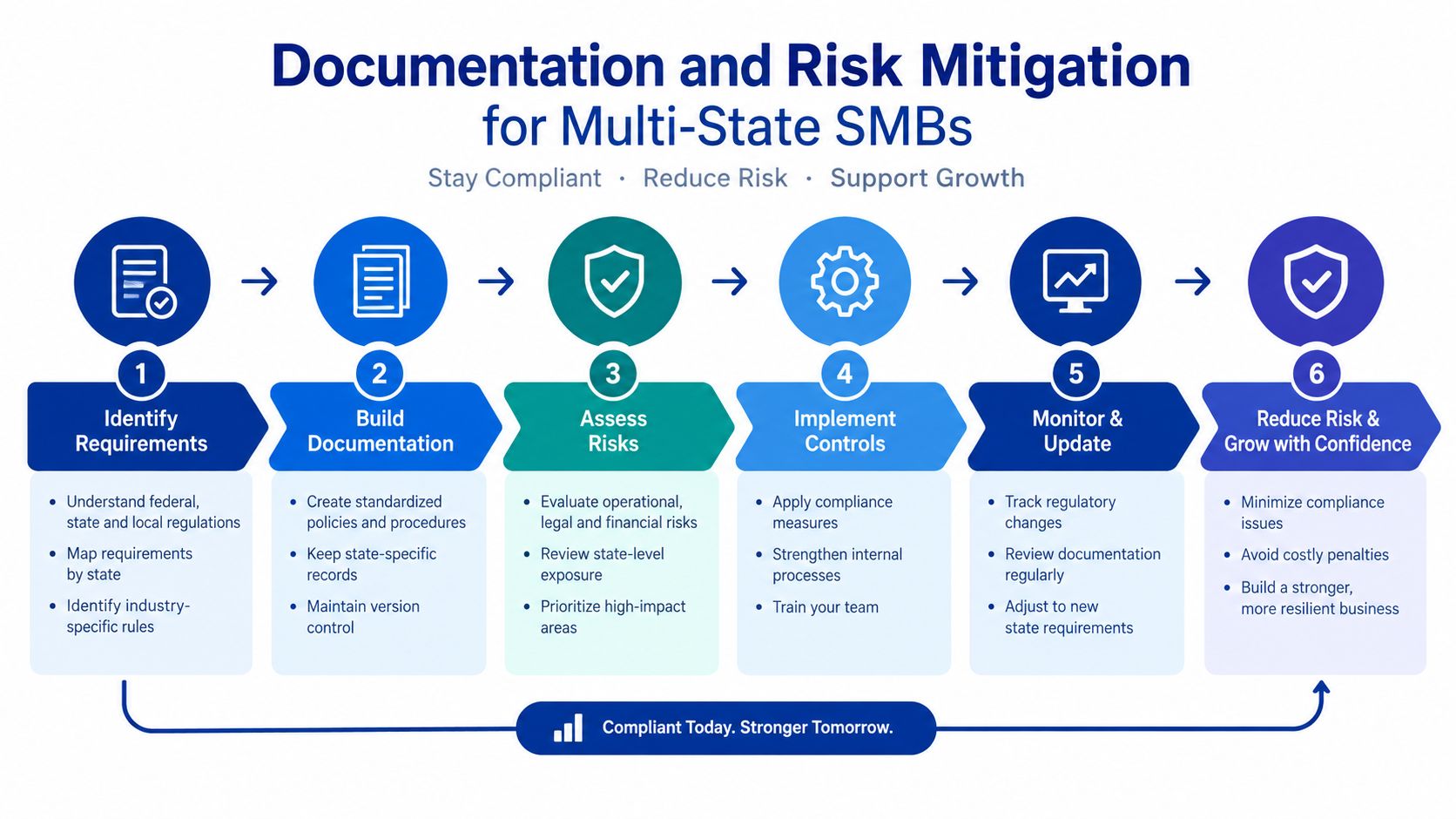
State rules change frequently enough that classification review belongs on the compliance calendar. Maintain a current state overlay and review it when a new employee is hired, a role moves, compensation changes, or a jurisdiction updates its wage-and-hour rules. The Paradigm International employee requirements resource can help leaders organize state-specific employment requirements, but it shouldn't substitute for reviewing the rule applicable to the role.
A defensible classification decision should stand on its own without relying on the memory of the manager who made it. Create a file for each role, not just each employee, then add employee-specific facts when duties or reporting lines differ.
The file should contain:
A useful job description might say that the employee “evaluates workflow exceptions, establishes operating procedures, and exercises independent judgment on significant service matters.” It should also state whether the employee processes tickets, enters orders, performs individual production work, or approves personnel actions. Specificity makes the classification easier to test against reality.
Review time records, organization charts, performance reviews, and manager observations. Ask the employee to describe a representative week, then compare that account with the written role. A job description that says “manages department operations” is weak evidence if performance reviews praise the employee primarily for clearing a production queue.
Use a recurring sample of exempt roles for review. A quarterly audit can examine a representative portion of the exempt population, with particular attention to roles near the salary floor, recently promoted employees, and hybrid positions. The exact sample should fit the size and risk profile of the business, but the process must be consistent.
Don't bury a classification concern in an HR ticket. Route it to the HR leader, finance, and the executive responsible for the function. If the role has been treated as exempt but the employee reports substantial routine work or untracked hours, preserve records and get qualified advice before changing payroll or discussing the issue with the employee.
The Paradigm International on documentation resource provides additional guidance for maintaining an organized employment record. Documentation doesn't make a weak classification lawful, but it exposes weaknesses early enough for leadership to correct them.
Use one workflow for every role, then add state-specific steps where needed. The sequence should be built into hiring, promotions, compensation planning, reorganizations, and role-change approvals.
Pause for advisory review when a role spans two exemption categories, the employee regularly crosses state lines, or a state threshold differs materially from the federal baseline. Escalate immediately if an audit or Department of Labor inquiry is active, or if the business may owe substantial back wages from a period when hours weren't tracked.
The framework also needs a pre-decision screen. Ask whether the employee performs routine queue work, whether supervisory authority is shared among several managers, whether compensation is close to the federal salary level, and whether the role has recently changed without a formal reclassification. These questions often reveal that the business is trying to preserve an old classification for a job that no longer exists in its original form.
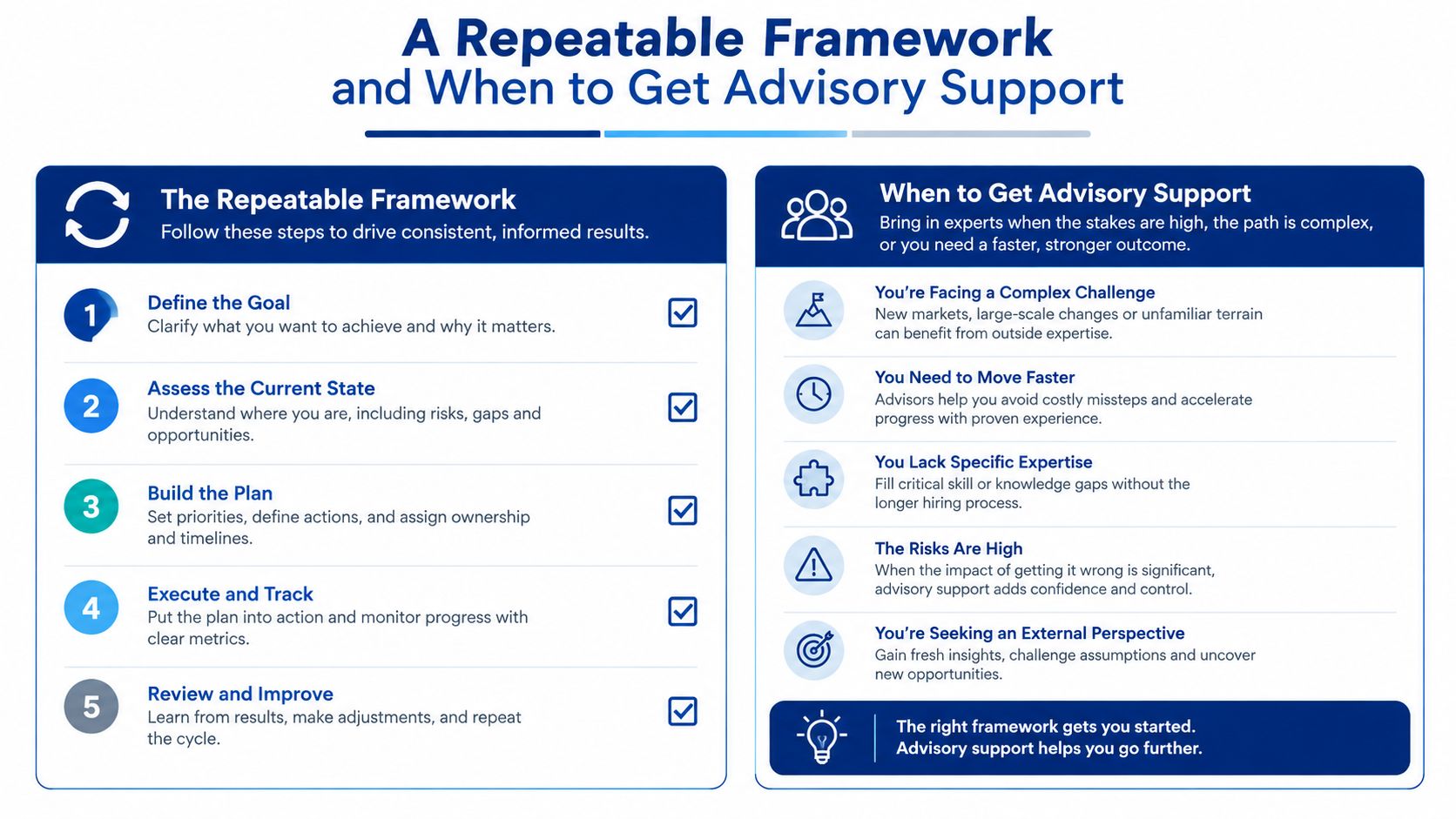
Advisory support should inform the judgment, not merely approve a decision already made. A qualified advisor can compare the job description, manager's account, and actual work records, identify state conflicts, and help leadership choose a payroll model that matches the role. For a specific classification decision or a broader multi-state review, Paradigm International Inc. offers HR risk and advisory support for leadership teams navigating employment decisions, documentation, and state-aware compliance. Visit the firm to discuss the role, the facts, and the review process needed to make the decision defensible.