When an employee raises a serious concern, the way you respond can define your company’s culture and protect it from significant risk. Handling these situations correctly isn't just an HR task; it's a critical leadership function. A well-conducted workplace investigation is a structured process that guarantees fairness, impartiality, and thoroughness. This guide provides a clear roadmap for navigating these complex situations with confidence.
A reactive approach to employee issues is a recipe for risk. Instead of scrambling when a complaint lands on your desk, successful leaders build a proactive framework grounded in consistency and clear principles. This approach transforms a daunting process into a manageable, structured part of your business operations. The goal is to reinforce your company’s values and protect its integrity.
The foundation of any defensible investigation rests on three core pillars: impartiality, thoroughness, and timeliness. Each one is crucial. If any of these are missing, the entire process can be undermined, exposing your business to unnecessary liability.
First, impartiality is non-negotiable. The investigator must be a neutral fact-finder, free from any conflict of interest or preconceived ideas about what happened. This means they cannot be the direct manager of either the person who made the complaint or the person responding to it, nor can they have a close personal relationship with anyone involved.
Next, thoroughness demands that you gather and analyze all relevant information. This goes beyond just talking to the primary parties. It means collecting documents, reviewing electronic communications like emails or Slack messages, and speaking with any witnesses who might have seen or heard something relevant.
Finally, timeliness is essential. An investigation needs to start promptly after a complaint is received and move forward without unreasonable delays. Procrastination can lead to lost evidence, fading memories, and the perception that the company is not taking the matter seriously. You can explore a detailed breakdown of the essential HR steps for workplace investigations to build a more robust process.
A well-conducted investigation is more than a procedural requirement; it is a powerful tool for demonstrating an organization's commitment to fairness. The process itself—making employees feel heard and respected—is often as important as the final outcome.
With employee relations issues on the rise, having a formal process is more critical than ever. According to recent data, a shocking 57% of organizations do not mandate a formal investigation process, creating a significant risk gap. A key piece of a defensible framework is solid training. You can discover how to implement powerful scenario-based training for investigation teams to prepare them for real-world complexities.
The first two days after an employee raises a concern are the most critical. Your response in this initial window sets the tone for the entire investigation and shows your team that you take their concerns seriously. This is your best chance to handle the situation with professionalism and build trust from the very first conversation.
Your immediate goal is to establish a safe and structured reporting environment. Whether an employee comes to a manager directly or uses an anonymous channel, your response must be consistent, empathetic, and organized. A rushed or dismissive intake can compromise the integrity of the process before it even starts.
The moment a complaint is made, the clock starts. Your first move is to listen without judgment and reassure the employee that coming forward was the right thing to do. This is not the time to offer opinions or make promises about the outcome. Your only job is to be a neutral, credible recipient of information.
Documenting the initial report correctly is absolutely essential. You need to capture the core details: who was involved, what allegedly happened, and the when and where of the incident(s). For a deeper dive into structuring this initial documentation, our guide on how to manage an employee complaint investigation is a great resource.
It's worth noting that incident reporting is at an all-time high, with web-based intake now outpacing traditional hotlines. Anonymous channels can boost reporting of sensitive issues from 42% to 72%. A solid system ensures you capture critical information early and gives employees the confidence they need to speak up.
With the initial report documented, it is time to triage. You must quickly assess the severity of the allegation to determine the appropriate response. An allegation of physical assault or unlawful harassment demands a far more immediate and intensive response than a complaint about a manager’s communication style.
This initial assessment will dictate the investigation's scope and timeline. It helps you figure out who needs to be involved, what potential evidence exists, and whether you need to take any interim steps to protect the people involved while the investigation is ongoing. The infographic below highlights the three foundational principles that must guide every step of your process.
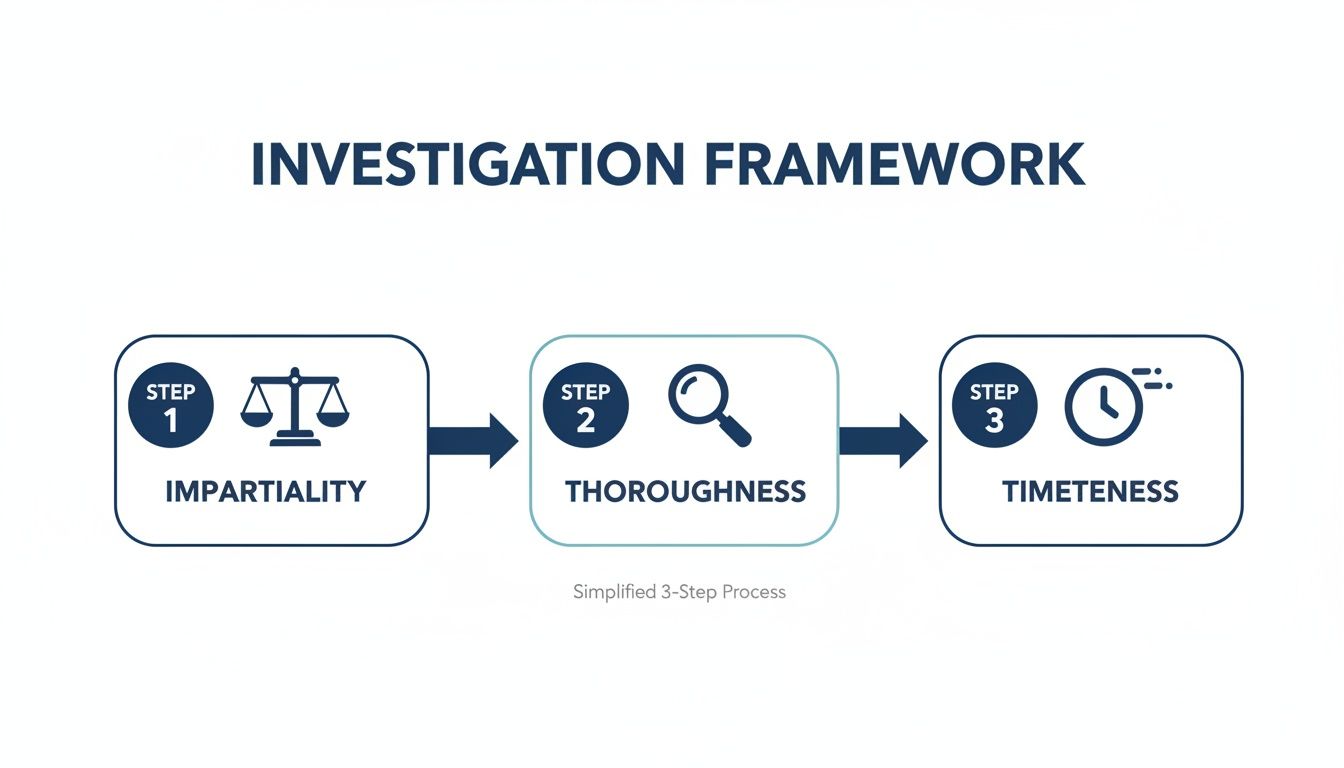
A legally defensible investigation is built on impartiality, thoroughness, and timeliness. You lay the groundwork for all three within these first 48 hours. To help you stay on track during this critical window, here is a checklist of immediate actions to take.
Following these steps methodically ensures you are building a solid, defensible foundation right from the start.
A critical part of your initial plan is to preserve all relevant evidence. You must take immediate steps to prevent key information from being deleted, altered, or lost.
Common sources of evidence to secure include:
Electronic Communications: Emails, internal chat logs (Slack, Teams), and text messages.
Physical Documents: Performance reviews, written warnings, personnel files, or handwritten notes.
Security Footage: Video from common areas that may have captured relevant events.
Access Logs: Digital or physical records showing who entered certain areas and when.
In some high-risk cases, you will need to implement interim measures. These are temporary, neutral actions taken to separate the involved parties, prevent interference, and stop any potential retaliation while the investigation proceeds.
Interim Measure Example: An employee alleges their direct manager is engaging in severe harassment. To protect the complainant, you might place the manager on paid administrative leave pending the outcome. This is not a punishment—it is a neutral step to safeguard the process.
These measures should be used thoughtfully and only when necessary. The decision should hinge on the seriousness of the allegations and the potential risk to your employees or the investigation itself. By carefully managing these first 48 hours, you create a solid foundation for a credible and conclusive investigation.
Witness interviews are the heart of any credible workplace investigation. This is where you move beyond the initial report and start piecing together what happened. Conducting these interviews well is a mix of structure, empathy, and objectivity. Your mission is to gather facts, make sure everyone feels heard, and protect the integrity of the process.
These conversations are a critical chance to show your commitment to fairness. According to the Workplace Bullying Institute, nearly half of U.S. workers have been affected by workplace bullying, either as a target or a witness. A thorough and respectful interview process is one of the best ways to restore trust and prove you are serious about creating a safe workplace.

Walking into an interview unprepared is the fastest way to get an unproductive conversation. Always have a clear outline of topics and a list of open-ended questions ready. You want to encourage detailed responses, not just simple "yes" or "no" answers.
Your questions also need to be tailored to the person you are speaking with. The way you approach the complainant will be different from how you talk to the respondent or a third-party witness.
For the Complainant: Focus on understanding the specific allegations. Ask them to walk you through events chronologically and identify any evidence or other people who might have relevant information.
For the Respondent: Clearly outline the allegations and give them a full opportunity to respond to every point. Get their side of the story and any evidence they believe is important.
For Witnesses: Keep the questions focused on what they personally saw or heard. It is crucial to steer them away from offering opinions or speculating about things they did not directly observe.
This targeted approach ensures you are gathering the most relevant information from each person, which is fundamental to conducting a solid workplace investigation.
The atmosphere you create is just as important as the questions you ask. Start every interview by explaining your role as a neutral fact-finder. Reassure them that the goal is a fair and thorough review, and stress the importance of confidentiality for protecting everyone involved.
Taking a moment to do this helps build rapport and can make employees feel more comfortable opening up. Being interviewed for an investigation is stressful, and a calm, professional demeanor can make a world of difference.
An investigator’s primary job is to listen. When employees feel genuinely heard and respected—regardless of their role in the complaint—they are more likely to provide the candid, detailed information needed to reach a fair conclusion.
Finally, explain that retaliation for participating in an investigation is strictly prohibited. This is a critical assurance that encourages honest cooperation, especially from witnesses who might fear getting involved.
During the interview, your most powerful tool is active listening. Pay close attention to what is being said without interrupting, and use follow-up questions to clarify details. Stay away from leading questions that suggest a desired answer. Instead of asking, "Was your manager aggressive?" try, "Can you describe your manager's tone and behavior during that meeting?"
Your note-taking must be just as disciplined—objective and factual. The goal is a clean record of the conversation, not your interpretation of it. Be sure to capture these key elements:
Direct Quotes: Use quotation marks for significant statements to capture the witness's exact words.
Factual Details: Document dates, times, locations, and the names of anyone else present.
Observed Demeanor: Note objective observations (e.g., "The witness became tearful when recounting the event") but avoid subjective judgments (e.g., "The witness seemed to be lying").
Accurate notes are the foundation of your final analysis. You might consider using the best transcription software for interviews to create a perfect record. This documentation becomes a permanent part of the official investigation file.
Once the interviews are done, you have reached the most critical phase of the investigation. This is where you shift from a fact-finder to an analyst. Your job is to meticulously piece everything together to arrive at a conclusion that is both well-reasoned and legally defensible. This is not about finding someone "guilty" or "innocent"; it is about determining what, more likely than not, actually happened.
The standard used in workplace investigations is called the preponderance of the evidence. This legal term simply means you must decide if it is more likely than not that the alleged conduct occurred, based on everything you have gathered. We are not aiming for the "beyond a reasonable doubt" standard of a criminal trial.
Not all testimony holds the same weight, and a huge part of your analysis is assessing the credibility of each person involved. This is not a gut feeling; it is a structured evaluation based on objective factors. This ensures your findings are fair and can stand up to scrutiny.
When weighing credibility, consider these factors for each witness:
Consistency: Does their story align with what they said earlier and with other credible evidence?
Plausibility: Does the account make logical sense on its face?
Motive to Misrepresent: Is there any reason this person might be untruthful, such as a history of conflict with the respondent?
Corroboration: Can you back up their testimony with other witnesses, documents, or physical evidence?
Demeanor: While it is the least reliable factor, a witness’s demeanor can sometimes add context. Be careful not to make it the sole basis for a credibility finding.
This systematic approach is one of the pillars of a defensible investigation. For more on this, our guide on HR investigation best practices breaks it all down.
It is almost a given that the complainant and respondent will have different versions of events. In a "he said, she said" scenario with no direct proof, your credibility assessment becomes everything. You must carefully document why you found one person’s account more credible than the other.
For example, you might find the complainant's story more believable because parts of it were backed up by another witness. Or perhaps the respondent's timeline is directly contradicted by email timestamps.
In the absence of definitive proof, the strength of your conclusion rests entirely on the quality of your analysis. Document your reasoning clearly, explaining how you weighed conflicting evidence and why you found certain accounts more plausible.
Sometimes, the evidence is truly inconclusive. If you cannot determine by a preponderance of the evidence that the conduct occurred, that is a valid finding. Your report should simply state the allegation could not be substantiated. It is always better to have an "unsubstantiated" finding than to force a conclusion not supported by the facts.
Finally, your findings need to directly address each of the original allegations. Avoid broad, sweeping statements. For each specific claim, you must state whether it was substantiated, not substantiated, or inconclusive, and explain why based on your analysis.
Your written findings should connect the dots for anyone who reads the report, clearly linking the evidence to the conclusion you reached. This clarity is essential, as lawsuits often pivot from the initial complaint to allegations that the employer failed to conduct a proper investigation. A well-reasoned, evidence-based finding is your best defense.
An investigation is not over when you have finished the last interview. What you do next is just as critical. How you document your findings, decide on consequences, and communicate the results will define the entire process. This final phase is about closing the loop responsibly and ensuring the resolution is fair and consistent.
Getting this part right reinforces your company's commitment to a safe and respectful workplace. If you fumble the conclusion, you risk undoing all your hard work and leaving employees feeling that their concerns were ignored.
The final investigation report is your official, permanent record. Think of it as the definitive story of the complaint, the steps you took, the evidence you found, and the conclusion you reached. This document must be clear, objective, and detailed enough to stand on its own if reviewed months or years from now.
Your report should be structured to tell that story logically, from start to finish. This is not the place for personal opinions or hunches—stick strictly to the facts and your analytical reasoning.
A strong investigation report doesn't just state a conclusion; it shows the work. It methodically connects the evidence to the findings, creating a defensible record that demonstrates a fair, thorough, and impartial process.
To ensure your report is both comprehensive and defensible, it needs to include several key sections. The table below breaks down the essential components that every solid investigation report should have.
Following this structure helps ensure anyone reading the report can easily follow your process and understand exactly how you arrived at your decision.
If you have substantiated an allegation of misconduct, you must take prompt and effective remedial action. This is any step taken to correct the behavior and prevent it from happening again. Crucially, the action must be proportionate to the misconduct and consistent with how you have handled similar situations in the past.
Consistency is key. Applying discipline unevenly is one of the fastest ways for an employer to face a claim of discrimination or unfair treatment. Remedial actions can vary widely based on the specifics of the case.
Common options include:
Coaching or Training: For less severe policy violations, targeted coaching or training can be an effective solution.
Written Warning: A formal disciplinary action that documents the misconduct and outlines expectations for future behavior.
Performance Improvement Plan (PIP): A structured plan to address behavioral issues with clear goals and consequences.
Suspension: A temporary removal from the workplace, which may be paid or unpaid depending on company policy.
Termination: For the most severe misconduct, such as unlawful harassment or violence, termination is often the appropriate outcome.
The goal is always twofold: stop the misconduct now and prevent it from recurring. Whatever action you choose should be reasonably calculated to achieve both.
Once a final decision is made, it is time to communicate with the people involved. You should meet separately with the complainant and the respondent to let them know the investigation is officially closed.
When speaking with the complainant, thank them for raising their concerns and reassure them that the matter was taken seriously. While you are not obligated to share specific disciplinary details, you should confirm that appropriate action has been taken to address the situation.
For the respondent, be direct and professional. Clearly communicate the findings and explain any remedial action being taken. As with all these conversations, ensure the discussion is well-documented. Finally, it is vital to monitor the situation to prevent any form of retaliation against the complainant or any witnesses.
Running a workplace investigation can be challenging, even for seasoned leaders. While a solid framework helps, every situation presents unique questions. This section tackles some of the most common issues that business owners and HR leaders face, providing clear, direct answers to help you handle tricky situations with confidence.
The credibility of your investigation rests on who you choose to lead it. The investigator must be impartial, well-trained, and objective. They cannot have a personal stake in the outcome or a close relationship with anyone involved.
For many day-to-day issues, a senior HR leader is a good choice. However, when allegations are highly sensitive or involve senior leadership, it is best to bring in an external consultant or legal counsel. Using an impartial third party removes any perception of bias and protects the integrity of the process.
A critical mistake is assigning the direct manager of either the complainant or the respondent to investigate. This creates an immediate conflict of interest that undermines the entire process, no matter how well it is handled from that point on.
There is no magic number for how long an investigation should last. The guiding principle is timeliness. An investigation must start promptly and move forward without unreasonable delays. A reasonable timeframe can be anywhere from a few days to a few weeks, depending on the complexity of the case. The goal is always thoroughness, not speed.
If you encounter an unavoidable delay, such as a key witness being on vacation, be sure to document the reason. It is also a good practice to keep the complainant informed that the process is still moving forward.
Confidentiality is the backbone of a good investigation, but it can never be absolute. You must be clear with everyone involved about what "confidentiality" means in this context. Instruct all participants that the details should not become workplace gossip. This is vital for protecting the integrity of the process and minimizing the risk of retaliation.
At the same time, explain that you cannot promise 100% confidentiality. Make it clear that information will be shared on a strict "need-to-know" basis with people like senior leaders or legal counsel who are essential to making an informed decision.
Even with the best intentions, it is easy to make mistakes. Knowing the common pitfalls is the first step to ensuring your process is legally defensible and fair.
Here are some of the most critical errors to watch out for:
Delaying the start: Procrastinating sends a message that the complaint is not a priority and allows evidence to disappear.
Choosing a biased investigator: This is the fastest way to have your findings discredited.
Failing to document everything: Your notes and final report are proof of a fair process. If it is not written down, it did not happen.
Jumping to conclusions: Every finding must be tied directly to the evidence, not gut feelings or assumptions.
Perhaps the biggest mistake of all is failing to follow up. This could mean not taking appropriate remedial action or, just as seriously, failing to protect the complainant from retaliation. A retaliation claim can easily create more legal trouble for a company than the original complaint.
Handling high-stakes employee issues demands more than a checklist; it requires sound judgment and a defensible strategy. When complex investigations arise, having an expert partner can make all the difference. An advisory-first approach can provide the guidance needed to manage risk and ensure your HR practices are both consistent and fair.
To learn more about strengthening your investigation framework and protecting your organization, explore how an experienced advisory partner at https://paradigmie.com can help.