
A new hire's first day is more than just a formality—it sets the tone for their entire journey with your company. An effective new employee orientation is not a checklist of paperwork, but a strategic tool that impacts retention, productivity, and compliance. It is your first and best opportunity to build a foundation of trust and inspire new hires to connect with your mission.
A well-designed orientation program is one of the most effective tools a business has for securing long-term commitment. In the past, orientation was often treated like an administrative chore—a day filled with forms, handbooks, and dry policy reviews. Today, smart leaders recognize it as the true starting point for employee engagement and a critical step in building a strong, cohesive team.

From the moment a new hire arrives, they are evaluating whether they made the right decision. A positive initial experience confirms their choice, reduces anxiety, and sets clear expectations for their role and your culture. For any business, this structured introduction is essential for establishing compliant and consistent practices from the start.
The first few weeks on the job are a critical period. When an orientation program is ineffective, the consequences appear quickly. Research shows that 70% of new hires decide if a job is a good long-term fit within their first month. More importantly, 29% make that decision within the first week.
This tight timeline highlights the realistic window a company has to demonstrate its commitment to a new employee's success. You can explore more of these crucial onboarding statistics to understand the importance of this initial period.
A strong start also leads to faster productivity. When orientation effectively covers the necessary tools, processes, and key contacts, new hires can begin contributing meaningfully much sooner. This acceleration benefits the entire team and delivers a quicker return on your hiring investment.
Beyond engagement, a formal new employee orientation is a critical risk management function. It provides a structured opportunity to address essential legal and safety requirements. This is your chance to ensure every employee understands their rights and responsibilities from day one.
Key compliance areas to cover in orientation include:
A consistent program ensures every new team member receives the same core information, creating a standard that is easy to defend across the organization. By treating orientation as a strategic function, you transform it from a procedural task into a powerful tool for building a resilient and committed workforce.
Ready to build a stronger foundation for your team? We can help you design an orientation program that aligns with your goals. Contact us to learn more.
An effective new employee orientation is a structured, repeatable process, not just a warm welcome. This approach is about more than just organization; it builds a legally defensible foundation that ensures every new hire receives the same critical information. A solid plan balances essential compliance tasks with the important goal of immersing new hires in your culture.

The effort to build a structured program pays significant dividends. Companies with a strong onboarding process can improve new hire retention by 82% and boost productivity by over 70%. These statistics confirm that a methodical approach is a true strategic advantage, not just an administrative task. Let's break down how to structure this framework.
To design a comprehensive program, it is helpful to organize it into clear categories. This table outlines the essential elements you will need to cover, from administrative tasks to more strategic goals.
Using this structure helps ensure you are not just checking boxes but building a well-rounded experience that sets your new hire up for long-term success.
The orientation experience should begin before your new hire's first day. Proactive communication is one of the easiest ways to reduce anxiety and demonstrate professionalism. It allows you to handle logistics in advance so Day One can focus on connection and culture, not paperwork.
A few simple steps can make a significant difference. About a week before their start date, send a welcome email containing practical information. This is your chance to build excitement while managing expectations.
Your pre-arrival communication should include:
The first day is your best opportunity to make a lasting positive impression. The goal is to balance necessary administrative tasks with genuine human interaction. While compliance is non-negotiable, it should not overshadow the welcoming experience.
A well-planned first day should feel organized but not robotic. New hires receive a large amount of information, so breaking the day into manageable segments is essential. The focus should be on making them feel comfortable, informed, and connected to their new team. The primary objective is simple: ensure your new hire leaves feeling confident they made the right choice.
Properly managing new hire documentation is the backbone of a compliant orientation program. This involves more than just collecting signatures; it means ensuring every form is completed accurately and understood by the employee. Mistakes in this area can create significant legal and financial issues down the road.
Two of the most critical documents are the Form I-9 and the employee handbook acknowledgment. The Form I-9 has strict timelines and requires a careful review of identity and employment authorization documents. The handbook acknowledgment confirms the employee has received and understands your company policies. Our guide offers a detailed employee handbook checklist to ensure you have covered all your bases.
For companies looking to build out a more robust program, detailed documentation is key. There are excellent resources available that show you how to create effective training manuals to support new hires.
Orientation extends beyond the first day. The entire first week should be a thoughtfully planned process, shifting from broad company overviews to role-specific training and team integration. The focus moves from administrative checklists to practical application and building relationships.
Schedule dedicated time for training on key systems, introductions to stakeholders, and initial goal-setting with their manager. Assigning a small, manageable first task can help new hires feel productive right away. This structured approach reinforces Day One information and builds momentum for the weeks ahead.
While HR builds the orientation framework, the direct manager truly brings it to life. A manager’s active involvement is what transforms a standard process into a personalized, impactful welcome. Their participation often determines how quickly a new hire feels like part of the team and starts contributing effectively.
A manager’s engagement sends a powerful message: "You are a valued member of this team." Research supports this, showing that when a manager takes an active role in onboarding, employees are over three times more likely to be satisfied with their experience. This early success builds a strong foundation for performance and loyalty.
The manager's work begins before the new hire arrives. Thoughtful preparation can eliminate first-day confusion and create a smooth, welcoming impression. This proactive approach shows the new hire they were expected and that their arrival is a priority.
Key tasks for a manager before day one include:
A clean desk, a working computer, and a pre-scheduled welcome meeting may seem like small details, but they communicate a high level of organization and respect.
The first week is all about connection and clarification. The manager’s main responsibility is to bridge the gap between general company orientation and the specific realities of the new hire’s team. This is where broad company policies are translated into daily workflows.
Active guidance during this period helps ground the new employee and accelerates their integration. It is the perfect time to introduce them to how the team communicates, what the key priorities are, and who the go-to people are for different tasks.
Key actions for the first week include:
A manager’s responsibility continues after the first week. The transition from formal orientation to full productivity is a gradual process that requires consistent support. Regular, structured check-ins are crucial for maintaining momentum and addressing any challenges early on.
These follow-up conversations show you are invested in their success and create a space for open dialogue. This is where real coaching and development begin, solidifying the manager-employee relationship. These meetings should focus on their progress, any roadblocks they are facing, and their connection to the team.
Building a strong team starts with a strong beginning. If you're looking to empower your managers and create a more effective orientation experience, we can help. Let's connect to discuss your goals.
A well-structured agenda is the backbone of any great orientation program. It transforms your goals into a practical, day-by-day plan that balances essential information with opportunities for your new hire to connect with the team. The key is to deliver information in a logical flow, ensuring new hires feel supported, not overwhelmed.
A thoughtfully sequenced agenda helps you cover all necessary operational, cultural, and compliance topics in a way that builds confidence. The manager’s role is central to this timeline, guiding the new hire from pre-arrival preparations through their crucial first few weeks.
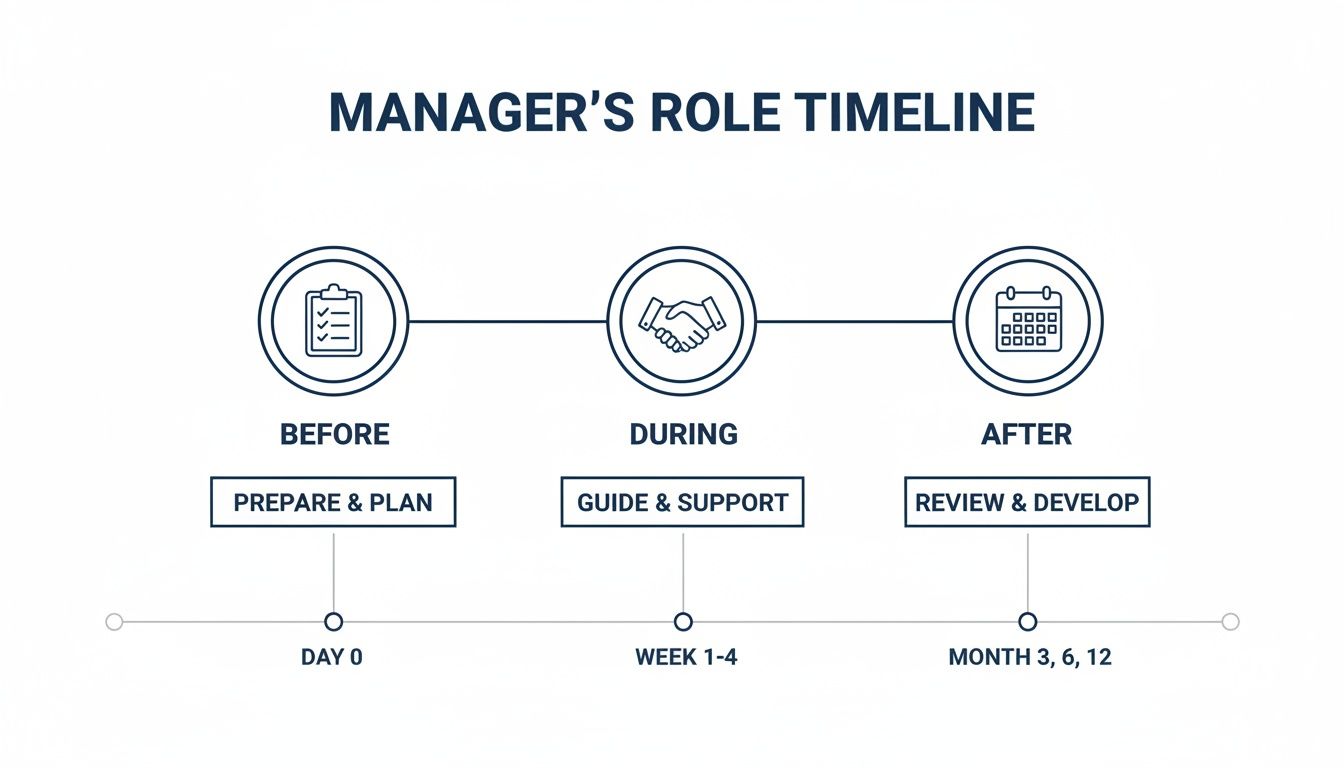
As you can see, a manager's active involvement before, during, and after the formal orientation creates a seamless, supportive experience for their new team member.
The goal of day one is not to teach a new hire everything about their job. It is to make them feel genuinely welcome and clear on what comes next. Your agenda should be light on dense, technical details and heavy on cultural immersion and essential logistics.
Start the day with a warm, personal welcome from their direct manager to begin building rapport immediately. From there, stick to the basics: a tour of the workplace, introductions to the immediate team, and setting up their workstation. A high-level overview of the company's mission and values will help them see the bigger picture they are now a part of. A new hire will remember how they felt far more than the specifics of every policy.
With the initial welcome complete, the first week is about building momentum. The agenda should expand to cover more role-specific information, introduce key team workflows, and clarify performance expectations. This is the perfect time to review handbook policies that directly impact their day-to-day work.
A well-rounded first-week agenda should include:
To ensure all bases are covered, it is helpful to use a detailed guide like this sample new hire checklist that outlines key tasks for both managers and HR.
To provide a clearer picture, here is a sample agenda for an effective first week. Consider this a template you can adapt to fit your company's specific needs and culture.
This structure ensures you cover the essentials without overwhelming your new hire, setting a positive and productive tone for their entire first week.
The orientation process evolves after the first week. The first month is about transitioning the new employee from a guided orientation to full integration within their team. The "agenda" for this period becomes less about formal sessions and more about structured check-ins and goal setting.
During this time, the manager should work with the new hire to set initial 30-day goals, providing a clear benchmark for success. Regular check-ins become crucial for monitoring progress, offering coaching, and clearing any roadblocks. It is also the perfect time to introduce them to cross-functional partners and projects.
If your business operates in multiple states, your orientation agenda must account for state- and city-specific compliance requirements. These local rules often go far beyond federal law. For example, some states mandate specific training on topics like harassment prevention.
The best approach is to build these specific modules directly into your agenda. Schedule dedicated time during the first week to cover these localized policies, making sure the new hire understands the rules that apply directly to their work location. This proactive step demonstrates a commitment to compliance and protects your business from potential penalties.
A manual, paper-heavy orientation process can be slow, inconsistent, and inefficient. Modern tools can transform orientation from a paperwork marathon into a scalable, measurable system that works better for everyone. Technology is not just a convenience; it is how you create a seamless experience that you can improve over time.
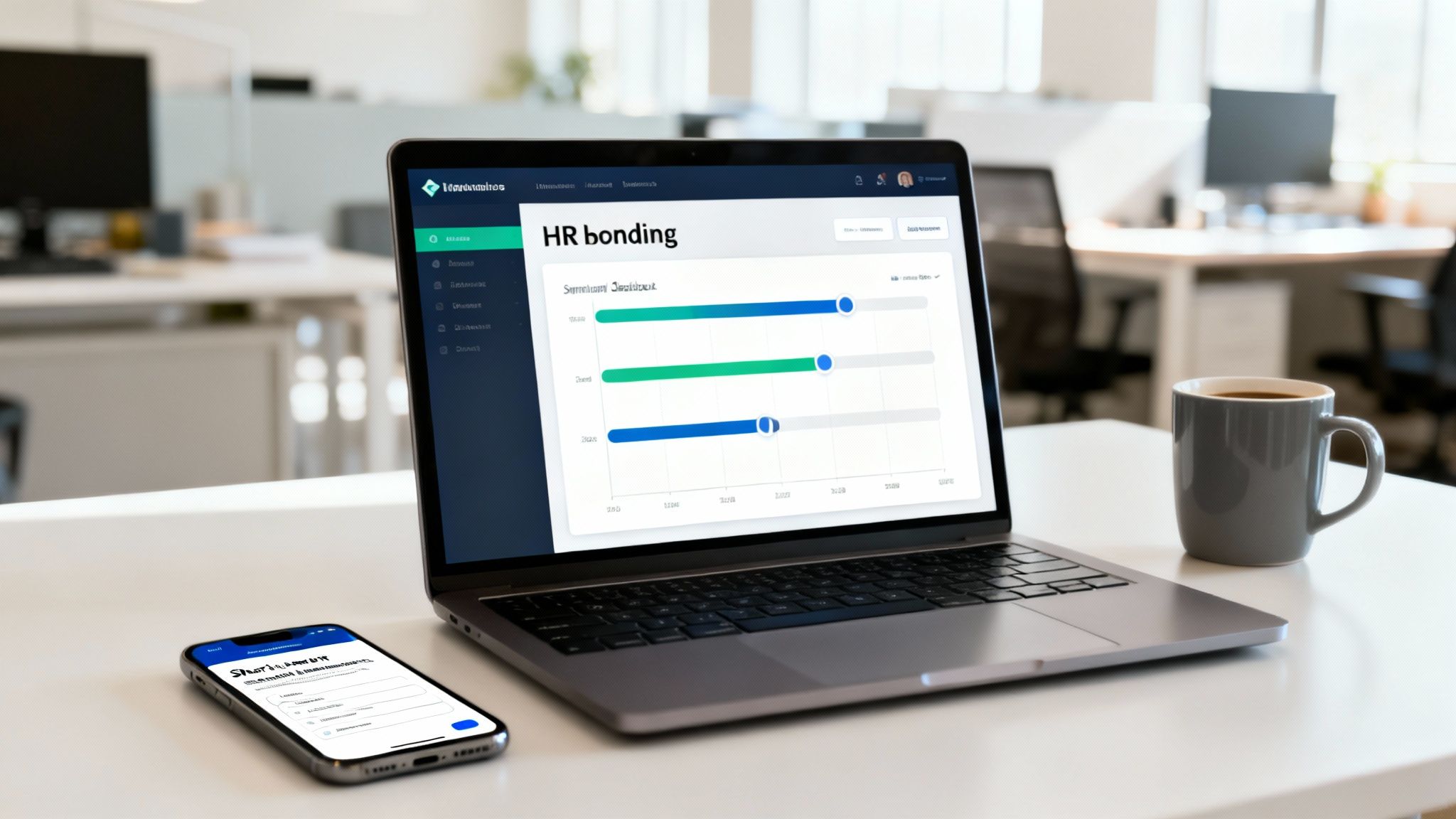
Even a simple HR platform can automate the most tedious orientation tasks. Sending a new hire a link to their welcome packet allows them to complete forms like the I-9 and W-4 before their first day. This one change transforms Day One from signing forms to meeting the team and absorbing the company culture.
The real power of technology in orientation is consistency. An automated workflow ensures every new hire receives the same core experience, reducing missed steps or forgotten meetings. From pre-arrival information to scheduled check-ins, everyone is on the same page, which is essential for both fairness and compliance.
A basic HR Information System (HRIS), for example, can handle the heavy lifting for you:
To take it a step further, consider leveraging chatbots in HR to answer common questions instantly. This frees up your HR team to focus on the human side of onboarding.
Without data, improving your orientation program is just guesswork. Technology makes gathering feedback and performance data simple, giving you the numbers you need to demonstrate what is working. The goal is to connect your orientation efforts directly to business outcomes, proving the program's ROI and securing ongoing support.
Start by tracking a few key performance indicators (KPIs) that tell a clear story. These metrics will provide a baseline to measure against as you make improvements.
Your data needs to answer three simple but powerful questions: Are our new hires satisfied? Are they becoming productive quickly? And are they staying with the company?
Here are the essential metrics you should be tracking:
Analyzing this data will reveal patterns that show you exactly where to focus your improvement efforts. You can learn more about unlocking the potential of HR analytics to make even smarter, data-driven decisions.
A well-designed new employee orientation is one of the smartest investments you can make in your company's future. It is the foundation for better retention, lower compliance risk, and a more engaged workforce from the very first day. This is your chance to make the difference between an employee feeling like an outsider and feeling like a key part of the team.
By moving orientation beyond a simple administrative checklist, you create a powerful and lasting advantage. It is your opportunity to reinforce your culture, clarify expectations, and demonstrate your commitment to your people’s success. This is how you turn a good hire into a great, long-term team member.
Navigating the complexities of compliance, engagement, and training is always easier with an expert partner. A strong orientation sets the stage for everything that follows, helping you build a more stable and high-performing team.
If you're ready to strengthen your team by building a better new employee orientation, we're here to help you lay the groundwork. Learn more about how we can support your goals by contacting us today.
Even with the best framework, questions often arise when building a new employee orientation program. Here are some of the most common ones we hear from business leaders, covering everything from timing to common mistakes. Getting these details right helps you fine-tune your approach.
While the formal part of a new employee orientation might last a day or a week, the true process is a 90-day journey. The first few days are ideal for handling compliance essentials, introducing company culture, and covering core knowledge.
The following weeks are just as critical. This period should include structured check-ins with managers, setting initial performance goals, and activities to integrate the new hire into their team. Spreading the process out prevents information overload and sets your new employee up for long-term success.
The single biggest mistake is treating orientation like a one-day paperwork drill. When the entire focus is on signing forms and reviewing a policy manual, you miss the opportunity to build connections and share cultural norms. A purely transactional approach can leave new hires feeling like a number, not a valued part of the team.
A great program seamlessly blends necessary compliance tasks with genuine cultural immersion. The goal is not just to inform but to inspire, making it clear from day one that you are invested in the employee's growth.
With remote hires, creating a strong sense of connection is essential. You must be intentional in your actions to replicate the support of an in-office experience and ensure they feel included.
To build an effective remote orientation, focus on these key steps:
At Paradigm International Inc., we help business leaders build defensible HR frameworks that support their teams and protect their organizations. If you're ready to strengthen your orientation process and ensure your new hires start on solid ground, we're here to help.
Find out how our advisory services can support your goals by visiting us at: https://paradigmie.com/contact