
If you're weighing a richer package for a senior hire, trying to keep a long-tenured operator through a sale, or dealing with executives who have already maxed out standard retirement options, a non qualified plan probably sits somewhere on your list. The problem is that most explanations stop at “tax deferral” and “executive benefit.” That's not enough for a CEO or HR leader making a real risk decision.
Used well, these plans can support retention, succession, and compensation strategy. Used casually, they can create tax exposure, deal friction in an acquisition, and governance problems that don't show up until someone leaves, the company restructures, or a state payroll issue surfaces.
A non qualified plan is a selective compensation arrangement, usually offered to executives or other key employees, that sits outside the normal framework for qualified retirement plans like a 401(k). Think of a 401(k) as a public road with fixed rules for everyone who qualifies. A non-qualified arrangement is closer to a private agreement. The employer has more discretion over who gets it, how much can be deferred, when it vests, and when it pays out.
That flexibility is the main reason these plans exist.
For many leadership teams, the issue starts with limits inside qualified plans. For 2026, the 401(k) contribution limit is $24,500, according to ADP's overview of non-qualified retirement plans. A senior executive who wants to defer more compensation than that limit allows may see a standard plan as useful, but insufficient.
A non qualified plan gives an employer room to solve a specific business problem, such as:
A lot of small and mid-sized businesses reach this point after their broader benefits package is already in place. The standard offering covers the workforce, but it doesn't fully address the needs of a select leadership group. If that sounds familiar, it helps to think about this decision alongside the broader design of your small business benefits packages.
Practical rule: A non qualified plan should solve a defined leadership problem. If you can't say exactly which retention, succession, or compensation issue it addresses, the plan usually isn't ready to launch.
It isn't a substitute for a sound qualified plan. It also isn't “free flexibility.” The company gets more design freedom, but the participant usually takes on more risk because the deferred amount is typically an employer promise rather than a protected retirement asset.
That distinction matters. A non qualified plan can be a sharp tool, but it works best when leadership treats it as part of total compensation strategy, not as an informal perk for a favored employee.
The easiest way to assess a non qualified plan is to compare it with the structure you already know. The terms sound similar, but the trade-offs are very different.
Qualified plans are built for broad employee participation and strict compliance. Non-qualified arrangements are built for selectivity and flexibility. That difference can be useful, but it changes the risk profile immediately.
| Feature | Qualified Plan (e.g., 401(k)) | Non-Qualified Plan (NQDC) |
|---|---|---|
| Participation | Generally broad-based | Select group of executives or key employees |
| Contribution limits | Subject to IRS caps | Not subject to the same IRS deferral limits |
| ERISA framework | Within qualified-plan rules | Outside many qualified-plan rules |
| Nondiscrimination testing | Typically required | Selective design allows targeted participation |
| Design flexibility | More standardized | Employer has more discretion on vesting and payouts |
| Funding and protection | Stronger protection than an unsecured employer promise | Typically an unfunded general corporate obligation |
| Insolvency risk | Participants have stronger ERISA protections | Participants become general creditors if the employer becomes insolvent |
The biggest strategic advantage is obvious. An employer can target high-value talent without having to extend the same arrangement broadly across the workforce.
The biggest legal and financial drawback is just as clear. John Hancock notes that non-qualified plans can be designed outside many ERISA requirements, including funding and fiduciary rules, but the deferred amount remains a general unsecured corporate obligation, meaning participants become creditors if the employer becomes insolvent in its explanation of what a nonqualified plan is.
If you're a CEO, this isn't just a benefits question. It's also a balance-sheet and governance question.
Here is where leaders often misread the structure:
When owners say, “We want something like a 401(k) for just our top people,” the better response is, “You can create a selective benefit, but you can't assume the same protections.”
Before approving a non qualified plan, ask three direct questions:
If those answers are vague, the plan design usually is too.
Not every non qualified plan does the same job. The right structure depends on what you're trying to accomplish and what kind of commitment the company is prepared to make.
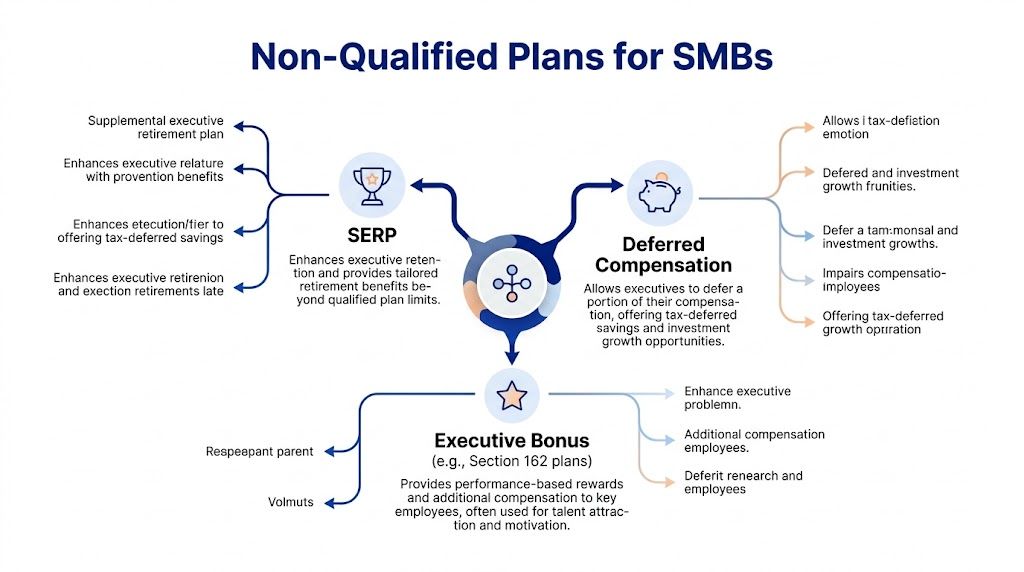
This is the form most leaders picture first. The employee elects to defer a portion of compensation, and the company agrees to pay it later under the plan terms.
This structure often fits a business with a strong executive team and a need to keep a few critical people in place over time. It can also help when a candidate wants more long-term upside but the company doesn't want to increase current cash compensation in the same way.
A compensation advisor can help determine whether deferred compensation belongs in the package at all, or whether another tool would be cleaner for the business. That's where a seasoned compensation consultant can add value.
A Supplemental Executive Retirement Plan, or SERP, is usually employer-driven. Instead of relying mainly on employee deferrals, the company promises an additional retirement benefit to a senior leader.
A SERP is often useful when the company wants to reward a specific executive with a customized retirement benefit. For example, a founder-owned business may use one for a COO who has carried operational risk for years and is central to succession planning.
A SERP works best when the company wants to make a deliberate promise to one or two leaders, not when it wants a loosely defined executive perk.
Some SMBs want leaders to think like owners without giving away actual equity. A phantom stock arrangement can tie value to company performance or enterprise growth while keeping control with the current owners.
This can be attractive in privately held companies where ownership dilution is a nonstarter. It can also fit a business preparing for a future sale and trying to align management with long-term value creation.
Sometimes the business problem isn't retirement income. It's simpler. The owner wants to reward a leader, create a future payment tied to service or performance, and avoid redesigning the full ownership structure.
In those cases, an executive bonus or similar selective arrangement may be more practical than a classic deferral plan.
The mistake is choosing a vehicle because the label sounds familiar. Match the structure to the business need:
A non qualified plan should fit the company's ownership strategy, cash flow, and succession posture. If it doesn't, the plan usually becomes harder to explain, harder to administer, and harder to defend later.
Most executives hear “deferred compensation” and focus on delayed taxation. That's understandable, but incomplete. The tax benefit only works if the arrangement complies with Section 409A.
That point gets missed far too often. Rippling notes that many articles explain that NQDC plans let employees defer taxes, but fail to emphasize that this only works if the plan complies with Section 409A. Failure can trigger immediate income inclusion and substantial penalties for the participant in its guide to non-qualified deferred compensation plans.

In practice, Section 409A problems often begin with casual decision-making. Someone promises a special payout to a leader, a side letter gets drafted, or payment timing changes after the original arrangement is set.
Those moves can feel harmless in the moment. They aren't.
A compliant non qualified plan needs disciplined documentation and administration around a few core points:
The employee often bears the direct tax pain if the plan fails. But employers shouldn't take comfort in that.
When a non qualified plan blows up under 409A, the business usually absorbs the reputational damage, employee relations fallout, and internal blame. The failure tells your leadership team that the company offered a complex benefit without the infrastructure to manage it.
For organizations with internationally mobile leaders or leaders comparing tax strategies across jurisdictions, broader tax planning context can also help frame the conversation. A practical example from outside the U.S. appears in this guide on managing top bracket tax liabilities in Australia. The tax system is different, but the underlying lesson is familiar. Deferral and planning only help when structure and compliance are handled correctly.
A non qualified plan isn't “set it and forget it.” It needs the same discipline you'd apply to an employment contract, a severance agreement, or any other high-stakes executive obligation.
The hardest part of a non qualified plan isn't explaining it at signing. It's managing what happens when the company hits stress.
That stress may come from a buyer's diligence process, a refinancing, a restructuring, or a downturn that makes old compensation promises feel more expensive. At that point, the plan stops being an executive benefit and starts looking like a corporate liability.
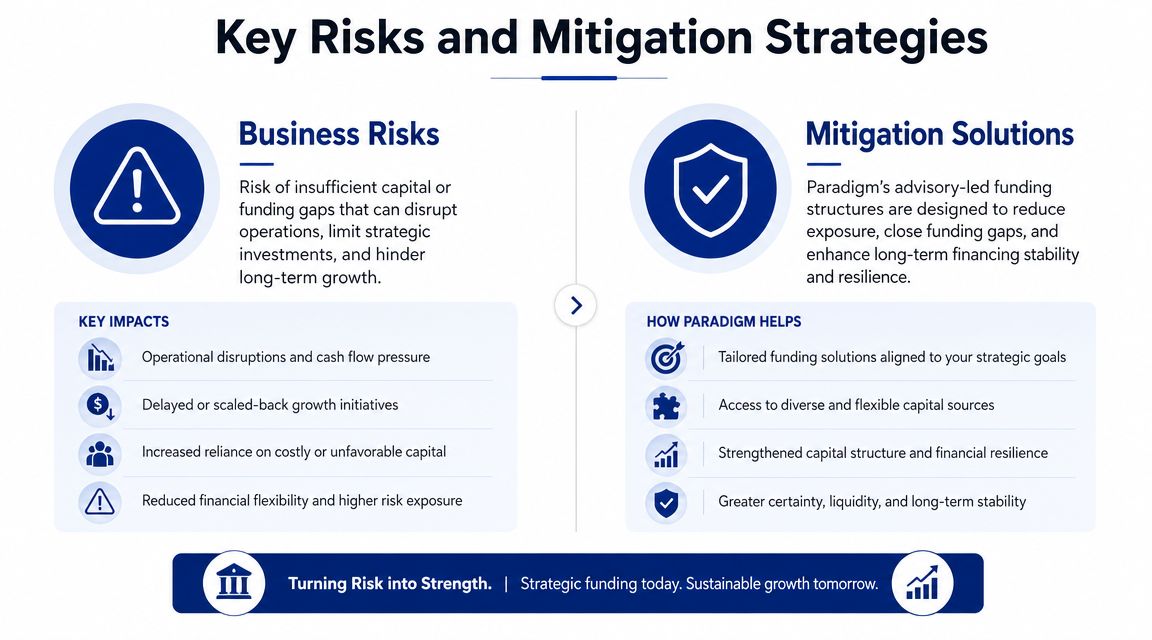
This is the risk many generic explainers mention but don't unpack. Meridian notes that when a company is sold or restructured, participants rank as general creditors, and their benefits can be cut back, delayed, or lost if the employer's balance sheet deteriorates in its discussion of nonqualified deferred compensation.
That matters in practical terms because buyers and lenders don't evaluate these promises emotionally. They evaluate them as obligations.
A buyer may ask:
Each question affects valuation, negotiation power, and post-close integration.
No mitigation strategy removes every risk, but some steps make the arrangement more manageable.
A business in a regulated or high-control environment should also evaluate these obligations through the same lens it uses for other sensitive exposures. This overview of financial risk for regulated environments is useful because it reinforces a broader point. Risk isn't just the existence of an obligation. It's the absence of a disciplined control framework around it.
If a plan creates confusion in diligence, it has already reduced some of its strategic value.
What works is a documented promise tied to a real business objective, with terms the company can live with under ordinary operations and under transaction pressure.
What doesn't work is treating a non qualified plan like a private handshake with tax benefits. That's how leaders end up discovering the actual terms of the arrangement in the middle of a deal, when their bargaining power is weakest.
For a single-state business with one or two participants, a non qualified plan can still be complex. For a multi-state employer, complexity increases fast because administration, withholding, documentation, and executive treatment have to stay consistent across locations and entities.
The biggest implementation mistake isn't picking the wrong plan type. It's letting the plan evolve into a series of custom promises handled differently by different people.
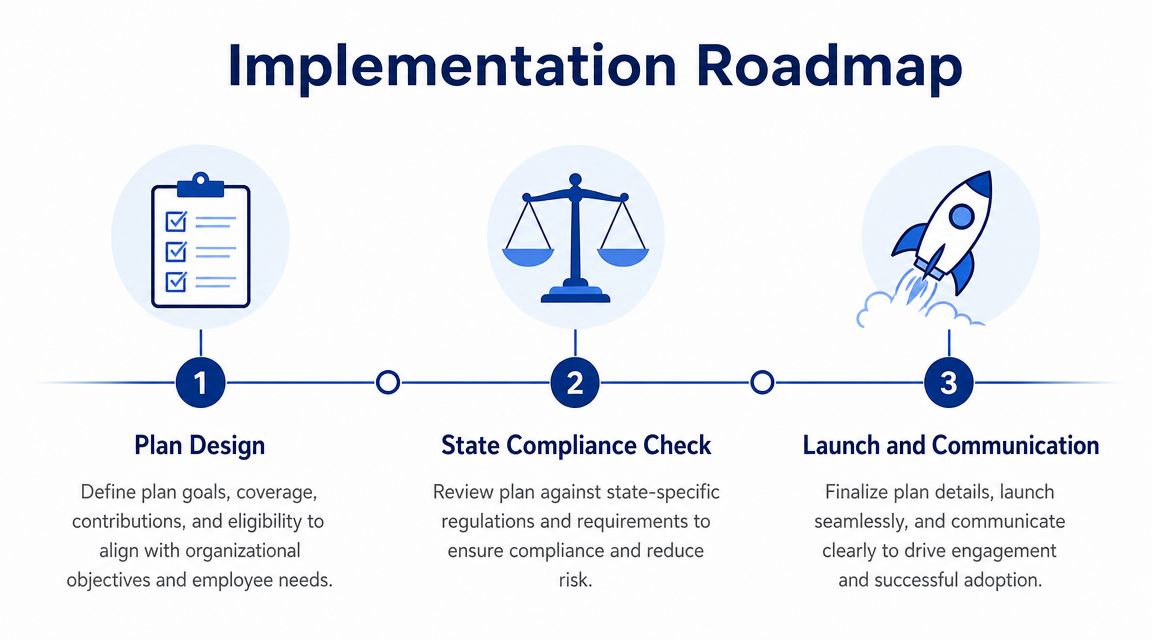
A defensible rollout usually starts with formal design choices before anyone offers the arrangement to an executive.
That means documenting:
If these rules aren't settled up front, the company usually ends up negotiating each case individually. That creates inconsistency, and inconsistency creates compliance risk.
A polished plan document isn't enough on its own. Multi-state employers need the operating documents that support the plan in practice.
That often includes employee election forms, board or committee approvals, payroll coordination, and a written process for handling life events such as termination, leave, entity transfers, or a move across state lines.
The plan also has to sit inside a broader compliance framework. For employers already managing dispersed teams, this is closely related to the larger challenge of remote worker compliance in multistate operations.
Many organizations operate in silos. Finance may model the liability. HR may communicate the benefit. Payroll may process deferrals. Legal may review documents. But no one owns the full operating picture.
A stronger approach assigns clear accountability.
The more states, entities, and executive exceptions you have, the less room you have for informal administration.
Multi-state employers don't need perfect uniformity in every situation. They do need disciplined decision-making, especially when a plan touches tax treatment, executive departures, and selective benefits that may draw scrutiny later.
Leaders usually understand the attraction of a non qualified plan quickly. The lingering questions tend to be about where the edge cases sit. Those are the questions worth asking before rollout, not after.
Often, yes. But it should be a targeted retention tool, not a generic one.
That use is common in the market. Principal found that 86% of plan sponsors offer deferred compensation plans to provide a competitive benefits package, 76% cite retention as a top reason, and 53% of employees said a nonqualified plan is important in deciding whether to stay with their current employer in its review of trends in nonqualified deferred compensation plans.
The practical lesson is simple. If retention is the reason, the design should reflect that through service conditions, payout timing, and disciplined participant selection.
This isn't a broad employee benefit in the usual sense. These plans are generally used for a select group of executives or key employees whose roles have outsized strategic value.
That group should be defined by business rationale, not personal preference. If eligibility looks arbitrary, the plan becomes harder to explain internally and harder to defend externally.
A Rabbi Trust can help reinforce that the company intends to honor the benefit. It may reduce concern that leadership will reverse course later.
It does not fully protect the participant from insolvency risk. The assets generally remain exposed to employer creditors. That is why a Rabbi Trust is better understood as a governance and commitment tool, not a guarantee.
Sometimes, but not casually.
The company shouldn't assume it can amend payout timing or redesign terms after the fact without consequences. Once a non qualified plan is in place, changes can raise significant administrative and tax issues if they aren't handled correctly.
Don't implement a non qualified plan if leadership wants a simple perk but isn't willing to support the governance behind it.
These plans work when the company can answer four questions clearly:
If those answers aren't ready, the plan usually isn't ready either.
If you're evaluating whether a non qualified plan fits your leadership strategy, or you're concerned about the governance and employment risk that comes with selective executive arrangements, Paradigm International Inc. can help you think through the decision carefully. The right structure isn't just about compensation design. It's about making sure the plan can hold up under scrutiny, across states, and during high-stakes business events.