

The most popular advice about Paychex alternatives is to compare monthly fees and feature checklists. That approach misses the decision that matters most to a multi-state leadership team: which provider helps you make employment decisions that remain defensible after a complaint, audit, termination, or tax dispute?
Payroll automation matters, but it doesn't decide whether a manager documented misconduct properly, whether a termination followed the right process, or whether a state-specific rule was applied to the right employee. Use the comparison below as a starting point, then test each provider against your actual exposure.
| Vendor | Strongest fit | Where it helps | Risk leadership still owns |
|---|---|---|---|
| ADP RUN or Workforce Now | Growing or complex multi-state employers | Broad payroll, tax, benefits, and HCM infrastructure | Implementation quality, notices, judgment calls, contract terms |
| Rippling | Technology-focused teams consolidating HR and IT | Connected employee records and workflow automation | Configuration, escalation, and total module cost |
| Gusto | Smaller employers seeking simple payroll | Accessible payroll and core HR administration | Deeper benefits, complex jurisdictions, employment decisions |
| Justworks | Employers considering a PEO structure | Benefits and outsourced employment administration | Co-employment terms and retained legal responsibility |
| Paylocity | Mid-market organizations | Broader HR, payroll, engagement, and reporting | Configuration, support responsiveness, and scaling fit |
| isolved | U.S. employers wanting software plus services | Payroll, benefits, HR, and professional support | Service boundaries and accountability for corrections |
Changing payroll systems can correct a weak process. It can't correct a weak decision.
A new platform may calculate wages, apply deductions, transmit payments, and generate forms more consistently. It won't determine whether an employee was correctly classified, whether a manager retaliated after a complaint, whether an investigation was sufficiently impartial, or whether termination documentation supports the stated reason. Those decisions remain with the employer and its leadership.
The market's history makes this distinction clear. ADP began in 1949 as Automatic Payrolls, Inc., went public in 1961, and launched EasyPayNet, its first software-as-a-service payroll solution, in 1998. By June 30, 2020, it processed payroll for approximately 840,000 clients and paid about 36 million employees, with roughly 22 million in the United States and 14 million internationally. ADP also reported that approximately $2.2 trillion moved annually through client payroll and that its services covered about one in six U.S. workers. Those milestones show how payroll providers evolved into workforce infrastructure, not that software replaces management judgment. (ADP's payroll history and scale)
Most multi-state failures don't begin with a missing button. They begin with a wrong work location, an outdated policy, an inconsistent manager response, or incomplete records.
A provider may surface a tax jurisdiction, but leadership still needs to verify that the employee's work pattern and legal entity are represented correctly. A system may store a termination form, but that record doesn't prove the employer reviewed comparable cases or investigated a complaint fairly.
Practical rule: Treat the platform as a control system, not as your employment-law decision maker.
The federal tax relationship is also more limited than many buyers assume. The IRS generally keeps the employer responsible for withholding, deposits, filings, and payments even when a payroll service provider or reporting agent performs the work. If the provider defaults, the employer may still owe the tax and face the resulting consequences. (IRS guidance on outsourcing payroll duties)
A switch can improve administrative consistency, reporting, support, and integration. It won't automatically transfer responsibility for:
A 2025 survey of 1,136 small businesses found that 42% struggled to understand termination and unfair-dismissal rules, while 35% lacked the time or resources to maintain compliance. (Small Business Conditions Survey.pdf)) The lesson is direct. A payroll switch may reduce administrative friction while leaving the most consequential employment risks untouched.
A COO should reject any payroll demonstration that stays at the feature level. Ask what the system will help leadership decide, what it will document, and what it will leave outside the platform.
Ask whether the platform can identify the correct tax, unemployment, disability, paid-leave, and withholding requirements by employee location and legal entity. Then ask how it handles an employee who works across jurisdictions rather than residing in only one state.
A provider should make jurisdiction ownership visible before payroll runs. It should also show how registrations, rates, filing status, notices, and corrections are tracked. If the answer depends on an undocumented spreadsheet maintained by one payroll administrator, the system hasn't solved the operating risk.
Benefits administration isn't just enrollment. Test eligibility rules, deductions, carrier feeds, billing reconciliation, qualifying events, and termination handling.
The important question is whether a payroll change flows reliably into benefits records and whether someone can identify the owner when the systems disagree. A platform with a long integration list may still require manual review for the carriers your workforce uses.
Ask how the system tracks variable-hour employees, measurement periods, eligibility, offer history, and year-end reporting. Don't accept a demonstration that shows only form generation.
Leadership needs an exception report that identifies missing hours, inconsistent eligibility decisions, and records that require review. If ACA data must be rebuilt in spreadsheets, the platform is exporting risk rather than managing it.
Union rules, prevailing wage requirements, industry licensing, wage determinations, and state leave programs can change the payroll design. Ask whether the system supports those requirements directly or just processes the inputs leadership supplies.
The right platform should make exceptions visible and preserve the approval trail. It won't decide whether a project was subject to a particular rule, so the implementation must assign that judgment to a named owner.
Ask what happens after a complaint, investigation, proposed termination, or high-risk accommodation request. Can the system preserve policy acknowledgments, investigation records, approvals, and related payroll changes in a controlled record?
Software selection should connect to operating design. A PEO may change the employment structure, while an ASO generally leaves more responsibility with the client. COOs evaluating that distinction can use PEO ASO explained for COOs to frame the service and liability questions before reviewing proposals.
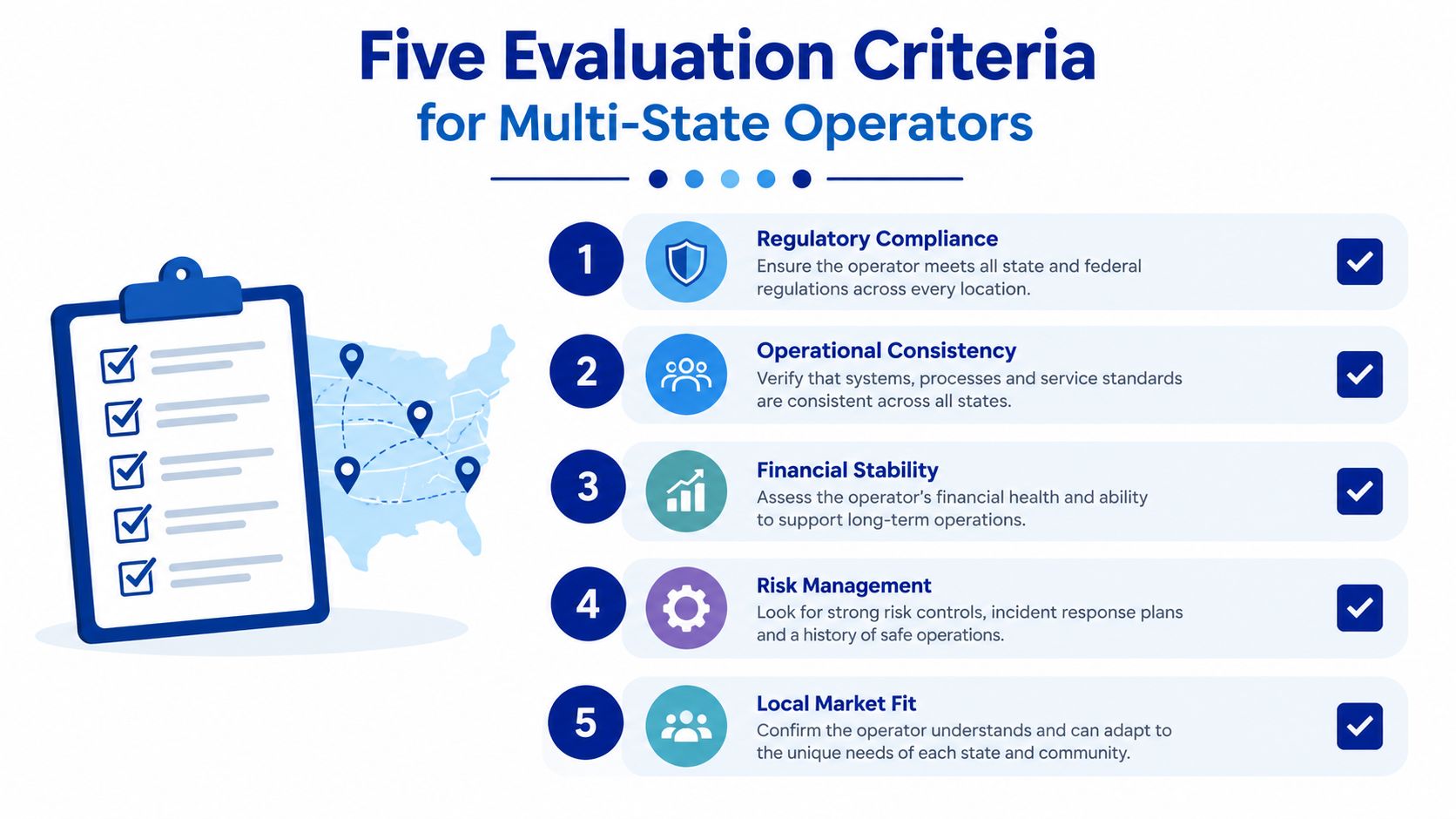
Weight these criteria according to workforce distribution, employee mix, regulatory exposure, and growth plans. They're a filter for serious diligence, not a universal scorecard.
The right alternative depends on the problem you're solving. Gusto may be sensible for a smaller employer that wants a clear operating model, while ADP or Rippling may fit a company adding jurisdictions, systems, and workforce processes. A vendor comparison should expose the trade-off rather than declare one winner.
| Vendor | Best-Fit Scenario | Multi-State Compliance | Benefits Integration | Trade-Off |
|---|---|---|---|---|
| Gusto | Smaller employer prioritizing accessible payroll | Suitable for core payroll needs, with complexity depending on plan and jurisdictions | Practical for standard benefits, less suited to intricate carrier environments | Simplicity can become limiting as workforce complexity grows |
| ADP RUN or Workforce Now | Employer needing national reach and broader HCM | Strong infrastructure for multi-state payroll and tax workflows | Broad benefits and workforce options | Enterprise reach can bring implementation and configuration friction |
| Rippling | Technology-focused employer connecting HR and IT | Strong workflow potential when employee and location data are configured correctly | Broad integration model | More modules and automation can increase cost and learning demands |
| Justworks | Employer considering a PEO | Outsourced administration through a different legal structure | PEO model can simplify benefits access and administration | Co-employment terms require careful legal and operational review |
| Paylocity | Mid-market employer wanting engagement and HR breadth | Designed for broader workforce administration | Integrated benefits and HR capabilities | May be broader than a smaller team needs |
| isolved | U.S. employer combining software with professional services | Supports core payroll and workforce administration | Benefits and service options vary by configuration | Scaling ceiling and service boundaries must be tested |
For a smaller team with ordinary payroll, Gusto's accessible design can reduce administrative burden. The trade-off is that a company with multiple states, complex benefits, or more demanding reporting may outgrow the simpler operating model. Compare those needs with other payroll solutions for multi-state employers before committing.
ADP is the safer direction when the business needs a mature national provider and expects payroll to connect with benefits, time, compliance support, and broader HCM. Its scale doesn't remove implementation risk. Smaller teams should insist on named implementation ownership, data validation, and a clear support escalation route.
Rippling is compelling when the employee record must connect payroll, HR, applications, and equipment. That breadth is valuable only if the company is ready to govern permissions, workflows, and data changes. More automation means more places for a bad source record to propagate.
Justworks deserves a separate category because a PEO isn't merely another software subscription. It changes the service and employment structure, so leaders should review co-employment responsibilities, client control, benefits terms, and tax obligations before treating it as a direct Paychex replacement.
Paylocity and isolved can fit mid-market employers that need more than a basic payroll engine. Test report construction, support ownership, implementation resources, and the point at which the platform requires workarounds. For performance and broader people-process comparisons, per performance management provides useful context, but performance tools shouldn't distract from payroll liability and employment governance.
Federal payroll compliance has three separate control points, and vendors often blur them together in demonstrations.
First, the employer must deposit federal employment taxes through electronic funds transfer. Second, employment-tax returns such as Forms 940, 941, 943, 944, and 945 may be filed electronically or on paper. Third, the employer needs evidence that the payment and filing were accepted, reconciled, and tied to the correct payroll period. The IRS distinguishes these events clearly in its employer tax guidance. (IRS Publication 15-A)
| Vendor | EFTPS Deposit Handling | Form 941 E-Filing | Year-End Reconciliation | Penalty Notice Routing | Residual Employer Liability |
|---|---|---|---|---|---|
| Paychex Flex | Confirm scheduled deposits and retain payment evidence | Confirm filing acceptance and correction ownership | Require employee-level reconciliation and documented exceptions | Establish whether Paychex forwards, responds, or only informs | Employer generally remains responsible |
| ADP RUN or Workforce Now | Test funding, timing, and confirmation records | Confirm Form 941, W-2, and correction workflow | Strong candidate for structured reconciliation, subject to configuration | Put notice ownership and response deadlines in the agreement | Employer remains responsible unless a specific legal arrangement changes it |
| Gusto | Verify deposit execution and downloadable confirmations | Confirm e-filing and amended-return support | Test year-to-date imports, corrections, and state differences | Confirm escalation for notices and rejected payments | Employer remains responsible |
| Rippling | Test the full workflow from payroll approval through deposit evidence | Confirm electronic filing and amended-return procedures | Test integration-driven reconciliation and audit logs | Define who receives and acts on notices | Employer remains responsible |
| Justworks | Review PEO or payroll arrangement and funding controls | Confirm who files under which EIN and arrangement | Review year-end responsibility and data access | Specify notice routing, response, and indemnification | Liability depends on the legal structure and written terms |
The IRS requires employers to report wages and employment taxes through forms including 940, 941, 943, 944, and 945. Employers with 10 or more information returns in a calendar year generally must file those information returns electronically. That makes employee-level exports, filing status, EIN validation, jurisdiction segmentation, and retained payment evidence practical selection requirements, not optional reporting enhancements. (IRS Publication 15)
A demonstration of successful payroll is not enough. Ask the vendor to explain what happens when:
Use an operational resource on taxes for business owners to help frame the questions, then insist that the vendor answer them in writing.
The employer's EIN remains central to the process. Confirm whether the provider uses your EIN, who controls authorization, how approval logs are retained, and whether the agreement includes meaningful error-resolution procedures. Full-service payroll reduces work. It doesn't erase residual liability.
A useful shortlist starts with the workforce, not the vendor's marketing category.
This company already operates in New York and Texas and is opening a California office. Its priority is not a prettier payroll screen. It needs accurate work-location data, state withholding, paid family leave deductions, benefits coordination, and a compliance team that can respond as the footprint changes.
Rippling or ADP RUN is the stronger direction for this scenario. Rippling fits when HR, payroll, IT access, and employee records should operate from connected workflows. ADP fits when the leadership team values a national payroll provider with broader compliance and service infrastructure.
The accepted trade-off is complexity. The company must invest in implementation governance, test state codes, and establish ownership for tax notices and employment decisions. Neither provider should be selected without a written escalation model.
This employer operates across Ohio, Indiana, and Illinois. It needs prevailing wage tracking, fringe benefit accounting, union reporting, and payroll rules that reflect project and jurisdiction requirements.
A PEO such as TriNet or an arrangement such as ADP TotalSource may fit better than a basic payroll platform because the company is buying administrative capacity and risk allocation, not only calculations. The leadership team must still examine co-employment terms, project-level reporting, audit access, and who makes employment decisions.
The trade-off is reduced flexibility and a more consequential service agreement. A PEO can absorb administrative complexity, but it doesn't give the client permission to stop reviewing payroll, workforce records, or manager conduct.
This retailer has employees across three states and faces ACA reporting exposure above the 50-FTE threshold. Variable-hour tracking, 1095 generation, benefits administration, and state-level mandate compliance determine the fit.
Gusto or Paychex Flex can handle the core payroll requirement, but benefits administration depth becomes the deciding factor. The retailer should test measurement-period reporting, eligibility history, employee communications, and corrections before choosing a provider.
The accepted trade-off is that a simpler platform may lower administrative friction while leaving more benefits review with the employer. That's acceptable only if leadership assigns the work and retains evidence of the decisions.
Migration teams often start with employee names and pay rates. That's backwards. Start with the failures that could create tax exposure, employee-pay disputes, or unusable records.
These controls come before convenience, interface preferences, or contract cancellation.
Skipping these items is the most common route to post-migration penalties and employee-pay disputes in multi-state conversions. A vendor's implementation checklist isn't a substitute for executive acceptance.
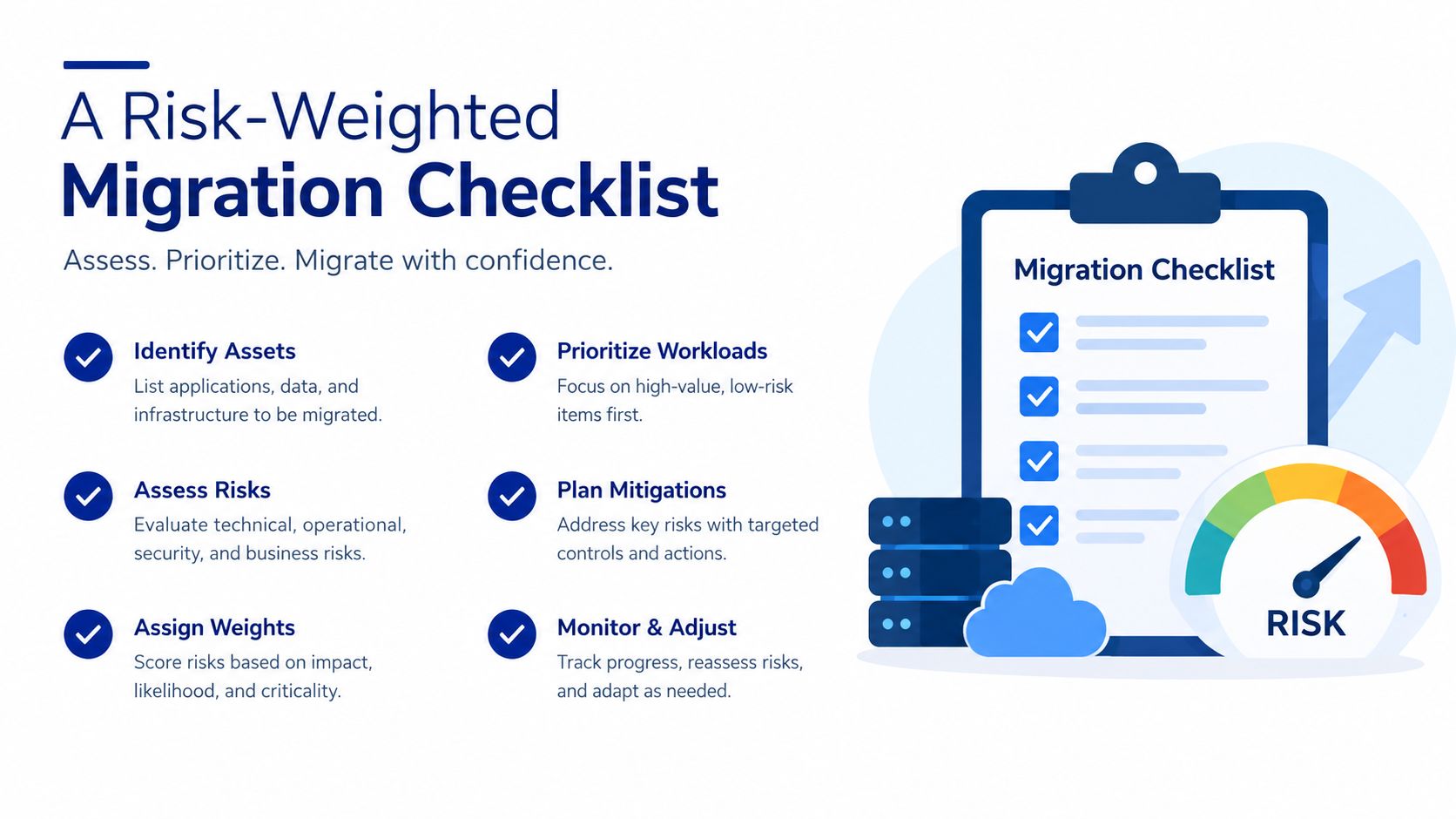
Once the tax foundation is proven, validate the records that drive each pay run.
These issues rarely stop the first payroll, but they can undermine future audits and disputes.
A recent comparison estimates that a typical migration can take 10 to 11 or more weeks, depending on workforce size, integrations, payroll complexity, and data quality. (Small Business Outlook and migration guidance) Treat that timeline as a planning input, not a reason to rush.
Sticker price is only one part of the decision. The true comparison includes implementation labor, parallel payroll, benefits administration, integrations, contract terms, data exports, support tiers, and the leadership time required to resolve exceptions.
The table below is intentionally a decision framework rather than a fabricated quote. Vendors price differently, and several require custom proposals. Request each component in writing before assigning a financial value.
| Cost Component | Paychex Flex | Gusto | ADP RUN Powered by ADP | Rippling | Workday |
|---|---|---|---|---|---|
| Platform fees by employee band | Request a complete written schedule | Request the applicable plan and state requirements | Quote-based | Modular and quote-based | Enterprise quote |
| Benefits administration | Confirm included carriers and add-ons | Test carrier connectivity and service scope | Review package and carrier breadth | Review module pricing and integrations | Review implementation and module scope |
| Year-one migration labor | Include export, mapping, testing, and reconciliation | Price internal and vendor support | Require a detailed implementation plan | Price workflow and integration configuration | Expect a substantial implementation commitment |
| Parallel-run overlap | Include both platforms during testing | Include dual processing and validation | Include implementation and parallel controls | Include configuration and parallel processing | Include project and testing resources |
| Contract exposure | Review renewal, notice, indemnification, and exports | Review plan terms and service limits | Review negotiated liability terms | Review module cancellation and data terms | Review enterprise commitments and exit terms |
Model the first 18 months without inventing savings. Include the current contract's termination cost, new implementation fees, employee communications, reconciliation labor, parallel processing, benefit setup, support, and the cost of correcting a failed cutover.
Contract language deserves the same attention as product functionality. Review auto-renewal, notice periods, indemnification carve-outs, responsibility for tax penalties, funding controls, data export fees, and the definition of a provider error. A low subscription cost can become expensive when the agreement leaves the employer with every correction and no practical escalation route.
Days 1 through 7: Build a compliance gap inventory. List every state, legal entity, benefit carrier, payroll integration, tax account, open notice, union or prevailing-wage requirement, and recurring exception.
Days 8 through 14: Score three finalists against the five evaluation criteria. Require each finalist to demonstrate a rejected payment, amended return, multi-state correction, benefits mismatch, and notice escalation.
Days 15 through 21: Request written proposals and contract redlines. Use resources on HR consulting fees 2026 to separate implementation work from ongoing advisory support and to avoid comparing unlike service packages.
Days 22 through 30: Approve the migration plan, name the cutover owner, schedule parallel payroll, and prepare the board-level artifacts. Leadership should receive a one-page risk register and a signed cutover acceptance memo.
A sound Paychex alternative is the provider that gives your team the clearest controls, evidence, and accountability for the risk you actually carry. Paradigm International Inc. supports SMB leadership teams with payroll administration, benefits coordination, HR risk guidance, and defensible processes for multi-state employment decisions. Visit Paradigm International Inc. to discuss your compliance gap inventory, vendor evaluation, or migration plan with an advisory team.


