An expanding business can outgrow payroll software without realizing it. One team may be processing wages from several states, another may be maintaining workforce records, and executives may be relying on managers to document discipline, leave, classification, and terminations consistently. When those processes sit across disconnected tools, the risk isn't limited to an incorrect paycheck. It can affect tax filings, wage decisions, employee records, and the organization's ability to explain what happened.
The strongest Paycor alternatives depend on how your business operates. Some companies need a broad HCM suite, while others need stronger workforce management, transparent pricing, managed HR services, PEO support, or a focused HRIS that keeps employee data clean. The comparison below evaluates each platform through a practical lens: multi-state administration, regulated employment risk, implementation control, contract transparency, and executive accountability. Software can provide calculations, workflows, alerts, and records. It can't replace sound HR judgment or leadership ownership.
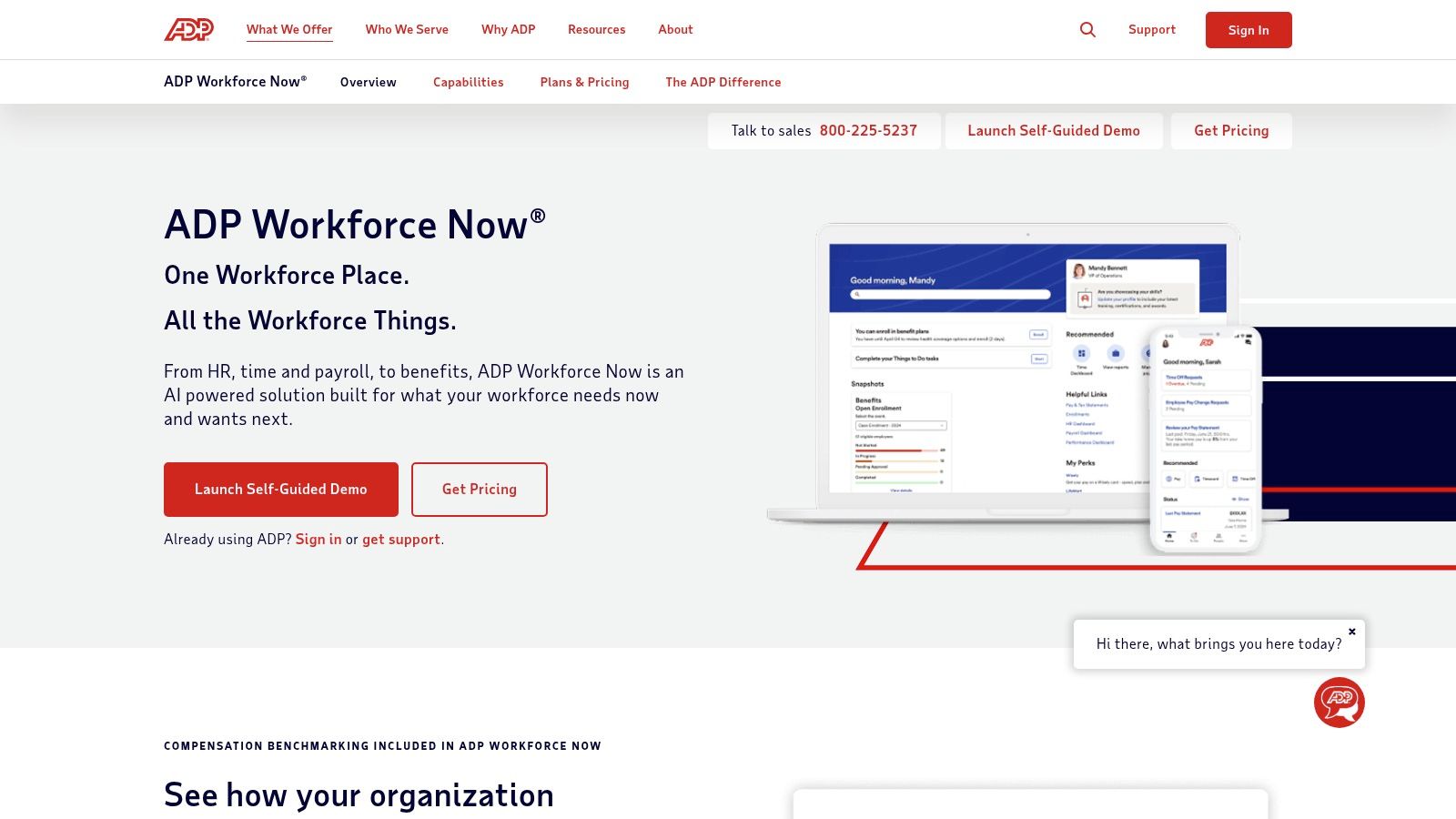
ADP Workforce Now is a strong candidate for a growing SMB that expects payroll complexity to increase rather than settle. It brings payroll, HR, time, benefits, talent, analytics, and workforce management into a broad HCM environment, with a substantial partner ecosystem through ADP Marketplace. The platform is designed to scale from smaller teams to organizations with thousands of employees, which makes it useful when a business doesn't want to replace its core system again soon.
Its most important advantage for regulated, multi-state employers is operational depth. Continuous-calculation payroll, anomaly detection, compliance guardrails, and ongoing regulatory updates can help payroll teams identify exceptions before approval. Those controls still need human review. A system can flag an unusual payment, but leadership must determine whether the cause is a legitimate bonus, a corrected time entry, a classification issue, or a broader process failure.
ADP also gives buyers room to build gradually. HR, benefits, time, talent, and workforce management can be configured as part of a broader suite, rather than forcing every organization into the same operating model.
ADP Workforce Now works when the company has the administrative discipline to configure a large platform properly. It can be excessive for a small employer with uncomplicated payroll and no need for broader workforce management.
Paylocity suits employers that need payroll and HR administration alongside regular employee participation. The platform covers payroll, HR, time, benefits administration, talent, analytics, configurable workflows, and employee communication through Paylocity. Its communication tools can support distributed workforces by bringing notices, surveys, recognition, and self-service tasks into one employee-facing environment.
That convenience creates an implementation responsibility. A workflow can standardize approvals across states, but it can also reproduce an inconsistent policy at scale. Before configuration begins, executives should assign ownership for pay changes, employee-record edits, time exceptions, and employment actions. They should also define the documentation required before a manager completes each action.
Paylocity can show where employees have completed tasks or where an approval is stalled. It cannot decide whether a policy complies with applicable wage, leave, classification, or recordkeeping requirements. HR and legal owners still need to review exceptions, assess state-specific obligations, and document decisions. The software organizes evidence. It does not replace management accountability.
For a multi-state employer, implementation control deserves the same attention as the feature set. Test workflows using employees in different locations, pay groups, schedules, and reporting lines. Confirm how the system handles changes in work location, manager, pay rate, and exemption status. Those tests can expose configuration gaps before they affect payroll or required notices.
Paylocity is a reasonable choice when communication and employee participation are part of the operating model. A lean employer seeking the simplest payroll process may find its configurability adds more oversight than value.
Paycom takes a different approach by emphasizing one employee database across the employment lifecycle. Payroll, HR, time, benefits, talent acquisition, and analytics operate within one application, with employee-driven payroll tools such as BETI. The central promise is straightforward: fewer handoffs and less re-keying should reduce data-integrity risk.
That approach only works if the implementation team treats the database as a controlled source of truth. A single system can preserve bad data just as efficiently as good data. Before launch, the company should establish authoritative fields, approval rights, correction procedures, and an audit process for changes to pay, status, job title, location, and exemption classification.
Employee-driven payroll can shift some responsibility away from payroll administrators by asking employees to review relevant information before payroll is finalized. That can reduce preventable exceptions, but it doesn't transfer accountability for wage compliance to employees. Managers and payroll leaders still need to review unusual results and correct systemic issues.
Practical rule: Use employee self-service to catch errors earlier, not to shift legal or operational responsibility away from the employer.
Paycom's primary trade-off is implementation rigor. Pricing isn't publicly listed, so buyers need a detailed proposal that separates software, services, integrations, training, and renewal terms. The system's value depends on consistent configuration across locations and departments. If every business unit creates its own codes or approval habits, the single-database advantage weakens.
Explore Paycom's HCM platform when data integrity is a central concern and leadership is willing to enforce one operating model. It isn't the right choice for a business that wants to install software quickly without redesigning the underlying payroll and HR controls.
Rippling is built for companies where HR, IT, and finance workflows intersect. Its modular platform can include U.S. payroll, time and attendance, benefits, applicant tracking, identity, device and application management, spend management, global payroll, and employer-of-record options through Rippling. That breadth is useful when a company is tired of maintaining separate systems for onboarding, access, payroll, expenses, and offboarding.
The operational benefit is automation. A properly designed workflow can connect an employee's status to equipment, access, payroll, and approvals. That can make offboarding more consistent, but automation must follow a documented decision. It shouldn't independently determine whether a termination is appropriate, whether a contractor relationship has ended correctly, or whether a manager has complied with policy. For related documentation, leaders can reduce risk with contractor termination by using a deliberate process rather than treating system deactivation as the entire offboarding record.
Rippling's modular design can support a fast initial deployment, but add-on modules can increase contract complexity and cost. Buyers should ask:
Rippling is particularly compelling for a multi-state employer with distributed operations and a lean administrative team. It may not be the best fit if the organization only needs payroll and basic HR, or if leaders aren't willing to govern automated workflows carefully. The platform can connect many processes, but connected errors can travel faster than isolated ones.
UKG Ready is designed for employers whose harder problem is coordinating time, labor, and payroll across locations. It brings together HR, payroll, timekeeping, talent, scheduling, and configurable workflows, with a potential path to UKG Pro as the organization grows. Review the available plans through UKG Ready's plan information before treating that progression as part of the buying decision.
For multi-state employers, timekeeping configuration deserves more scrutiny than the feature list. The system can calculate hours and accruals, but HR and operations leaders remain responsible for setting work rules, reviewing manager overrides, and investigating missed breaks, inaccurate punches, or inconsistent schedules. Test the setup with employees who work across locations or change job codes, then retain evidence of the decisions behind each rule.
The platform is strongest when reliable time and labor data feeds payroll. Its breadth also creates governance work. Decide which fields and workflows control the record, limit unnecessary customization, and document exceptions so administrators do not create conflicting processes.
UKG Ready fits employers managing varied shifts, locations, accruals, and time-related compliance requirements. The possible move to UKG Pro may reduce replacement pressure later, but the proposal should explain the migration process, responsibilities, and likely disruption.
Implementation control matters more than module count. Keep written records of pay codes, approvals, location settings, and rule changes. Assign an internal owner for administrator training and post-launch review, because the implementation team will not govern daily decisions after handoff.
UKG does not publish pricing in the supplied plan information. Require a proposal that separates plan levels, implementation services, integrations, support, renewal terms, and any conditions that could change the contract. UKG Ready is a credible choice for operations-led businesses with substantial scheduling needs. A straightforward office-based employer may find its scope difficult to justify.
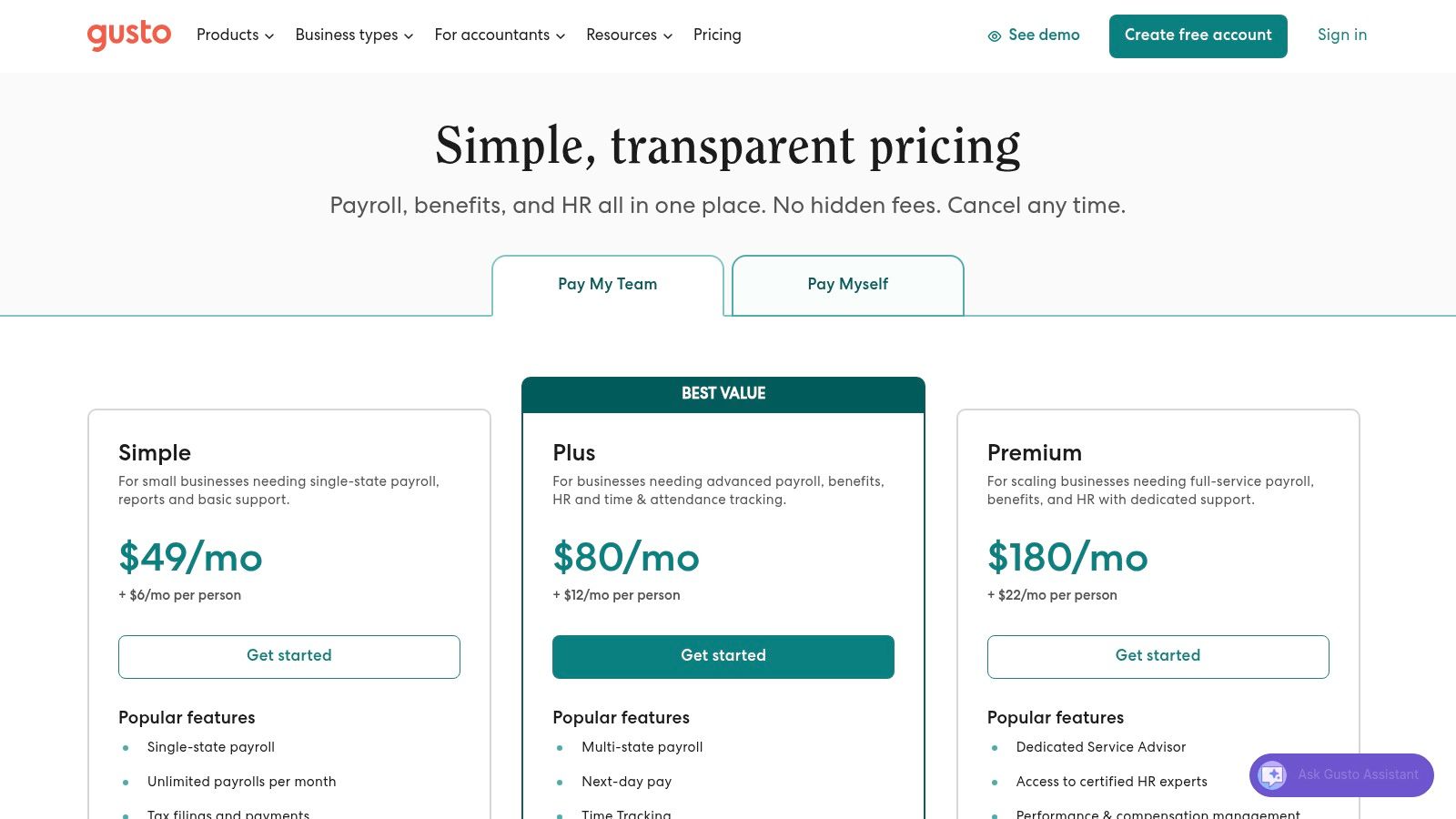
Gusto is the most approachable option on this list for a smaller U.S. employer that wants payroll, benefits administration, time tracking, onboarding, and a clear buying process. It publishes plan tiers and pricing through its Gusto pricing page, and it supports federal, state, and local payroll tax filings in all 50 states. Optional global contractor payments and an accountant and partner ecosystem add flexibility for businesses that work with contractors or outside advisers.
The main advantage is control over the buying decision. Published pricing makes it easier to compare the recurring subscription with the cost of adding benefits, time, or other services. That transparency doesn't eliminate procurement work. A buyer should still confirm what is included, how support works, how corrections are handled, and what records are available after an employee leaves.
Gusto is less convincing when the business needs deep mid-market controls, complex reporting, or extensive configuration. A simple interface can support good administration, but it can also leave fewer options for unusual pay structures or advanced approval requirements.
Gusto is a reasonable fit when payroll is the primary need and the organization has a small HR function. It can help replace manual processes in a market where only about 21% of small businesses use third-party payroll software, while 51% rely on spreadsheets and 19% use manual or paper processes, according to small-business payroll software data. Those conditions make clean setup and disciplined payroll review more important than an oversized feature catalog.
Confirm any benefit add-on price changes during procurement, and don't assume that a transparent base price means every employment workflow is covered. Gusto works best when leadership accepts its boundaries and pairs it with sound policies, documented approvals, and outside HR advice where needed.
Paychex Flex gives SMBs a choice between software and more managed support. Its platform includes payroll, HR, time and attendance, benefits, and compliance support, while optional HR advisory and PEO services allow the employer to add outside assistance through Paychex Flex. That model is useful when an owner or COO needs more than software but isn't ready to build a large internal HR department.
The trade-off is that service quality can depend on the assigned team. A strong adviser can help leadership interpret an employee complaint, prepare for a difficult termination, or organize compliance work. A weak handoff can leave the employer believing it has support when it still lacks a clear decision record. The contract should define response expectations, service ownership, escalation, and the boundary between administrative processing and employment advice.
The employer still owns the employment decision, even when a provider helps administer the process.
Paychex Flex is a good candidate for organizations that want to increase or reduce managed support as their needs change. It can also suit multi-state employers that value payroll-specific expertise and broad U.S. filing support. Pricing isn't fully transparent online, and costs vary by size, service tier, and modules, so request a complete written proposal.
Before signing, confirm:
For COOs comparing outside support with an internal hire, this guide to HR advisory costs for COOs provides useful context. Paychex Flex is strongest when the business wants a service model, not merely another login.
BambooHR is a focused HRIS for organizations that need cleaner employee data, consistent onboarding, approval workflows, reporting, and dashboards. It publishes software tiers and entry pricing through BambooHR pricing, which gives buyers more visibility than quote-only platforms. Optional native U.S. payroll, time, and benefits add-ons let a company expand without immediately adopting a broad enterprise HCM suite.
Its best use is administrative standardization. A business can define where employee records live, how onboarding tasks are assigned, who approves changes, and how documentation is retained. That matters in regulated environments because a clean workflow helps leaders demonstrate what was requested, approved, and completed. The system still won't decide whether a policy is lawful in every location or whether a manager handled a complaint appropriately.
Payroll is an add-on, so buyers should evaluate depth rather than assume that an HRIS with payroll has the same multi-state controls as a payroll-first platform. Organizations with unusual pay rules, complex time requirements, or extensive reporting needs may need a larger suite or a specialized integration.
BambooHR is a strong choice when HR administration and documentation are the immediate priorities. It can also support consistent onboarding and offboarding, provided the company connects those workflows to its own policies. Leaders managing multiple jurisdictions should map the system against their state-by-state handbook requirements and decide which obligations require policy review outside the platform.
The main risk is underestimating the work created by add-ons and integrations. Each additional system creates another permission model, data handoff, and contract term to govern. Ask whether the lower-complexity HRIS reduces administrative burden after payroll, benefits, time, and compliance needs are included.
An SMB expanding into several states may want payroll, HR, time, benefits, and talent in one system without adopting an enterprise suite. isolved People Cloud addresses that need through a U.S. partner network and a value-focused product model. The isolved People Cloud platform can suit employers that prefer local implementation and an identifiable service relationship.
That relationship deserves as much scrutiny as the software. Implementation quality, training, configuration, and support can vary by partner, even when the underlying product is the same. Before signing, name the responsible partner, define escalation steps, and list included services. Assign ownership for tax notices, data corrections, configuration changes, and post-launch support.
The product's integrated payroll and HR coverage may reduce handoffs between systems. Its time and payroll compliance tools still require testing against the employer's actual rules. A useful demonstration should include a multi-state hire, a location transfer, overtime calculations, benefit deductions, a termination payment, and a change to user permissions.
Review these points with the implementation team and executive owner:
Interface depth may be less polished than some larger suites. That trade-off can be acceptable if the partner provides accountable support and the company assigns an internal owner for payroll and HR controls. Leaders should also compare the full contract, including implementation charges, support boundaries, integrations, renewal terms, and exit assistance. isolved fits best when relationship-based delivery matters, responsibilities are written clearly, and the employer will test and govern the system rather than treat it as a substitute for compliance judgment.
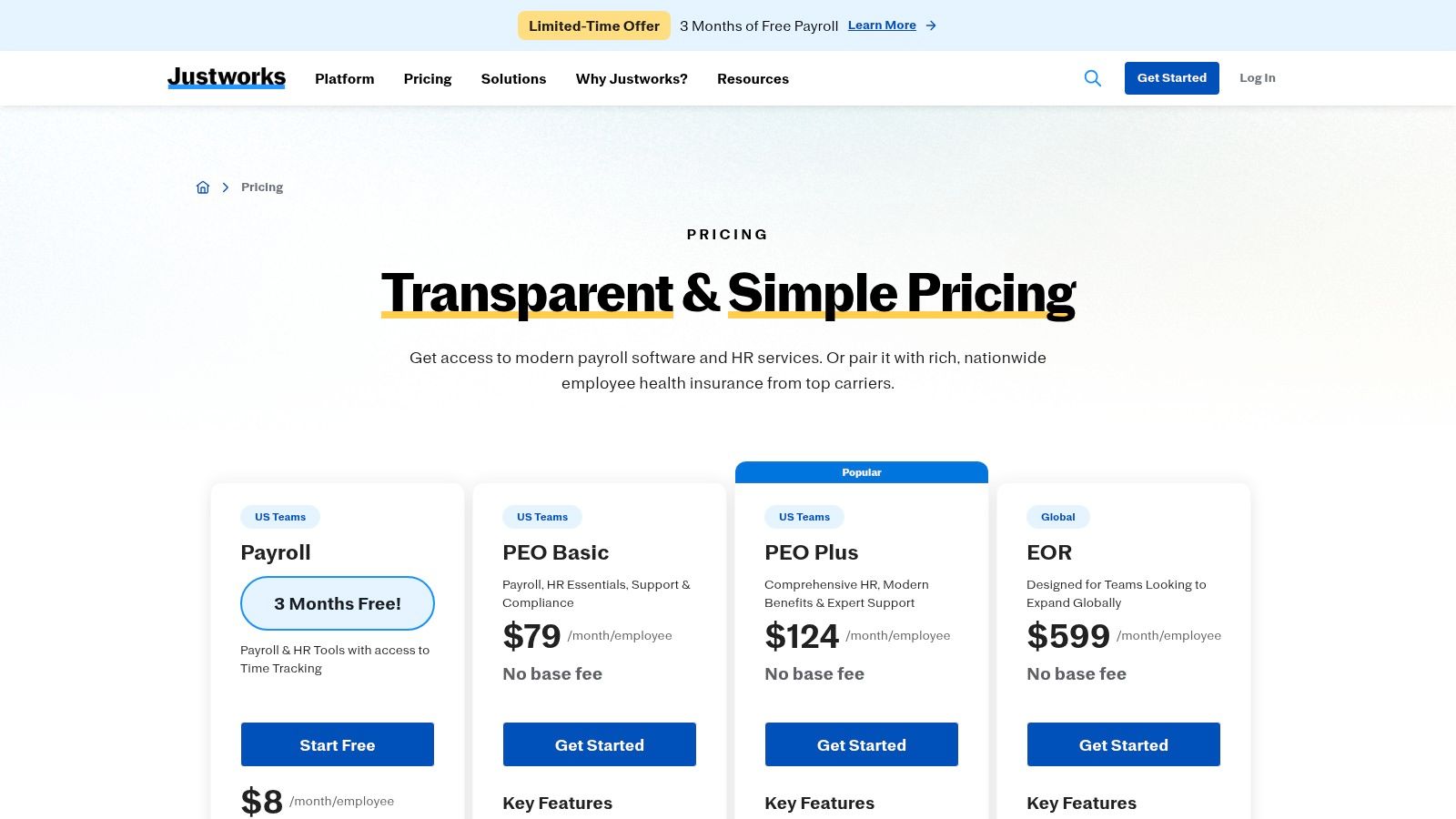
Justworks offers two distinct paths. A business can choose stand-alone Payroll and HR tools, or it can select a PEO arrangement that includes HR consulting, benefits, workers' compensation, 401(k), and broader managed services. Its Justworks pricing information provides online plan comparisons and per-employee pricing, while global hiring support is available through an EOR option.
This structure makes Justworks useful for an employer deciding how much risk and administration it wants to retain. Software-only payroll keeps the company's operating model more direct. A PEO can provide deeper administrative and benefits support, but it also changes the relationship among the employer, provider, employees, and insurers. Leadership needs to understand who makes which decisions and how the company exits the arrangement.
Multi-state payroll and HR tools can help a distributed SMB establish a common process. Optional time tracking adds operational support, while 24/7 support may matter for businesses with nonstandard schedules. The provider can't replace internal judgment about discipline, investigations, classification, or manager conduct.
Justworks is a strong fit when transparent plan comparisons and the option to move into a PEO matter. PEO per-employee rates can be higher than software-only alternatives, and benefit rates are subject to carrier renewals, so the company should confirm those costs annually. Don't compare a PEO quote with software-only pricing without accounting for the services and obligations included in each model.
Ask for written answers on:
Justworks works best when the leadership team consciously chooses the operating model. It isn't a shortcut around policy, documentation, or compliance review.
| Product | Best fit / Target | Core strengths | Compliance & multi-state risk | UX & support | Pricing & value |
|---|---|---|---|---|---|
| ADP Workforce Now | Multi-state SMBs scaling to thousands | Continuous-calculation payroll; modular HCM; large integrations | Strong multi-state tax filings; compliance guardrails | Established ecosystem; service responsiveness varies by region | Quote-based; scalable tiers but pricing can feel opaque |
| Paylocity | SMBs focused on employee engagement & communication | Payroll + HR + time; social hub; configurable workflows & analytics | Solid payroll/compliance support for U.S. SMBs | High employee-facing adoption tools; support varies by account | Quote-based; feature-rich for SMBs |
| Paycom | Organizations needing a single system of record | Single-database HCM; employee-driven payroll (BETI) | Low data-integrity risk when implemented correctly | Self-service reduces exceptions; implementation requires rigor | Proposal-based pricing |
| Rippling | Firms that cross HR, IT & finance boundaries; global hires | Modular HR + IT provisioning + automations; global payroll/EOR | Supports international payroll/EOR; strong automation reduces vendor sprawl | Fast modular deployment; contract pricing needs clarity | Quote-based; costs grow with add-ons |
| UKG Ready | Smaller orgs needing mature time & labor management | End-to-end HR/payroll/time; advanced scheduling & timekeeping | Mature time/labor compliance and multi-state scheduling | Configurable but can sprawl; guided path to UKG Pro | Quote-based; clear upgrade path to Pro |
| Gusto | Small U.S. businesses wanting simplicity & transparent pricing | Payroll tax filings (50 states); clear tiers; onboarding tools | Handles U.S. tax filings; may lack deep mid-market controls | Simple UX; strong partner/accountant ecosystem | Published pricing and tiers; good value for small teams |
| Paychex Flex | SMBs wanting payroll expertise with optional advisory/PEO | Payroll + HR + time; optional HR advisory & PEO services | Deep payroll filing expertise; advisory reduces exposure | Broad footprint; delivery experience varies by service team | Pricing varies by size/modules; flexible service tiers |
| BambooHR | SMBs standardizing HR data, onboarding & workflows | Core HR, custom reporting, onboarding; transparent tiers | Supports consistent documentation; payroll is an add-on | Approachable admin UX; strong onboarding tools | Published entry pricing; payroll/time add-ons extra |
| isolved People Cloud | Value-focused SMBs seeking integrated HCM via partners | Integrated HR/payroll/time/benefits; partner-driven delivery | Steady compliance updates; delivery varies by partner | Competitive cost but UX depth can trail larger suites | Competitive total cost; pricing via partners/sales |
| Justworks | SMBs wanting simple payroll or easy move to PEO | Payroll + HR tools; optional PEO and benefits; 24/7 support | PEO option reduces employer exposure; benefits renewals vary | Clear plan comparisons; easy vendor transition to PEO | Published per-employee pricing; PEO higher than software-only |
Changing payroll or HR platforms should begin with the problem, not the product demonstration. Document the current system's failure points first. Identify whether the problem is inaccurate data, weak multi-state tax handling, poor timekeeping, inadequate documentation, slow support, unclear pricing, weak reporting, or an operating model that leaves managers without guidance.
Then rank the requirements that cannot be compromised. A company with employees in several states may prioritize tax administration, location rules, classification controls, and audit records. A distributed employer may care more about time capture, permissions, onboarding, and offboarding. A business without internal HR leadership may need advisory or PEO support rather than another self-service platform.
Request comparable quotes. Each proposal should itemize:
Multi-state validation should use real employee scenarios, not a generic sales script. Test a new hire in one state, a transfer to another, a change from exempt to non-exempt status, a location change, a correction to time records, a benefit deduction, a termination, and an off-cycle payment. Under the federal Fair Labor Standards Act, executive, administrative, and professional overtime exemptions require at least $684 per week, or $35,568 per year, while the highly compensated employee threshold is $107,432 per year, according to FLSA exemption guidance. Several states set higher thresholds, including California at $70,304, Washington at $80,168.40, Colorado at $57,783.96, and New York between $62,353.20 and $66,300 depending on region, as summarized in state exemption threshold guidance.
The system can calculate against configured rules. Leadership still has to classify the role correctly, review changes, and investigate exceptions. Background screening creates another example of the same boundary. The Fair Credit Reporting Act limits reporting of many negative non-conviction records to seven years, while bankruptcies can be reported for ten years, and some summaries identify a $75,000 salary exception for certain screening rules, according to the Consumer Financial Protection Bureau's background screening document. A platform may store a screening result, but the employer must still use a lawful, consistent process.
Assign an executive owner for implementation and a separate reviewer for compliance validation where practical. Migrate clean employee data, remove duplicate records, validate tax and location fields, and preserve the legacy system's required records. Run parallel payroll validation before the first live cycle. Test permissions with real roles, document approvals, and review post-launch exceptions instead of assuming the implementation is finished at go-live.
For leadership teams that need help assessing employment risk, documentation, investigations, terminations, manager conduct, or multi-state compliance, Paradigm International can serve as an advisory decision partner. Paradigm International Inc. doesn't replace the selected payroll platform. Its role is to help owners, COOs, HR leaders, and executive teams make defensible people decisions around the system.
The right Paycor alternative is the one your organization can govern. Compare the technology, but also compare the implementation burden, contract exposure, service model, and accountability that will remain after the sales process ends.
Paradigm International Inc. supports SMB leadership teams with HR risk advisory, payroll and administrative services, benefits administration, employee relations, documentation, and multi-state compliance guidance. Visit Paradigm International Inc. to discuss a controlled, defensible approach to selecting and operating your next HR platform.