
When an employee's performance isn't meeting expectations, it's crucial to address the situation with clarity and structure. A Performance Improvement Plan (PIP) serves as a formal roadmap for this process. This document needs to be clear, detailing specific performance gaps, setting measurable goals, and establishing a realistic timeline. It must also outline the support you will provide and the consequences if objectives are not met, offering a structured opportunity for an employee to succeed.

Many managers view a Performance Improvement Plan (PIP) as the final step before termination—an administrative task to protect the company. While a PIP does serve a critical documentation purpose, this view misses its primary, more strategic function. A well-executed PIP is fundamentally a tool for recovery, not just removal.
Its true purpose is twofold. First, it gives a struggling employee a genuine, transparent opportunity to improve and succeed. Second, it creates a legally defensible record of the company's reasonable efforts to support that employee. Shifting your perspective from a disciplinary last resort to a structured intervention is the key to using PIPs effectively.
When performance issues are handled through informal chats and vague feedback, misunderstandings are almost guaranteed. An employee might not grasp the seriousness of the situation, while their manager grows more frustrated by the lack of progress. A PIP cuts through that ambiguity.
It translates subjective concerns like "lacks initiative" into objective, observable behaviors and outcomes. This formal process creates a shared understanding of the problem and a clear picture of what success looks like. By doing so, it establishes mutual accountability for the path forward.
A Performance Improvement Plan serves as a formal roadmap, detailing specific performance deficiencies, outlining clear expectations for improvement, and defining the support the organization will provide to help the employee succeed.
From a risk management standpoint, solid documentation is non-negotiable. A thoughtfully written PIP demonstrates a fair and consistent process, which is critical for mitigating legal risks. If termination becomes necessary, the PIP serves as clear evidence that the company notified the employee of their shortcomings and provided a structured chance to improve.
To see how PIPs fit into a broader strategy, it's helpful to review modern performance management best practices.
This documentation is vital as legal standards evolve. Courts scrutinize employer actions more closely than ever, and a detailed record of good-faith efforts can be a powerful defense against claims of unfair treatment. For a deeper look into managing struggling team members, review our guide on how to handle underperforming employees.
Approaching a PIP as a strategic intervention protects your organization while treating employees with fairness and respect. It turns a potentially negative interaction into a structured, professional process focused on resolution. If you need expert guidance on creating defensible HR documentation, contact the team at Paradigm for a consultation.
A Performance Improvement Plan built on vague feelings or subjective opinions is destined to fail. Before writing, you must anchor the entire process in objective, factual evidence. This is a non-negotiable step for creating a plan that is both fair to the employee and legally defensible.
The goal is to move past unhelpful feedback like "needs to be a better team player." Instead, pinpoint concrete examples of specific performance gaps that are directly tied to documented job expectations. This means gathering proof—emails, project data, sales figures, or notes from previous conversations that show a clear pattern.
Getting this right means understanding the critical difference between subjective feedback and objective evidence. Subjective statements are open to interpretation and debate. Objective facts, on the other hand, are verifiable and leave little room for argument.
Let’s look at an example:
The second example is packed with specifics: dates, the exact task, and the business impact. That is the level of detail required to build a solid foundation for your PIP. Strong documentation is your best defense in managing employment risk.
Once you have gathered your evidence, the next step is to determine why the performance is lagging. Not all performance problems have the same source, and your solution must match the actual problem. If you misdiagnose the issue, you will end up with an ineffective plan.
Before drafting the PIP, ask yourself: Is this a problem of skill, will, or something else entirely? A plan designed to build a new skill will fail if the employee’s issue is a lack of motivation.
Sift through the evidence to determine the root cause:
Identifying the correct cause is crucial because it directly shapes the solutions you will propose in the plan. For a deeper dive into the formal process, check out our guide on documenting employee discipline. This diagnostic step ensures the PIP you write is a targeted, effective tool for recovery.
A vague Performance Improvement Plan is a failed plan. To give an employee a real opportunity for success, the PIP must be built from clear components that leave no room for misinterpretation. Each part serves a specific purpose, creating a document that is supportive, legally sound, and focused on measurable outcomes.
Think of a well-written PIP as a tool to transform a difficult conversation into a structured, problem-solving dialogue. By breaking the document down into these essential elements, you create a clear roadmap that both you and the employee can follow.
This section is the foundation of the entire document. You need a concise, factual summary explaining why the PIP is necessary. This is not the place for subjective language. Stick to observable behaviors and measurable outcomes, linking them directly to the employee’s defined job responsibilities.
Use the objective evidence you have already gathered. List specific, dated examples where performance has not met expectations. This is a factual record that establishes a clear pattern and provides undeniable context for the required improvements. For more on this, our post with examples of employee write-ups is a helpful resource.
This section should be so clear that a neutral third party could read it and understand the exact nature of the performance gap. Getting this right prevents the conversation from getting sidetracked by debates over perceptions.
The process of gathering this evidence is straightforward when you focus on dates, data, and business impact.
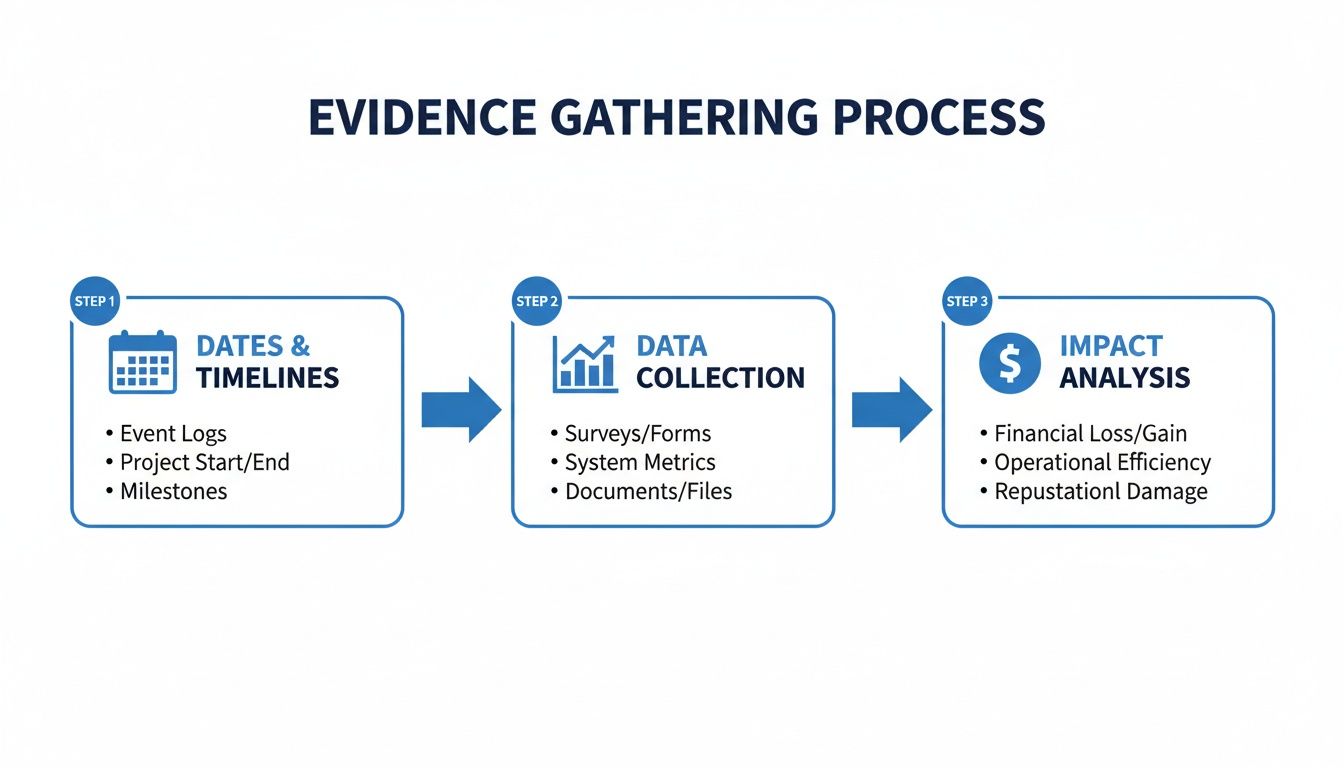
As this shows, solid evidence is built on specific timelines, hard data, and a clear understanding of how the issue is affecting the team or company.
A PIP can feel overwhelming, so we have broken down its essential parts into a simple table. An effective and legally defensible plan will always include these key components.
By ensuring each of these elements is thoughtfully addressed, you create a document that is fair, actionable, and protects the organization.
After you have laid out the problem, you must define the solution. This section is where you translate abstract expectations into concrete, measurable standards. It is where you set the bar for acceptable performance moving forward.
These expectations should tie directly back to the performance concerns you just outlined. The goal is a one-to-one match between the problem and the required standard.
For example:
With the standards set, the next step is creating specific goals to help the employee get there. The SMART framework is an industry standard for a reason—it works. Every single goal must be:
Vague goals like "be more proactive" are useless in a PIP. Instead, frame it as an objective, measurable action: "By Friday at 5 PM each week, you will identify and present one potential roadblock for each of your top three projects, along with a suggested solution."
A PIP should be a two-way street. It is not just about what the employee must do; it is also about what the company will do to support them. This section is crucial for demonstrating the organization's good-faith effort and genuine commitment to helping the employee improve.
Outline the specific resources you will provide. This could include:
Being explicit about the support you will offer makes the plan feel less punitive and more like a partnership. It can be helpful to look at different Performance Improvement Plan templates to see how others format this section.
Finally, the PIP must state the potential outcomes in plain, unambiguous terms. This section ensures the employee fully understands the seriousness of the situation and exactly what is at stake. The tone should be professional and direct, not threatening.
Start by stating that the goal of the plan is to help them return to a successful level of performance. Then, you must explain the consequences if the goals are not met by the end of the timeline. Typically, this means stating that failure to meet the expectations outlined in this plan may result in further disciplinary action, up to and including termination of employment.
This language is not meant to be intimidating; it's a necessary clarification that protects the organization and ensures the employee is fully aware of all possible outcomes.
The effectiveness of a Performance Improvement Plan boils down to one thing: clarity. Vague goals like “improve your attitude” are a recipe for failure because they are impossible to measure. The point of this stage is to turn abstract concerns into concrete, observable actions that leave no room for misinterpretation.
This is where many well-intentioned PIPs fall apart. An employee cannot meet expectations they do not fully understand. To build a defensible PIP, you must define exactly what success looks like in a way that both you and the employee can track objectively.
First, take the performance issues you have already documented and reframe them as specific, actionable goals. Stop focusing on subjective traits and start focusing on business output. Think about what you can physically see, count, or verify.
Let's take a common scenario where a manager is frustrated with an employee’s lack of organization.
The second goal is powerful because it is completely unambiguous. It names the task (client reports), the quality standard ("error-free"), the method ("via the project management tool"), the deadline ("by 5 PM"), and the precise metric for success ("zero late submissions").
By defining success with this level of precision, you remove subjective judgment from the equation. At the end of the PIP, there is no debate about whether the goal was met—the data provides a clear answer.
Once the goals are clear, you need to set a reasonable timeframe for the employee to show improvement. The timeline needs to be long enough to allow for real change but not so long that it removes urgency.
The industry standard for a PIP is typically 30 to 90 days.
Choosing the right duration depends on the complexity of the goals. You are looking for a sweet spot that creates focused effort without making the timeline feel impossible. You can discover more insights about broader HR compliance frameworks on paradigmie.com.
Setting goals and a deadline is only half the battle. The final, and arguably most critical, piece is scheduling weekly check-in meetings. A PIP should never be a "set it and forget it" document. Consistent follow-up is essential for providing support, offering real-time feedback, and making course corrections.
Keep these meetings brief, structured, and forward-looking.
These check-ins show the company is genuinely committed to helping the employee succeed. They also create crucial documentation that demonstrates a consistent, good-faith effort to manage the process fairly. This structured approach ensures everyone knows exactly where they stand at every point in the process.
If you need guidance on structuring a PIP that aligns with your company’s specific needs while maintaining defensible documentation standards, the team at Paradigm can help. Our expertise is in helping leaders navigate high-stakes situations with confidence.

All the work you put into drafting a solid Performance Improvement Plan can fall apart if the delivery is poor. How you present the PIP is just as important as what is in it. This is a delicate, high-stakes conversation that demands a careful blend of clarity, professionalism, and composure.
Your job is to steer a tough discussion toward a constructive outcome. The tone should be supportive and forward-looking, making it clear that the plan’s purpose is to help the employee get back on track—not to punish them.
Before you sit down with the employee, meticulous preparation is non-negotiable. You need to know the document inside and out, ready to walk through every point with confidence. Think through potential questions and anticipate emotional reactions. This is not a conversation to handle unprepared.
Choose a private, neutral space where you will not be interrupted. It is also a best practice to have an HR representative in the room. Their presence acts as a neutral witness, reinforces the seriousness of the discussion, and helps keep the conversation professional and on track.
Get straight to the point. Skip the small talk and clearly state the meeting's purpose with a calm, direct demeanor. Explain that you have identified some performance gaps and that this plan is designed to provide a clear roadmap for improvement.
Then, walk through the document section by section, together.
Give the employee space to ask questions and listen without becoming defensive. Acknowledge their feelings, but always bring the conversation back to the documented facts. The goal is not to debate the past; it is to agree on a clear path forward.
Remember, even a perfectly executed PIP can face scrutiny. Documenting this meeting, including the employee's acknowledgment of receiving the plan, is a critical step in showing you followed a fair and consistent process.
A PIP is not a "set it and forget it" tool. The real work starts after the initial meeting. Your consistent follow-through will ultimately determine whether the plan succeeds or fails.
Regular, documented check-ins are essential. Schedule these meetings weekly and treat them as immovable appointments. If you constantly cancel or postpone them, you send the message that the PIP is not a priority, which can undermine your position if things do not improve.
While performance improvement plans are a crucial tool, hard data on their success rates can be elusive. Many organizations track broader metrics like HR risk and compliance rather than specific PIP outcomes. To learn more about this, check out this guide on effective HR risk management for managers.
During each check-in, take detailed notes. Meticulous documentation is your best friend here, creating a defensible record of your efforts.
Your follow-up notes should always include:
After every check-in, send a brief follow-up email summarizing the conversation. This creates a clear, real-time record of your ongoing support and management of the process. This consistent follow-through demonstrates a good-faith effort and provides the detailed evidence needed to support any final decisions.
This structured process ensures that if the employee turns things around, you have guided them effectively. And if they do not, you have a clear, defensible record of the support and opportunities you provided every step of the way.
Navigating these conversations and ensuring your documentation is airtight can be complex. If you need expert guidance on managing high-stakes employee situations, contact Paradigm to discuss your needs.
Even a perfectly written Performance Improvement Plan can encounter challenges. These are high-stakes conversations, and it is critical for managers and HR leaders to be prepared. Knowing how to handle tricky situations with confidence keeps the process on track and reinforces a fair and professional workplace.
Navigating these moments is about staying grounded in the facts of the plan while managing the real human emotions that come with it. Let's walk through some of the most common hurdles you might face and how to clear them effectively.
This happens more often than you might think. The first thing to do is calmly explain that their signature is not an admission of guilt or agreement with your assessment. It is simply an acknowledgment that they have received the document and that you have discussed it with them.
If they still refuse to sign, do not force the issue. Instead, make a note on the signature line that says, "Employee received a copy of the plan on [Date] but declined to sign." Then, you and the HR representative should sign and date the document. The PIP is still valid and in effect; your note is the final piece of documentation you need.
Your goal is simply to document that the employee was made aware of the performance expectations and the plan. Their refusal to sign does not invalidate the process, as long as you record it properly.
Receiving a PIP is difficult news, so a defensive or emotional reaction is normal and expected. Your job as a leader is to remain calm, professional, and composed. The key is to avoid getting pulled into an argument or a debate over past events.
Listen to what they have to say and acknowledge their feelings with simple phrases like, "I understand this is difficult to hear." After giving them a moment, gently but firmly steer the conversation back to the objective, fact-based examples in the plan. Reiterate that the purpose of the PIP is to provide a clear roadmap for success and that you are there to support them.
A Performance Improvement Plan is a powerful tool, but it is not a one-size-fits-all solution. Knowing when not to use a PIP is just as important as knowing how to write one. A PIP is designed to correct performance issues—gaps in skills, productivity, or work quality.
It is absolutely the wrong tool for addressing serious misconduct. For issues like the ones below, a PIP is not appropriate:
These types of problems often call for immediate disciplinary action, which could include termination. A PIP is for employees who are struggling to meet job expectations, not for those who are breaking foundational rules. A PIP is also likely to fail if an employee lacks the core skills for the job and no reasonable amount of training will change that.
Navigating the complexities of performance management requires precision and sound judgment, especially when the stakes are high. At Paradigm International Inc., we act as a decision partner for leaders, providing the expert guidance needed to handle these situations correctly and reduce employment risk.
If you need support in creating defensible HR practices that protect your organization, we can help. Schedule a consultation with our team to learn more.