
Onboarding a new employee is a pivotal moment for any organization. While it's tempting to focus only on making them feel welcome, the administrative steps in the first few days are fundamentally important. A structured new hire checklist is not just about efficiency; it is a foundational risk management tool. It ensures every new employee is processed consistently and compliantly, protecting your business from preventable legal and financial exposure. For business owners and HR leaders, getting this process right from day one is non-negotiable.
The offer letter is more than a formality; it's the foundational legal document of the employment relationship. This formal written offer outlines the complete terms of employment, including compensation, role responsibilities, reporting structure, and at-will status. It serves as the initial, official communication that establishes mutual understanding and creates a defensible record of the agreed-upon terms, protecting both the employee and the employer.

This step is critical in any sample new hire checklist because it prevents future disputes over job duties, pay, or work location. For businesses operating across multiple states, this document must be meticulously tailored to reflect state-specific laws. This includes compliance obligations such as non-compete clauses or intellectual property assignments, which vary significantly by jurisdiction.
To maximize clarity and legal protection, your offer letter template should be reviewed by employment counsel before use. It should also be adaptable to specific roles and locations.
Before a background check can be initiated, employers must obtain signed authorization from the candidate. This is a critical compliance requirement mandated by the Fair Credit Reporting Act (FCRA) and various state laws. This formal disclosure and consent document notifies the applicant of their rights and gives the employer legal permission to conduct the screening.
This step is an essential component of any sample new hire checklist because non-compliance can lead to significant legal penalties. The documentation must be a standalone form, not buried within a general employment application. For businesses in multiple states, this process requires adherence to "ban the box" laws and rules governing the consideration of criminal records, which differ by location.
To ensure full compliance and mitigate risk, partner with an FCRA-compliant screening vendor and embed their standardized forms into your process. This approach helps maintain consistency and keeps your documentation current with evolving regulations.
The Form I-9 is a mandatory federal document used to verify the identity and employment authorization of individuals hired in the United States. This is a critical compliance step required by U.S. Immigration and Customs Enforcement (ICE) for every new hire, regardless of citizenship status. Failure to complete or retain this form correctly is one of the most common and costly compliance errors for employers.
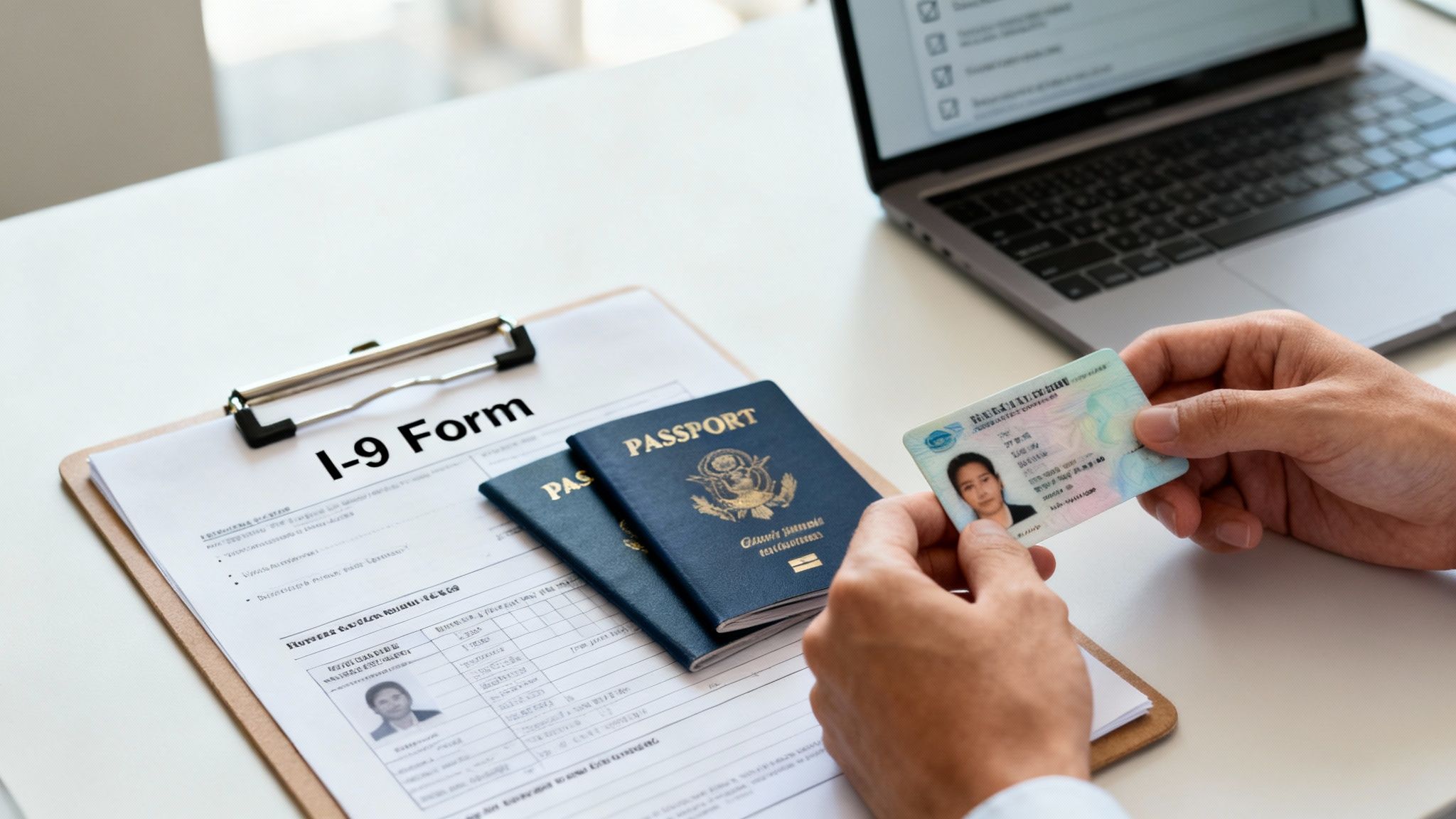
This item's inclusion in any sample new hire checklist is non-negotiable due to the significant legal risks involved. The law requires Section 1 to be completed by the employee on or before their first day, and Section 2 must be completed by the employer within three business days. For organizations with remote hires, managing this time-sensitive process requires a robust system to avoid fines that can reach thousands of dollars per violation.
To ensure defensible compliance and avoid penalties, establish a standardized and audited I-9 process from day one. This process must be consistent for all employees to prevent accusations of discrimination.
Collecting tax documentation is a foundational payroll compliance task. This includes the federal Form W-4 to determine income tax withholding and corresponding state and local tax forms. Proper and timely completion is non-negotiable for accurate payroll processing and mitigating significant tax liability risks for your business.
This step is a critical component of any sample new hire checklist because it forms the basis of payroll compliance. Incorrectly completed or missing forms can lead to incorrect withholdings, resulting in penalties from the IRS and state agencies. For companies with multi-state employees, the complexity increases, as each state has unique withholding forms. Ensuring all new hire tax forms are correctly completed is a cornerstone of effective tax compliance services for any organization.
To ensure accuracy and defensibility, implement a rigid process for collecting and verifying all tax-related documents on the employee's first day. This system should account for federal, state, and role-specific requirements.
The employee handbook acknowledgment is a critical document that confirms a new hire has received, reviewed, and understands the company’s core policies. This signed form serves as a defensible record, showing the employee was made aware of workplace rules, from the code of conduct to anti-harassment policies. This step is a cornerstone of any sample new hire checklist because it provides essential legal protection in the event of disciplinary action.
This process establishes a clear baseline of understanding for the employment relationship and helps mitigate risk. For businesses in regulated sectors or those operating in multiple states, this acknowledgment becomes even more important. It confirms the employee’s awareness of specific compliance obligations, such as patient privacy protocols in healthcare or unique leave policies required by state law.
To ensure this document is effective, it must be managed with precision. The acknowledgment should always be tied to the current version of the handbook and filed promptly in the employee's personnel record.
Collecting emergency contacts and dependent information is a foundational step for employee safety and benefits administration. This documentation provides a critical lifeline for notifying next-of-kin in an emergency. It also serves as the official record for enrolling dependents in benefits programs like health and life insurance.
This step is an essential part of any sample new hire checklist because it directly impacts legal and operational duties. For benefits, inaccurate dependent data can lead to compliance issues under ERISA or the ACA. Outdated emergency contacts can create significant liability in a crisis. The process must be handled with sensitivity, ensuring data privacy while gathering the necessary details.
To ensure this process is both compliant and efficient, integrate it into your Day 1 paperwork flow and establish clear data handling protocols. The goal is to collect accurate, verifiable information without creating an undue burden on the new employee.
The direct deposit authorization form is a critical administrative tool that streamlines payroll processing. This signed document grants the employer permission to electronically transfer funds into an employee’s designated bank account. It establishes clear employee consent and provides a secure, efficient alternative to physical paychecks, reducing administrative costs.
This step is a non-negotiable part of any sample new hire checklist because it formalizes the payment process and integrates payroll with benefits administration. For organizations offering Health Savings Accounts (HSAs) or 401(k) plans, this form often authorizes pre-tax deductions. Proper documentation creates a defensible record of payment consent, protecting the business from wage and hour disputes.
To ensure payroll accuracy and compliance, your direct deposit authorization process should be standardized and secure from day one. It needs to be precise to prevent payment errors that can damage employee trust.
In competitive markets, safeguarding your company’s ideas and client relationships is essential. Confidentiality, non-compete, and intellectual property agreements form the legal backbone that keeps proprietary information secure. These legally binding documents define what information must remain confidential and clarify ownership of work-product.
Because enforceability varies significantly by state, businesses should seek tailored legal review for these agreements. This item is vital in any sample new hire checklist because it creates a defensible record of expectations around sensitive data and post-employment conduct. Inconsistent or overly broad restrictions can be struck down in court, so precision is paramount.
To maximize enforceability and clarity, follow these tactics:
Beyond standard employment forms, many roles require specific, legally mandated documentation to ensure compliance within regulated industries. This documentation serves as auditable proof that an employee is qualified, licensed, and legally permitted to perform their job duties. This protects the business from significant regulatory penalties and legal liability.
This step is an indispensable part of any sample new hire checklist for businesses in sectors like healthcare, finance, or education. Failure to verify these credentials before an employee begins work is a procedural error that can violate state and federal law. For example, allowing a clinician to see patients without verifying their state medical license could lead to government sanctions.
To build a defensible and compliant onboarding process, integrate role-specific verification directly into your pre-employment workflow. This ensures no regulated employee is overlooked.
Properly provisioning technology access is a critical security measure. This process involves establishing the new hire’s digital footprint within the company, including creating system credentials and assigning access to necessary applications. It serves as the first line of defense against unauthorized access, data breaches, and intellectual property theft.

This step is a non-negotiable component of any sample new hire checklist, as it directly impacts operational security. For organizations in regulated sectors like healthcare or finance, documenting the precise level of access granted is essential for audit trails and proving adherence to standards like HIPAA. A well-defined process ensures employees have the tools they need while safeguarding sensitive data.
To ensure a secure and efficient technology setup, coordinate closely between HR and IT departments to create a standardized, role-specific provisioning process. This alignment prevents security gaps and productivity delays.
A well-structured sample new hire checklist is more than an administrative tool; it is the blueprint for a compliant and efficient human resources function. By standardizing the collection of critical documents like I-9s, W-4s, and policy acknowledgments, you create a consistent experience that minimizes risk and sets a professional tone from day one.
The real power of these checklists emerges when they are viewed as a strategic asset. Each item, from the offer letter to technology setup, represents a crucial data point in the employment lifecycle. When managed systematically, this documentation becomes your organization's first line of defense in an audit, compliance inquiry, or employee dispute. This structured approach moves onboarding from a reactive exercise to a proactive risk management strategy.
Ultimately, mastering your onboarding process yields benefits far beyond simple compliance. A seamless, professional onboarding experience directly impacts employee engagement, retention, and time-to-productivity. When new hires feel supported and confident that their employer is organized, they are more likely to integrate successfully into your company culture and contribute to its goals. A meticulously executed checklist is the bedrock of responsible growth, protecting your organization from fines, legal challenges, and reputational damage.
Navigating the complexities of multi-state compliance and HR decisions requires more than just a checklist. If you need support in building defensible practices as your organization grows, it may be helpful to consult with experts in the field. Contact us to learn more about how to support leadership teams in complex employment environments.