
Sexual harassment training can often feel like just another legal hurdle for small and mid-sized businesses to clear. But a truly effective strategy is much more than a certificate of completion—it’s a core part of building a resilient, respectful, and productive workplace. This guide is designed to move beyond legal jargon and help business leaders make a strategic investment in their people and their culture.

A modern approach to harassment prevention is all about fostering a culture of safety and respect. This culture becomes your best defense against legal risks and reputational damage. It requires a thoughtful strategy that goes far beyond simply satisfying minimum state requirements. Think of it less as a mandatory task and more as a powerful tool for strengthening your organization.
The real goal is to create an environment where issues are addressed early, openly, and fairly. This builds trust and shows your team that their well-being is a genuine priority. Such an environment is essential for retaining top talent and maintaining a healthy workplace.
A strong sexual harassment prevention program rests on four key pillars. When these elements are integrated, they reinforce one another to create a system that is both legally sound and culturally effective. A comprehensive program is your best defense against workplace misconduct.
To move beyond mere compliance, organizations must empower employees to proactively understand and address all forms of workplace bias. A deeper understanding helps create a more inclusive environment. For those looking to explore this topic further, a helpful resource is available here: Navigate Bias and Succeed.
Your harassment policy is more than a legal document—it's the bedrock of your prevention strategy. If it’s buried in a handbook, filled with legal jargon, or vague, it isn’t doing its job. This policy is a direct message to your team about the safe, respectful workplace you are committed to building. A strong policy gives people clarity on expectations and the confidence to speak up.
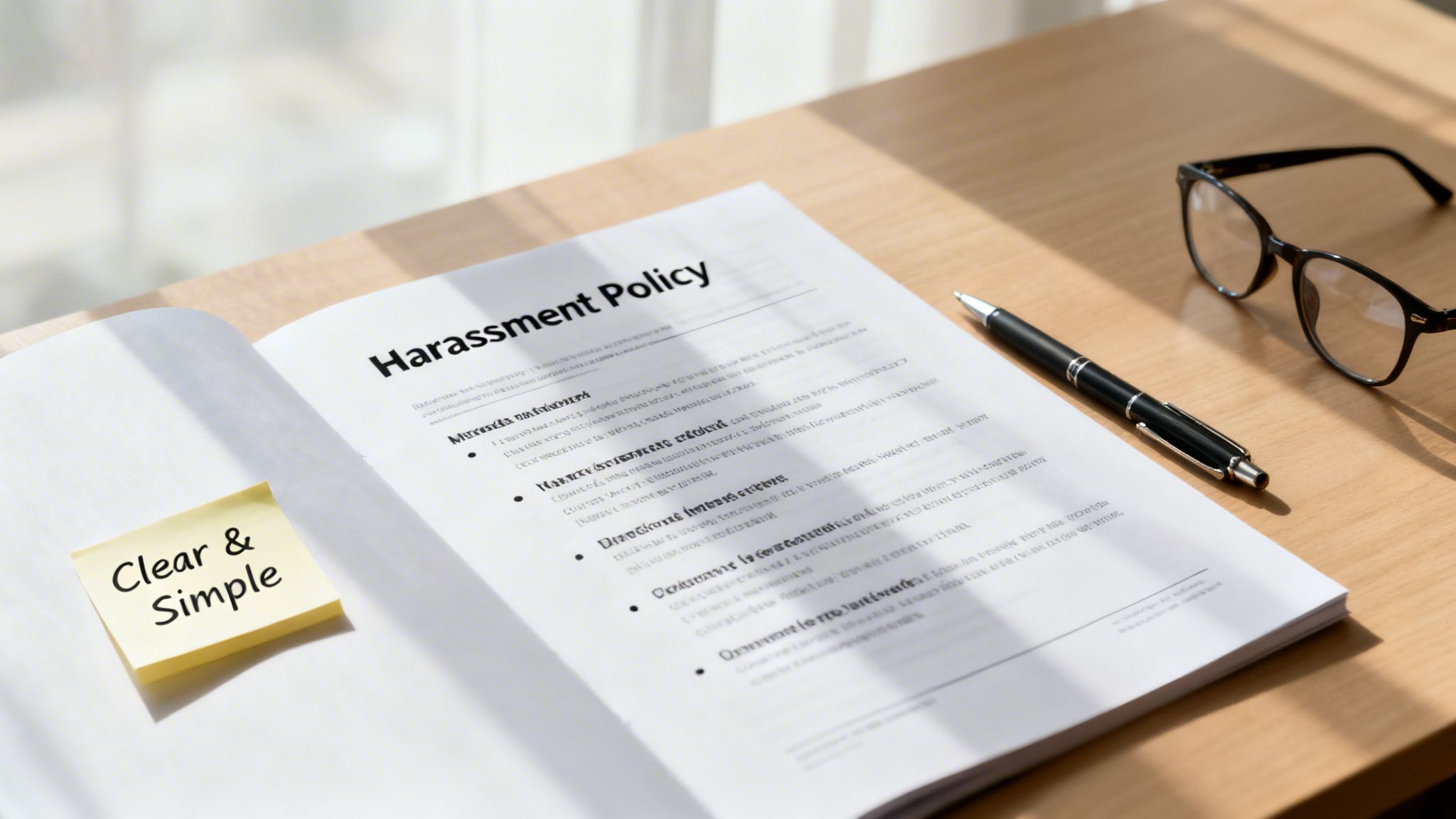
The goal is to create a living document that empowers your team. It should reinforce your promise of a workplace where everyone feels safe and valued. Let's explore what makes a policy both legally solid and genuinely effective.
First, you must state plainly what is unacceptable. Your policy needs to define harassment, discrimination, and retaliation in simple, everyday language. Avoid dense legal jargon. If your team cannot understand the policy, they cannot follow it.
An effective policy goes beyond the legal definition of sexual harassment. It provides real-world examples that paint a clear picture of what prohibited conduct looks like day-to-day. Using concrete examples makes the rules tangible and clear.
A policy is useless if people do not know who to go to or are afraid to speak up. Fear of not being heard or believed often causes silence. Your policy must lay out a clear, accessible reporting process with multiple options for employees.
A common mistake is naming only a single point of contact, such as the direct manager. This single-channel approach can be a barrier if the manager is the problem. Providing multiple avenues for reporting builds trust and shows you are serious about hearing complaints.
Essential Reporting Channels to Include:
Offering choices empowers employees to go to the person they feel most comfortable with. This simple adjustment can dramatically increase the chances that issues are raised early, before they escalate. For a starting point, our guide on creating an employee harassment policy from templates can provide a solid foundation.
This may be the most important part of your policy: a zero-tolerance stance on retaliation. Employees often stay silent not because they are unsure if they were harassed, but because they fear losing their job or being ostracized for speaking out.
Your policy must state clearly that no employee will face punishment for reporting a concern in good faith or for participating in an investigation. This protection must also extend to witnesses. This commitment cannot just be a line in a document; it has to be demonstrated. When people believe they are protected, they are far more likely to trust the system.
Passive, click-through online modules do not inspire real change. For sexual harassment training to have a lasting impact, it must be engaging, relevant, and actionable. The goal is not just to check a compliance box, but to build awareness, shift perspectives, and drive meaningful behavioral change across your organization.
This means moving away from generic, one-size-fits-all solutions. The best training gives your team the tools and confidence to contribute to a more respectful workplace. It must address the real-world nuances of your environment while satisfying complex state-by-state legal mandates.
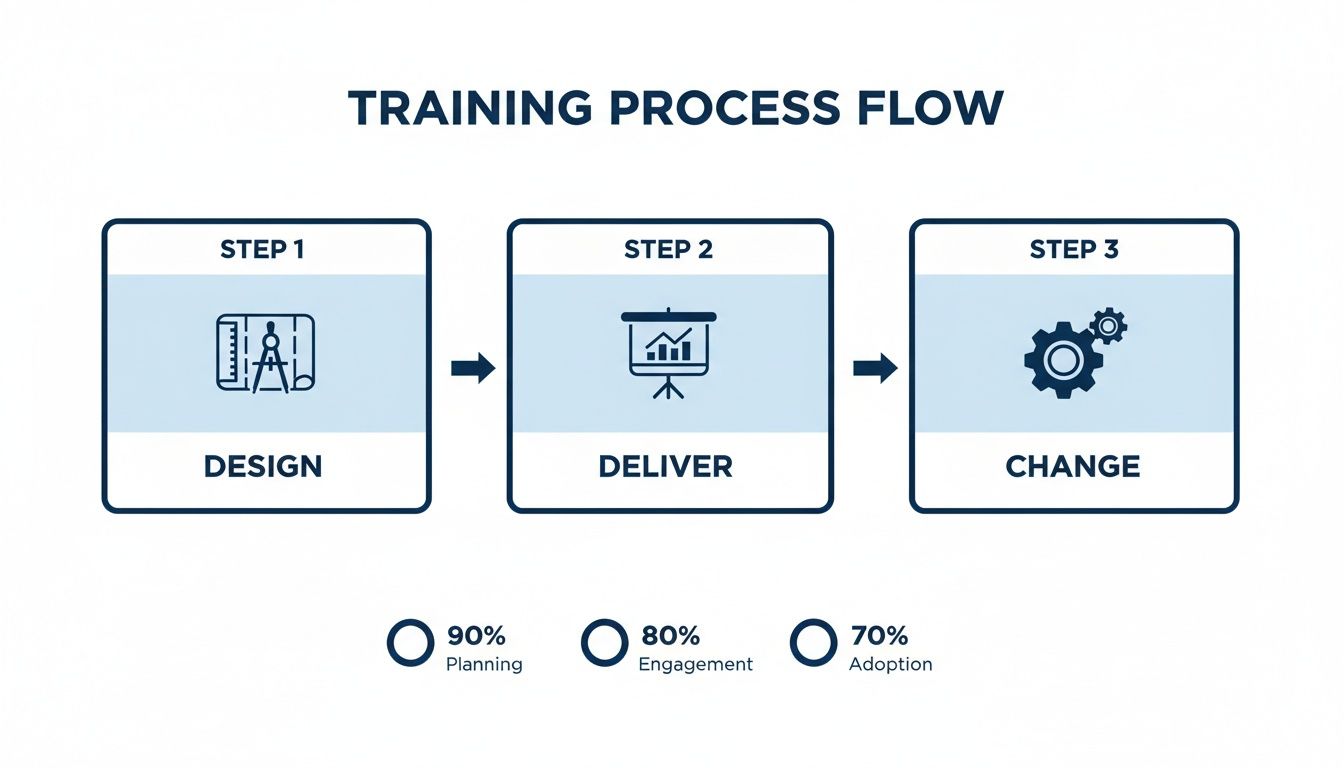
First, recognize that not everyone has the same role in preventing harassment. A uniform approach often fails because it ignores the unique duties of managers compared to individual contributors. Segmenting your training ensures each group gets the information most critical to their position.
For training to be effective, especially regarding nuanced interpersonal skills, it must be built on the idea that people can learn and improve. This is about fostering a growth mindset, where personal development is seen as an ongoing process.
Who are you training?
This is not just a "nice to have." The Equal Employment Opportunity Commission (EEOC) reports that sexual harassment charges are a persistent issue, highlighting the critical need for robust prevention training for businesses of all sizes.
How you deliver training is as important as its content. The days of a static PowerPoint in a conference room are over. Today’s most effective sexual harassment training and prevention programs use interactive formats to keep people engaged and ensure the lessons stick. A blended approach that fits your company's culture and operations is often best.
No matter the format, interactivity is key. Many states now legally require that training be interactive, meaning it must provide a way for employees to ask questions and get timely answers. The best training feels less like a lecture and more like a facilitated conversation about how we treat each other at work.
A comprehensive training program goes beyond legal definitions of harassment. It delves into the subtleties of workplace behavior and equips employees with actionable strategies for building a more respectful environment. We've created a detailed guide on what to include in workplace harassment training for managers if you want to dig deeper.
This table outlines the critical elements for your harassment training programs to ensure compliance and effectiveness for both employees and managers.
By building your training around these pillars, you create a robust program that not only meets legal standards but also actively contributes to a healthier workplace culture. When you focus on these core elements, your training becomes a powerful tool for proactively shaping your company culture.
Perfect policies and engaging training sessions are worth little if your team doesn’t trust what happens after an issue is raised. The foundation of your sexual harassment prevention program rests on a reporting and investigation process that employees believe is safe, fair, and thorough.
Without that trust, even the most serious problems will remain hidden, creating a massive blind spot for your organization. This is where theory meets reality. Building trust requires a clear commitment to a process that is both legally sound and genuinely supportive.
One of the biggest reasons people don't report harassment is a fear of retaliation. They worry about being ostracized, passed over for a promotion, or even fired. To help people feel comfortable coming forward, you must provide them with options. A single point of contact is a structural flaw.
Make sure your team knows they have several safe avenues to raise a concern:
The goal is simple: remove as many barriers as possible. When employees see they have choices, they start to believe the system is designed to help them.
Once a report is made, your response must be immediate, consistent, and impartial. A slow or disorganized investigation erodes trust and increases legal risk. Every complaint, no matter how minor it seems, must trigger the same structured process. A solid, defensible investigation follows a few key phases.
Phase 1: Initial Intake and Planning
First, take the complaint seriously. Gather the initial details and identify any potential witnesses. Immediately reassure the employee that retaliation is strictly forbidden. Then, map out an investigation plan, including who you need to interview and a rough timeline. A critical mistake is promising absolute confidentiality; instead, explain that information will be kept as private as possible on a need-to-know basis.
Phase 2: Conducting Interviews and Gathering Evidence
All interviews should be conducted in private by a trained, neutral investigator. Prepare questions beforehand to stay consistent. You will need to interview the complainant, the accused, and any relevant witnesses. Your role is to be an objective fact-finder. Collect relevant evidence such as emails, messages, or security footage, and document every step of the process.
Phase 3: Reaching a Conclusion and Taking Action
After gathering all the facts, the investigator must weigh the evidence and determine if the company's policy was violated. The legal standard is "preponderance of the evidence"—meaning, is it more likely than not that the harassment occurred? Once you have a conclusion, you must communicate the findings to both parties involved.
If the investigation confirms a policy was broken, you must take prompt and appropriate corrective action. The goal of that action is to stop the harassment for good and prevent it from happening again. Documenting the conclusion and all actions taken closes the loop and proves your process is built on accountability.
Sexual harassment training is not a one-time project; it is an active, ongoing commitment. Real prevention is woven into your company's fabric, showing up in daily interactions and leadership decisions. It’s about moving beyond an annual training session and making respect a core part of how you operate.
This requires a conscious, sustained effort. The goal is to build a culture where prevention is a shared responsibility, not just an HR task. When you achieve this, you create a sustainable, safe environment where everyone can do their best work.
The most effective prevention strategies are continuous. A single training session, no matter how great, will fade from memory. To keep the principles of respect and safety top of mind, you must reinforce them consistently throughout the year. Simple, regular touchpoints can make a huge difference.
By integrating these small but consistent actions, you signal that sexual harassment prevention is a core operational priority.
Employees look to leaders for cues on what behavior is valued and what is tolerated. If there is a disconnect between your policies and what leaders do, the policy becomes meaningless. Every manager, supervisor, and executive must be a visible champion of your respectful workplace culture.
Leadership is the engine of culture. When leaders consistently model respectful communication, actively listen to concerns, and address inappropriate behavior swiftly, they send a clear message that your company’s values are not negotiable. This goes beyond avoiding obviously bad behavior; it is about demonstrating inclusive and professional conduct in every interaction.
How Leaders Can Set the Tone:
When leadership walks the talk, they build the psychological safety employees need to trust the prevention systems you have put in place.
Your reporting system is not just a reactive tool; it is a source of data that can help you get ahead of potential problems. By analyzing anonymized data from reports, you can spot trends, identify departmental hot spots, or notice recurring issues that may point to a deeper cultural problem.
This proactive approach allows you to move from simply responding to incidents to actively preventing them. For instance, a cluster of complaints from a specific team might signal a need for targeted management coaching. This data-informed strategy helps you put your prevention resources where they are needed most, transforming your sexual harassment training and prevention program into a targeted strategy for continuous improvement.
Ultimately, embedding prevention into your culture creates a resilient organization. This commitment protects your people, strengthens your brand, and builds a foundation of trust that will pay dividends for years to come. If you're ready to build a more sustainable prevention strategy, our team can provide the expert guidance you need. Connect with us today.
Building a sexual harassment prevention program that is both compliant and effective raises many questions. Business owners and HR leaders are constantly balancing legal requirements with the practical realities of training and handling sensitive situations. Getting the answers right is key to building a program your team can trust.
The best approach combines legal requirements with proactive culture-building. States like California, New York, and Illinois have specific mandates for annual or biannual training. However, waiting two years between sessions is too long to keep this topic top-of-mind.
A better strategy is to include foundational sexual harassment training and prevention in your new hire onboarding process. From there, conduct a comprehensive refresher for all staff annually. This frequency sends a clear message about your commitment and keeps everyone current on policies and laws. Don't forget that managers need more frequent, targeted sessions on their unique responsibilities.
The short answer is: maybe. Many states now mandate that training must be "interactive." A simple click-through video or a static presentation likely does not meet this standard. An online program is only compliant if it actively engages the user.
"Interactive" platforms typically include features like quizzes to test understanding, scenario-based questions, and a way for employees to ask questions and get a timely response from a qualified expert. Before investing in an online training vendor, you must verify that their platform meets the specific interactivity requirements for every state where you have employees.
A poorly handled investigation can shatter trust and expose your company to significant legal risk. One of the most common mistakes is delaying the process. When a concern is raised, you must act promptly. Another major error is failing to document every step, from the initial complaint to the final resolution.
Promising absolute confidentiality is a well-intentioned but impossible promise to keep during a thorough investigation. Instead, assure everyone involved that information will be kept as private as possible and shared only on a strict need-to-know basis. Finally, many companies fail to follow up with both the complainant and the accused after the investigation. Closing the loop is essential for rebuilding trust.
Creating a defensible and effective sexual harassment prevention program requires a thoughtful strategy. If you need a partner to help you navigate these critical decisions, the team at Paradigm International Inc. is here to help. If you would like to learn more about how we can support your organization, please feel free to contact us.