Disciplinary action is often seen as a negative process, something to be avoided. But in reality, it is one of the most important tools a manager has to guide an employee back toward success. This is not about punishment—it is about providing corrective guidance to realign an employee with company expectations. Think of it as a structured roadmap for getting a team member back on track. When handled correctly, this process reinforces fairness, consistency, and accountability across your entire organization.
A formal disciplinary process is a strategic function that upholds your company’s standards and builds a culture of accountability. This approach shifts the conversation from punishment to course correction, giving you a clear, defensible framework for addressing issues fairly every time. The risks of not having one are significant. A lack of clear processes and documentation can expose a business to serious legal challenges and undermine employee trust.

Disciplinary action is a formal process an employer uses to address and correct an employee's performance or conduct issues. It is a strategic tool designed to guide employees toward improvement while ensuring fairness and consistency in the workplace. This is not just a reactive measure for when things go wrong; it is a foundational process for maintaining a healthy and legally compliant organization.
When leaders hear “disciplinary action,” many immediately think of punishment. However, it is far more effective to see discipline as a corrective tool designed to guide an employee back to the right path. A punitive approach can breed fear and disengagement. A corrective one, however, focuses on solving the problem and helping the employee succeed, which reinforces a culture of accountability and support.
A structured disciplinary process does more than just respond to isolated incidents. It creates a system that protects the organization and gives employees a clear path to improve. The primary goal is to correct behavior and retain valuable employees, not just to terminate them.
Here are the core purposes of a formal disciplinary process:
Ultimately, a well-defined process is about guiding employees toward success while protecting your organization from legal and cultural risks. Mastering what disciplinary action is—and how to apply it correctly—transforms a difficult HR task into a powerful tool for strengthening your entire organization.
If your business needs guidance on creating a fair and defensible disciplinary framework, our team can help you build a process that aligns with your goals. You can schedule a consultation by visiting the ParadigmIE Contact Page.
When an employee’s performance or conduct falls short, a fair and effective response is crucial. This is where progressive discipline comes in. It is not a rigid set of punishments, but a structured pathway designed to give an employee clear feedback and every opportunity to get back on track.
This model provides a defensible framework for managers, ensuring that actions are consistent, fair, and escalate logically if the problem continues. The core idea is simple: the response should fit the infraction. A minor slip-up receives a minor correction, while serious misconduct requires a more forceful response from the start.
The progressive discipline process generally moves through a series of steps, each one more formal than the last. However, the right starting point always depends on the severity of the issue at hand.
Here are the most common stages:
When deciding on any disciplinary action, a leader faces a fundamental choice: is the goal to punish past behavior, or to correct future performance?
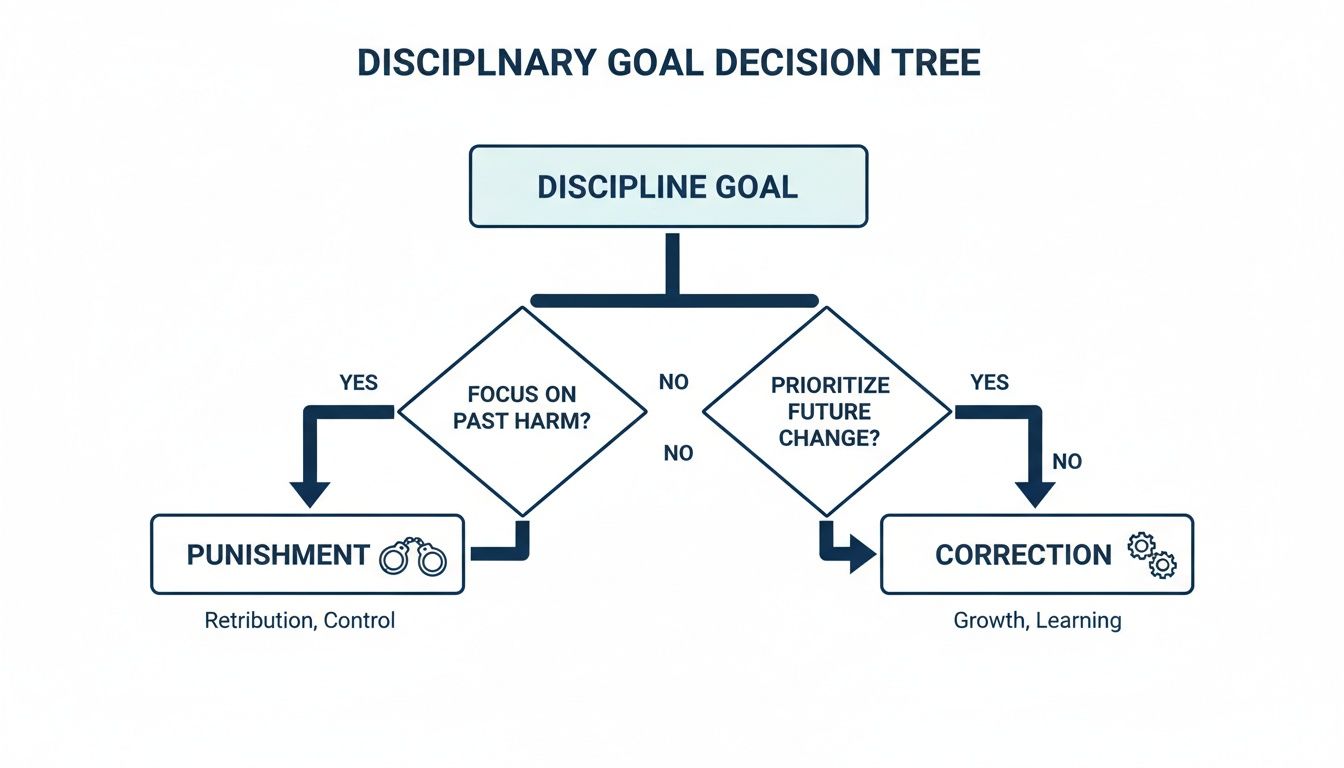
A corrective approach focuses on changing future behavior, which is the entire philosophy behind progressive discipline. Understanding these employee disciplinary steps is essential for any leader.
Sometimes, initial attempts at correction do not work. For those situations, or for severe one-time offenses, the process moves toward more serious consequences that signal the employee's job is in jeopardy.
Remember, this model has built-in flexibility. You would not give a verbal warning for employee theft; you would move directly to suspension pending an investigation. Tailoring the response to the infraction protects both the employee and the business.

Before taking serious disciplinary action, a thorough and impartial investigation is your single best defense against legal challenges. A rushed or biased process can undermine even the most justified discipline, opening your business to significant risk. Think of an investigation as a fact-finding mission. Your goal is not to prove someone is guilty; it is to objectively gather information, determine what happened, and make a decision based on evidence.
A successful investigation starts with a clear plan. Before you talk to anyone, define the scope and objectives. Acting fast is important, but acting strategically is what truly matters. First, pinpoint the core allegation. What specific policy was allegedly violated? Who was involved, and what is the potential impact?
Your plan should outline:
A well-planned investigation creates a roadmap that ensures you stay on course and gather the right information. This leads to a much more reliable and defensible outcome.
Once your plan is set, start gathering evidence. This involves collecting documents and conducting interviews. The key here is to remain objective and impartial every step of the way. Collect all tangible evidence you can before you begin interviews. This allows you to prepare informed questions and corroborate what witnesses tell you.
Best practices for witness interviews include:
After all evidence is in and interviews are complete, analyze everything and create a formal investigation report. This document summarizes your findings and provides the basis for any disciplinary action. For a deeper dive into this, check out our guide on how to conduct a compliant HR investigation.
In employee relations, there's one golden rule: if it was not documented, it did not happen. Every conversation, warning, and decision must be recorded to protect your business and prove you acted fairly. Solid documentation is your single best defense, transforming a subjective situation into an objective record of the facts.
Think of it as building a procedural shield. A clear paper trail shows a commitment to due process, which becomes invaluable if your actions are ever questioned. Without it, even the most justified disciplinary action can be twisted to look arbitrary or discriminatory. This is why mastering documentation is a critical leadership function.
A strong disciplinary notice leaves no room for ambiguity. To be effective and defensible, every notice must include these key components:
The tone you use in disciplinary documents is just as important as what you write. The goal is to be firm and factual, never emotional or accusatory. For a deeper look at the specifics, check out our guide on documenting employee discipline effectively. Using tools that help generate legal documents can add another layer of protection.
If you need help building a documentation process that stands up to scrutiny, our experts can provide the guidance your business needs. Please contact us to learn how we can help you build a more defensible HR framework.
Not all employee issues are created equal. While many performance problems can be resolved with progressive discipline, some situations demand an immediate, firm response. High-risk scenarios—like allegations of harassment, discrimination, workplace violence, or theft—require you to act fast to protect your people and your business.
In these cases, you often have to set the standard playbook aside. Instead of a verbal warning, your first move is usually to secure the workplace. This could mean placing an employee on administrative leave or suspension while you conduct an impartial investigation. Knowing when to escalate your response is a critical skill for any leader.
Certain types of misconduct pose a direct threat to your employees, customers, or the organization itself. These are serious breaches that cannot wait for a scheduled one-on-one. Taking immediate action shows you take your duty to provide a safe workplace seriously.
Incidents that almost always require an immediate, escalated response include:
High-risk situations are legal minefields. Fumbling your response can expose your business to catastrophic legal and financial harm. Escalating the matter to trained experts is a smart, defensive business decision. Workplace violence, for instance, is a growing concern. The AFL-CIO noted a significant jump in serious violence-related injuries, with a rate of 4.3 per 10,000 workers, as detailed in their full report on workplace safety. Mishandling these cases can quickly lead to major lawsuits.
While managers can handle routine discipline, high-risk situations often demand specialized expertise. The complex web of employment laws and the nuances of a defensible investigation require a professional. Knowing when to call for backup is a crucial judgment call.
You should engage HR advisory support or legal counsel right away if:
If you are facing a high-risk employee situation and need expert guidance on how to respond, our team is here to help. You can learn more by connecting with us at the ParadigmIE contact page.
Navigating what disciplinary action looks like in the real world can be challenging. Even with a solid policy, specific situations often raise new questions for business leaders. This section provides clear answers to the most common questions, helping you handle these scenarios with confidence.
While “at-will” employment generally means you can terminate an employee for any lawful reason, firing someone on the spot is incredibly risky. It bypasses a fair investigation and proper documentation, opening your business to claims of wrongful termination, discrimination, or retaliation. Even in at-will states, consistency and due process are your best legal defenses. Always follow a fair, documented process to prove your decision was based on legitimate business reasons.
A written warning and a Performance Improvement Plan (PIP) are important tools, but they serve different purposes. Knowing when to use each one is key to achieving the right outcome.
A written warning is a snapshot documenting a past event. A PIP, on the other hand, is a forward-looking roadmap for correcting future performance.
It happens more often than you would think. The most important thing to remember is that an employee's signature is simply an acknowledgment that they received the document, not that they agree with it. If an employee refuses to sign, stay calm and professional. Simply make a note on the form, such as, “Employee received a copy but declined to sign,” and add the date. If possible, have a witness sign the document to confirm it was presented. The refusal to sign does not invalidate the disciplinary action.
For specific scenarios unique to your business, getting professional guidance is always the safest move. The experts at Paradigm can help you tailor a process that protects your organization and ensures fairness. If you need support navigating complex employee issues, you can learn more by visiting our contact page.