Navigating the world of employment can feel like a minefield. The routine decisions you make every day—hiring a new team member, promoting a top performer, or conducting a performance review—each carry a hidden risk. This is the core of employment practices liability: the legal and financial exposure your business faces simply by being an employer. A single misstep, however unintentional, can quickly spiral into a costly legal battle over claims like wrongful termination or discrimination.
This guide is for business owners and leaders navigating this complex landscape. We will demystify Employment Practices Liability (EPL), breaking it down into practical concepts and actionable strategies. The goal is to move you from a place of reactive fear to one of proactive confidence, giving you the tools to protect your organization.
Employment practices liability doesn’t just stem from major incidents; it can arise from any point in the employee lifecycle. Common triggers often look like routine business, but they can be perceived as unfair or illegal by an employee.
These everyday situations are where the real liability exists. The risk is also growing; according to the EEOC, workplace discrimination charges jumped significantly between 2021 and 2024. For a deeper look at prevention, you can learn more about how to protect your company from HR lawsuits.
The reality of modern business is that operational decisions and people management are deeply intertwined with legal risk. A proactive approach is no longer optional—it's essential for stability.
So, what exactly is employment practices liability? At its core, it is the legal risk your company shoulders every day, spanning the entire employee lifecycle—from the first interview to the final exit conversation. Think of it as a necessary shield against claims that an employee's rights were violated during their employment.
These issues often grow out of everyday workplace interactions and decisions, not just high-profile legal battles. To protect against this financial exposure, businesses turn to Employment Practices Liability Insurance (EPLI). This specialized coverage is designed to handle the legal defense costs, settlements, and judgments that come from employee-related claims.
EPLI is built to defend your business from a wide range of allegations, regardless of whether they have merit. Even a claim that is ultimately dismissed can easily cost tens of thousands of dollars in legal fees alone. This makes EPLI coverage essential for any business with employees.
Everyday management decisions are where the real risk lies. Things like hiring, promoting, and conducting performance reviews are all potential trigger points for a claim.
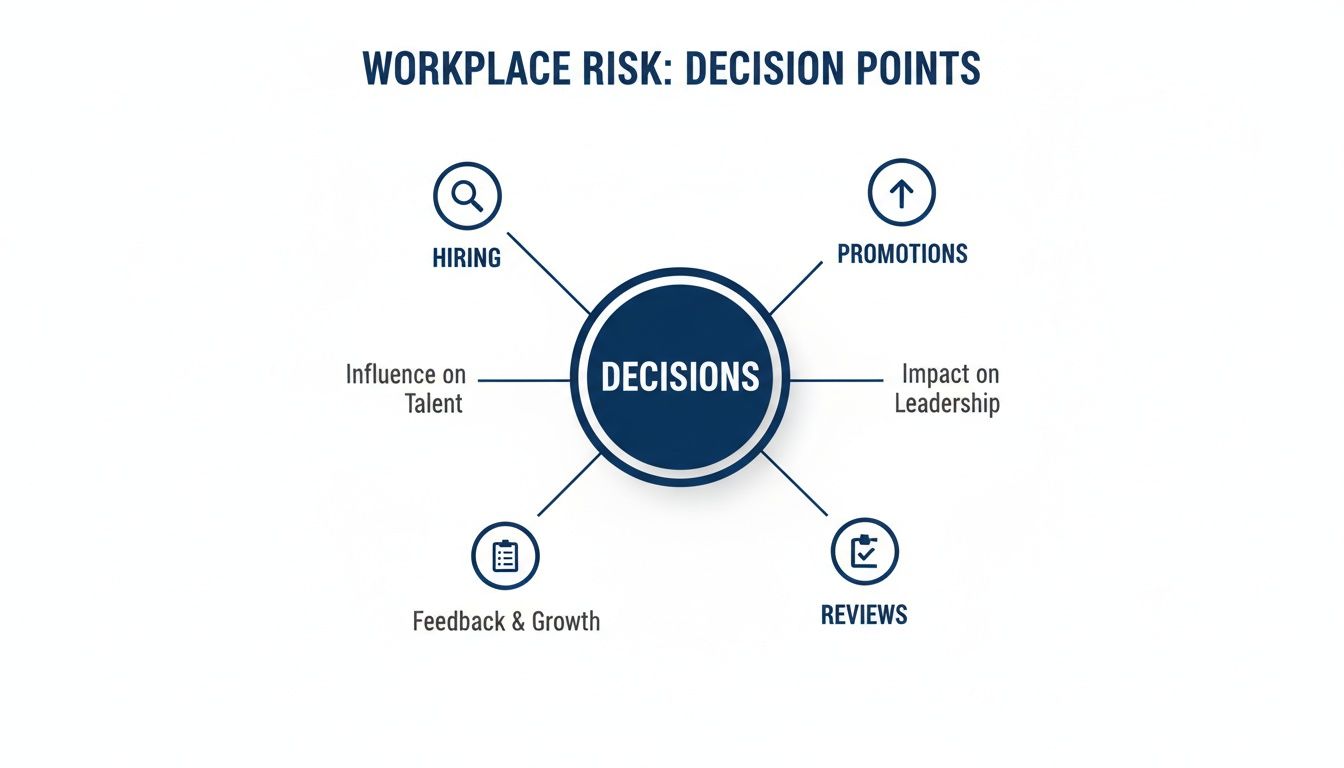
This illustrates that liability isn’t usually from a single, dramatic event. Instead, it’s a cumulative risk that comes from the ongoing process of managing people, where every choice carries potential legal weight.
The claims covered by EPLI are broad, touching on nearly every part of the employer-employee relationship. Becoming familiar with these common claim types is the first step in seeing where your company might be vulnerable. The following table breaks down the most frequent claims that fall under an EPLI policy, offering a simple definition and a real-world example for each.
These scenarios highlight how easily a routine management action can turn into a costly legal dispute. Understanding them is key to building a more resilient and compliant workplace. These issues are far more common than many leaders realize, making EPLI a critical safeguard.
Employment Practices Liability isn't just about avoiding lawsuits; it's about creating fair, consistent, and legally sound processes that protect both your people and your company's bottom line.
To truly manage this risk, it helps to understand the foundational principles of employment law, which form the legal basis for the rights and obligations EPLI is designed to address. Wrongful termination claims are especially dangerous for businesses that lack consistent documentation. Our guide on defensible strategies for wrongful termination for employers is a great place to start.
Understanding what employment practices liability is gets you started, but preventing claims means examining your daily operations. The key is to spot the everyday actions and minor oversights that can grow into expensive lawsuits. These triggers often hide in plain sight, embedded in routine management duties.
Most lawsuits do not come from a single, dramatic event. Instead, they are the result of small, cumulative failures in process, communication, or documentation. Recognizing these common tripwires is the key to defusing problems before they escalate.
One of the fastest ways to face legal trouble is by applying company policies inconsistently. When one employee is disciplined lightly for an offense that another was fired for, you create a perfect scenario for a lawsuit. This can easily be viewed as favoritism or, even worse, illegal discrimination.
Equally dangerous is poor documentation. Without a clear, written record of performance issues, disciplinary actions, and termination reasons, your company is left defenseless against a wrongful termination claim. It becomes an employee's word against a manager's memory, and the paper trail often wins.
Common mistakes that open the door to claims include:
Your employee handbook isn’t just a welcome packet; it’s a legal document. When you ignore its policies or apply them unevenly, it can be used as evidence against you.
Your frontline managers are your biggest asset, but they can also be your greatest liability. They make daily decisions on hiring, promotions, and discipline—all of which carry legal weight. If they are not properly trained, they can unknowingly create massive legal problems.
Untrained managers might ask illegal interview questions, mishandle a harassment complaint, or terminate someone without the right documentation. These actions are direct pipelines to claims of discrimination, retaliation, or wrongful termination. Good training is not a luxury; it ensures every leader understands the legal boundaries.
The world of work is always evolving, and so are the liability risks that come with it. New work arrangements and technologies are creating fresh challenges that every business owner and HR leader needs to monitor.
Remote and Hybrid Work ArrangementsThe rise of remote work has introduced new complexities. Tracking overtime for non-exempt employees at home has become a significant challenge. Additionally, ensuring a fair virtual environment and preventing digital harassment are growing concerns that can easily trigger lawsuits if not managed proactively.
Wage and Hour DisputesThese are among the most common and costly claims. Simple errors like misclassifying an employee as exempt from overtime or failing to pay for all hours worked can lead to class-action lawsuits. These claims are often easy for an employee’s attorney to prove and can result in devastating financial penalties.
Artificial Intelligence in HiringUsing AI in recruiting is a new frontier for liability. If your software is not designed and monitored correctly, it can inadvertently screen out candidates based on protected characteristics like age or gender. The EEOC is already cracking down on biased hiring software, signaling that this will be a major legal battleground.
When an employee does raise a concern, conducting proper workplace investigations is a critical first step. Understanding these triggers is the foundation of a strong defense.
It's a common and costly mistake to think that an Employment Practices Liability Insurance (EPLI) policy is a complete solution for your HR risks. While EPLI is an essential financial safety net, it’s not a standalone strategy. Insurance and proactive HR management must work together.
Think of it this way: EPLI is like car insurance. It’s critical for covering costs after a crash. Proactive HR management, on the other hand, is like defensive driving—it’s the set of skills you use every day to avoid the crash in the first place. One is reactive and financial; the other is proactive and operational.
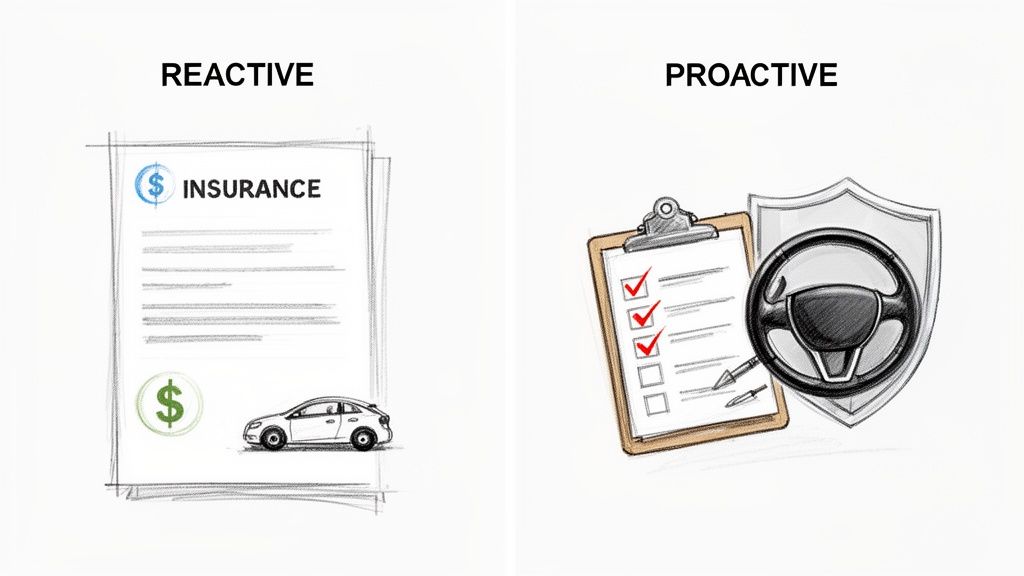
An EPLI policy is designed to pay for legal defense and settlements, which is critical for protecting your company’s assets. However, it does nothing to prevent the underlying issues that lead to claims. Relying solely on insurance accepts that claims are inevitable and focuses only on managing the financial fallout.
A proactive HR strategy aims to stop those claims before they materialize. This involves building a strong, defensible framework for every employment decision. Sound HR practices are your true first line of defense, drastically reducing the likelihood of incidents and strengthening your position if a claim does arise.
Key pillars of a proactive HR strategy include:
These operational controls are what truly reduce your exposure. They build a healthier, more stable organization from the inside out.
Many businesses overestimate the effectiveness of their internal efforts. With employment lawsuits surging in recent decades and a significant portion of EPLI claims targeting small to midsize businesses, relying on internal efforts alone creates a major vulnerability.
Relying on insurance without strong HR practices is like having a fire extinguisher but storing flammable materials next to a heater. You have a tool for the disaster, but you’ve done nothing to prevent it.
Proactive HR management builds a culture of consistency and fairness, which naturally reduces the triggers for lawsuits. For example, implementing effective employee onboarding strategies sets clear expectations from day one, minimizing misunderstandings. While EPLI protects your balance sheet, a strong HR framework protects your operations, reputation, and employee morale.
For businesses operating across state lines or in regulated sectors, a one-size-fits-all HR strategy is a recipe for disaster. Managing employees in different states creates a tangled web of local laws. What is compliant in one location could be illegal just a few miles away, multiplying your risk of an employment practices liability claim.
Expanding your business is an exciting milestone, but each new state brings its own rulebook. You must juggle different minimum wage laws, unique paid sick leave mandates, and varying regulations on non-compete agreements. A generic employee handbook is not enough; it must be tailored to the legal landscape of every location.
Imagine you have employees in California, Texas, and New York. Each state has distinct laws governing everything from meal breaks to final paychecks. A simple oversight, like failing to adhere to California’s strict overtime rules, can quickly spiral into a class-action lawsuit affecting your entire workforce in that state.
This patchwork of regulations creates serious operational challenges. Your leaders need training on the specific rules for their location, not just general company policy. Inconsistency is a breeding ground for claims, making a structured, defensible HR framework an absolute necessity for any multi-state employer.
When your business operates in multiple states, you are not just managing one set of rules—you are managing many. The risk of non-compliance doesn't just add up; it multiplies.
If your business is in a regulated industry like healthcare or finance, the stakes are even higher. These sectors face an extra layer of federal oversight governing everything from background checks to data privacy. A failure to comply not only risks an employee lawsuit but can also trigger severe regulatory penalties and reputational damage.
For example, a healthcare practice must navigate both standard employment laws and HIPAA requirements, while a financial firm must adhere to FINRA rules. This dual compliance burden means every hiring and firing decision must be meticulously documented to withstand scrutiny from multiple directions.
The legal environment is always changing, with new regulations creating fresh liabilities. Emerging pay transparency laws, for instance, have become a major flashpoint. The Pregnant Workers Fairness Act (PWFA) and the growing use of AI in hiring are also creating new compliance challenges. You can get more insights on these trends from a 2025 market outlook on employment practices liability.
These trends underscore the need for a proactive and adaptable HR strategy. Staying ahead of these changes is essential for survival. Businesses that fail to adapt their policies to these new realities are leaving themselves open to significant legal and financial risk.
Knowing your risks is one thing, but actively reducing them is where the real work begins. You can take concrete, practical steps right now to build a more defensible foundation for your business. These are not abstract legal theories—they are proven strategies that form the bedrock of strong HR risk management.
Each of these actions is designed to weave fairness and consistency into your operations, which directly lowers your employment liability. The goal is simple: create a system where every employment decision is backed by clear logic and documentation.
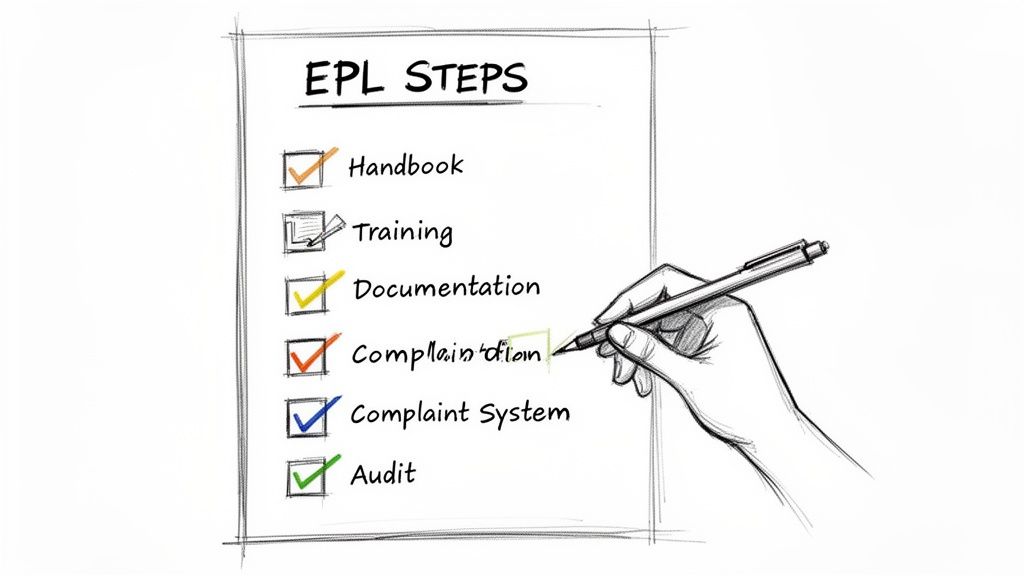
Your employee handbook is your single most important risk management tool. It sets clear expectations for conduct, outlines employee rights, and details company policies. A well-crafted handbook serves as a contractual reference that you can point to when enforcing rules or defending a decision.
A handbook is only effective if it is current and acknowledged. Ensure it is reviewed annually by a legal expert to keep up with changing laws. Critically, you must have every employee sign an acknowledgment form confirming they have received and understood it.
Inconsistency is the fuel for discrimination claims. When one manager handles a performance issue differently than another, you create the appearance of bias. A standardized disciplinary process removes this ambiguity by creating a clear, predictable path for addressing misconduct.
This process should include defined stages:
A consistent disciplinary framework ensures that all employees are treated equitably under the same set of rules. This fairness is your strongest defense against claims that a decision was biased or retaliatory.
Your managers are on the front lines, making decisions every day that carry significant legal weight. Without proper training, they can unknowingly expose your company to massive liability. Regular, recurring training sessions are essential for equipping them to navigate sensitive situations correctly.
Training should cover critical topics such as:
Investing in your managers' education is a direct investment in your company's protection. It ensures that the people making key decisions understand the legal boundaries and are following established company protocols.
You must give employees a safe and clear channel to raise concerns without fearing retaliation. A formal complaint system allows you to address issues like harassment internally before they escalate into lawsuits. This process should be clearly outlined in your employee handbook.
An effective system designates multiple people—not just an employee's direct supervisor—who can receive complaints. This gives employees options if their complaint involves their manager. Once a complaint is received, a prompt and impartial investigation is non-negotiable.
Protecting your business requires a proactive approach. If you are ready to implement these actionable steps and build a more defensible HR framework, our team can provide the expert guidance you need. Connect with us to learn more.
Implementing best practices is a great first step, but even the most careful leaders will face situations that go beyond their in-house expertise. Certain moments in a business’s lifecycle are clear signals that your employment liability is about to increase. A proactive partnership is a strategic move to ensure your decisions are defensible when the stakes are high.
An outside advisor provides the objective viewpoint you need to handle complex challenges without second-guessing your decisions. They help you build confidence in your HR framework.
Some business milestones naturally raise your risk profile. Growth is exciting, but it almost always brings new compliance headaches. If your company is facing any of these situations, it is a good time to seek expert advice.
Seeking expert guidance isn't just for when you're in trouble. It's about having a trusted partner in your corner before a high-stakes decision goes wrong, ensuring your choices are built on a solid, defensible foundation.
Partnering with an HR risk advisor is an investment in your company’s long-term health. Their job is to help you build the systems and decision-making habits that prevent claims from happening in the first place. This partnership shifts you from a reactive mode to a proactive one, where your HR practices become a strategic advantage.
This approach can be the difference between navigating growth smoothly and getting bogged down in preventable legal trouble. It provides your leadership team with the confidence that their people strategies are not just effective, but also compliant and defensible.
If you are navigating these challenges and want to strengthen your HR strategy, expert guidance can make a significant difference. Contact us to learn how we support leaders in making defensible decisions and building more resilient organizations.