A missing EIN confirmation notice has a way of showing up at the worst possible moment. Your payroll provider is ready to move, the bank wants one more compliance document, and someone in finance just realized the original IRS paper is gone. At that point, the issue isn't tax. It's records governance, and the business needs the right IRS proof fast.
The document that usually resolves that bottleneck is the 147C letter from IRS. It confirms the EIN the IRS already assigned, and it gives banks, payroll vendors, lenders, and agencies something they can rely on when they need an exact legal-name match. Leaders who treat it as a formal control, not a clerical annoyance, avoid the most common onboarding delays.
The problem usually surfaces during a live transaction, not during a quiet admin week. A COO is finalizing a new payroll setup, a controller is opening a commercial account, or an HR lead is sending entity paperwork to a new vendor. Then the counterparty asks for official IRS verification, and the original CP 575 can't be found.
That's when the 147C becomes operational, not theoretical. The IRS uses EINs as the business identifier for federal tax administration, and the 147C letter exists to confirm that the EIN already assigned by the IRS matches the legal business record on file. It is not a fresh number, and it doesn't replace the original EIN assignment. It gives third parties a clean, IRS-issued match point.
For SMBs with multiple entities, multiple states, or changing ownership records, this comes up more than people expect. A bank may need proof before it opens or re-verifies an account. A payroll vendor may need it before onboarding. A lender may want it before final approval. In each case, the document request sounds simple, but the issue is whether the company can prove it is the same legal entity the IRS recognizes.
Practical rule: Treat the 147C as a control document. If your team can't produce it quickly, your onboarding process is under-documented.
The leadership mistake is to wait until the request arrives. The better move is to know who can request the letter, where the company will receive it, and how fast the counterparty needs it. That's the difference between a one-day admin task and a stalled transaction.
The 147C letter is an EIN Verification Letter. Use it as the IRS's backup record when the original CP 575 notice is missing, misplaced, or unavailable. It does not assign a new tax ID, and it does not replace the original EIN issuance record. The IRS explains EINs as the business identifier used for federal tax administration, and the 147C is the document that confirms that identifier is already on file. The reference point for that distinction is IRS Employer Identification Number guidance.
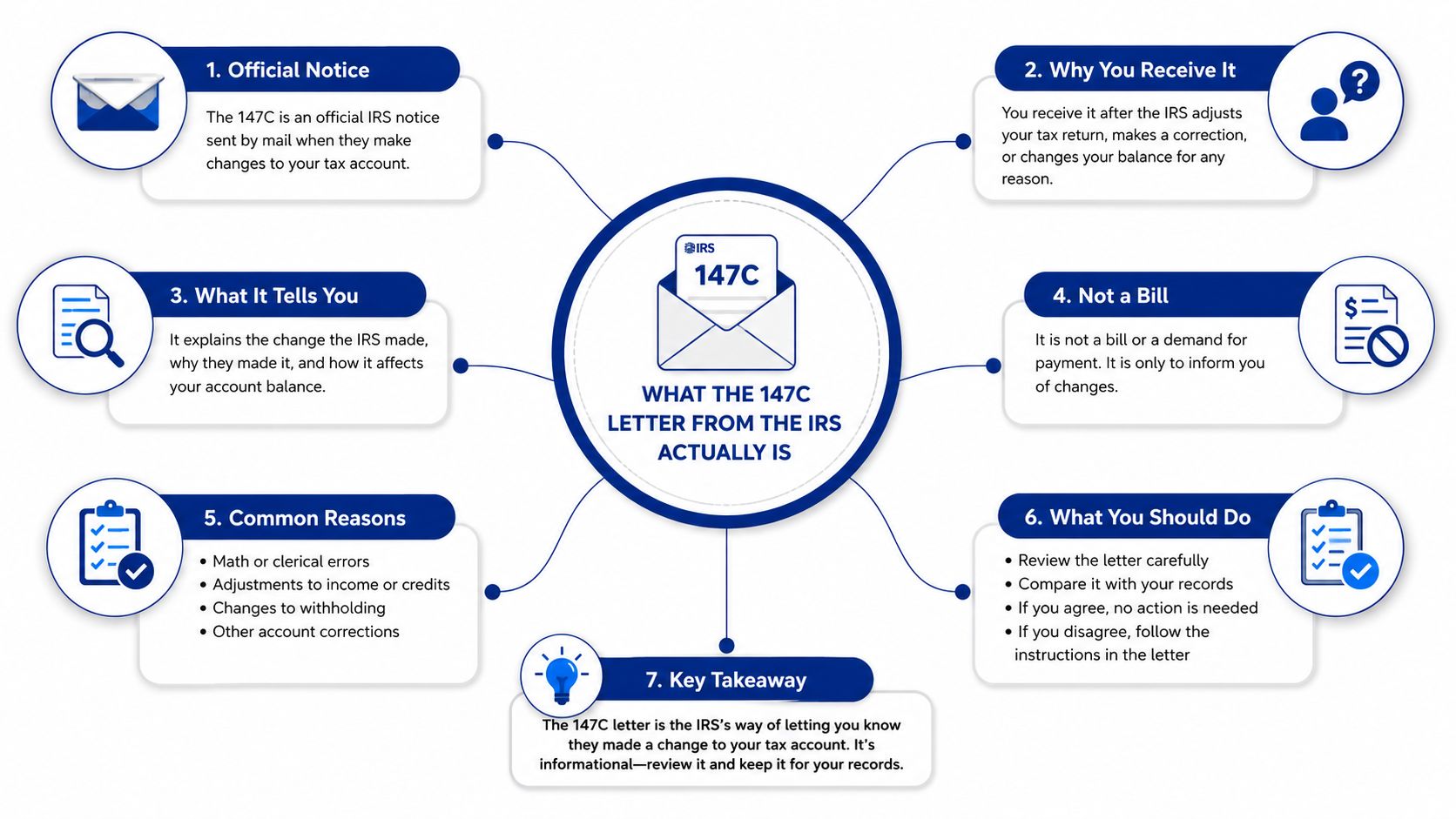
Operationally, this is a records-governance document. Banks, payroll providers, lenders, and other counterparties use it to confirm the legal business name, address, and EIN against the IRS record before they move a file forward. That makes the letter more useful than an internal spreadsheet or a casual printout, because it ties the entity back to the IRS record the other side needs to trust.
A proper 147C should include:
If those fields do not match the entity information you are submitting elsewhere, stop there and fix the record issue first. Do not send a mismatched document and expect the bank, payroll team, or licensing office to ignore it. They will catch it, and they will pause the process.
For teams sorting out a broader EIN or entity-record problem, Allied Tax Advisors tax resolution is a useful point of reference. The right response depends on whether you are dealing with a missing letter, a naming mismatch, or a deeper IRS record issue.
A 147C confirms an existing EIN. It does not create one.
That is the line your controller, HR lead, and banker need to keep in view. It keeps the discussion on verification and record control, which is what matters before a banking or payroll onboarding call. For payroll setup discussions, a practical overview of small business PEO onboarding also helps teams see why entity records need to be clean before the handoff starts.
A 147C request is rarely about tax filing. It's about a third party needing confidence that the legal entity in front of them matches the IRS record. That's why the same document shows up in bank onboarding, payroll implementation, licensing, and transaction diligence. The underlying question is always the same. Does the entity name and EIN match cleanly enough to proceed?
The important point is not the formality of the request. It's what the counterparty is trying to verify. In banking and payroll, they're often checking the legal-name match first, then whether the EIN is active and assigned. If the company's records carry a different name, a stale address, or a responsible-party mismatch, the request can slow down even when the EIN itself is correct.
That's why HR and finance should stop thinking of the 147C as a one-off backup document. It belongs in the same operating mindset as entity setup files, W-9s, and payroll onboarding packets. If a vendor asks for it once, they may ask again when systems get reverified or a new counterpart reviews the file.
For leaders working through outsourced payroll design, the related operational issue is often entity documentation discipline. Managed payroll service considerations matter here because the provider can only move as fast as the records you hand over.
The best time to prepare for a 147C request is before a bank, payroll vendor, or agency asks. If your company opens accounts, changes states, or uses multiple entities, keep this document in the same folder as the rest of your formation records. That simple habit prevents a routine request from becoming a deal-risk issue.
The fastest route is still the most direct one. The IRS Business and Specialty Tax Line is the standard phone channel, and it is commonly listed as open Monday through Friday, 7 a.m. to 7 p.m. local time. Call 1-800-829-4933 if you're in the U.S., or (267) 941-1000 if you're calling internationally. One detailed guide on request handling also notes that fax handling is part of the process once identity verification is complete, which is why the phone path is the practical choice for time-sensitive requests. The IRS handling guidance on fax treatment is documented in this public IRS file: IRS Letter 147C fax handling guidance.
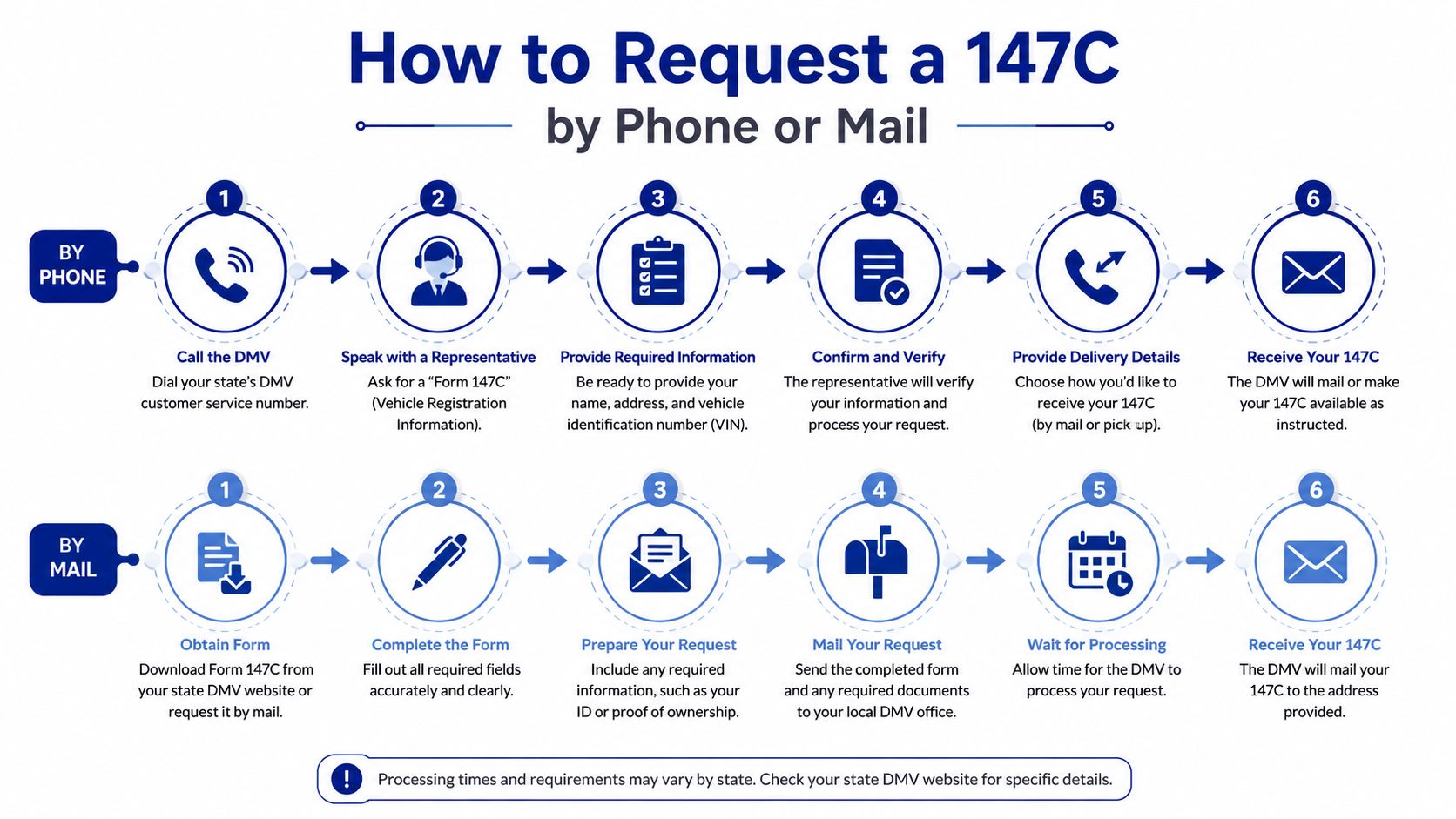
The caller should be an authorized party. Expect identity verification questions before the IRS sends anything. Be ready with the business name, the EIN, the address on file, and the caller's authority to act for the entity. After verification, the IRS can send the letter by fax or mail.
A written request needs more than a casual note. It should include the date, legal business name, EIN, a clear statement asking for the 147C, the address on file, and a signature from an authorized party. The address should match IRS records. If it doesn't, you're inviting delay.
Use fax when the transaction is active and someone else is waiting on the letter. Use mail when you need the paper trail and have time to wait. Don't overcomplicate the decision. The fastest path is usually the one that keeps the deal moving.
A practical summary from HR and payroll operations is that your request process should mirror the urgency of the counterparty's deadline. For broader workforce administration workflows, the same discipline shows up in proof-of-income letter practices, where clean documentation and fast turnaround both matter.
The right channel depends on who can act, how quickly the letter is needed, and how much documentation friction you can tolerate. If the bank wants the file today, you don't start with mail. If the authorized signer is unavailable, you don't pretend the request can move without proper authority. That's where many SMB teams waste time.
Cloudvara's Circular 230 overview is useful background when a tax professional is involved, because authority and representation rules affect who can speak for the business. That's not a compliance footnote. It's the difference between a completed request and a rejected call.
| Channel | Typical Speed | Documentation Required | Best For |
|---|---|---|---|
| Phone by authorized party | Fastest | Identity verification, business details, authority to act | Active deadlines, bank onboarding, payroll cutover |
| Mail request | Slower | Written request with date, legal name, EIN, address, and signature | Clean paper trail, nonurgent requests |
| Third-party authorization | Depends on authority already on file | Power of attorney or written proof of authority | When the owner or officer can't call |
If the person calling the IRS can't prove authority, the request stops there.
That's why leadership teams should confirm authority before they assign the task. A controller with the right paperwork can move quickly. A bookkeeper without it cannot. The difference is administrative readiness, not effort.
If your business uses outside payroll support, the authorization question becomes even more important. Providers can help with the process, but they can't fix missing authority after the fact. For teams standardizing that relationship, managed payroll service planning should include who can request IRS records and who cannot.
The worst mistake is treating the 147C like a generic IRS printout. It is a records-verification document tied to the IRS entity file, and the IRS only issues it after identity verification. Teams also get tripped up when they expect email delivery. Public guidance points to fax or mail as the normal route, which is exactly why a third party waiting on the letter can stall a payroll or banking onboarding call. The IRS operational note on fax handling shows that delivery reality clearly: IRS Letter 147C handling notice.

The core issue is records governance, not IRS resistance. The IRS can only verify what its file shows, and the bank, lender, or payroll vendor can only accept what matches its own compliance rules. When those records disagree, the business owns the gap.
The next misconception is that getting a 147C is unusually hard. It is a structured identity check, and that structure protects both the IRS record and the counterparty receiving it. The friction comes from incomplete authority, inconsistent entity data, and rushed requests, not from the process itself.
Leadership teams should read a delayed 147C request as a records-control problem. If the company cannot get the letter cleanly, the entity file probably needs tightening before the next onboarding or audit cycle. That is the same kind of file hygiene that affects SBA broker approval odds, and it is why teams should also keep a ready reference for proof of income letter from employer requests when vendors ask for supporting documentation.
A good 147C process is short, repeatable, and owned by one person. If your team has to improvise every time, the problem is the process, not the IRS. Use a checklist before the call, and keep the request template ready if mail is the better route.
If you're also working through financing or vendor onboarding, it helps to understand how document readiness affects approval friction. A useful parallel is SBA broker approval odds context, because lenders tend to move faster when the file is clean and the entity record is consistent.
Date: [Insert date]
To the Internal Revenue Service,
Please provide a 147C letter for [Legal Business Name] with EIN [EIN].
The business address on file is [Address].
Please send the verification by [fax/mail, as applicable] to [fax number or mailing destination].
Signed,
[Authorized Name and Title]
Keep the wording direct. Don't add narrative. Don't explain the business history. The request only needs enough detail for the IRS to identify the entity and send the verification.
After the letter arrives, store it with the company's formation records, EIN notice, and banking file. If your legal name or responsible party changes later, expect the records to be reviewed again. That's normal. What matters is that you can find the document quickly when the next bank, payroll provider, or state agency asks.
For multi-state operators, the smarter next move is to build a standard onboarding packet that includes entity proof, authority proof, and a named owner for IRS correspondence. If you want help tightening that workflow before the next bank, lender, or payroll review, connect with Paradigm International Inc. for a direct advisory conversation built around multi-state and regulated environments.
Paradigm International Inc. helps SMB leadership teams build defensible HR and records practices when the situation demands it. If your company needs cleaner entity documentation, stronger onboarding controls, or better coordination between HR, finance, and outside vendors, visit Paradigm International Inc. to start a conversation.