An employee says their manager crossed a line. The owner, president, or COO is now handling HR on top of a full-time job, and the next move could affect the employee, the manager, and the company's records. The complaint needs to be treated as a file the company may have to explain later, not as a dispute to settle over a quick conversation.
| Complaint type | Confirm first | Interim step |
|---|---|---|
| Harassment or discrimination | Who, when, witnesses, and the protected trait | Limit contact if needed and preserve messages |
| Retaliation | What protected act came before the harm | Freeze the disputed action |
| Wage or hour | Hours, pay practice, and who else is affected | Keep timecards and do not cut hours |
| Safety | Whether a hazard is still present | Remove the hazard |
| Leave or disability | The request, restrictions, and policy language | Do not deny leave while coverage is sorted |
| Threats or violence | Immediacy, weapons, and witnesses | Send the person home pending review |
| Ordinary conflict with no protected basis | Facts and business impact | Coaching or a pause, not a legal hold |
Choose the closest row before anyone interviews the manager or considers discipline. A complaint naming sex, race, age, disability, religion, pregnancy, or gender identity belongs in the harassment or discrimination row. A report of harm after a complaint, leave request, or pay or safety report belongs in the retaliation row. Complaints can involve more than one issue, so use the stricter row when types overlap. Threats and protected claims take priority over ordinary conflict.
Write the complaint type at the top of a new file the same day. The label is an initial sorting decision, not a conclusion about whether the allegation is true. For help setting up a process for a harassment report, see this harassment complaint procedure guide.
Confirm only the facts listed in the matching row, then take that interim step. Don't use the first response to decide who is at fault or to promise a particular outcome. If the complaint is ordinary disrespect, favoritism, or a harsh management style with no protected basis, address the workplace problem through coaching or a pause. Don't turn every personality conflict into a formal legal investigation, but don't label a protected claim “just conflict” to avoid dealing with it.
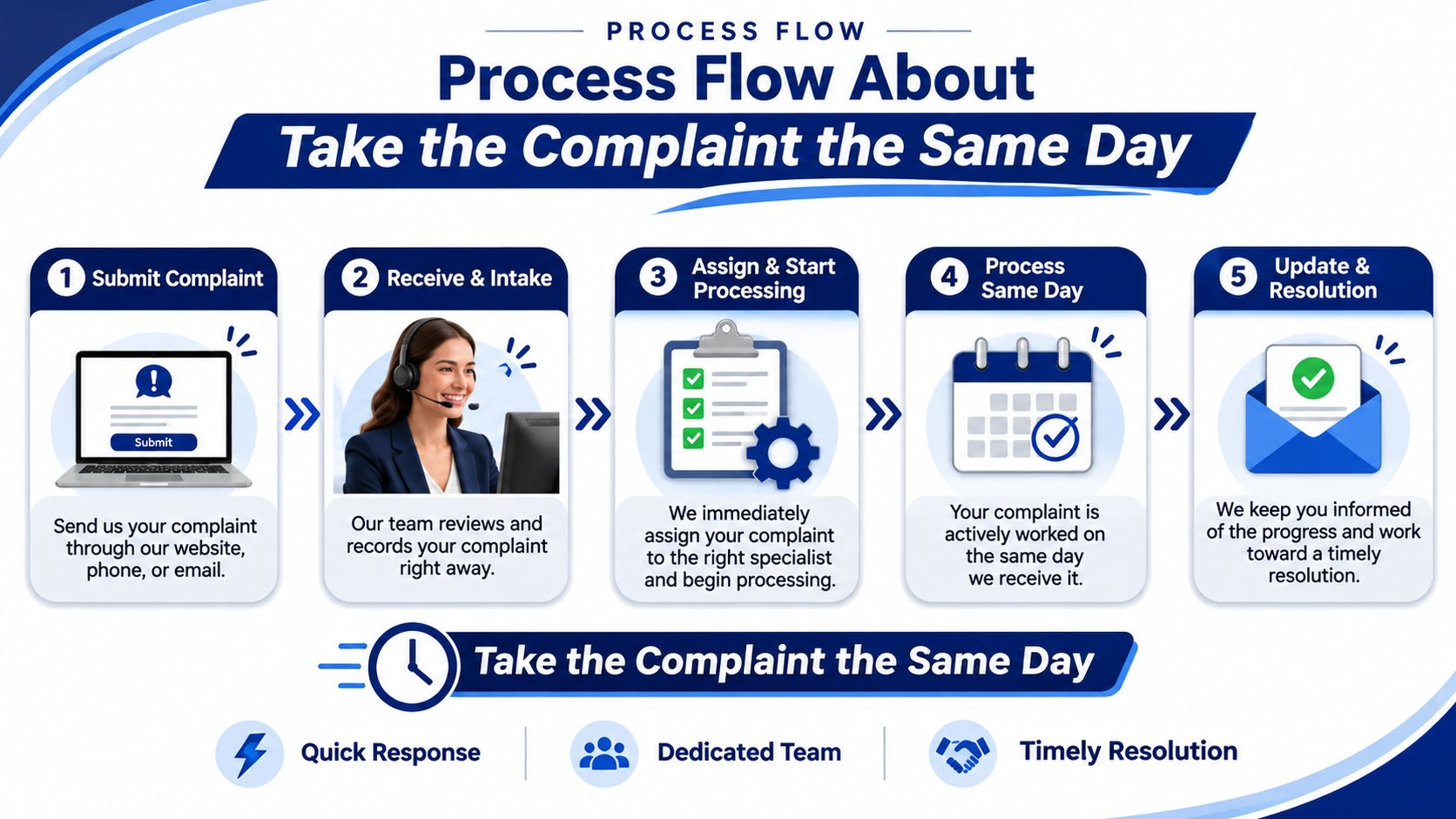
The first meeting is for receiving the report, recording it, and setting expectations. It isn't the time to test the employee's credibility or confront the manager. A private room works for an on-site employee; use video for a remote employee.
Meet privately and listen. Arrange the conversation the same day and let the employee finish before asking questions. Interrupting too early can cause the account to be incomplete.
Ask for specific facts. Find out who was involved, what was said or done, and when and where it happened. Ask who saw or heard it and whether messages, photos, schedules, or other records exist.
Ask what the employee wants. Write down their requested outcome without agreeing to it. The company can consider the request without promising that it will act on it.
Set clear expectations. Say the company will look into the concern, share information only with people who need to know, and doesn't allow retaliation. Give practical examples, such as cutting shifts, cold-shouldering the employee, or giving a bad review because they spoke up.
Record the account and confirm it. Write the employee's account the same day, using their words as closely as possible. Send a short, neutral summary and invite corrections so the file captures disagreements about the details early.
Set the next contact. Tell the employee how to reach the person handling the complaint if something new happens. Set a check-in within a few business days, even if there may not be a final answer by then.
An anonymous note still deserves a limited review if it gives facts the company can check. A complaint about the owner or president needs someone else to run the interviews; the person accused shouldn't control the process. If the employee says they've already filed with the EEOC, a state agency, OSHA, or the Department of Labor, don't argue about the filing. Preserve records and get advice before considering discipline.
Don't promise that the manager will be fired, that the employee's account will remain confidential, or that the company has reached a finding before checking the facts. A useful response is: “The company will look into this and share information only with people who need to know.” It's direct without promising more than the company can control.
Interim steps should limit risk without treating an allegation as a proven finding. A paid pause for the accused manager is a temporary hold, not a conclusion of guilt. Don't cut the complaining employee's hours, change their shift, or remove their duties because they spoke up. Don't move only that employee unless they ask for space or a safety need supports it, and record the reason.
The accused manager shouldn't run the review, edit relevant records, or contact witnesses about their statements. If there's a practical need to separate people, choose an arrangement that doesn't burden the complainant by default. Explain the temporary arrangement to both parties without sharing unnecessary details.
The relevant law depends on the type of complaint, the employer, and the facts. The table is a routing guide, not a determination that a particular law applies to a particular employee.
| Claim | Agency and rule to check |
|---|---|
| Harassment or sex discrimination | EEOC. Title VII of the Civil Rights Act of 1964; federal coverage generally begins at 15 employees. |
| Age 40 or older | EEOC. ADEA; federal coverage generally begins at 20 employees. |
| Disability | EEOC. ADA; federal coverage generally begins at 15 employees. Consider the interactive process for an accommodation request. |
| Pregnancy accommodation | EEOC. Pregnant Workers Fairness Act, in force since 2023, and Pregnancy Discrimination Act. |
| Family or medical leave | DOL. FMLA, 29 U.S.C. § 2601 and 29 C.F.R. Part 825; coverage generally includes an employer-size and worksite test. |
| Wage complaint retaliation | DOL Wage and Hour Division. FLSA, 29 U.S.C. § 215(a)(3). |
| Safety retaliation | OSHA. OSH Act section 11(c); a short filing window can apply. |
| Group complaint about pay or conditions | NLRB. NLRA, 29 U.S.C. § 157; group activity can be protected even without a union. |
Federal charge deadlines are often 180 days, or 300 days when a state agency also covers the claim. These timelines are a reason to act promptly, not a promise that a fast internal process will prevent an outside charge. For leave, disability, or a firing after a complaint, get expert help before acting.
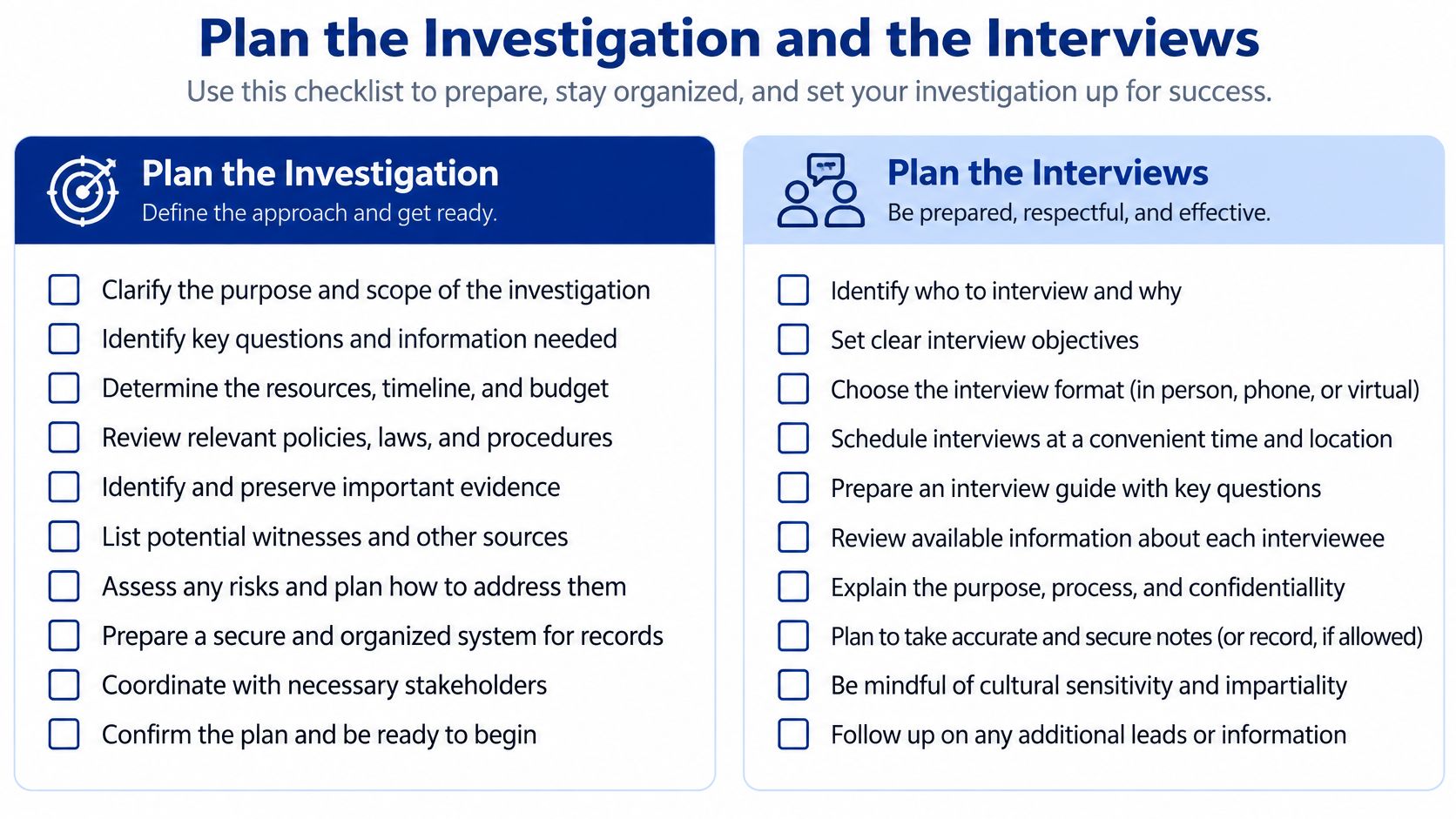
A fair review needs a neutral investigator, a defined scope, and a record of what the company checked. The owner can investigate if they can stay neutral and aren't too close to either person. If the owner is accused, or the manager is a founder, choose someone outside the reporting line.
Choose the investigator. Don't assign the accused manager or a close friend of either person. If no internal person can be neutral, use outside help.
Write a one-page plan. List each allegation, the people to interview, the records to pull, and a working window of about five to ten business days for a routine matter. Safety threats and leave deadlines may require faster action.
Preserve the evidence. Save relevant email, chat, camera footage, timecards, and the handbook version in force when the conduct happened. Record where each item came from and who handled it.
Interview in a consistent order. Start with the employee, then speak with witnesses, and then give the manager a chance to respond. Ask each person the same core questions about the relevant events.
Use open questions. Ask what happened, what the person saw or heard, and what records may support their account. Take notes without leading the witness or promising a result.
Give the manager a fair response opportunity. Explain each allegation clearly enough for a meaningful answer. Ask for the manager's account and the names of any witnesses they believe should be interviewed.
Assess the evidence. Consider consistency, corroboration, motive to lie, and whether the account fits the records. Don't treat a complaint as false just because it can't be substantiated.
Make a finding for each allegation. Use “substantiated,” “not substantiated,” or “inconclusive.” Keep the conclusion tied to the evidence gathered, not to assumptions about seniority or personality.
Tie any action to policy. Explain which handbook or conduct rule supports the recommendation. Get expert help before using an investigation finding to fire the manager.
A real plant review may involve interviewing several employees and comparing camera footage and timecards with the conduct policy. In one manufacturing plant case, investigators interviewed 8 employees, reviewed camera footage and timecards, and documented 5 separate violations of company conduct policy. That kind of scope is a reminder to plan for evidence and witness work, not just a single conversation.
For interview prompts, the workplace investigation questions guide can help the investigator keep questions focused. If video evidence is central, the AI Video Detector video forensics guide offers context on assessing video as evidence. At closure, tell both parties the review is finished and state the work rule that applies next. Don't provide a blow-by-blow of witness accounts.
The file is the company's decision record, not a pile of emails. Keep each note factual, dated, and written on the day of the conversation where possible. Mark exact quotes as quotes, and keep observations separate from conclusions.
For a practical structure, the HR documentation templates guide can help organize records without replacing the facts of the case.
Leave out guesses about a lawsuit, jokes about either person, medical detail beyond what a leave or accommodation decision needs, and comments about protected traits. Don't mix investigation records with casual texts between leaders. Store the file with personnel records, limit access to the people deciding the matter, and don't put full witness statements in the manager's day-to-day folder.
If a lawyer is involved, ask which notes should be treated as privileged before mixing those notes with the factual file. Don't invent a retention period. Counsel should set how long the company keeps investigation files; until then, don't delete chat exports or camera clips tied to the complaint.
A person who wasn't in the room should be able to see what was alleged, what was checked, and why the company acted.
A clean file doesn't guarantee an outcome in court. It does give decision-makers a clearer basis for explaining what they did and why.
| State | Rule that changes the response | Agency |
|---|---|---|
| California | FEHA covers harassment at very small employers and requires reasonable steps to prevent harassment. | Civil Rights Department |
| New York | Harassment coverage applies to employers of all sizes, with a required written policy and training. | Division of Human Rights |
| Illinois | Sexual harassment training is required for all employers under the Illinois Human Rights Act. | Department of Human Rights |
| Colorado | The Protecting Opportunities and Workers' Rights Act, effective 2023, narrows the kind of harassment defense some employers may assume applies. | Civil Rights Division |
| Florida | The Florida Civil Rights Act generally follows the 15-employee federal threshold for most discrimination claims. | Florida Commission on Human Relations |
| Texas | Texas Labor Code Chapter 21 generally follows the 15-employee federal threshold for most discrimination claims. | Texas Workforce Commission Civil Rights Division |
| Montana | The Wrongful Discharge from Employment Act limits at-will firing after a probationary period. | Department of Labor and Industry |
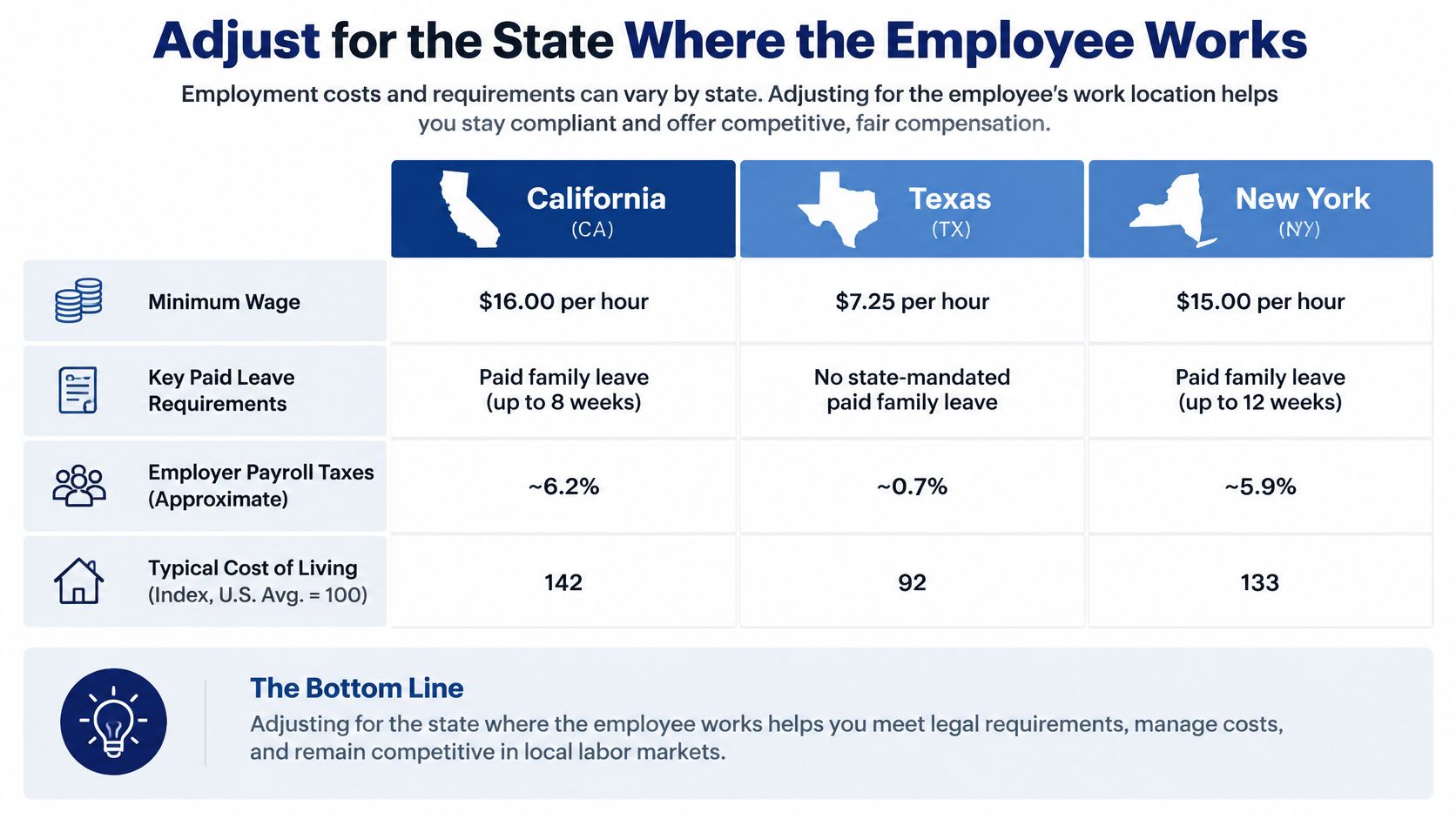
The governing state is generally the state where the employee works, not the state where the company's headquarters sits. Apply the same check to remote employees. A guide to which state law applies to remote employees can help frame the question, but a high-stakes decision still needs a fact-specific review.
A single national handbook isn't enough for a company operating across state lines. Add state pages for the harassment policy, complaint path, and leave rules. Don't fire, demote, or deny leave until the rule for the employee's working state has been checked. For a first employee in a new state, or a termination soon after a complaint, get expert help before acting.
Proceed without outside help only when the complaint is ordinary conflict, the decision-maker is a neutral fact-finder, no leave or disability issue is involved, and the proposed action matches a rule already enforced with other people. A fair, well-documented process supports a clearer decision, but it doesn't guarantee a result or prevent a lawsuit.
Pause before acting if the company is about to fire or demote either person because of the complaint; the employee is on or has requested FMLA leave or an ADA accommodation; the accused is an owner, executive, or the decision-maker's own boss; an agency filing has already been made; or the people work in different states under a one-state handbook. A guide to termination after an employee files a complaint can help frame the risk, but it isn't a substitute for advice on the specific decision.
Owners who handle HR alongside another role can bring in an employer-side advisor to structure the investigation, file, and multi-state policy questions. International helps leadership teams with complaint response and neutral workplace investigations when there's no senior HR leader.
This article is general information, not legal advice. Employment laws change and vary by state; consult qualified employment counsel about your situation.
International Inc. supports employers with complaint response, neutral workplace investigations, and multi-state HR risk management. For help structuring a complaint file and reviewing a high-stakes people decision, visit Paradigm International Inc..