
A manager calls at 4:45 p.m. on a Friday. An employee in one state has made a complaint about a supervisor in another. Payroll is asking whether final pay rules are the same everywhere. Someone else wants to terminate a poor performer on Monday, but the file is thin and the manager's notes are sloppy. If that sounds familiar, you're already dealing with employment risk management, whether you've named it or not.
For a growing business, this pressure shows up fast. What starts as “an HR issue” quickly becomes an operations issue, a legal issue, and a leadership issue. A 2023 global survey found that 15% of the world's adult population, about 667 million people, personally experienced serious harm at work, which makes one point impossible to ignore: workplace risk is not abstract, and it hits stability, reputation, and financial performance directly, as reported in the World Risk Poll 2024.
The mistake most SMBs make is treating employment risk as a checklist. They buy a handbook template, run annual training, and assume that consistency alone will protect them. It won't. You need a system that helps leaders make sound decisions under pressure, document them properly, and adapt when state rules or workplace facts change. If your broader business risk planning also touches cyber exposure, operational continuity, and vendor vulnerability, resources like MY CYBER GUARD business services can help frame risk as a business governance issue instead of a narrow compliance task.
Employment risk management matters most when your business is moving fast. Expansion creates complexity before leaders feel ready for it. A second state, a new manager, a disputed accommodation request, a rushed termination, or uneven timekeeping can expose weak processes in a single week.
I've seen the pattern many times. The owner believes the company is being fair. The managers believe they're using common sense. HR is trying to keep up. Then one complaint, one agency notice, or one attorney letter reveals that nobody built a defensible decision path.
The first mistake is assuming good intent is enough. It isn't. Regulators, insurers, and plaintiff attorneys look for process, consistency of reasoning, and documentation that matches what happened.
The second mistake is splitting employment issues into separate boxes. Wage and hour, manager conduct, performance management, investigations, leave, and termination decisions are connected. Weakness in one area usually infects the others.
Practical rule: If a manager can make a high-risk people decision without a clear process, your company has a governance problem, not just an HR problem.
A defensible system helps your team answer basic but high-stakes questions quickly:
This is why employment risk management belongs with leadership, not buried under administration. A strong system doesn't just reduce claims. It gives your business better control over performance, culture, and operational stability.
Most companies don't need a giant audit to start. They need an honest look at the few areas that create the most exposure. That means identifying where risk sits today, then rating which issues deserve immediate attention.
A practical model already exists. A risk management code of practice uses a five-step cycle of Identification, Assessment, Control Development, Implementation, and Continuous Improvement. Start with the first two. Identify the hazard, then assess it using probability and impact so you can assign a Risk Priority Number, or RPN.
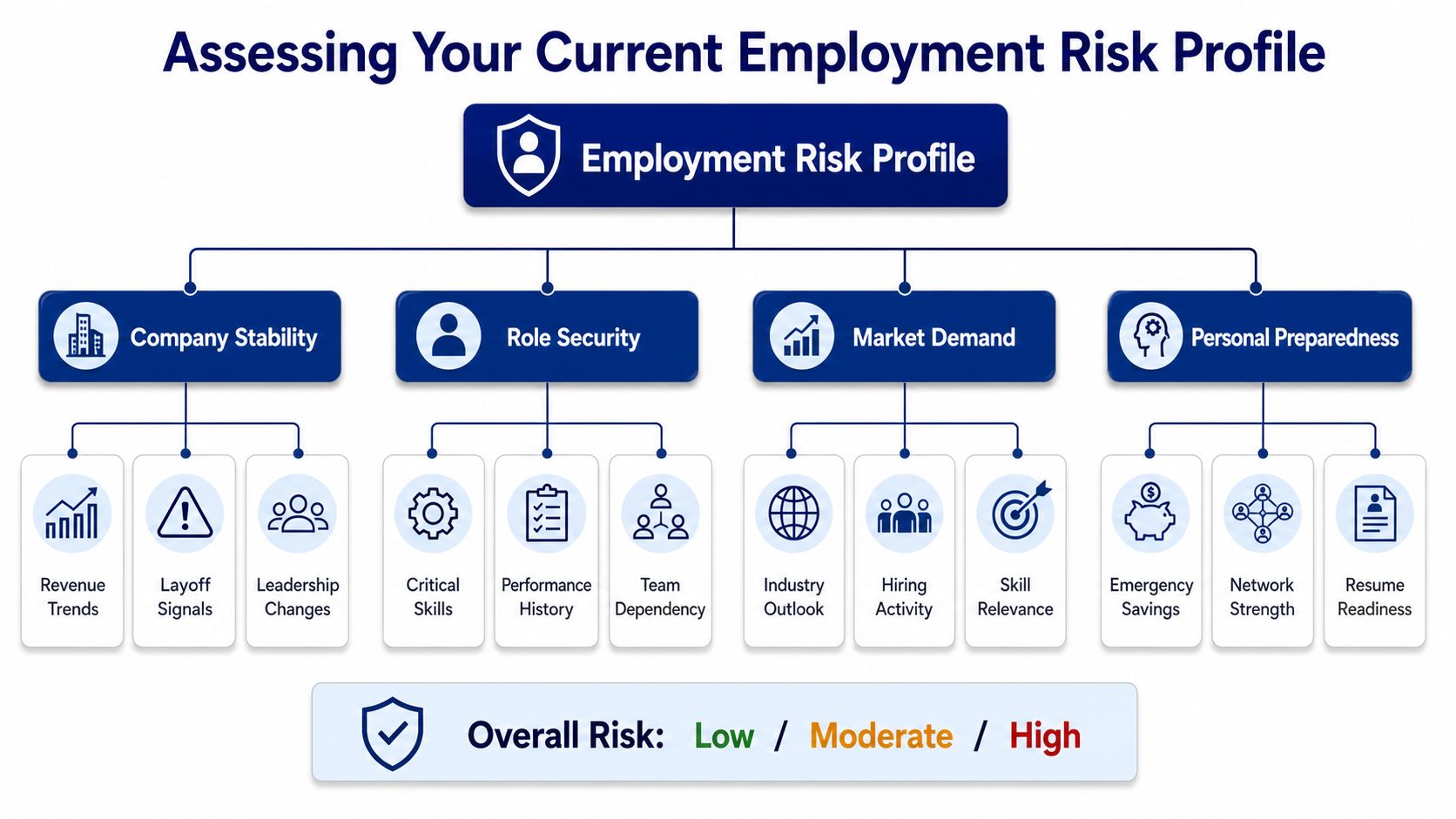
You don't need to review everything at once. Focus on the points where SMBs usually create preventable liability.
One classification example deserves direct attention. Under the Fair Labor Standards Act, the executive exemption applies only when the employee is paid on a salary basis of at least $684 per week or $35,568 annually and meets the duties test, as noted in this FLSA executive exemption overview. If your managers or recruiters can't explain why a role is exempt, assume you need a review.
A simple risk matrix works well. Ask two questions for each issue:
That gives you a ranked list instead of a pile of anxiety. A high-likelihood, high-impact issue deserves immediate action. A low-likelihood, moderate-impact issue can wait until core controls are in place.
If you can't rank risks, you'll default to reacting to the loudest complaint instead of fixing the most dangerous weakness.
Review your current state as if you were an investigator, insurer, or plaintiff attorney. Would they find clear role definitions, clean time records, objective performance notes, and consistent decision paths? Or would they find exceptions, shortcuts, and messages that contradict the official file?
A structured HR risk assessment for managers can help leadership teams turn that review into a practical action list. The point isn't perfection. The point is visibility. Once you know where your actual exposure sits, your next decisions get sharper.
Once you know your exposure, set up a system that controls decisions before a problem lands on your desk. A defensible HR framework is a governance function. It assigns ownership, creates decision rules, and gives leaders a record that matches what happened. If your policies say one thing and supervisors do another, the policy will not save you.
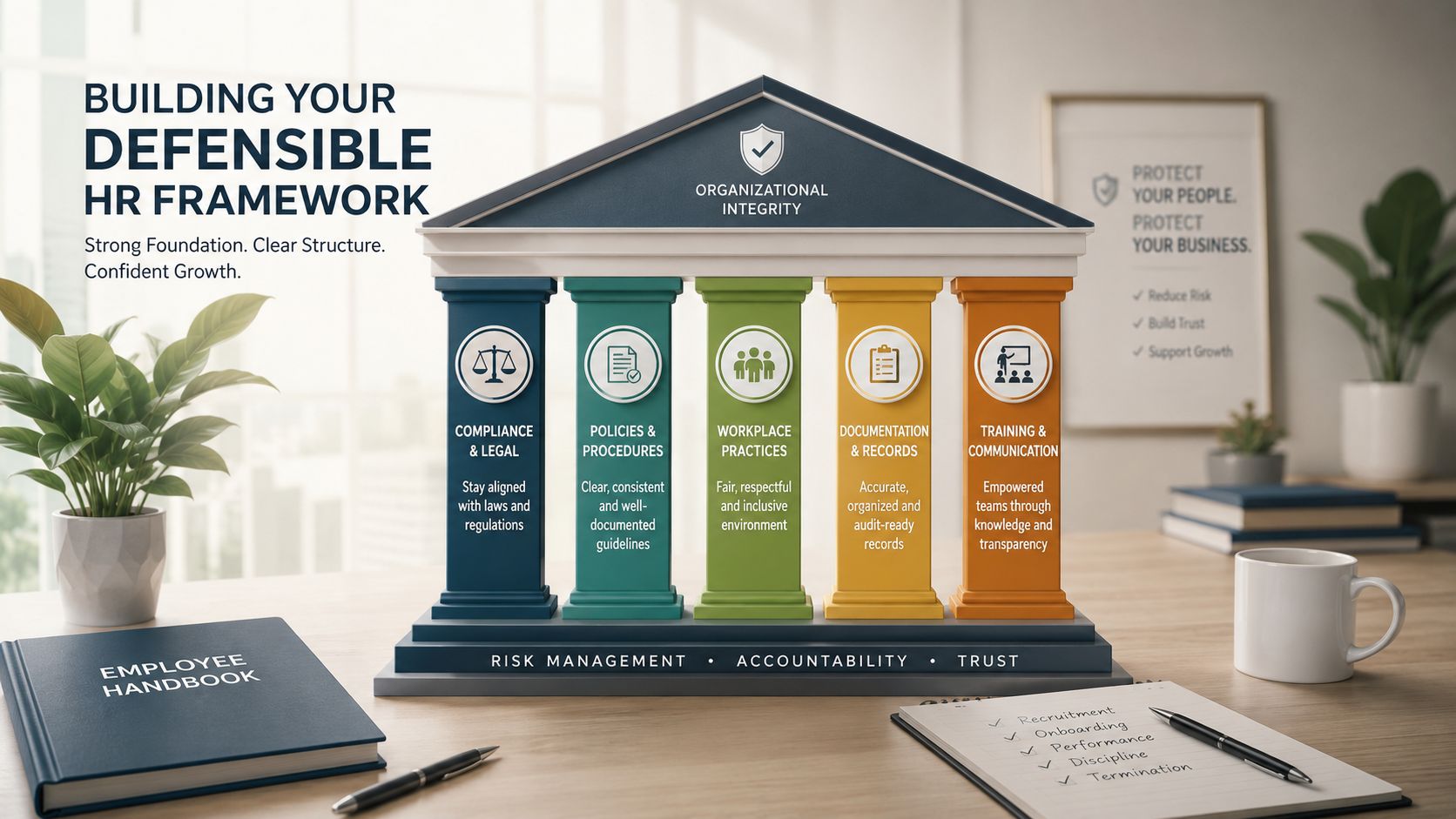
This matters even more for multi-state SMBs. Many leaders fall into the consistency trap. They force one national process onto every location, then miss state-specific notice rules, leave requirements, pay practices, or documentation standards. Good control does not mean identical treatment everywhere. It means consistent decision logic with state-specific rules built in.
A usable HR framework rests on three operating tools, and each one needs an owner.
Your handbook should set conduct standards, reporting options, complaint paths, and manager responsibilities in plain language. For multi-state operations, use one core handbook with state addenda where law requires different rules. That structure gives you control without pretending California, Texas, and New York can run under one set of details.
Keep the handbook aligned with how work gets done. If leaders rely on text messages, informal schedule changes, off-cycle pay decisions, or local practices that never appear in policy, your written standards will lose credibility fast.
Documentation needs rules, not suggestions. Define what must be recorded, where it belongs, who reviews it, and how quickly it must be entered. Apply that across hiring, pay decisions, performance management, leave, accommodations, investigations, and terminations.
The goal is not more paperwork. The goal is decision consistency you can defend. If one manager writes factual coaching notes and another writes emotional commentary in a private notebook, you have created risk, not a record.
Formal records are only half the picture.
You also need a way to capture informal organizational intelligence early. Exit comments, manager concerns, repeated employee relations themes, hotline trends, and sudden turnover on one team often show trouble before a formal complaint appears. A strong framework combines those signals with official data so HR can intervene before a weak manager, a pay practice issue, or a retaliation pattern turns into a claim.
Every company needs a fixed process for complaints and workplace concerns. Decide who receives reports, who triages them, who investigates, what must be documented, when legal review is required, and who approves interim action. If those decisions shift based on personalities or titles, your process is exposed.
A good protocol also protects fairness. Employees need a reporting path they trust. Leaders need a process that produces the same level of care whether the complaint involves a top performer, a new supervisor, or a founder's favorite manager.
Frameworks decay quickly. Managers improvise. Forms get stale. State rules change. Local habits creep in and slowly replace the written process.
Review the framework every quarter. Check whether handbook language matches current practice, whether templates are still being used, whether investigation steps are followed, and whether state addenda still reflect active laws. Use a short governance review, not a ceremonial policy meeting.
Leadership test: If a promotion file, a leave file, and a termination file read like they came from three different companies, your framework is not controlling risk.
Your framework should give HR and managers practical tools for high-risk moments:
If reporting lines, process ownership, and approval authority are unclear, fix that first. A stronger HR operating model with clear decision rights and escalation paths gives the framework a real owner instead of leaving HR to clean up inconsistent calls after the fact.
Employee-facing education also supports the system when it reinforces your policies and reporting channels. Short resources on topics like preventing discrimination in your job can help employees recognize misconduct early and report it through the right path.
If your business needs an external decision partner for sensitive terminations, investigations, manager conduct issues, or multi-state process design, International Inc. provides advisory support focused on defensibility rather than day-to-day HR administration.
A supervisor in Texas tells an employee to “just take a few days off and come back ready to work.” Another manager in California hears the same issue and starts a leave process. HR learns about both cases after the employee files a complaint. That is how employment risk starts in a multi-state business. Not with policy gaps alone, but with frontline decisions made fast, inconsistently, and without context.
Managers are your operating control. If they mishandle complaints, performance issues, schedule changes, leave requests, or discipline, your written framework will not save you. A defensible system depends on managers who know when to act, when to pause, and when to escalate. It also depends on leaders who stop treating manager judgment as a soft skill and start treating it as a governed business process.
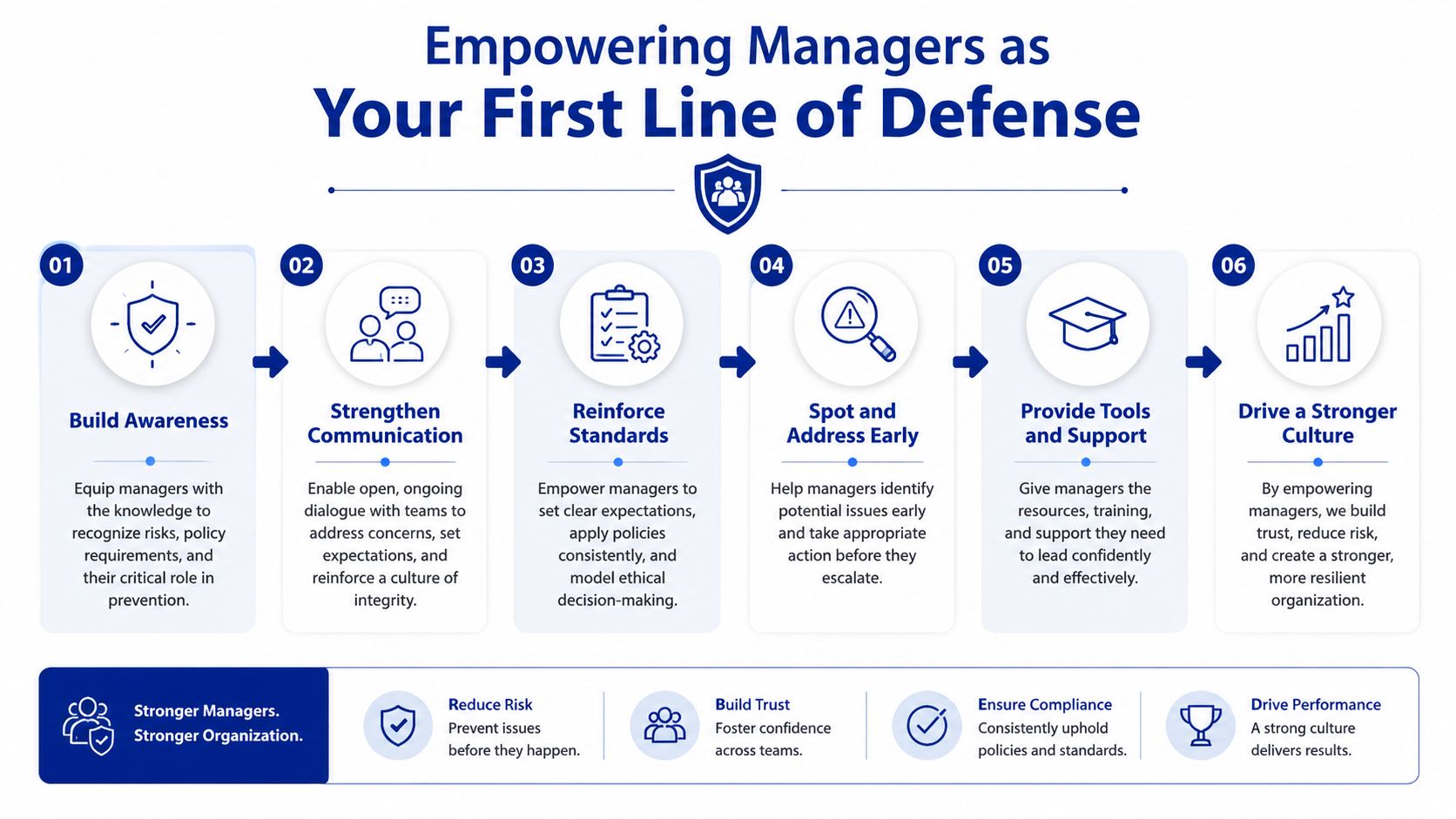
Generic manager training fails because it focuses on tone and leadership style while skipping the decisions that create liability. Train for the moments that produce bad records, inconsistent treatment, and retaliation arguments.
Cover these situations with short modules, realistic examples, and required practice:
Training needs usable prompts, not policy essays.
Under pressure, managers do not remember policy language. They remember the last shortcut that seemed to work. Replace that habit with simple operating tools.
Use decision trees, call guides, and one-page response maps for recurring situations. A manager who receives a harassment complaint should know the exact first five actions. A manager dealing with poor performance should know the point where coaching ends and formal review begins. A manager facing a cross-state issue should know that the answer may differ by location, and that “we always do it this way” is not a defense.
This matters even more in multi-state organizations. Too much standardization creates its own risk. Your manager tools should keep core process steps consistent while flagging the points where state rules, employee history, protected activity, or prior practice require a different path.
Claims rarely appear out of nowhere. Warning signs show up first in manager behavior, team chatter, exit comments, skipped documentation, and repeat complaints about the same supervisor. If you only watch formal HR metrics, you will miss the pattern until the problem is expensive.
Build a review habit that combines both types of information. Look at complaint volume, leave disputes, turnover spikes, and documentation quality. Then compare that with what HR business partners, employee relations staff, recruiters, and local leaders are hearing on the ground. That combination gives you a more accurate risk picture than a dashboard alone.
Do not judge managers only by productivity, retention, or team sentiment. Judge them by whether they follow the decision process that protects the company and the employee.
Review questions should be blunt:
A manager who hits numbers while creating messy facts is still a risk. A manager who follows process creates cleaner records, more consistent employee treatment, and fewer surprises for HR. That is what a first line of defense looks like.
The usual advice to “be consistent” sounds sensible. In a multi-state business, it can create risk. If you apply one national rule to final pay, paid leave, rest breaks, or termination documentation, you can accidentally build a violation into your standard process.
That's the consistency trap. Recent data shows that over-standardization is a growing cause of employment claims in states with unique worker protections like California and New York, while a majority of SMBs still use a single national template, according to this discussion of multi-state over-standardization risk. In other words, consistency can become a liability when it ignores local law.
You still need consistency. You just need the right kind. Create a federal or company-wide baseline for core expectations, then add state-specific rules where law requires variation.
This approach gives leaders a stable operating model without pretending every state is the same. Your policies stay recognizable, but the high-risk details are localized.
| Policy Area | Federal Baseline (Company-Wide) | State-Specific Addendum (e.g., California) |
|---|---|---|
| Final Pay | Final pay is processed promptly according to applicable law and internal separation procedures. | Define timing rules, delivery method, payout treatment, and approval steps required under California law. |
| Meal and Rest Breaks | Managers must schedule legally compliant breaks and record exceptions. | Add California-specific break timing, premium pay handling, and documentation steps. |
| Paid Leave | Employees may request leave through a standard intake process with HR review. | Add state-specific leave entitlements, notice requirements, and documentation limits. |
| Termination Process | Use a pre-termination review, documented rationale, and approved communication script. | Add state-specific notices, final pay requirements, and local risk checks. |
Not every employee issue is high risk. Some are routine. Others demand immediate review before anyone acts.
Escalate quickly when any of these appear:
Multi-state compliance is not about writing more policies. It's about knowing where variation is required and controlling who approves it.
A multi-state employer needs a regular compliance rhythm. Quarterly reviews work well because they are frequent enough to catch drift and realistic enough to maintain. Focus those reviews on employee classification, anti-discrimination practices, wage and hour procedures, handbook updates, investigation files, and state addendums.
This is also where insurance matters. If you're thinking about financial protection for claims like wrongful termination, discrimination, or harassment, Employment Practices Liability insurance is the policy designed for that purpose, distinct from general liability or workers' compensation, as explained in this employment liability risk guide.
Insurance helps with transfer of financial risk. It does not replace clean decisions, proper review, or compliant state-specific practice. If the underlying process is weak, coverage won't fix the operational damage.
Employment risk management isn't a project you finish. It's a control system you maintain. Companies get into trouble when they build documents once, train once, and assume the program is still working a year later.
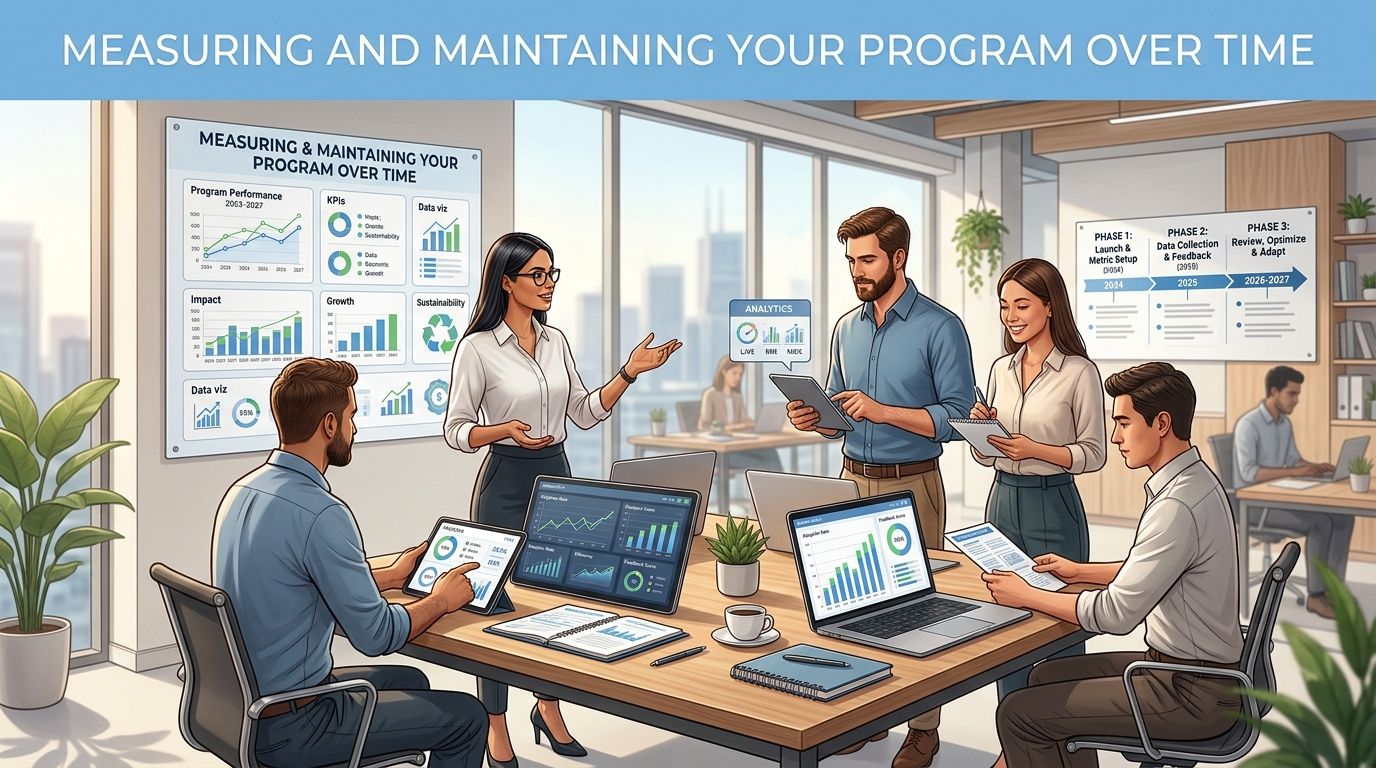
The right measurement approach combines formal metrics with informal workplace intelligence. Most SMBs miss that second piece. According to this workforce risk governance analysis, companies that fail to integrate informal “chatter” with formal risk data can miss 40% to 60% of early-stage behavioral risks, including manager conduct issues and localized compliance problems.
You don't need an elaborate dashboard. You need a short set of indicators leadership actively reviews.
Useful measures include:
Formal metrics show where problems appear. They rarely tell you why.
Informal intelligence matters because employees and frontline managers often spot risk before HR sees a measurable event. Exit interviews, skip-level conversations, manager debriefs, hotline trends, and recurring rumors can all signal weak supervision, retaliation fear, or local process failure.
That information should not stay trapped in anecdotes. It belongs in a review process that asks:
A useful human resources risk management template can help turn those observations into a repeatable review process without making the system bureaucratic.
Healthy programs don't wait for claims. They look for patterns, friction points, and weak signals while the issue is still fixable.
Mature organizations separate themselves from reactive ones by reviewing incidents, complaint trends, policy breakdowns, manager errors, and state law changes on a calendar. They update tools, retrain managers, revise forms, and tighten escalation paths.
That discipline matters outside HR too. Workplace accidents, insurance claims, absences, and downtime show how expensive weak risk controls can become. A Canadian workplace safety overview notes $29.4 billion in annual business costs, alongside nearly 1,000 worker deaths and more than 270,000 reported injuries each year, which is a reminder that workforce risk has direct operational consequences, not just legal ones, as summarized in this workplace risk management statistics article.
The companies that hold up under pressure don't rely on heroic HR cleanup. They run a repeatable system. Leadership stays involved, managers know their lane, documentation is disciplined, and exceptions get reviewed before they become claims.
If your leadership team needs a sharper way to handle high-stakes people decisions, multi-state compliance questions, investigations, or documentation standards, Paradigm International Inc. can be a practical next step for building a more defensible employment risk management program.