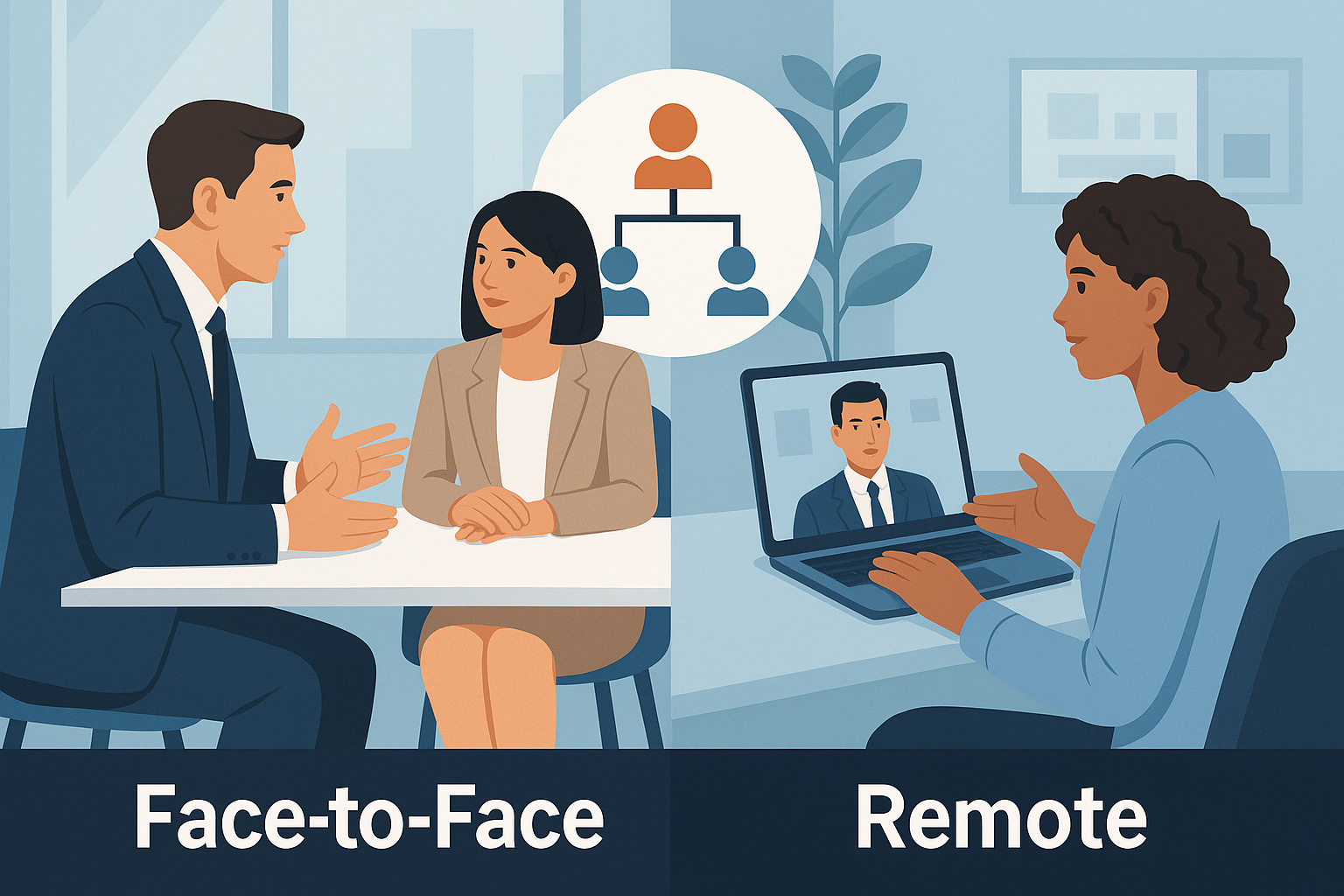
A founder in a growing company often discovers the genuine value of HR support during an uncomfortable conversation, not during onboarding. A manager wants someone terminated today, an employee raises a complaint, or a new hire starts working from another state without anyone checking the legal consequences. At that point, HR service for small business stops being an administrative purchase and becomes a decision about risk, judgment, and documentation.
The right provider won't send a form or close a ticket. It will help leadership identify the governing rules, preserve the facts, involve the right people, and create a record that explains why the company acted. That distinction matters even more for multi-state employers and regulated businesses, where a single process rarely applies everywhere.
A founder-CEO of a 45-person SaaS company has employees in California, Texas, and New York. On a Monday morning, the sales director in Texas demands the immediate termination of a manager in California after a misconduct complaint. The request sounds straightforward until the details arrive.
What exactly happened? Who received the complaint? Did the manager report wage concerns before the allegation surfaced? Are there witnesses, messages, or performance records? Does the proposed termination create questions about retaliation, wage-and-hour practices, protected leave, or inconsistent treatment across locations?
The CEO now has a people problem and a legal-risk problem. California rules may control the employee's worksite obligations, while federal discrimination laws and other state or local requirements may also apply. The U.S. Department of Labor explains that small employers must account for federal and state labor and employment laws, and the EEOC recognizes that state and local discrimination laws may apply alongside federal rules (small-business compliance assistance from the Department of Labor).
An administrative vendor may provide a termination checklist, a letter template, and a ticket number. That can be useful for routine execution, but it doesn't answer the central question: what should the employer do, and why?
An advisory-first HR partner would help establish the allegation, review the timeline, identify the applicable jurisdiction, recommend interim measures, and document the decision path. The employer still owns the decision, but leadership doesn't have to make it without structured judgment.
Practical rule: If the provider can't explain who owns the decision, who reviews the facts, and what gets documented, you haven't bought risk management. You've bought administration.
The same principle applies to the supporting record. A clear file should show the complaint, evidence reviewed, individuals consulted, policy considered, decision-maker, and rationale. Even practical resources such as browse PDFKing how-to guides can help teams organize documents and workflows, but document organization isn't a substitute for employment judgment.
The rest of this guide focuses on choosing that judgment deliberately. Price matters, but the more important question is whether the service matches the decisions your company is already making.
Small employers generally encounter three service models. They overlap in places, but they don't carry the same responsibilities or give leadership the same level of support.
Administrative outsourcing handles transactions. The provider may process payroll, maintain employee files, prepare standard letters, administer benefits, or answer defined questions. Billing commonly follows a per-employee, per-ticket, or package structure. The vendor executes within a stated scope and usually disclaims authority over hiring, discipline, termination, and other employer decisions.
PEO or co-employment services bundle payroll, benefits, workers' compensation, and related administration through a shared employment arrangement. The provider may use its federal employer identification number for payroll and tax functions, while the client directs day-to-day work. The appeal is operational scale, but leadership must understand which responsibilities remain with the company and which sit with the PEO.
Advisory-first services work alongside owners, COOs, and executive teams. The employer retains decision ownership, while the advisor provides senior HR judgment, documentation review, manager coaching, investigation structure, and escalation support. Billing may use a flat advisory retainer, a defined project fee, or a custom engagement rather than transaction volume.
A practical comparison looks like this:
| Model | How You're Billed | Who Owns Decisions | Typical Break Point |
|---|---|---|---|
| Administrative outsourcing | Per employee, ticket, or service package | Employer | The vendor supplies process but avoids judgment |
| PEO or co-employment | Bundled fees tied to payroll, benefits, and workforce services | Shared by contract, with employer control over daily work | Leaders misunderstand responsibility and escalation |
| Advisory-first | Retainer, project fee, or scoped advisory engagement | Employer, supported by advisor judgment | Advice doesn't translate into execution without internal follow-through |
The distinction between an administrative services organization and a PEO deserves close review. Benely's perspective on ASO and PEO arrangements is useful because the names can sound similar while the employment relationship, control structure, and service obligations differ.
Administrative providers can overreach when a service representative gives informal advice outside the agreed scope. PEO arrangements can create co-employment confusion when managers assume the PEO has taken over all legal responsibility. Advisory services can drift strategically if the advisor produces thoughtful recommendations but no one owns implementation.
For a business that needs payroll execution, a PEO may be sensible. For a company facing repeated judgment calls, HR risk advice for business owners should be evaluated separately from payroll administration. Don't expect one pricing model to solve every HR problem.
The difference between advisory and administrative HR becomes visible when a situation stops being routine. A payroll correction can follow a defined workflow. A termination, accommodation request, harassment complaint, or wage classification question requires someone to evaluate facts and consequences.
Administrative outsourcing usually wins on transaction price and predictable unit costs. It works well when the workforce is stable, the company operates in one jurisdiction, managers follow established procedures, and employee claims are unlikely. It becomes less attractive when a low-cost process creates rework, inconsistent treatment, or weak records during an audit or dispute.
Advisory-first support usually costs more to budget because the work depends on judgment rather than ticket volume. In exchange, the employer receives a structured review of the decision itself, not just help completing the paperwork.
| Criterion | Advisory-First | Administrative Outsourcing |
|---|---|---|
| Decision ownership | Employer decides with documented senior guidance | Employer decides, vendor generally executes |
| Documentation defensibility | Built around rationale, evidence, approvals, and timelines | Often limited to forms and transaction records |
| Jurisdiction coverage | Maps rules to employee work location and facts | May rely on templates or standard workflows |
| Escalation discipline | Defined triggers for legal, executive, or specialist review | Escalation often begins after a ticket exceeds scope |
| Manager coaching | Direct preparation for difficult conversations | Usually limited or template-based |
| Total cost | Less predictable, with more judgment included | More predictable, but rework can increase exposure |
Administrative support is the right fit for a stable, single-jurisdiction team with uncomplicated employment practices. It can also be appropriate when the company has capable internal HR leadership and needs extra processing capacity.
Advisory-first support is the stronger choice for a multi-state operator, a regulated employer, or a business approaching its first serious wrongful-termination, wage, or discrimination exposure. It also fits companies where managers make employment decisions without an internal HR department to review the sequence.
The cheapest quote often covers the task. It doesn't necessarily cover the consequences of doing the task badly.
A provider should explain whether its fee covers policy interpretation, decision review, investigation support, manager coaching, and follow-through. If those services are all excluded, the initial price may hide the actual cost of obtaining them later.
Compliance changes when employees work in different locations. The company headquarters isn't the only relevant address. In general, the law of the state where an employee physically performs work usually matters more than the state where the employer is headquartered (multi-state HR compliance guidance from Nimble).
That makes compliance a jurisdiction-mapping exercise, not a checklist. The employer needs to connect each employee, worksite, worker classification, headcount category, and employment event to the rules that apply at that moment.
A first employee in a new state can trigger operational work involving unemployment insurance registration, workers' compensation coverage, state tax withholding, and state-specific wage, overtime, and leave requirements. Remote work can create exposure even when the company has no office in that state.
The federal baseline also changes as the workforce grows. Title VII and the ADA apply to private employers with 15 or more employees for each working day in each of 20 or more calendar weeks in the current or preceding year, while the ADEA applies at 20 or more employees, according to the EEOC's threshold guidance for federal employment laws. Those thresholds require active tracking, not a general assumption that the company is too small to be covered.
The overtime analysis has two parts. Under the FLSA, the federal salary threshold for executive, administrative, and professional exemptions remains $684 per week, or $35,568 per year, after a 2024 rule was vacated in federal court (federal employment law guidance). A fixed salary alone doesn't make a role exempt. The employee must also satisfy the applicable duties test.

A provider should maintain a state-by-state matrix covering classifications, postings, wage statements, leave, accommodations, and termination practices. The matrix needs regular review and a re-check when an employee moves states or the workforce crosses a relevant threshold.
A current employee handbook requirements by state guide can support policy review, but a handbook alone won't manage the decision. The service should also maintain:
The EEOC notes that there is no universal federal harassment-training mandate, while California, Connecticut, and Maine impose training requirements for certain employer sizes. Its examples include California and Connecticut requirements for employers with 50 or more supervisors, and Maine requirements for employers with 15 or more supervisors (harassment-prevention compliance discussion). A competent HR service should identify these triggers rather than issue the same training recommendation to every client.
A credible HR partner should make its work reviewable. That means an owner can see what advice was given, which facts supported it, who approved the action, and what records the company retained.
Ask providers to define documentation defensibility in operational terms. Written opinions, signed acknowledgments, retention rules, investigation files, and audit-ready records should appear in the engagement scope, not just in a sales conversation.
Escalation thresholds should be written down. Examples include a discrimination complaint, a retaliation allegation, a wage classification dispute, a request for accommodation, a report involving an executive, or a termination soon after protected activity.
A provider should also explain its investigation standard. Government guidance supports a formal process with defined terms of reference, investigator independence, relevant information sharing, confidentiality, timeliness, evidence planning, interviews, documented findings, and secured records (workplace investigation directive from Queensland).
Use these questions during selection:
| Criterion | Admin Outsourcing | PEO / Co-Employment | Advisory-First |
|---|---|---|---|
| Written decision opinions | Limited or separately scoped | Varies by service agreement | Core engagement feature |
| Investigation standards | Often referral-based | May provide a process or referral | Structured intake, evidence plan, findings, and decision memo |
| Multi-state staffing | Template and transaction focused | Broad platform coverage may exist | Location-specific advisory review |
| Conflict handling | Usually outside standard workflow | Governed by contractual roles | Defined escalation and independent review |
| Policy ownership | Employer or add-on service | Shared service structure | Advisor drafts or reviews, employer approves |
| Pricing signal | Lower unit cost | Bundled workforce fees | Retainer or project pricing tied to judgment |
Even specialized work requires the same discipline. If your organization uses volunteers or nonprofit staff, a resource on background checks for nonprofits may help frame screening questions, but the provider should still clarify who owns consent, record handling, and final eligibility decisions.
Before comparing fees, review how services are priced. A discussion of HR consultant fees and costs can help leadership distinguish an advisory retainer from a per-employee administration model.
The provider's value becomes clearest during the moments that don't fit a template.
A company wants to terminate an employee in a state with stricter termination requirements than the employer's home state. An administrative vendor may send a separation letter and direct the manager to follow the handbook. An advisory-first partner reviews the employee's work location, the complaint history, performance record, decision timeline, final pay implications, and stated rationale before the company acts.
The advisor doesn't make the decision for the employer. The advisor helps the decision-maker avoid unsupported conclusions and creates a record that connects facts to policy.
A remote employee in a second jurisdiction reports harassment by a supervisor. The company can't treat the complaint as a routine interpersonal conflict. The service should identify interim measures, preserve messages and files, define the allegation, select an investigator, sequence witnesses, and control confidentiality.
An administrative provider may route the matter to a generic hotline or send an investigation template. An advisory-first service stays involved through intake, interviews, findings, and the final response. It also helps leadership avoid contaminating a later discipline or termination decision with an undocumented investigation.
A manager repeatedly makes inappropriate comments, but no one has recorded the incidents consistently. The owner wants to issue a final warning. An administrative model may provide a form and ask the owner to fill it in.
An advisor will ask what the manager said, when it occurred, who observed it, whether expectations were communicated, and whether comparable conduct received similar treatment. The result may still be discipline, but the company now has a defensible explanation for the action.
During expansion, an administrative vendor may add a payroll jurisdiction and provide onboarding materials. An advisory-first service checks the new state's wage, leave, posting, workers' compensation, unemployment, and tax requirements before the first employee starts. It also establishes who will review future changes and how managers will receive updated instructions.
A template completes a transaction. An advisor controls the decision process around it.
These scenarios help owners identify the service gap inside their own businesses. If managers are already making termination decisions, investigating complaints, or hiring across state lines, the company likely needs more than a ticketing system.
Start with coverage depth, not the provider's software demonstration. Ask how the firm handles federal rules, state and local requirements, remote workers, regulated industries, worker classifications, investigations, and executive-level complaints.
Then request evidence of the work. A serious provider should be able to discuss sample escalation memoranda, investigation reports, state-by-state compliance matrices, policy review playbooks, and client references from businesses with comparable complexity.
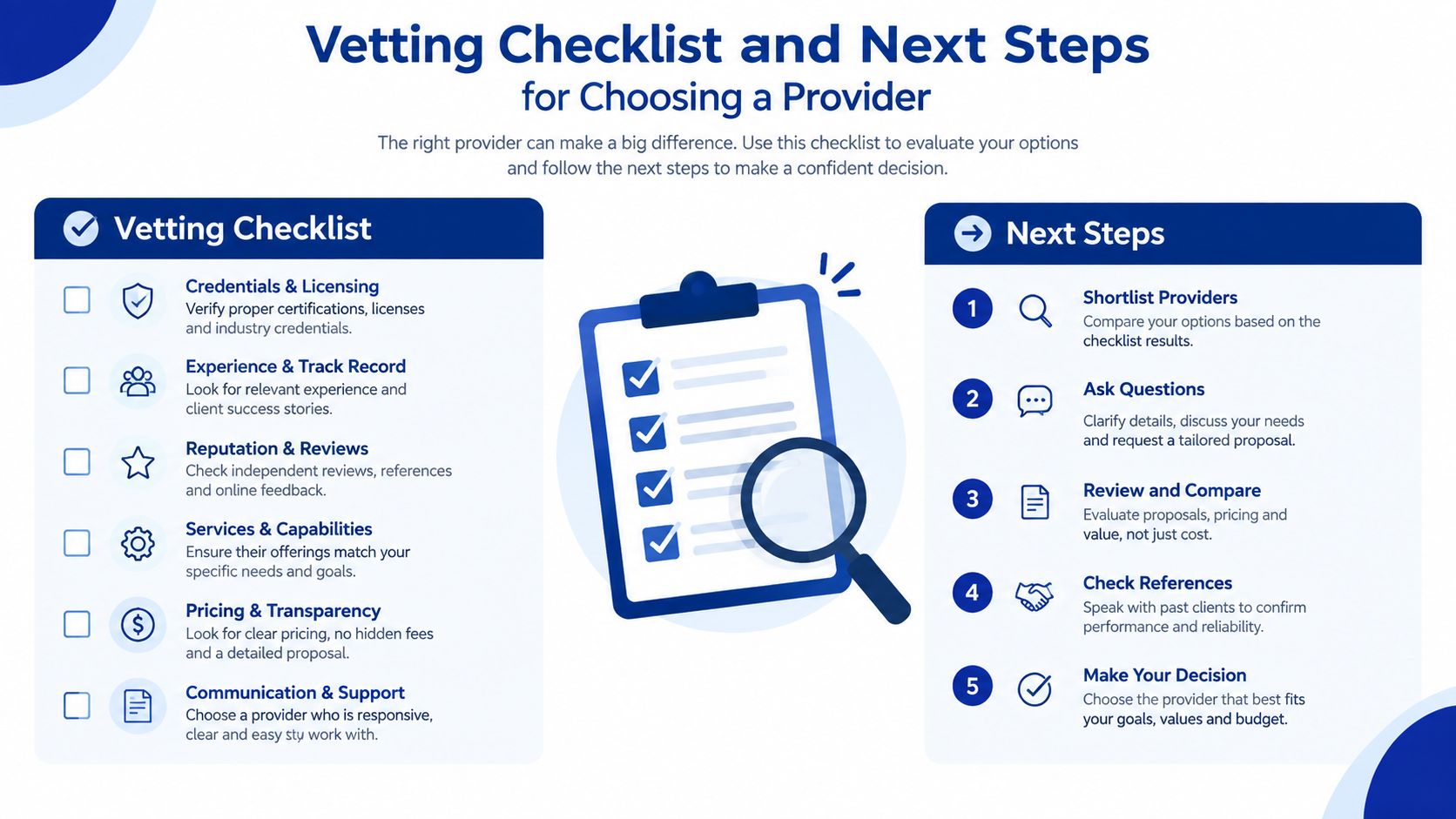
Request a sample playbook, a redacted investigation report, a state compliance matrix, a documentation-retention schedule, and references from multi-state or regulated clients. You should also ask for the provider's written process for handling conflicts, scope creep, emergency requests, and coordination with employment counsel.
Watch for warning signs:
Use a three-step buying process. Begin with a diagnostic call focused on workforce footprint, industry exposure, recurring complaints, and upcoming changes. Follow with a document review of policies, sample personnel files, prior investigations, and state mappings. Finish by defining a pilot scope, such as termination review, handbook assessment, manager coaching, or multi-state compliance maintenance.
Model selection should follow risk, not fashion.
An administrative provider can suit an early-stage, single-state team with uncomplicated employment practices and limited regulatory exposure. A PEO or co-employment arrangement may fit when payroll, benefits, and workers' compensation bundled into one platform drive the buying decision.
Advisory-first support fits a multi-state operator, a regulated SMB, or a company where each employee decision carries meaningful legal, financial, or reputational consequences. It also suits leadership teams that need an experienced decision partner without building a full internal HR department.
| Stage / Profile | Recommended Model | Key Reason |
|---|---|---|
| Early-stage, single-state team | Administrative outsourcing | Efficient handling of routine transactions |
| Payroll and benefits centered business need | PEO / co-employment | Bundled workforce administration and benefits structure |
| Multi-state operator | Advisory-first | Location-based guidance and consistent decision documentation |
| Regulated SMB | Advisory-first | Stronger escalation, investigation, and audit discipline |
| Employer facing serious employee complaints | Advisory-first | Senior judgment before action creates additional exposure |
The cheapest HR service is rarely the lowest-cost option once misclassification, wrongful termination, inconsistent discipline, or jurisdiction violations enter the picture. Choose the model that matches the decisions your leaders are making, then require the provider to document its role clearly.
Paradigm International Inc. supports SMB leadership teams with HR risk advisory, investigations, policy reviews, manager guidance, and multi-state compliance support. Visit Paradigm International Inc. to start a structured conversation about the HR decisions, documentation gaps, and jurisdictional risks your business needs to address.