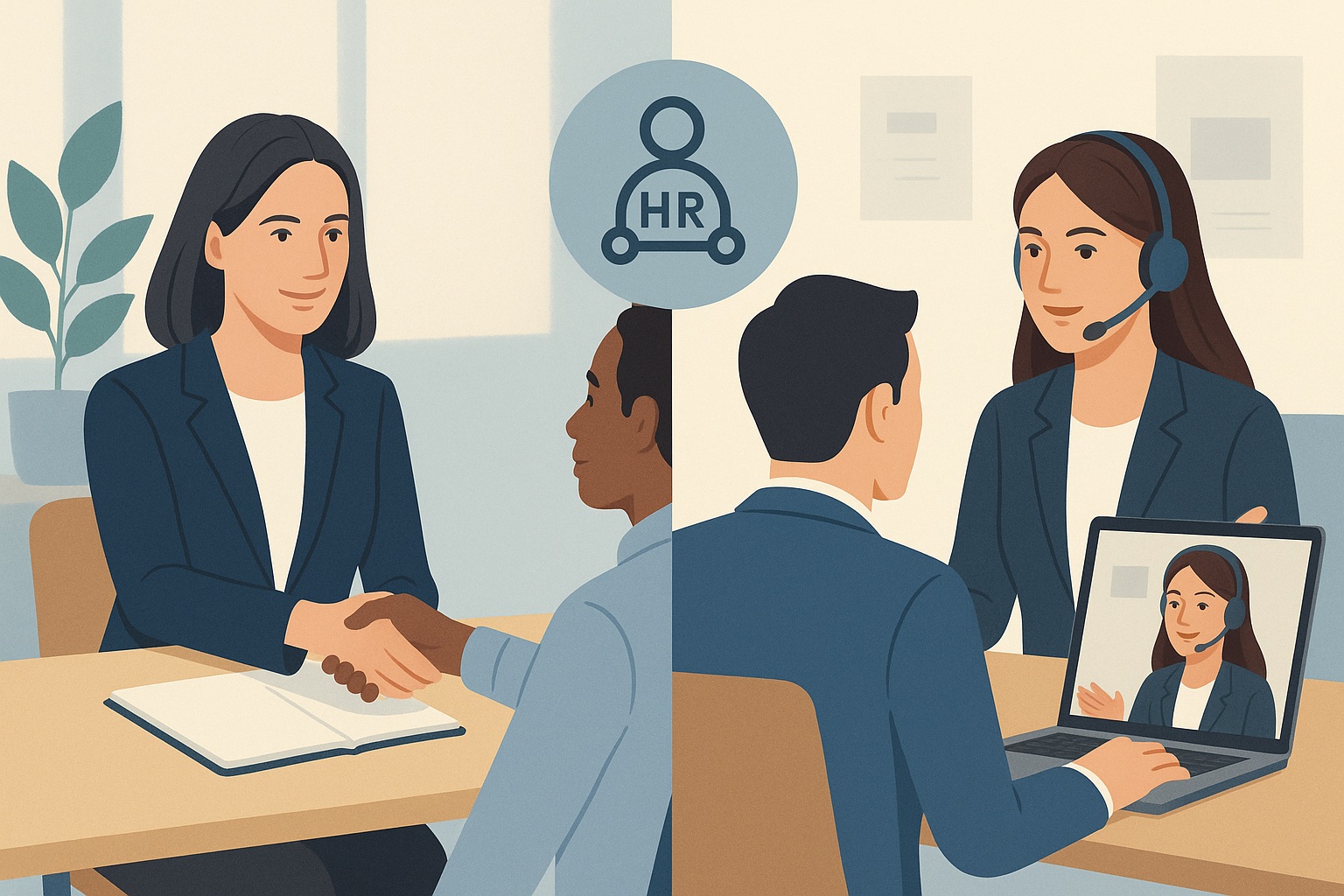
As businesses evolve and adapt to a rapidly changing marketplace, the need for effective human resource (HR) management solutions has never been more critical. With 2025 on the horizon and the workforce becoming increasingly diverse and distributed, organizations are faced with a crucial decision: should they rely on traditional in-person HR consultants, or embrace the flexibility and innovation offered by virtual HR consultants? Understanding the strengths and limitations of each approach is essential not only for operational efficiency but also for maintaining compliance, fostering employee engagement, and driving business growth. Whether you are a growing startup or an established enterprise, making the right HR management choice can set your organization up for long-term success.
In-person HR consultants have long been a staple in the business world, offering hands-on support and tailored services directly within the client’s workplace. These professionals typically operate onsite, providing a physical presence that can be invaluable for companies seeking immediate and personalized HR solutions.
One of the primary benefits of in-person HR consultants is their ability to build strong relationships with both management and staff. By being physically present, they can observe workplace culture, dynamics, and challenges firsthand. This immersive approach allows them to develop a deep understanding of an organization’s unique needs and deliver customized strategies for issues such as talent acquisition, employee relations, training, and compliance.
Face-to-face interaction is another significant advantage. In-person consultants can conduct interviews, mediate conflicts, and lead workshops or training sessions with a personal touch that is sometimes difficult to replicate virtually. This direct engagement fosters trust and facilitates open communication, which can be especially important during sensitive HR matters or organizational change initiatives.
Furthermore, onsite consultants can respond quickly to urgent situations. Whether it’s addressing a sudden compliance issue, investigating a workplace incident, or supporting a transition, the ability to be present in real time often leads to faster resolution and more effective outcomes.
However, in-person HR consulting is not without its challenges. Costs can be higher due to travel expenses, hourly or daily rates, and potential limitations in availability, particularly for organizations with multiple locations. Additionally, geographic constraints may restrict access to top-tier consultants, especially for businesses located in remote or rural areas.
Despite these limitations, many businesses continue to rely on in-person HR consultants for their expertise, relationship-building capabilities, and immediate support. According to recent data, “57% of companies outsource at least one HR function.” This trend demonstrates the ongoing value that external HR professionals bring to organizations seeking specialized knowledge and hands-on assistance.
The rise of digital technology has fundamentally transformed the HR landscape, giving birth to the era of virtual HR consultants. These professionals leverage cloud-based platforms, video conferencing, and collaborative tools to provide comprehensive HR services remotely. As companies embrace hybrid and remote work models, the demand for virtual HR solutions continues to accelerate.
Virtual HR consultants offer a wide range of services, including payroll administration, benefits management, recruitment, policy development, and compliance monitoring. They often utilize advanced HR technology platforms to streamline operations, automate routine tasks, and deliver data-driven insights. As highlighted by recent industry findings, “85% of organizations use HR technology to manage people operations.” This widespread adoption underscores the growing reliance on digital solutions to enhance efficiency and effectiveness in HR management.
One of the most significant advantages of virtual HR consulting is its scalability and flexibility. Organizations can access expert support regardless of their size, location, or industry. Virtual consultants are available across various time zones and can be engaged on-demand, making it easier for businesses to scale HR support as their needs evolve. This approach is particularly beneficial for companies with distributed or remote teams, as it ensures consistent HR coverage without the need for a physical presence.
Cost-effectiveness is another compelling benefit. By eliminating travel and onsite expenses, virtual HR consultants can often provide services at a lower rate compared to their in-person counterparts. Additionally, access to a broader talent pool means businesses are not limited to local expertise; they can engage specialists with niche skills or industry-specific knowledge from anywhere in the world.
The integration of artificial intelligence and automation is further enhancing the capabilities of virtual HR consultants. According to projections, “By 2025, 80% of organizations are expected to integrate AI into HR functions.” This shift is driving innovation in areas such as candidate screening, compliance tracking, and employee engagement, allowing virtual HR professionals to deliver more accurate, timely, and actionable recommendations.
However, virtual HR consulting also presents challenges. Building rapport and trust can be more difficult without face-to-face interaction, and complex or sensitive issues may require a level of nuance that is harder to achieve remotely. Additionally, organizations must ensure robust cybersecurity measures to protect sensitive employee data when working with virtual providers.
Despite these considerations, the global HR technology market is experiencing unprecedented growth. “The global HR technology market is projected to grow from $40.45 billion in 2024 to $81.84 billion by 2032.” This surge reflects the increasing adoption of virtual HR solutions and the critical role they play in modern workforce management.
Choosing between in-person and virtual HR consultants requires a careful evaluation of the unique strengths, limitations, and suitability of each approach for your organization’s needs. Both models offer distinct advantages that can contribute to effective HR management, but their impact may vary depending on business priorities, workforce dynamics, and operational challenges.
Personalization and Relationship Building:
Accessibility and Flexibility:
Expertise and Specialization:
Cost Considerations:
Technology Integration:
Compliance and Risk Management:
In summary, the choice between in-person and virtual HR consultants hinges on factors such as relationship dynamics, accessibility, budget, technological readiness, and the complexity of HR needs. Many organizations are now adopting a hybrid approach, combining the best of both worlds to achieve comprehensive and adaptable HR management.
Selecting the right HR management solution requires a strategic assessment of your organization’s goals, workforce structure, and long-term vision. Here are several key considerations to guide your decision-making process:
Ultimately, the right choice may involve a blend of in-person and virtual consulting, tailored to your organization’s unique needs and strategic priorities. Partnering with an expert HR management provider like Paradigm | Expert HR Management Solutions (https://paradigmie.com) ensures access to both personalized support and innovative technology, empowering your business to thrive in the evolving world of work.
The decision between in-person and virtual HR consultants is a pivotal one for organizations seeking to optimize their people operations in 2025 and beyond. Both approaches offer distinct advantages, from the personalized touch and immediate responsiveness of in-person consultants to the flexibility, scalability, and technological innovation of virtual solutions. The increasing adoption of HR technology and AI-driven platforms is reshaping how businesses approach workforce management, making it essential to choose a solution that aligns with your company’s goals, culture, and growth trajectory. By carefully evaluating your options and leveraging expert support, your organization can build a robust HR infrastructure that drives engagement, compliance, and long-term success.