
Most advice on people first leadership gets the core issue wrong. It treats the idea like a culture initiative, something you discuss in town halls and reinforce with manager training, while your legal, compliance, and documentation processes live somewhere else.
That separation is a mistake.
If you lead an SMB in healthcare, professional services, or any multi-state operation, people first leadership only matters when it holds up under pressure. It has to work during investigations, performance problems, accommodations, policy changes, and terminations. If it falls apart in those moments, it isn’t leadership. It’s branding.
A lot of people hear “people first” and think soft standards, flexible boundaries, and a reluctance to make hard calls. I think the opposite. The strongest people first leadership models make hard calls more clearly, more fairly, and with better documentation.
That matters because most content on this topic emphasizes culture-building but gives very little guidance on how people first principles connect to employment law, documentation standards, and termination procedures, which is a serious gap for regulated and multi-state SMBs, as noted in this discussion of people-first leadership and its implementation gap.
Leaders usually make one of two bad assumptions.
People first leadership should sit inside your operating model. It should shape how managers communicate expectations, how HR documents concerns, and how executives make decisions that affect someone’s job, pay, schedule, or future at the company.
Practical rule: If your managers can’t explain a difficult decision with calm, clear language and clean documentation, your culture isn’t people first. It’s just informal.
A defensible approach does two things at once. It creates enough trust for employees to speak up early, and enough structure for the company to respond consistently.
That means leaders should build systems that support both human judgment and legal defensibility:
That’s the frame. People first leadership isn’t a softer alternative to discipline and compliance. It’s how disciplined, compliant organizations avoid becoming impersonal and risky.
You don’t need a slogan. You need a repeatable management standard.
The most useful way to define people first leadership is through behaviors that leaders can demonstrate and organizations can reinforce. The core traits usually sound familiar. Empathy, transparency, accountability, and fostering initiative. The problem is that many companies stop at the words and never translate them into operating rules.
Use this as a working model.
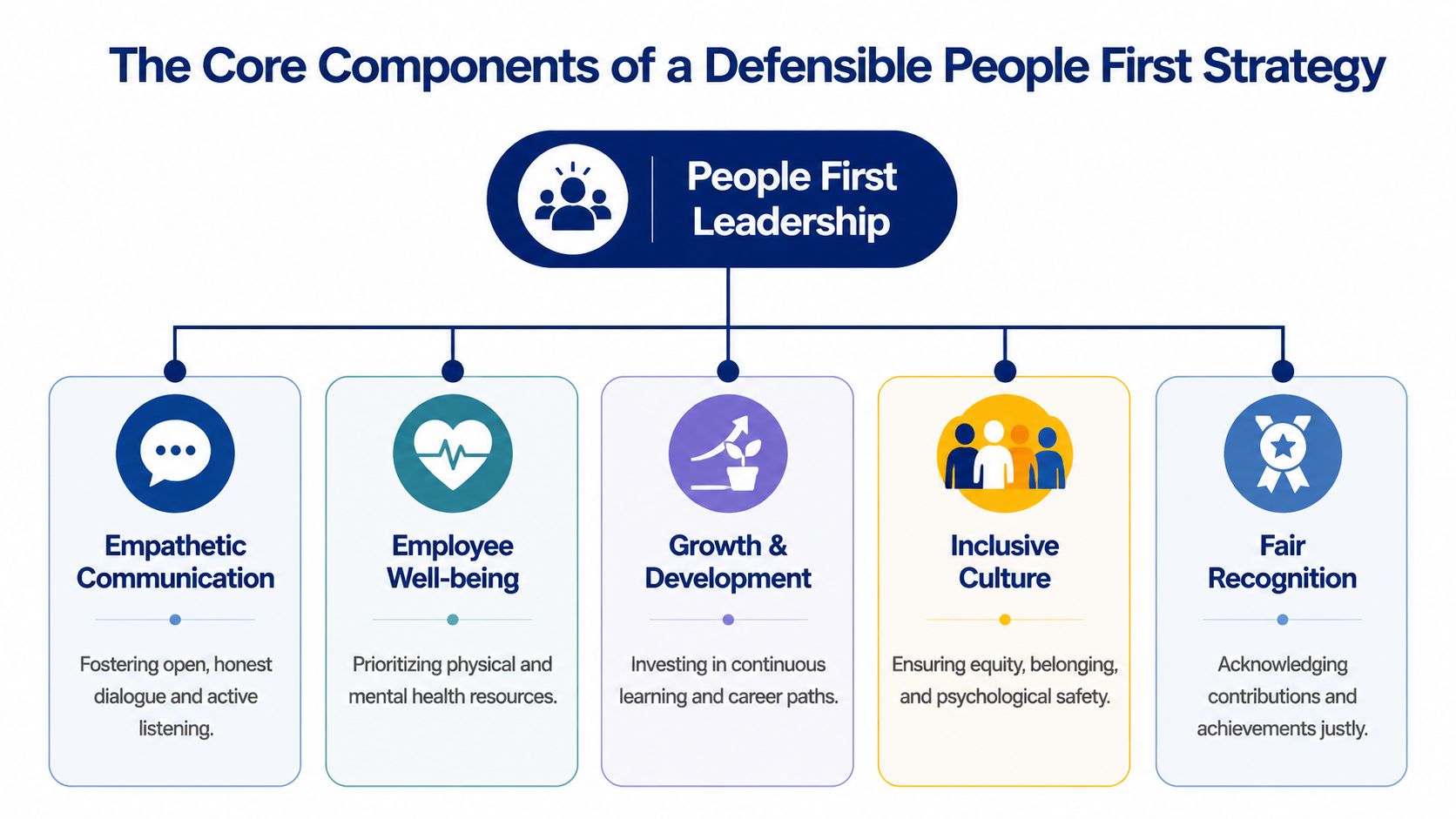
Empathy without clarity creates confusion. Clarity without empathy creates resentment. You need both.
If you want a practical baseline for manager behavior, attributes of a good boss is a useful reference point because it grounds leadership in habits employees can directly experience.
People first leadership also has to show up in the employee lifecycle, not just in manager style.
Here’s where companies should operationalize it:
A people first strategy becomes defensible when managers can show both care and consistency in the same file.
A defensible strategy usually rests on five pillars:
| Pillar | What it means in practice | Why it matters |
|---|---|---|
| Empathy | Listen, ask questions, and respond without rushing to judgment | Employees raise issues sooner |
| Transparency | Explain decisions and process steps clearly | Reduces confusion and rumor-driven conflict |
| Consistency | Apply standards across teams and states with local adjustments where required | Supports fairness and defensibility |
| Accountability | Address problems directly and document them accurately | Prevents drift and weak files |
| Follow-through | Close the loop after concerns, complaints, or commitments | Builds trust in leadership action |
That’s the shift most SMBs need. Stop treating people first leadership as a personality trait. Treat it as a management system.
Leaders don’t need another moral argument. They need a business one.
People first leadership affects engagement, and engagement affects performance. According to Gallup research cited by Helpside, when employees feel leaders prioritize them, 77% are engaged, compared with 45% when they believe leaders do not. The same source notes that only 33% of employees in the United States are engaged, and organizations with high engagement outperform those with low engagement by up to 21% in profitability. That’s not a soft outcome. It’s a business signal with operational consequences, as summarized in this Gallup-based overview of people-first leadership.

In SMBs, the payoff usually appears in ordinary operating moments, not dramatic cultural campaigns.
A manager who gives clear feedback early can prevent a months-long performance spiral. A leader who explains a policy change plainly can prevent rumor, disengagement, and complaints. A company that handles a separation with structure and dignity is in a better position if that decision is later challenged.
The business case shows up in areas like these:
The mistake many owners make is looking for return only in productivity. Risk reduction matters just as much.
A people first approach can reduce the chance that an employee experiences discipline or termination as arbitrary, retaliatory, or personally targeted. That doesn’t guarantee agreement, but it improves the company’s position because the record shows process, communication, and consistency.
Handle people issues as if a regulator, a plaintiff’s attorney, and your remaining employees will all review the decision later. Because in some form, they might.
Health and safety is a good example. If leaders say they care about people but ignore basic operational safeguards, employees see the contradiction immediately. For a practical refresher on understanding health and safety at work, this resource from Safety Space is useful because it ties workplace care to real management responsibility.
If you operate across states or in regulated environments, you can’t afford a split model where culture is human and compliance is mechanical. Employees experience one company, not two.
That’s why I advise leaders to treat people first leadership as a business control. It supports engagement, improves decision quality, and lowers the odds that preventable people issues turn into expensive disputes.
Most leaders don’t fail because they lack good intentions. They fail because they don’t have a repeatable method.
Use a simple framework: Listen, Document, Act, Communicate. It works in performance management, accommodations, investigations, interpersonal conflict, and separations. This framework also offers managers a consistent approach to leadership when the facts are messy and circumstances are critical.
Listening is not passive. It means creating ways for employees to raise concerns, then making sure managers know how to respond.
That requires structure:
Listening matters because employees often judge fairness before they judge the outcome. If they feel dismissed at the start, the rest of the process is already damaged.
Documentation is where many “people first” cultures fall apart. Managers either write too little, write too late, or write the wrong things.
Good documentation should be:
Manager advice: Write down what you observed, what standard applies, what you communicated, and what happens next. Leave motive and emotion out of it.
Once you have facts, act. Delayed decisions create confusion, send mixed signals, and often make the situation harder to defend.
Consistency doesn’t mean identical outcomes in every case. It means similar issues are evaluated through the same decision framework. Consider role, prior coaching, policy, history, and local legal requirements. Then decide.
Closing the loop is part of leadership, not an administrative extra.
Tell employees what they need to know about the decision, what comes next, and where they can go with questions. You won’t always be able to share everything, especially in investigations, but you should always explain process and expectations as clearly as possible.
That final step does more than preserve trust. It reduces confusion, rumor, and the sense that decisions happen in secret.
A multi-state company can’t rely on manager instinct. It needs a centralized philosophy and localized execution.
That’s where people first leadership gets difficult. You want employees to experience one coherent culture, but state law doesn’t give you one coherent rulebook. Leave requirements, break rules, final pay timing, and documentation expectations can vary. Your managers need a consistent leadership approach that still respects local requirements.

This is the right model for multi-state SMBs:
| Central standard | Local adjustment |
|---|---|
| Managers use the same conversation structure for performance issues | State-specific rules shape timing, notices, and pay practices |
| Leaders document concerns in a common format | HR reviews for location-based compliance requirements |
| Employees receive the same respect and explanation during difficult decisions | Policies reflect local leave, wage, and break rules |
If your team needs a practical example of how one policy area changes by jurisdiction, employment law breaks is a useful reminder that “simple” manager issues rarely stay simple across states.
Don’t start with abstract culture training. Start with the interactions that most often create claims, complaints, or inconsistency.
Focus manager training on:
A structured advisory partner can offer assistance. Firms of this kind support leadership teams with decision-making around terminations, investigations, manager conduct, and documentation standards in more complex employment environments.
Documentation standards should be plain enough for every manager to follow.
Use these rules:
A weak documentation culture causes two problems at once. It undermines fairness because employees get mixed messages, and it undermines defensibility because the file doesn’t tell a coherent story.
Many leadership teams launch a people first effort and never touch the handbook, investigation protocols, or corrective action templates. That guarantees misalignment.
Review these areas:
If your values say “we care about people,” your forms, scripts, and manager training should say the same thing in practice.
That’s how you build one company across multiple states. Not by pretending the legal details are the same everywhere, but by making sure the leadership standard is.
If you can’t measure leadership behavior, you can’t manage it well. Gut feel is not enough, especially when you’re trying to improve consistency across departments, managers, and locations.
That doesn’t mean turning people first leadership into a spreadsheet exercise. It means identifying a small set of signals that tell you whether leadership behavior is helping or hurting culture, execution, and risk posture.
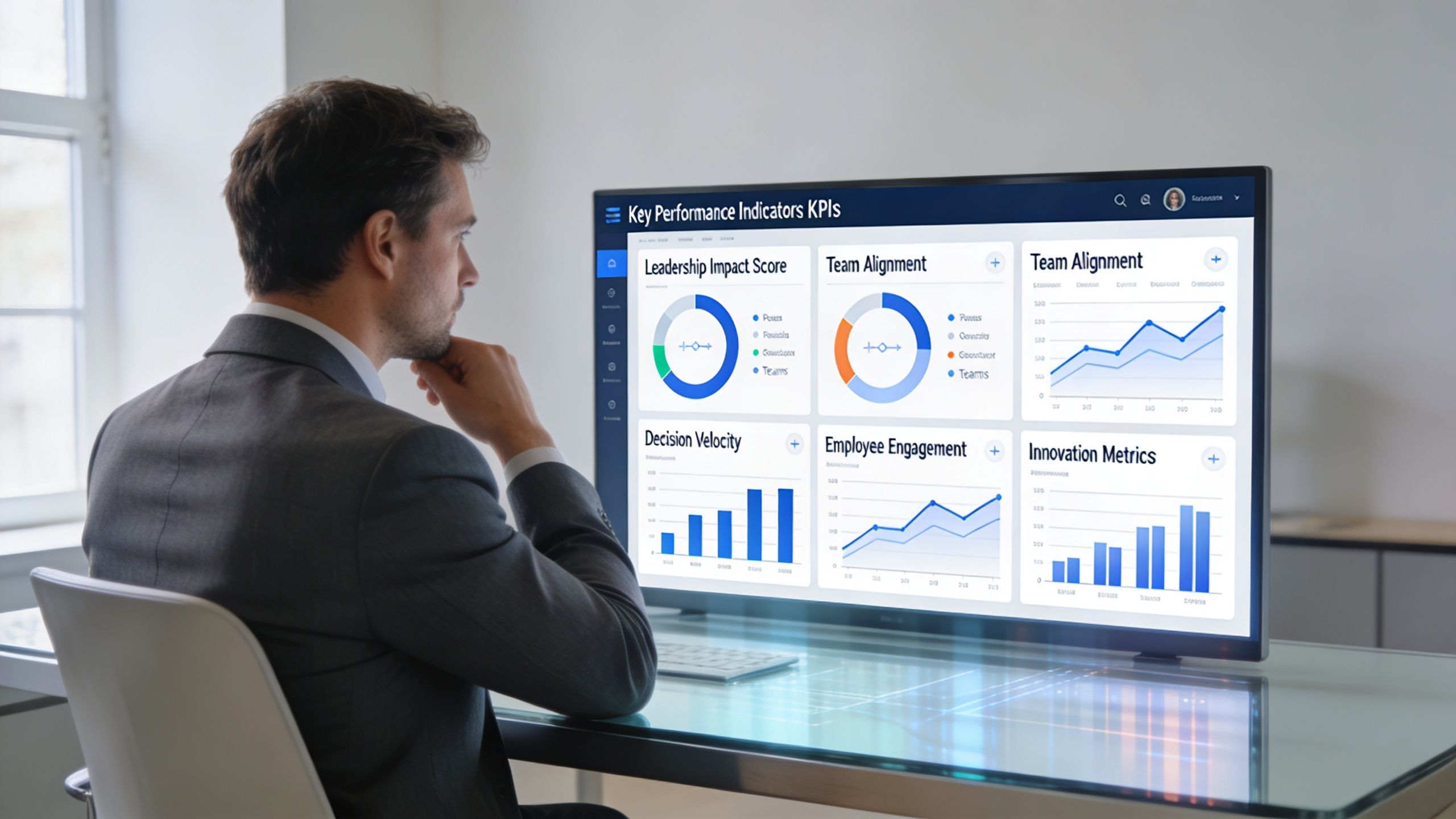
Start with business intelligence you probably already have, then layer in leadership assessment.
Useful indicators include:
Those measures won’t prove everything on their own. They help you ask better questions. Why does one team see repeated friction? Why do some leaders document well and others not at all? Why do employees escalate concerns in one location but stay silent in another?
A more defensible approach includes a validated survey tool. The People-First, Value-Centered Leadership Behaviors Survey is one such option. It is a validated instrument with high reliability, with Cronbach’s alpha greater than 0.86, which makes it a credible survey-based tool for benchmarking leader behavior and improving leadership as part of a defensible HR process, according to the PFVC survey project documentation.
That matters because many companies try to evaluate managers using vague feedback like “more supportive” or “needs better communication.” Those comments may be directionally useful, but they aren’t strong enough to support development plans or leadership accountability on their own.
Measurement should help you coach managers earlier, not punish them later.
Keep the dashboard simple enough that leaders will use it.
A practical leadership dashboard should show:
| Measure | What it helps you see |
|---|---|
| Engagement feedback | Whether employees experience trust and clarity |
| Turnover patterns | Whether leadership behavior may be driving exits |
| Complaint and escalation themes | Where manager conduct or process gaps may exist |
| Documentation quality reviews | Whether performance management is consistent |
| Leadership survey results | Which behaviors need coaching or reinforcement |
The point isn’t data volume. The point is consistency. When leadership effectiveness becomes measurable, people first leadership stops being a talking point and becomes a management discipline.
People first leadership is only useful if it survives real business pressure. It has to work when performance slips, when an employee raises a complaint, when state rules differ, and when leaders have to make decisions that affect someone’s job. If it only shows up in values statements, it won’t protect the business or the people inside it.
The companies that handle this well do a few things differently. They define manager behavior clearly. They document carefully. They train for high-risk moments. They measure whether leadership is being experienced the way the company claims.
Here’s the practical comparison.
| People First Action | Cultural Benefit | Risk & Compliance Benefit |
|---|---|---|
| Clear performance expectations | Employees understand what success looks like | Reduces ambiguity in coaching and discipline |
| Structured one-on-ones | Employees feel heard earlier | Issues surface before they escalate |
| Neutral, timely documentation | Builds trust through fair process | Supports defensible employment decisions |
| Consistent policy application | Reinforces fairness across teams | Reduces inconsistency across managers and states |
| Respectful separation practices | Preserves dignity during difficult decisions | Improves the company’s position if decisions are challenged |
This matters beyond traditional HR operations. As leadership teams adapt to new tools, automation, and changing workforce models, the discipline of human-centered management becomes even more important. For teams thinking about capability-building in parallel with operational change, this CTO's guide to building AI-native teams is a useful example of why structure, clarity, and team design need to evolve together.
People first leadership is not a softer way to run a business. It’s a more stable one. If your organization is growing, spreading across states, or facing more complex people decisions, getting this right takes more than good intentions.
If you’re working through high-stakes people decisions and need a more defensible approach, Paradigm International Inc. works with SMB leadership teams to build practical HR structure around manager conduct, documentation, investigations, and multi-state compliance.