
For many business owners, HR can feel more like a necessary expense than a genuine driver of growth. A properly built strategic plan for HR, however, flips that script. It transforms your people operations from a reactive cost center into a powerful asset that both protects the business and fuels its long-term success. This is about creating a deliberate framework for every single people-related decision you make.

The first step toward making HR a true business partner is moving beyond just administrative tasks. A strategic plan is your roadmap for navigating the tough challenges—from multi-state compliance and high-stakes terminations to talent retention and poor manager conduct. It ensures every HR activity is intentional, documented, and defensible.
This shift is essential for growing businesses. Instead of just running payroll or managing benefits, a strategic approach aligns your people operations directly with your company's long-term goals. This proactive stance helps you anticipate needs, mitigate risks before they escalate, and make choices that strengthen the entire organization.
The difference between a reactive and a strategic HR function is stark. A reactive HR department is constantly putting out fires—handling employee complaints as they arise or scrambling to fill a critical role after someone quits unexpectedly. This approach is not only expensive but also leaves your business exposed to significant risk.
A strategic HR function, on the other hand, looks ahead. It builds systems to prevent those fires from ever starting. This means creating clear, unambiguous policies and providing manager training to minimize workplace issues. A key part of this is establishing firm guidelines for critical tasks, like effectively disciplining your employees while avoiding legal trouble.
The real goal is to build a structure where HR decisions aren't just about fixing today's problem. It's about building long-term organizational resilience and a genuine competitive advantage.
This guide is designed for leaders who need to make deliberate, defensible decisions. It’s for those who know that managing people-risk is absolutely essential for sustainable growth. If you want a deeper dive into this process, you may find our guide on how to build an HR strategy for growth helpful.
Building this kind of framework demands a clear understanding of where you are now and where you want to go. The next sections will walk you through how to assess your organization's needs, define your strategic pillars, and create an implementation roadmap that works. This structured approach helps ensure your human resources contribute directly to your bottom line.

Before you can build a forward-looking strategy, you have to be honest about where your business stands today. Creating a strategic plan for HR always starts with a clear-eyed audit of your current people operations. This isn’t about getting lost in administrative details; it's a targeted look at your strengths, weaknesses, and—most importantly—your hidden risks. The goal is to build a data-backed baseline that connects your HR activities directly to your company’s long-term goals.
Think of this initial review as the foundation of your plan. Without it, you’re just guessing. You need to know how your current HR practices are helping or hurting your ability to scale your team, expand into new states, or simply operate in a highly regulated industry.
A truly meaningful HR audit is more than a generic compliance checklist. It’s a strategic deep-dive that starts with one fundamental question: what is the business really trying to achieve? Answering this first ensures your audit focuses on what actually matters. For example, if rapid growth is the primary goal, your audit should focus on the scalability of your hiring process and whether your onboarding program can handle the volume.
On the other hand, if you're a multi-state operator, your audit must prioritize compliance consistency across every jurisdiction. You would need to scrutinize policies on wage and hour laws, leave requirements, and termination procedures in each state. Getting this wrong isn't just an administrative headache; it’s a massive legal and financial liability.
The most effective HR audits are not just about finding problems. They are about mapping your current people-related capabilities directly to your strategic business goals to see where the gaps are.
When you tie every piece of your audit back to a specific business outcome, it transforms from a simple review into a powerful diagnostic tool. This approach helps you gather the critical data needed to build a truly defensible HR plan.
With your business goals in focus, it's time to zoom in on high-risk areas. Some HR functions carry far more potential liability than others, and these are where your audit needs to be rigorous. A single mistake here can undo years of hard work.
Pay special attention to these areas during your review:
The insights from this audit will become the bedrock of your strategic plan. The growing demand for this kind of specialized HR guidance is clear. The global HR outsourcing market was valued at around USD 39.25 billion in 2024 and is projected to hit USD 57.59 billion by 2033. This shows a definitive shift toward leadership teams seeking structured approaches to manage complex employment decisions, as detailed in our analysis of the best HR service providers.
A thorough audit gives you the clarity to move forward. You will know exactly where your vulnerabilities lie and what capabilities you need to build. This data-driven foundation is essential for creating the core pillars of your HR strategy. If you need a partner to help navigate these high-stakes decisions, you can connect with our team.
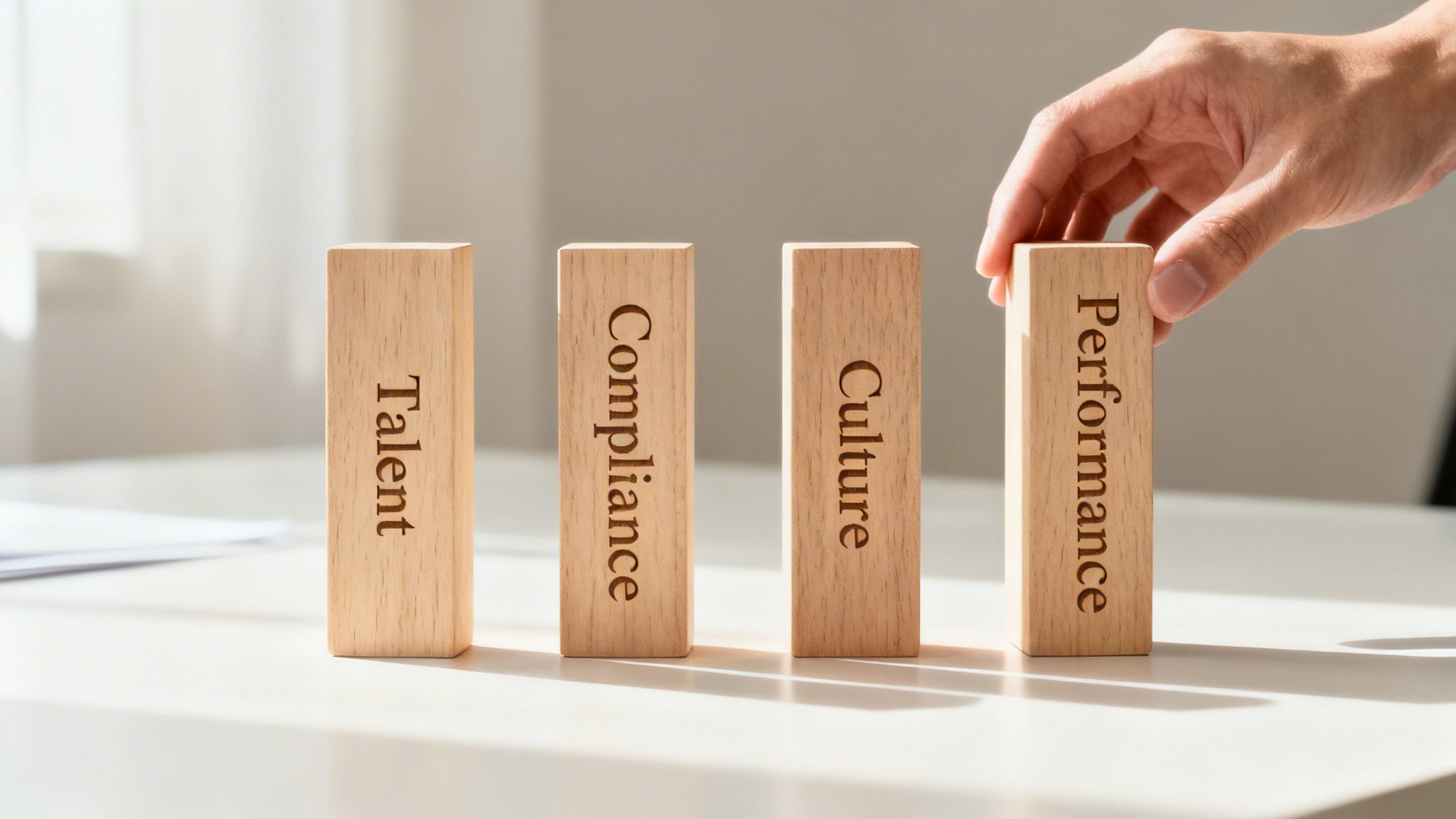
After completing the HR audit, you have a clear view of where you stand. Now it's time to turn that raw data into a defensible strategic plan for HR. This isn't about creating a binder that sits on a shelf; it's about translating your high-level business goals into a structured people strategy. The most effective way to do this is by building your plan around a few core pillars.
Think of these pillars as the foundation for every people-related decision you make, ensuring each initiative has a clear purpose and a measurable outcome. This structure makes your plan easy for leadership to understand, track, and support. To make this actionable, we'll focus on four critical pillars that are essential for any growing business.
By grounding your HR initiatives in these four areas, you ensure your people operations are directly supporting the company's long-term success.
Let's start with the lifeblood of your company: your people. Talent Management is how you attract, hire, and—most importantly—retain the right team members. For a growing business, getting this wrong is incredibly costly. In today's market, you cannot simply post a job and hope for the best.
A solid talent pillar should answer some important questions:
A strategic approach to talent means you’re always thinking one step ahead. It’s about building a pipeline of great candidates before you have an opening and creating an environment where your top performers want to stay.
This pillar is non-negotiable, especially if you operate in multiple states. It’s all about building defensible systems that shield your organization from preventable legal claims and financial penalties. This goes far beyond just having an employee handbook; it’s about ensuring your managers are trained to apply your policies correctly and consistently.
A huge focus here is establishing defensible documentation standards. For example, having a clear, documented, and consistently followed process for employee separations is your best defense against a wrongful termination claim. This pillar ensures your decisions are based on objective facts, not emotions, and that you have the records to prove it. To strengthen this area, it's worth exploring the best HR practices in the workplace.
Culture is often seen as a "soft" metric, but its impact on your bottom line is significant. This pillar is about being intentional. You either shape the work environment you want, or it will develop on its own—and you might not like the result. Culture is simply "how we do things around here," and it directly impacts everything from productivity to your ability to attract talent.
Your goal here might be to build a culture of accountability or to break down communication silos. For example, if your audit showed that managers are avoiding difficult performance conversations, a key initiative would be to roll out mandatory training on giving direct, constructive feedback. This is a perfect example of a single action that strengthens culture and mitigates risk.
Finally, this pillar ties individual employee performance directly to your company's objectives. It's about setting clear expectations, giving regular feedback, and showing people a path for growth. When employees see how their daily work contributes to the company's success, their engagement and effectiveness increase.
A strong performance and development pillar typically includes:
The financial stakes here are high. With the average cost-per-hire around $4,700 according to industry reports, a haphazard approach is a recipe for wasted money. A well-structured plan helps prevent these expensive mistakes and turns your people operations into a strategic asset.
A great HR strategy is only a concept until you translate it into a concrete implementation roadmap. This is where your strategic plan for HR stops being an idea and starts becoming a tangible force for change in your day-to-day operations. Without a clear roadmap, even the best intentions can fall flat.
This roadmap builds a bridge from your strategic pillars—Talent, Risk Mitigation, Culture, and Performance—to real, measurable results. It’s about creating a series of concrete initiatives, each with a clear owner, a realistic timeline, and the necessary resources. This methodical approach drives steady progress without overwhelming your team.
Translating high-level pillars into specific actions is the heart of building your roadmap. This isn’t about vague goals; it’s about defining the exact projects that will move the needle for each pillar. You have to ask, "What specific, tangible steps will get us from where we are to where we need to be?"
Let's say a key objective under your Risk Mitigation pillar is to "achieve 100% manager certification on new performance documentation standards." Your initiatives might break down like this:
This level of detail makes the goal tangible and, more importantly, measurable. The idea is to create a series of focused, time-bound projects that build on each other to create lasting change.
Your roadmap is destined to fail without genuine buy-in from your executive leadership and your front-line managers. Leadership provides the authority and resources, while your managers are the ones executing the plan every day. To get them on board, you have to speak their language.
Frame your roadmap in terms of business outcomes, not HR jargon. Instead of saying, “We need to update our employee handbook,” explain it as, “A clear, updated handbook will reduce our exposure to wage-and-hour claims, a risk that costs businesses in our sector significantly each year.” Tie every initiative back to a core business goal like reducing risk or improving productivity. Framing this conversation through the lens of effective strategic risk management is a powerful way to get leadership’s attention.
The most successful rollouts are phased, realistic, and communicated clearly from the top down. Start with one or two high-impact initiatives to build momentum and demonstrate value early. This proves the plan works and builds confidence for future phases.
Trying to do everything at once is a common mistake and a recipe for burnout. A phased approach is essential for sustainable success. Your roadmap should clearly outline what will be accomplished in the first 90 days, the first six months, and the first year. This creates momentum and allows your organization to absorb changes without causing massive disruption.
For a growing business, the first 90 days might focus on risk mitigation—standardizing termination checklists and training managers on documentation. Once that foundation is solid, the next phase could shift to talent acquisition. This approach also creates positive ripple effects. A strong workplace culture is a direct outcome of these well-planned initiatives, which in turn becomes a powerful magnet for talent. For instance, companies that become a Great Place to Work often see higher retention rates; at Paradigm, 89% of employees say it's a great place to work, compared to just 57% at a typical U.S. company.
By breaking your strategy into a clear, phased roadmap, you give your entire organization a path forward. If you are looking to create a truly defensible HR framework with expert guidance, connect with us to learn more.
Your strategic HR plan shouldn't be a document that just gathers dust. For it to have a real impact, it must be a living guide that evolves with your business. Many companies stumble here—they do the hard work upfront but forget to build a system for monitoring, measuring, and adapting the plan over time.
A truly great strategic plan for HR stays relevant because it’s constantly reviewed and refined. This is what turns your people strategy from a historical artifact into a powerful tool. By tracking progress and tackling challenges as they arise, you ensure your plan remains focused on your company's most important goals. This flowchart shows how to break down strategic pillars into actionable initiatives on a clear timeline.
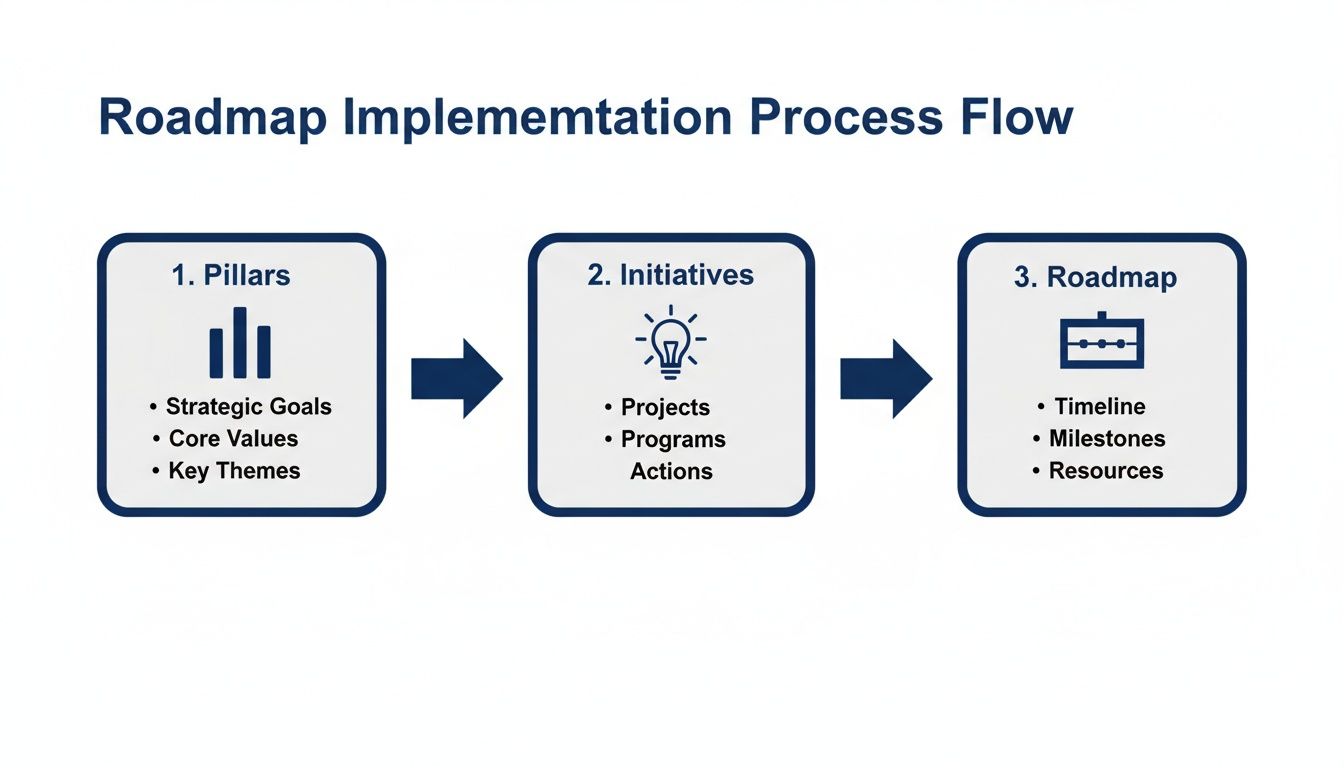
As you can see, a roadmap isn't just a to-do list; it's a structured way to turn high-level strategy into real-world action.
You can't manage what you don't measure. However, tracking dozens of HR metrics can lead to data overload. The key is to pick a handful of meaningful Key Performance Indicators (KPIs) that directly signal the health of your strategic pillars. Think of KPIs as the vital signs for your people strategy, giving you a clear, at-a-glance view of whether your initiatives are working.
Here are a few powerful KPIs to consider, broken down by strategic pillar:
Your KPIs should tell a story. If your goal is to reduce turnover, tracking the "Employee Turnover Rate" is the plot. But analyzing why people are leaving provides the context and reveals what actions to take next.
Once you have your KPIs, the next step is to create a formal rhythm for reviewing them. Accountability is built through consistency. We recommend establishing a quarterly leadership review dedicated specifically to the HR strategic plan. This meeting is a strategic work session to assess progress, celebrate wins, and confront challenges.
This regular cadence ensures the HR plan stays top-of-mind. It carves out a dedicated forum for making necessary adjustments, reallocating resources, or pivoting on an initiative that isn’t delivering the expected results. Without this structured review, even the best-laid plans will slowly drift off course.
No business operates in a vacuum. New regulations are passed, growth opportunities emerge, and market conditions shift. A truly strategic HR plan is built to be agile enough to handle these inevitable changes. Your review process is the engine that allows for this adaptation.
For example, a new state law on paid leave might demand an immediate update to your policies. A sudden chance to expand into a new territory will trigger a hard look at your talent acquisition strategy and compliance framework for that location. The goal isn't to rewrite the whole plan every time something changes; it's about making smart, targeted adjustments to keep your strategy aligned and effective.
Even the best leaders have questions when it comes to building a strategic HR plan. It's easy for strategy to feel abstract, so let's get into the practical details. Here are answers to some of the most common questions we hear from business owners navigating this process for the first time.
Think of your strategic plan for HR as a living document, not a report you file away. At a minimum, you need to conduct a full, comprehensive review once a year. The best time to do this is alongside your annual business planning cycle, ensuring your people strategy is aligned with your commercial goals for the year ahead.
But a year is a long time, which is why we also recommend quarterly leadership check-ins. These are shorter meetings to review your KPIs, check progress on key initiatives, and make adjustments as the business landscape shifts. Any major business event—like an acquisition, expansion into a new state, or significant changes in employment law—should also trigger an immediate review of the plan.
By far, the most common mistake is creating an HR plan in a vacuum, disconnected from what the business is trying to achieve. An HR plan with vague goals like “improve company culture” is likely to fail because it isn’t tied to a measurable business outcome, like “reduce voluntary turnover in our sales team by 15% to protect revenue targets.”
A close second is failing to get real buy-in from your front-line managers. These are the people on the ground who have to execute your policies every day. If they don’t understand the "why" behind the plan or feel they have the tools to implement it, your strategy will never leave the paper it’s written on.
Absolutely. A strategic HR plan is arguably more critical for a small business. The negative impact of a single bad hire, a compliance mistake, or losing one key employee is magnified when you’re small. A "formal" plan doesn't mean a 100-page binder; it’s a focused, practical roadmap that outlines how you plan to hire, manage, and retain your people while staying compliant. This is essential risk management.
The goal isn't to track everything; it's to track the right things. You want a handful of powerful metrics that tell an honest story about the health of your workforce. We advise clients to start with these high-impact metrics:
When you choose metrics that clearly connect HR activities to business value, you transform HR from a cost center into a strategic partner.
Building and maintaining a defensible HR strategy is a significant undertaking, but it is one of the most important investments you can make in your company's long-term health. If you are ready to move beyond reactive HR and create a strategic framework that protects your business and supports its growth, we are here to help.
To learn more about how our advisory-first approach can support your leadership team, please contacting us.