A growing business can cross Florida's E-Verify threshold without anyone in the Florida office realizing it. A new hiring class, seasonal staffing, or a second-state expansion may push total company headcount to the statutory trigger while HR continues using the old onboarding process. The problem may stay invisible until the first Florida reemployment tax filing, when a missed verification becomes part of an annual compliance certification.
For 2026, Florida employers need to treat E-Verify as a connected system of hiring controls, tax reporting, record retention, worker classification, and licensing risk. The Florida statute governing E-Verify compliance makes the obligation operational, not theoretical. A defensible program should identify coverage before hiring begins, create cases on time, preserve supporting records, and give finance enough evidence to certify accurately.
A multi-state company can trigger Florida's E-Verify duties without adding many employees to its Florida office. The local manager may see a small team while operations staff in another state, replacement hires, and seasonal workers push the company-wide count over the threshold. That hidden headcount calculation creates exposure before the Florida team recognizes that its hiring process must change.
Florida's current rule covers private employers with 25 or more employees. A covered employer must use E-Verify for each new employee and complete the case within 3 business days after the worker's first day on the payroll. The obligation also includes annual certification and record retention. HR risk management for Florida businesses should assign clear ownership across HR, payroll, finance, and compliance rather than treating E-Verify as an account setup task.
Operational reality: A company can remain locally small in Florida and still fall under the rule when its total employee count reaches the statutory threshold.
The annual reemployment tax certification is a separate control point that deserves executive attention. Finance must have reliable evidence that the company met its E-Verify obligations before making the certification. A missing case, incomplete file, or unclear employee count can turn an otherwise routine tax filing into a compliance exposure.
House Bill 197 proposed expanding the requirement to all private employers statewide, with a proposed effective date of July 1, 2026. The bill moved through the Florida House in January 2026 but later stalled in the Senate. The current framework remains the 25-employee rule unless new legislation is enacted. The bill's legislative history still supports preparing for broader coverage, especially for smaller employers approaching growth milestones.
Executives should manage E-Verify through defined handoffs:
The control must survive onboarding, tax reporting, retention reviews, and a later state inquiry. A written headcount method and documented certification workflow give leadership a defensible record when staffing spans multiple states.
The most important threshold question is not, “How many people work in Florida?” It's, “How many employees does the company have across its business?” Florida's rule applies to private employers with 25 or more employees, and the count is company-wide rather than limited to Florida headcount. That makes the threshold especially important for multi-state SMBs that grow through hiring, expansion, turnover replacement, or seasonal staffing.
A business may cross the trigger during a period when its HR team is focused on recruiting rather than compliance design. If the organization's HRIS counts employees by location, but the legal review relies only on the Florida location, leadership may receive the wrong coverage answer. The company should define one authoritative headcount method and make sure HR, payroll, finance, and legal teams use the same employee population.
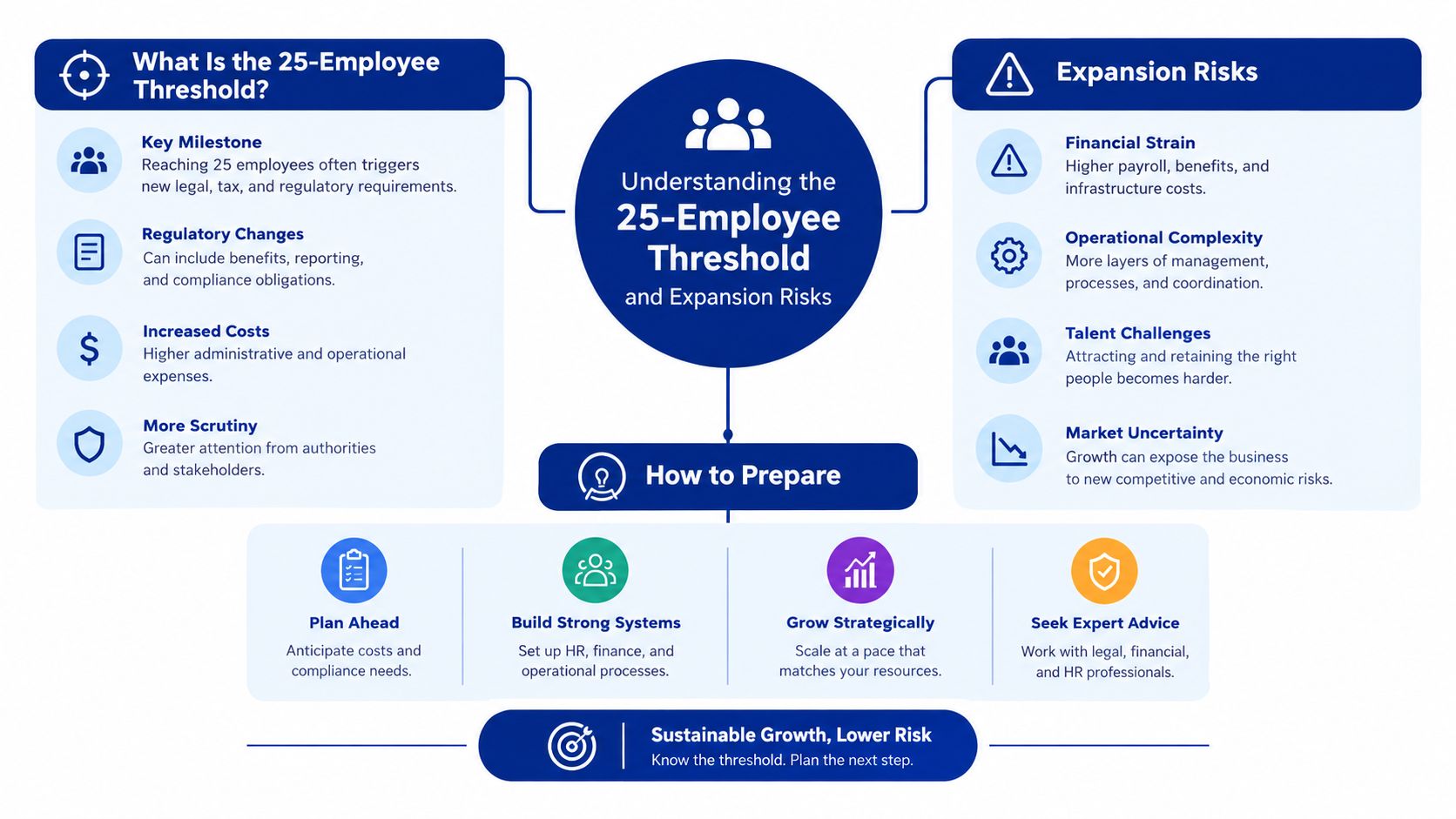
The threshold isn't a temporary switch that disappears because staffing later declines. For organizations with fluctuating headcount, it creates a durable compliance trigger tied to total staffing. That matters for businesses managing expansion, employee turnover, or seasonal hiring because the organization may remain operationally exposed even after the staffing pattern changes.
Leadership should monitor headcount before opening requisitions, not after the first payroll run. A practical review asks:
House Bill 197 proposed replacing the threshold-based model with a universal requirement for all private employers. It moved through the House in January 2026 before stalling in the Senate, so it didn't change the operative rule. Its significance is directional. Florida has demonstrated a willingness to broaden E-Verify coverage, and small businesses may eventually face the same process obligations as larger employers.
The right response isn't to enroll every business based on a bill that didn't become law. The right response is to build a process that can scale quickly. If your company expects growth, establish ownership, document the current threshold analysis, and monitor legislative changes before a new rule creates a compressed implementation period.
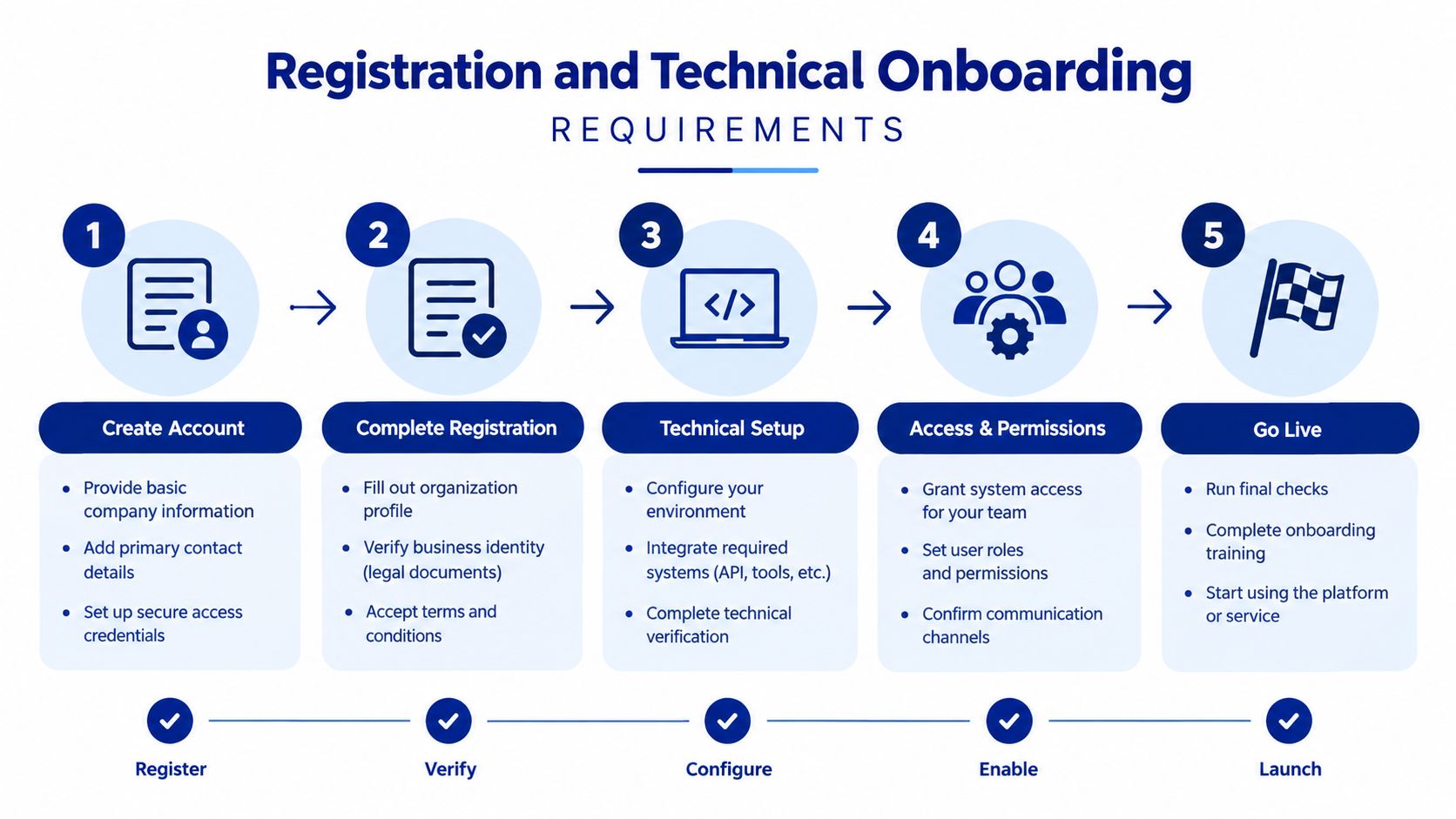
Registration is only the starting point. Covered employers need a workflow linking Form I-9 completion to E-Verify case creation, deadline tracking, exception handling, and record retention. Florida requires employers to verify employment eligibility within 3 business days after the worker's first day on the payroll, as stated in Florida's E-Verify statute.
Set the process around the legal deadline, then choose technology that supports it. An HRIS, applicant tracking system, or electronic I-9 platform can issue reminders and route assignments. It cannot decide how to handle incomplete information or an unresolved case. Assign a named owner, define escalation rules, and require review before an exception is closed.
Use one sequence across every location:
Data quality determines whether the workflow produces defensible records. Names, dates, and document details entered incorrectly can create avoidable mismatches. Use validation checks, reduce manual rekeying, and train every person who handles I-9 or E-Verify tasks. The SMB I-9 verification guide can help standardize the underlying verification process.
A reviewer should be able to answer four questions quickly:
An email trail or general personnel file is not enough. Configure the system to preserve case identifiers, timestamps, responsible users, and exception notes. If a manager bypasses the standard workflow, require a documented correction. Informal workarounds create gaps that become difficult to defend during an audit.
A growing Florida employer can finish a hiring file and still face a compliance question months later. Covered employers must certify E-Verify compliance on the first Florida reemployment tax return or report filed each calendar year. That requirement ties HR's onboarding records to payroll and tax reporting, creating a second control point where incomplete records can become a business liability.
The certification is especially risky during expansion. A company may hire workers in several states, add a Florida location, or change its payroll structure without recalculating which employees belong in the Florida compliance population. A missed E-Verify case may remain hidden until finance prepares the annual filing. If HR cannot show what occurred, the executive approving the certification may lack a defensible basis for it.
The tax filing does not replace hiring controls. It tests whether those controls produced reliable records.
The annual review should reconcile three connected populations:
Multi-state headcount calculations require a clear method. Do not rely on a payroll report that mixes Florida employees, out-of-state workers, contractors, and inactive records. Document the locations, worker categories, and reporting period used to determine the Florida population. That file gives finance a clear explanation if the tax return population differs from HR's hiring report.
Finance and payroll should review the Florida Department of Revenue reemployment tax guidance applicable to the filing. Preserve a certification package identifying the reviewer, reports reconciled, exceptions found, and resolution for each exception.
HR should own verification data. Payroll or finance should own the filing calendar. A senior executive should know who may sign or approve the annual certification. Put those assignments in writing before filing activity begins.
Use a pre-filing review with three deliverables: HR's new-hire and case report, payroll's reemployment tax population, and a documented explanation for every mismatch. Resolve gaps before certification, not after a state inquiry.
Florida also requires covered employers to retain E-Verify records for at least 3 years. Retention should connect each hire with the verification date, case result, and annual certification review. Keep the headcount methodology with that package, particularly when the business operates across state lines or changes payroll systems.
A first-offense cure period can create false confidence. Florida provides 30 days after notice for an employer to correct a first violation, but that opportunity shouldn't become the company's operating strategy. The cure period addresses correction after detection. It doesn't make poor onboarding controls acceptable.
Florida's enforcement framework becomes substantially more serious when violations repeat. If the Department finds 3 failures to use E-Verify within any 24-month period, the law requires a $1,000 per day fine until the employer demonstrates compliance, according to the Florida E-Verify enforcement analysis.
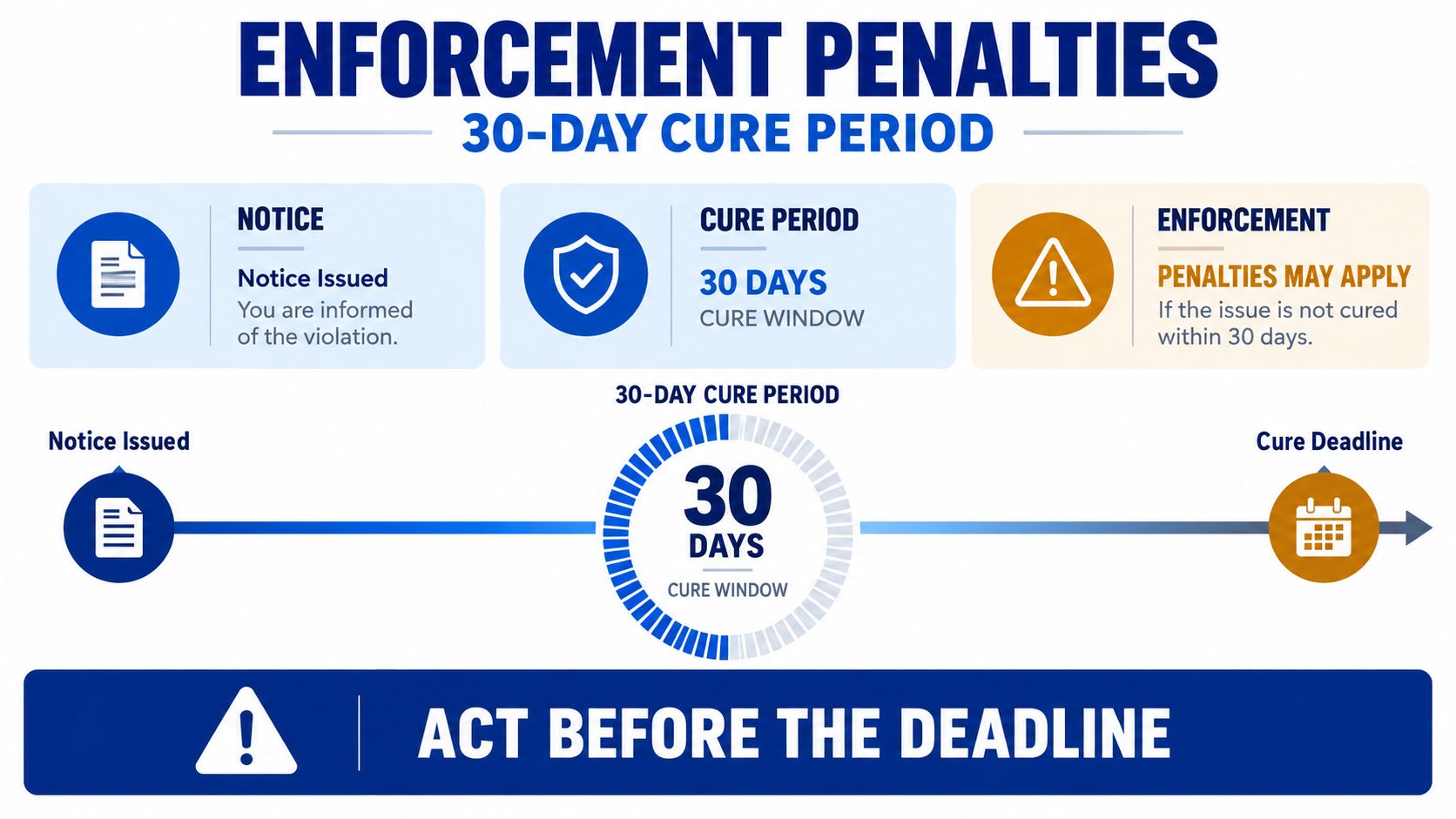
A single missed case may look like an administrative error. Repeated failures show that the company's process is not functioning. That distinction matters because a daily fine continues until compliance is demonstrated, and the same reporting identifies possible suspension of state licenses. The consequences can reach beyond HR into operations, contracting, and business continuity.
Leaders should ask whether the organization can detect a missed case before a regulator does. If the answer is no, the company is relying on the cure period as a monitoring system. That is an expensive and unreliable approach.
The enforcement model also links noncompliance to knowing violations involving unauthorized workers, which can create stronger consequences. HR leaders shouldn't make assumptions about intent or rely on informal assurances. They should document consistent verification, fair handling of discrepancies, and prompt correction of technical failures.
If the organization receives a notice, the response should be controlled:
A cure period is valuable protection when a good-faith employer discovers a problem. It isn't a reason to postpone enrollment, training, audits, or executive oversight.
Multi-state employers have to coordinate three different layers of control. Federal Form I-9 requirements create the baseline employment eligibility process. Florida adds E-Verify obligations for covered private employers. The organization's worker-classification model determines which people belong in the employee count and which workers fall outside the Florida E-Verify rule.
Florida excludes independent contractors from the employee count and verification requirement. That exclusion makes classification accuracy a direct input into the E-Verify analysis. A company that labels workers inconsistently may miscalculate its threshold, apply the process to the wrong population, or fail to verify people who should have been handled through the employee workflow.
An employee belongs in the company's staffing analysis and should move through the applicable onboarding process. An independent contractor is excluded from the Florida employee count and verification rule, but that label must reflect the actual working relationship rather than a preferred payroll treatment. A worker supplied through another business may require a separate review of contractual responsibility and classification facts.
The operational question isn't only how the person is paid. HR and operations should examine who controls the work, how the relationship is structured, whether the individual performs an ongoing business function, and what the written agreement says. Use a documented analysis, not a manager's verbal description.
For a structured review, use a 2026 employee classification guide and apply the same decision criteria across locations. Consistency matters because different managers may otherwise classify similar workers differently.
A multi-state company shouldn't assume that one Florida process satisfies every state obligation. Requirements vary by jurisdiction, and a company may also have separate obligations tied to federal contracts, state contracts, or particular business activities. The safest internal design uses a common core workflow with state-specific decision points.
That workflow should define:
Worker classification also affects state-funded economic development incentives. Covered employers seeking certain incentives must use E-Verify, and failure to comply can require repayment of incentive amounts, according to Florida E-Verify compliance guidance. Finance should therefore include E-Verify status in incentive compliance reviews rather than treating it as an HR-only issue.
Executives need a control system they can test, not a policy that sits in a shared folder. The following playbook gives CHROs, COOs, and owners a practical way to review coverage and close gaps.
Start with a written coverage determination. Record the company-wide employee count, the Florida hiring population, the treatment of independent contractors, and the person responsible for monitoring changes. Revisit the determination when the business expands, adds a location, changes its workforce model, or begins seasonal hiring.
Then document the technical workflow. The policy should identify who completes Form I-9, who creates E-Verify cases, who handles unresolved results, who reviews exceptions, and where records are stored. If an HRIS or electronic I-9 platform is used, document the system controls and the manual backup process.
A leadership audit should sample recent Florida hires and trace each file from the first day on payroll to the E-Verify record. The reviewer should confirm the employee's classification, the case creation date, the final result, and the presence of exception notes when needed.
Use these checks:
Before the first annual Florida reemployment tax return or report is filed, HR and finance should reconcile the hiring log, employee classifications, payroll population, and E-Verify records. Document the review date, participants, findings, corrections, and approval. The signer should have evidence supporting the certification rather than relying on a general assurance from HR.
International Inc. works with owners, COOs, and executive teams on multi-state HR risk, documentation standards, and complex employment decisions, including processes connected to Florida compliance. Its advisory approach can complement internal HR, payroll, and legal resources when leadership needs a defensible operating framework.
Store E-Verify records with clear employee identifiers, case dates, outcomes, and corrective-action notes. Access should be controlled, retrieval should be tested, and the retention schedule should be known by HR and IT. A record that exists but can't be located quickly won't provide much protection during an audit.
Review the program at least whenever the company's workforce structure changes or Florida legislation moves toward broader coverage. House Bill 197 didn't replace the current threshold, but it demonstrated why leaders should monitor the compliance horizon instead of building a process that works only under today's narrowest interpretation.
Paradigm International Inc. helps SMB leadership teams build defensible HR practices for multi-state growth, including documentation standards, employment risk decisions, and compliance workflows connected to Florida E-Verify requirements. Visit Paradigm International Inc. to discuss how an advisory review can help your organization connect onboarding, tax certification, classification, and recordkeeping controls.