


An H-1B offer can look straightforward on paper and still miss the mark. An SMB executive team often assumes there's one salary number to clear, then HR discovers the core issue is a location-based wage test, payroll records, and internal pay consistency all at once. That's where h1b salary requirement compliance gets messy, especially when the employee works remotely, moves states, or sits in a role that looks routine but sits in a higher wage tier.
The smart move is to treat this as a documentation and wage-determination exercise, not a guess. USCIS and the Department of Labor both anchor H-1B pay to the higher of the actual wage or the prevailing wage for the job and location, so the question is never just “What are we paying?” It's “Can we prove this pay is defensible from every angle?” USCIS specialty occupation wage guidance and DOL prevailing wage guidance make that standard explicit.
A lot of employers start with the wrong mental model. They hear “H-1B salary requirement” and assume there must be a single national floor, like a minimum wage with a visa label on it. That assumption creates avoidable risk, because the actual test depends on the worker's occupation, worksite, and the pay practices of similarly employed workers at that location.
The practical trap is simple. An owner approves a salary because it looks competitive in one city, or because a recruiter benchmarked it against a national job board. Then HR compares that offer to the prevailing wage for the actual worksite and finds the numbers don't line up, or finds that the internal wage file doesn't show how the company priced the role.
USCIS states that an H-1B employer or agent must pay at least the wage paid to similarly qualified workers, or, if greater, the prevailing wage for the position in the geographic area where the worker will work USCIS specialty occupation wage guidance. That means compliance is not about one threshold, it's about a two-part legal test with an evidence trail behind it.
Practical rule: If you can't explain why the offered wage clears both the internal wage comparison and the outside market benchmark, you're not defensible yet.
That's why the published wage distribution matters. USCIS reported that the median annual compensation for all approved H-1B beneficiaries in FY 2024 was $120,000, with a $116,000 median for bachelor's degrees and $200,000 for professional degrees, while the middle half ranged from $90,000 at the 25th percentile to $159,000 at the 75th percentile USCIS wage requirements overview. That spread tells you exactly why one-size-fits-all salary thinking fails.
The consequence of getting it wrong is not abstract. A weak wage file can slow or sink a petition, and a sloppy payroll record can create later enforcement exposure. SMBs don't need panic, they need discipline, because the issue is usually not the absence of a good faith offer, it's the absence of proof.
Think of the H-1B wage rule as a floor that rises to whichever benchmark is higher. If your internal wage for similarly employed workers is higher, that wins. If the prevailing wage for the occupation and location is higher, that wins instead. There is no shortcut around that structure, and no single national salary number that overrides it.
The actual wage is what you pay workers with similar duties, skills, and qualifications at the same worksite. That's an internal fairness test. If your H-1B employee is underpaid compared with peers doing comparable work, the company has a wage compliance problem even if the outside market rate seems acceptable.
The prevailing wage is the market benchmark for the occupation and location. DOL guidance says it is the minimum wage rate for the occupational classification in the area of employment, and for H-1B cases the employer must pay the prevailing wage or the actual wage paid to similar workers, whichever is higher DOL prevailing wage guidance. In plain English, this protects against wage suppression and prevents employers from using the visa process to undercut local labor standards.
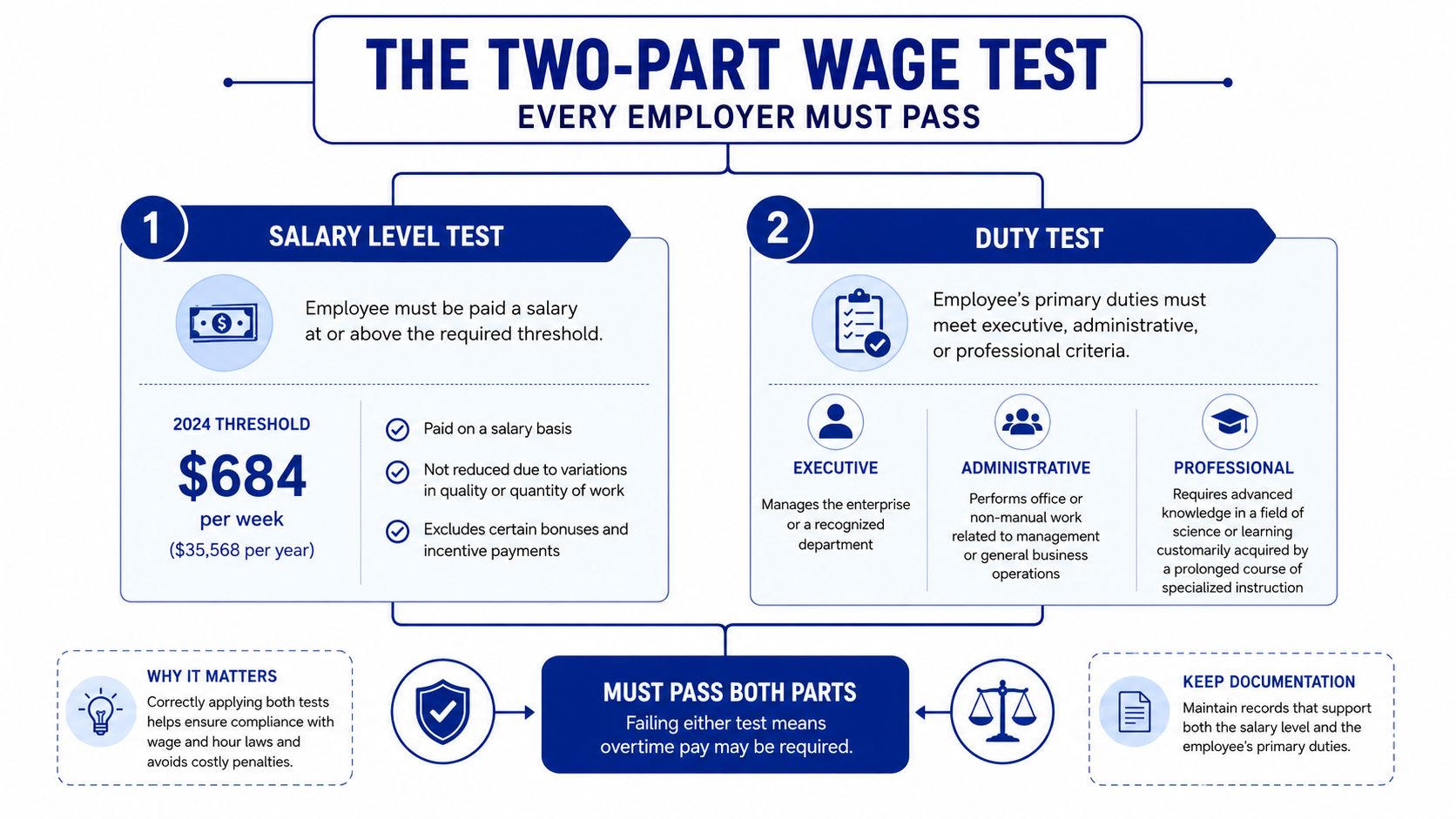
The cleanest way to explain the rule to a business owner is this. The company must clear both hurdles, not one. If the internal comparison says the role should pay more than the market benchmark, the internal number controls. If the market benchmark is higher, the market controls.
This dual test matters because it protects two groups at once. It helps prevent H-1B wages from dragging down the local market, and it helps prevent unequal treatment of workers inside the company. That's why the wage file should never be treated as a checkbox attached to the petition. It's a core compliance record.
A strong process also gives you a better decision. If you know the actual wage baseline and the prevailing wage baseline before the offer goes out, you avoid last-minute renegotiation, premium salary surprises, and weak explanations during review. That's the standard SMBs should be aiming for.
The Department of Labor's wage framework is not a guess, and it isn't static. It ties required pay to wage levels that correspond to percentiles in local wage data, which is why a junior analyst and a senior manager in the same occupation won't share the same floor. This is also why employers who only look at broad salary sites end up with bad numbers.
The most important point is that wage levels reflect skill, supervision, and experience, not just job title. A company that slaps the same title on two different roles can still end up with very different wage obligations if the worksite and responsibility level differ. That's where screening logic matters more than a recruiter's shorthand.
Practical rule: Don't use a job title to determine the wage level. Use the actual duties, supervision, and worksite.
The table below captures the current and proposed percentile shift described in the verified data. It's a useful planning reference because it shows how the government's wage assumptions are moving upward.
| Wage Level | Current Percentile | Current Salary | Proposed Percentile | Proposed Salary |
|---|---|---|---|---|
| Level 1 | 17th percentile | $73,279 | 34th percentile | $97,746 |
| Level 2 | 34th percentile | $98,987 | 52nd percentile | $123,212 |
| Level 3 | 50th percentile | $121,979 | 70th percentile | $147,333 |
| Level 4 | 67th percentile | $144,202 | 88th percentile | $175,464 |
Those proposed 2026 changes, reported in the NFAP analysis of the DOL rule, are not current law, but they show the direction of travel. Level 1 would move from the 17th percentile ($73,279) to the 34th percentile ($97,746), a 33.39% increase, while Level 2 would rise 24.47% from $98,987 to $123,212 NFAP analysis of the October 2020 rule and later wage changes.
That matters for SMB planning because wage compliance is becoming a moving target. Employers who assume the old level structure will hold forever are building budgets on stale assumptions. The better approach is to determine the wage level carefully now and keep a close watch on rule changes before the next filing.
The core lesson is simple. A Level 1 role is not “cheap labor” and a Level 4 role is not a luxury expense. Each level is part of a government wage structure that should be matched to the job as performed, then documented with care.
A wage file that starts with the wrong assumptions will not hold up. HR has to identify the role as it is performed, confirm the wage level, compare that number against both outside benchmarks and internal pay data, then document how the final offer was set. If the company cannot show the path from duties to salary, the petition record is weak before filing even begins.
The DOL says the H-1B wage rule requires paying the higher of the prevailing wage or the actual wage for similarly employed workers, and that the prevailing wage framework benchmarks the offered wage against occupation, location, and skill level DOL wage factsheet. Your internal process should follow that standard exactly, because anything looser creates avoidable audit risk.
The paper trail matters as much as the calculation. Keep the Labor Condition Application, wage memoranda, payroll records, and supporting wage analysis in one file. If the company cannot trace the decision later, it cannot defend it later either.
A weak wage file usually fails in one of two places, the comparison wage is stale, or the job description does not match reality.
SMBs also get caught by pay design. Guaranteed bonuses may count in some dependent-employer contexts, but relying on ambiguous pay components without clean records invites trouble. Outdated surveys, old worksite assumptions, and untracked role changes are common failure points.
Payroll controls have to match the immigration file. A structured managed payroll service can help keep wage decisions, worksite data, and payment records aligned. The point is not outsourcing judgment. The point is making sure the wage you promised is the wage the payroll system delivers.
Remote work has made H-1B wage compliance harder, not easier. The salary rule follows the geographic area of employment, so a move from one metro area to another can change the required wage even when the job title stays the same. SMB leaders miss this because payroll tracks a person, while immigration compliance tracks a worksite.
That split matters the moment an employee starts working from a new state or from a different metropolitan area than the one used for the original filing. The company may need a new wage analysis and a revised filing path. The risk is not only underpaying the worker, it is also creating a mismatch between the petition record and the actual work arrangement.
Multi-state payroll adds another layer of exposure. State tax withholding, unemployment insurance, and payroll registration rules can change when the employee works across jurisdictions, and those records need to match the H-1B wage file. If payroll shows one state and the immigration file shows another, the company looks disorganized during review.
Remote arrangements create the most common failure point. A worker can be fully productive and fully paid, yet still be out of compliance if the worksite changed and the wage record did not change with it. HR and payroll have to talk before the location shift happens, not after.
For employers managing these moving parts, a solid wage and hour compliance framework is the right baseline, because H-1B wage decisions sit inside the broader payroll control environment. The same discipline that keeps overtime, exemptions, and pay records clean also helps keep visa wages defensible.
The documentation should be tight. Keep the work location history, payroll registrations, internal approvals, and wage support tied to the filing file so the company can show what changed, when it changed, and who approved it. For managers who need a broader control model, the complete HR compliance guide helps frame how wage decisions, onboarding, and recordkeeping should fit together.
Build those triggers into HR and payroll workflows so the company knows when to recalculate. If the company cannot identify where the work is being performed, it cannot defend the wage with confidence.
Some employers face a second compliance layer because of their workforce mix. One source notes that H-1B-dependent status can apply to employers with more than 50 workers and at least 15% on H-1B visas, or 50 or fewer workers with over half on H-1B H-1B visa glossary overview. That status matters because it can add recruitment and attestation burdens that ordinary H-1B employers don't face.
There is a compensation-based path that can reduce those burdens. The same source says an employer may satisfy the salary requirement by paying at least $60,000 per year or by employing a worker with a related master's degree or higher, and that the threshold must be met in cash wages or guaranteed bonuses, not benefits H-1B visa glossary overview. That detail is important because payroll design is part of compliance, not a back-office afterthought.
The clean compliance check for SMBs is straightforward.
Many professional services firms and consultancies get exposed. They assume the wage issue is only about the petition filing, when the risk is the combination of pay design, dependent status, and recordkeeping. The safest approach is to treat compensation architecture as a compliance decision, not just an HR negotiation.
Decision point: Are we a standard H-1B employer, or are we close enough to dependent status that payroll structure needs to be reviewed before the next filing?
If the answer is unclear, that is the problem. Dependent-employer status changes the compliance path, so leaders should not wait until an audit or filing deadline to sort it out. A short review now is cheaper than a correction later.
An H-1B wage program fails fast when it relies on memory, handoffs, or a manager's judgment call. SMBs need a repeatable process that ties the job description, wage source, payroll file, and worksite review together in one defensible record.
Start with the wage decision itself. Match the role description to the correct prevailing wage source, then compare that benchmark with the actual wage paid to similarly employed workers. If the job duties, worksite, or compensation mix is outdated, stop and correct the file before the offer goes out. For roles that sit at the edge of a wage question or involve mixed pay structures, bring in a compensation consultant before you finalize the number.
Then build the documentation file like you expect a government reviewer to read it. Keep the wage analysis, the Labor Condition Application, the payroll support, and the location history together, and update the file when duties or worksites change. If your team needs a baseline for HR controls, the complete HR compliance guide is a practical reference for why payroll decisions need written support, not verbal assurance.
A defensible action list looks like this:
Internal HR can handle routine cases when the role is stable and the worksite is fixed. Counsel should review files when the wage level is borderline, the employee works across state lines, or the pay structure mixes salary, bonuses, or variable compensation. A compensation consultant helps when the market data, job architecture, and offer amount need to line up before the filing goes in. If the record cannot survive a government review, the file is not ready.
Paradigm International Inc. fits that kind of review work as an HR risk advisory partner, especially when wage decisions intersect with payroll controls and multi-state employment practices. The business case is simple. Tight wage compliance protects the petition, reduces avoidable corrections, and keeps growth from outrunning the documentation behind it.
If your team needs a defensible way to handle H-1B wage decisions, payroll alignment, and employment compliance risk, visit Paradigm International Inc. to see how their advisory team supports SMB leaders facing complex people decisions. They work with organizations that need structure, judgment, and records that hold up when the facts matter.

