A lot of SMB leaders start a health and wellness challenge the same way. The idea is positive, the team wants something engaging, and leadership assumes a step contest or app-based challenge will be easy to roll out. Then the emails start. One employee says the rules favor runners. Another asks why a specific tracker is required. Someone else wants to know who can see the health data.
That pattern is common because good intent doesn't equal sound design. Global average participation in workplace wellbeing programs is low, ranging between 20% and 30%, which is a reminder that most programs struggle before legal risk even enters the picture (employee wellness program statistics). Low participation usually points to something deeper than weak promotion. It often means the program wasn't built for the workforce that exists.
A defensible health and wellness challenge has to do more than look appealing. It has to fit different ability levels, protect privacy, avoid coercive practices, and hold up across changing compliance requirements. For SMBs, that matters because a poorly designed challenge can create employee relations problems, documentation gaps, and unnecessary exposure at the same time.
The better approach is practical. Build the challenge around voluntary participation, clear business objectives, inclusive activity options, careful data handling, and a communication plan that managers can support. When those pieces are in place, the program stops being a morale experiment and becomes a structured business initiative.
A company announces a month-long wellness challenge with gift cards for the top performers. Within days, HR is answering questions that have nothing to do with team spirit. Does the program favor younger employees or people without medical restrictions. Is participation really voluntary if managers keep asking who joined. Who gets access to app data, and how long is it kept.
That is the point many SMB leaders realize a wellness challenge is not a morale activity first. It is an HR program that touches fairness, privacy, manager conduct, and, in some cases, disability accommodation.
The common mistakes are easy to spot. Employers pick a single activity such as steps, attach incentives before setting rules, and assume broad participation means the design is working. In practice, a challenge can exclude employees with physical limitations, alienate hourly teams with less schedule flexibility, and create distrust if the tracking method feels intrusive.
A wellness program becomes risky when leadership treats it as culture-building but employees experience it as pressure, exclusion, or surveillance.
I advise clients to treat wellness challenges the same way they would treat any other people policy with legal and operational exposure. Set a business purpose. Define what data is collected and who can see it. Make participation voluntary in practice, not just on paper. Test the rules against the workforce you have, including remote staff, multi-state employees, and people who cannot or should not join a physical competition.
Done well, a health and wellness challenge can support retention, reduce friction around wellbeing conversations, and give managers a healthier framework for encouraging sustainable habits. Done casually, it can trigger complaints, inconsistent enforcement, and avoidable risk that costs far more than the prize budget.
Most wellness challenges fail before launch day. The problem usually isn't the theme. It's the absence of planning discipline around leadership behavior, legal review, and workforce fit.
The first essential is leadership buy-in. Not just budget approval. Visible participation. The benchmark guidance is clear that leadership buy-in is the primary success driver, and a lack of senior management participation correlates with low employee trust and program failure. The same guidance recommends a needs assessment using HRA data and voluntary employee committees to define SMART goals, including examples such as reducing stress-related absenteeism by 10% in six months (workplace wellness mistakes and how to avoid them).
Here's the strategic picture leaders should keep in view:
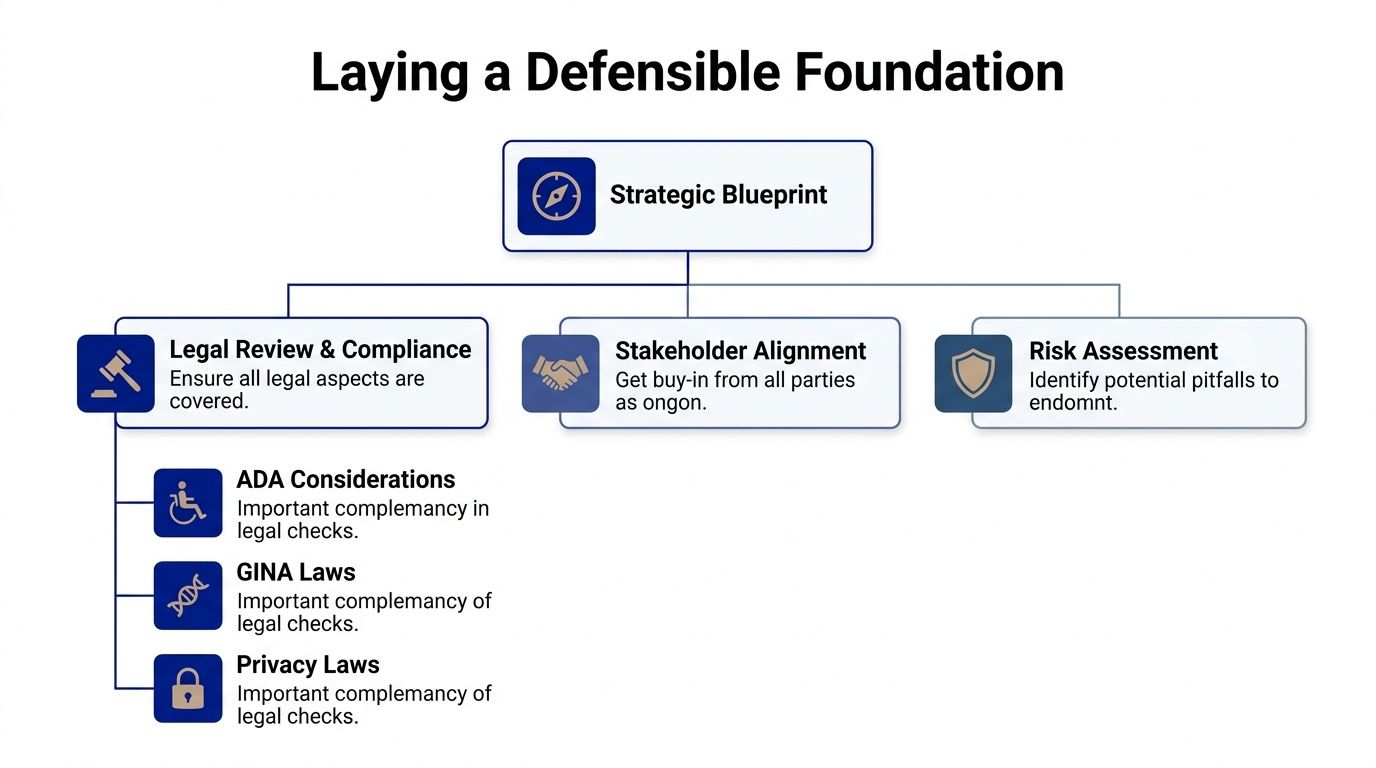
Employees read a challenge by watching what senior people do. If executives announce a wellness initiative but never join, discuss it, or model reasonable participation, staff will assume it's either performative or another compliance-adjacent program with hidden strings attached.
A practical standard looks like this:
That last point matters more than many teams realize. If a manager praises participation in a way that sounds mandatory, the legal language in your policy won't save the rollout.
A defensible challenge starts with evidence from your own workforce. For SMBs, that doesn't require a massive system. It requires a disciplined process.
Use a mix of voluntary input such as:
If your population includes field staff, hybrid employees, caregivers, and employees with medical limitations, a one-size-fits-all physical challenge is poorly matched from the start. Consequently, many employers accidentally build inequity into the design.
For leaders reviewing broader benefit risk decisions, this related perspective on staff benefits that reduce SMB risk is useful because it places wellness inside a larger risk-management framework rather than treating it as a standalone perk.
Practical rule: If your challenge can only be completed by healthy, daytime, office-based employees with flexible schedules, it isn't well designed.
“Improve wellbeing” sounds positive, but it doesn't guide operations. SMART goals do. They tell managers what matters, give HR a basis for evaluating the program, and reduce the temptation to improvise halfway through the challenge.
A better approach is to set goals in categories:
| Goal type | Weak version | Defensible version |
|---|---|---|
| Engagement | Increase interest | Increase voluntary enrollment and ongoing activity completion |
| Wellbeing | Support employee health | Improve self-reported stress management or sleep routines |
| Operations | Help culture | Reduce stress-related absenteeism over a defined period |
| Governance | Protect privacy | Limit reporting to aggregate data and documented access controls |
That structure turns the challenge into something leadership can monitor and HR can document. It also helps counsel, operations, and managers stay aligned on what the program is trying to achieve.
The fastest way to shrink participation is to build the challenge around a narrow version of wellness. When employers focus only on steps, gym time, weight loss, or proprietary wearable devices, they often exclude employees who would otherwise participate. They also increase the chance that the challenge feels judgmental rather than supportive.
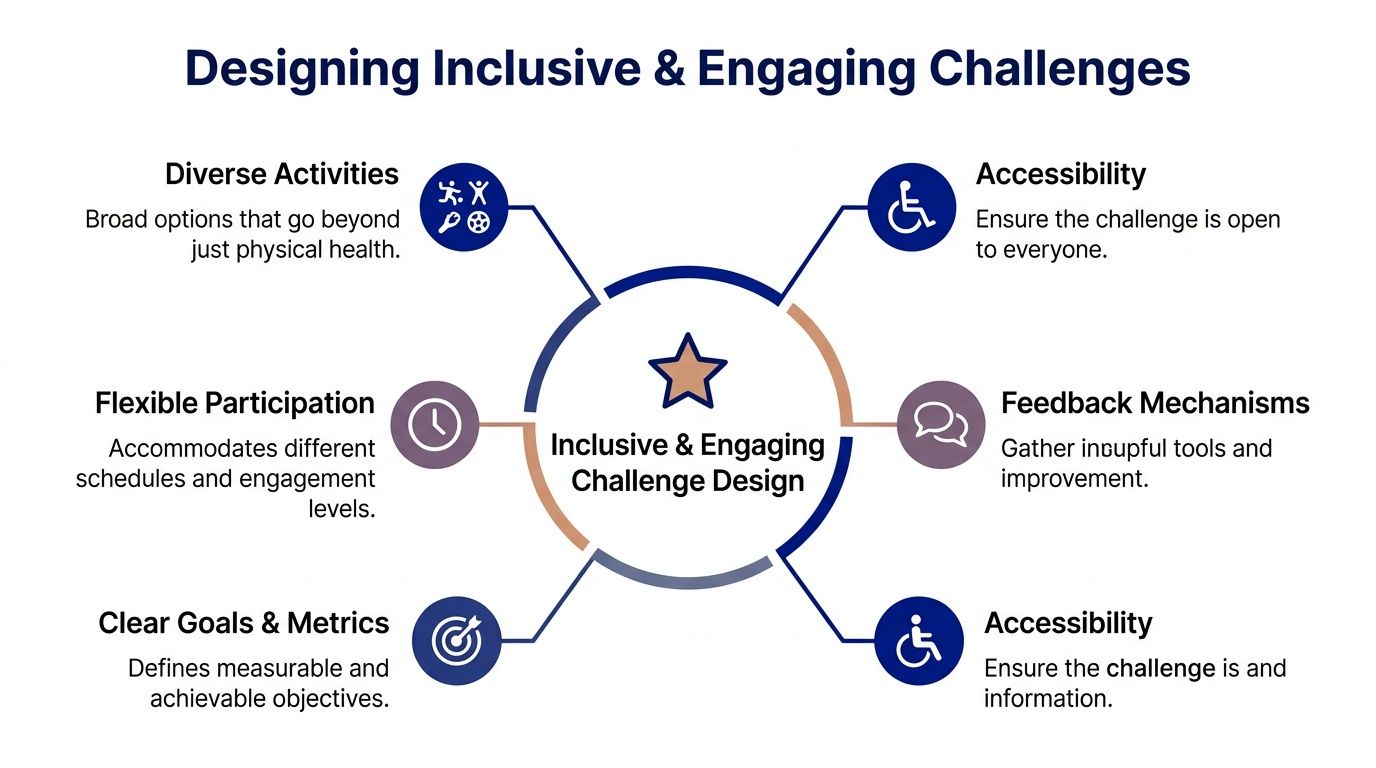
The design standard should be broader and more modern. The strongest programs don't treat wellness as a synonym for exercise. They include physical, mental, emotional, and social options, and they let employees choose activities that fit real schedules and real limitations.
This visual captures the design principles that matter most:
One of the most overlooked design opportunities is mental wellness. Guidance on challenge structure notes that mental wellness efforts tied to burnout and boundary-setting are often overlooked, and that challenges centered on movement snacking and boundary-helping practices can sustain participation better than traditional hour-long gym sessions (structural elements every wellness challenge needs).
That insight matters because many employees don't need another idealized fitness target. They need practical ways to build manageable habits during a demanding workweek.
Consider challenge options like these:
These formats are often easier to adapt for remote teams, field roles, and employees with caregiving responsibilities. They also lower the chance that people feel publicly ranked on health status.
A health and wellness challenge can subtly become unfair if the rules assume too much. The most common mistakes are avoidable.
Watch for these red flags:
Inclusive design means building alternatives into the challenge itself. Don't wait for employees to ask for exceptions. Offer modifiable options from the start.
The most reliable sign of inclusive design is simple. Employees with very different schedules, bodies, and stressors can still participate without asking for special treatment.
Team-based challenges can be effective because they create peer support and reduce the isolation of individual tracking. But they work best when the emphasis is shared progress, not public comparison between “top performers” and everyone else.
A practical team model includes:
| Design choice | Better approach | Why it works |
|---|---|---|
| Team scoring | Credit varied activities | Supports different ability levels |
| Recognition | Celebrate consistency and participation | Reduces all-or-nothing behavior |
| Resources | Share meal plans, stress guides, and practical tools | Makes the challenge useful, not symbolic |
| Scheduling | Allow asynchronous participation | Fits hybrid and multi-site teams |
If you want additional inspiration for activity formats, this guide to designing group fitness challenges is useful because it shows how group-based design can create structure without requiring every employee to engage the same way.
Employees shouldn't have to guess how to succeed. If you want behavior change, give them practical support.
Helpful add-ons include:
That support matters as much as the challenge theme. Employees are more likely to trust a program that acknowledges therapy, stress, burnout, and recovery as legitimate parts of wellness rather than pretending every issue can be solved with more exercise.
Incentives are where many employers create their greatest exposure. A reward can motivate participation. It can also become coercive, uneven, or difficult to defend if it pressures employees to disclose health information or penalizes people who can't participate in the same way.
The rollout conversation should include legal review early, not after the materials are drafted.
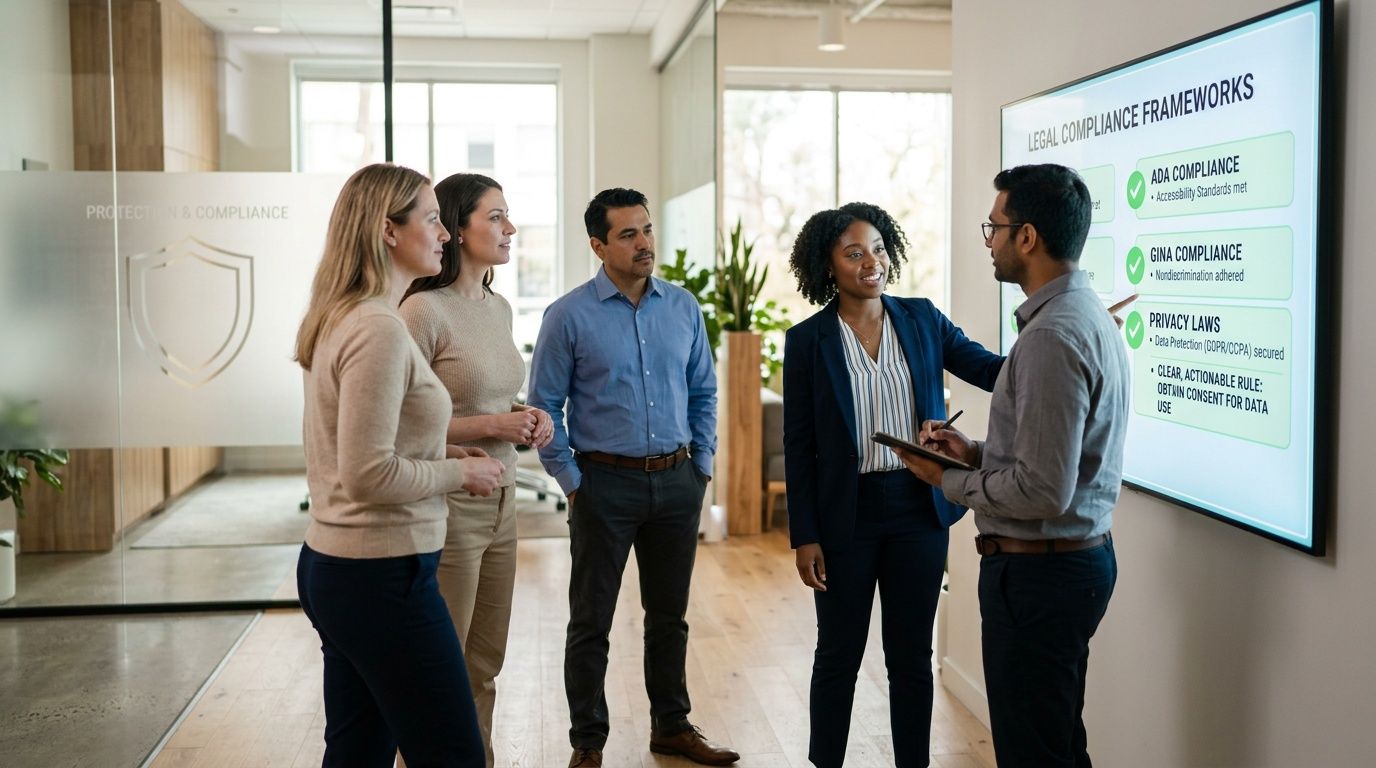
Federal reporting shows that employers using both penalties for non-participation and rewards for participation reached a median participation rate of 73%, compared with 40% for employers using rewards alone (workplace wellness program incentives report). That's an important operational finding, but it should not be read as a blanket recommendation for SMBs to add penalties.
Higher participation doesn't automatically mean lower risk. Penalty-based models can trigger employee relations problems quickly if employees believe they're being punished for medical limitations, privacy concerns, or competing personal obligations. In practice, many SMBs are better served by carefully structured rewards and broad participation options than by aggressive surcharge models.
Most leaders don't need a dense legal memo to make good first decisions. They need workable rules.
Use these as your baseline:
That last point is easy to underestimate. A challenge that seems harmless in one state may create a different compliance analysis in another, especially when health-adjacent data is collected through apps, forms, or vendor tools. For employers reviewing state-specific developments, this overview of the Washington state data privacy law is a useful example of why wellness data handling can't be treated casually.
A short checklist keeps leaders out of common trouble.
Do
Don't
If an incentive would make a reasonable employee feel forced to share health-related information, the design needs to be revisited.
Even a carefully designed program can stall if the launch is vague. Employees need to know what the challenge is, why the company is offering it, how to join, what data will be used, and where questions should go. Managers need separate guidance so they support the program without crossing lines.
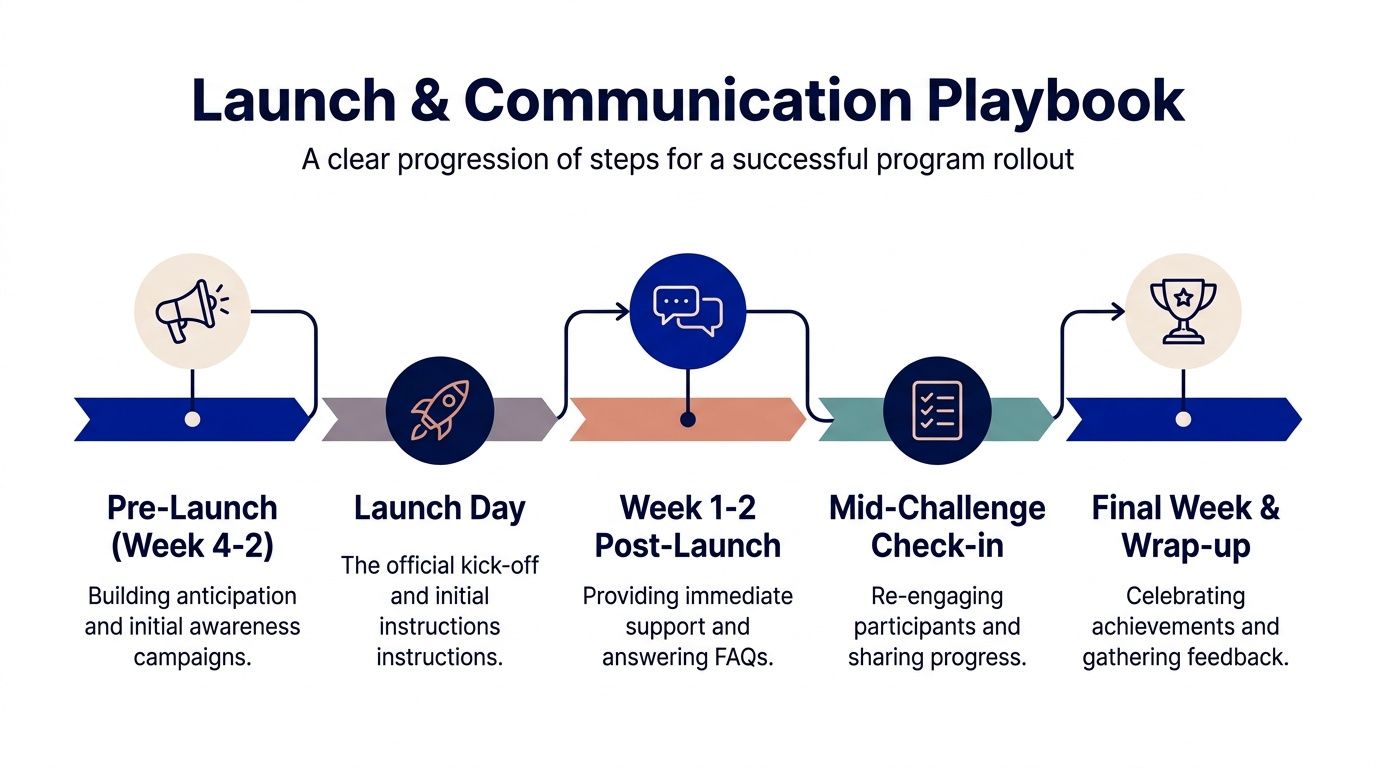
A staged rollout works better than a single announcement. It gives people time to understand the offer, raise concerns, and decide whether participation fits their circumstances.
This launch sequence is a useful model:
Managers shape how a challenge is received. If they sound skeptical, dismissive, or overly forceful, employees notice immediately. That's why a manager toolkit matters.
It should include:
A written internal plan helps leadership keep those messages consistent across teams and locations. For this reason, a documented internal communications plan becomes especially useful because it keeps rollout language aligned across HR, managers, and operations.
Employees usually don't reject a wellness challenge because they dislike wellness. They reject unclear motives. If the company hasn't explained the purpose, the data handling rules, or the voluntary nature of the challenge, people fill in the gaps on their own.
Use a communication sequence that answers questions in order:
| Stage | What employees need to hear |
|---|---|
| Early notice | Why the company is offering the challenge |
| Pre-launch FAQ | How participation works and what data is or isn't collected |
| Kickoff message | Clear instructions, timelines, and support contacts |
| Midpoint update | Encouragement, reminders, and broad progress themes |
| Wrap-up | Appreciation, lessons learned, and next steps |
For employers trying to extend communication beyond email alone, practical lessons from low-cost outreach planning can help. Some of the same principles in these PostSyncer tips for social media budgets apply well to wellness launches. Reuse core messages, tailor them by audience, and avoid overproducing materials employees won't read.
Employees often have the same early questions:
Answer those questions before anyone asks. That alone can reduce resistance and stop confusion from turning into distrust.
Clear launch language does two jobs at once. It improves participation and lowers the chance that employees interpret the challenge as pressure or monitoring.
The most effective communication doesn't oversell the program. It explains the rules plainly, acknowledges different employee circumstances, and gives people a low-friction way to participate.
A health and wellness challenge shouldn't be evaluated by sign-up volume alone. Participation tells you who enrolled. It doesn't tell you whether the program was inclusive, trusted, operationally useful, or worth continuing.
The better measurement model combines leading and lagging indicators. The guidance here is direct. Continuous evaluation via HRA and biometric screenings is critical for success, and tracking leading indicators such as engagement and self-reported well-being alongside lagging outcomes such as reduced medical claims and absenteeism supports data-driven optimization. In successful programs, the reported net return is $1.50 to $3.00 for every dollar invested (wellness challenge mistakes to avoid).
A stronger review process looks at several layers:
Qualitative feedback matters here. If employees say the challenge felt supportive, flexible, and easy to understand, that's useful operational evidence. If they say it felt confusing or too tied to tracking, the next version needs redesign before expansion.
The challenge shouldn't remain static. Review what drew participation, what caused drop-off, which resources were used, and whether certain employee groups were effectively left out. Then revise the design, the communications, or the incentive structure before relaunching.
Leaders who want a broader framework for evaluation can also review this guide on how to measure employee engagement, especially when wellness is one component of a larger workforce strategy.
A defensible program improves over time because leaders treat it as an operational process, not an annual event. That's where long-term value shows up. Not just in participation, but in trust, consistency, and a healthier relationship between employee support and employer responsibility.
If your organization is weighing how to structure a wellness initiative without creating unnecessary legal, privacy, or employee relations risk, Paradigm International Inc. can help you think it through with the level of precision these decisions deserve.