
A supervisor calls HR at 8:10 a.m. An employee arrived late, seems disoriented, and nearly backed a company vehicle into a loading area. The manager is worried about safety, but also worried about saying the wrong thing, sending the person for testing without enough support, or creating a discrimination problem that gets worse by the hour. That is where most companies discover whether they have a real substance abuse policy or just a document in a handbook.
In practice, these situations are rarely clean. The employee may be high-performing. The signs may be subtle. The worksite may be in one state while payroll, benefits, and legal review sit in another. If your managers are making judgment calls under pressure without a written protocol, your risk isn't limited to the incident itself. It extends to inconsistent discipline, weak documentation, privacy complaints, and wrongful termination arguments.
A defensible substance abuse policy gives leaders a framework for making decisions that are calm, consistent, and tied to legitimate business reasons. It helps a manager know what to observe, what to document, who to call, when testing is appropriate, and how to respond if the issue turns out to involve treatment, relapse, or accommodation. It also keeps the organization from swinging between two bad extremes. One is overreaction driven by fear. The other is delay driven by uncertainty.
That balance matters because this isn't a fringe workplace issue. The CDC reports that 46 million U.S. adults experienced a substance use disorder in 2022, and nearly two-thirds of them, 30.1 million people, were employed according to CDC workplace substance use data. For employers, substance abuse policy sits at the intersection of safety, employee relations, disability compliance, and operational continuity.
The strongest policies don't read like punishment manuals. They read like risk management systems. They define prohibited conduct clearly, focus on workplace impairment and safety, establish repeatable investigation steps, and create a record that can withstand scrutiny later. In a multi-state environment, that last point matters as much as the policy language itself. If your policy can't survive an unemployment hearing, agency inquiry, or lawsuit file review, it isn't finished.
Most business owners don't start thinking seriously about a substance abuse policy until a manager has someone sitting in an office, door closed, waiting for direction. By then, every weakness in your system is exposed at once. Who makes the decision. What facts count as reasonable suspicion. Whether testing is permitted in that state. Whether the employee should be sent home, suspended, referred, or accommodated.
That pressure is exactly why policy design matters. A substance abuse issue is rarely just an HR problem. It can become a safety event, a workers' compensation issue, a leave question, a privacy dispute, or a termination decision before the day is over. If multiple states are involved, the complexity rises fast because drug testing rules, marijuana protections, and off-duty conduct standards don't line up neatly.
Many companies rely on generic handbook language such as "the company prohibits drug and alcohol use in the workplace." That sounds firm, but it leaves critical questions unanswered. It doesn't tell managers what to do with observable impairment, what happens at a client site, how to handle remote work, or what documentation is required before action is taken.
Others build policies around a zero-tolerance statement and assume that consistency alone makes the policy safe. It doesn't. A rule can be consistently enforced and still be poorly drafted, misaligned with state law, or disconnected from accommodation obligations. Defensibility comes from precision, not just firmness.
A manager's first mistake in an impairment case usually isn't bad intent. It's acting without a structured record.
A workable substance abuse policy does four things well:
When those pieces are missing, organizations improvise. Improvisation is what plaintiffs' lawyers, agencies, and inconsistent managers all have in common. They notice it immediately.
At 7:15 a.m., a supervisor calls HR about an employee who arrived for a shift glassy-eyed, unsteady, and argumentative. The immediate question is not whether the company has a policy. It is whether the policy gives that supervisor a clear, lawful set of steps to follow, with enough structure to support the decision later if the employee challenges it.
That is the standard to draft for. A defensible substance abuse policy starts with the written document because investigators, agencies, counsel, and judges will all begin in the same place. If the language is vague, inconsistent across roles or locations, or silent on common fact patterns, the company ends up relying on manager judgment alone. That is where documentation gaps, uneven enforcement, and avoidable claims usually begin.
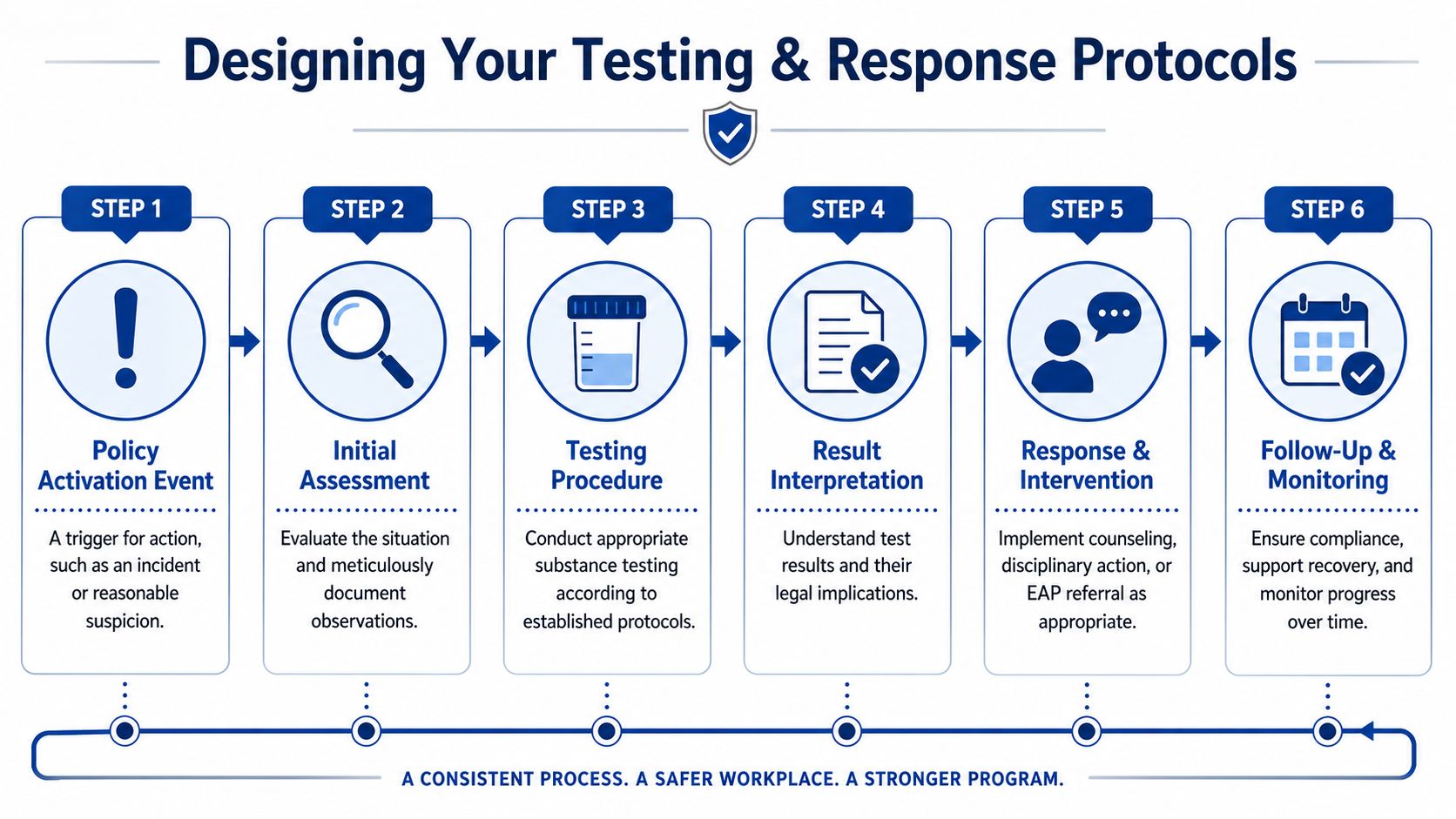
A strong policy answers the questions a reviewer will ask after an incident. It should also reflect a practical reality many employers miss. The document must work in real time, under pressure, across different states, managers, and work settings.
At minimum, include:
One drafting choice matters more than it first appears. Separate prohibited workplace conduct from broader concerns about substance use generally. Employers are on firmer ground when the policy regulates behavior, fitness for duty, safety risk, and cooperation with lawful procedures, rather than trying to police private life in ways the law may not support.
The biggest drafting mistake is trying to sound broad enough to cover every possible problem. Broad language often creates more exposure because it gives managers no usable standard. If a policy prohibits "any substance use that may affect the workplace," the company still has to explain what that means, who decides, and what facts justify action.
A better approach is to define observable, business-linked standards. Focus on impairment while working, possession where prohibited, refusal to cooperate with lawful testing or investigation, reporting to duty unfit, diversion of controlled substances, or unsafe operation of company equipment. Those are facts a manager can document and HR can review.
Practical rule: Write policy terms so a manager can identify conduct, record observations, and escalate the issue without trying to diagnose a medical condition.
That distinction protects the business in two ways. It reduces subjective calls in the moment, and it creates a record that is easier to defend later.
Many policies still read as if all work happens in one building under direct supervision. That is not how many employers operate now, and a policy that ignores remote work, travel, client sites, and after-hours access leaves obvious gaps.
The fix is straightforward. Map the policy to the places where risk shows up, then decide what standard applies in each setting and who has authority to act. Employers should also account for employee privacy rights in workplace investigations, especially when the response may involve searches, device access, medical information, or off-site incidents.
| Work context | Policy question to answer |
|---|---|
| Remote work | What happens if impairment affects meetings, systems access, confidential data, or judgment from home? |
| Company events | Does the policy address alcohol service, conduct expectations, transportation, and return-to-work obligations? |
| Fleet or driving roles | Who is considered safety-sensitive and what immediate removal rules apply? |
| Client-facing travel | What standards apply while representing the company off site? |
A policy becomes defensible when it minimizes ad hoc interpretation. The document should tell managers what to do, tell HR what to review, and tell employees what standard applies. If leaders still have to decide what the policy "probably meant" after an incident, the drafting is not finished.
The legal risk in substance abuse policy usually doesn't come from having standards. It comes from applying one standard everywhere as if every jurisdiction agrees. They don't. Federal law, state law, local rules, industry regulations, and privacy expectations often pull in different directions.
The scale of the issue helps explain why employers keep running into shifting requirements. The federal budget for drug control was nearly $45 billion in 2024, while an estimated 54.2 million people needed substance abuse treatment in 2023, according to national substance abuse statistics and drug control figures. That level of public investment, combined with widespread treatment need, creates constant policy movement across enforcement, treatment, workplace safety, and accommodation.

At the federal level, employers generally need to think in separate buckets rather than one combined issue.
One bucket is current workplace conduct. Employers usually have the strongest footing when they act on safety risk, performance failure, policy violations, or documented impairment at work.
Another bucket is disability and accommodation risk. Alcohol-related conditions and past drug use can trigger legal analysis that is different from current illegal drug use on the job. That means managers should not try to classify behavior on their own. Their role is observation and escalation, not diagnosis.
A third bucket is industry-specific regulation. If your workforce includes transportation, healthcare, or other regulated functions, you may have testing, removal, reporting, or return-to-duty standards that are stricter than your general handbook language. General HR policy should never override a mandatory regulatory scheme.
The biggest drafting failure I see is policy language that says the company prohibits marijuana use, full stop, without accounting for the fact that state protections can change how that rule is enforced. In some jurisdictions, a positive test alone may not justify the same response it would elsewhere. In others, off-duty lawful use may trigger separate analysis. In still others, safety-sensitive roles remain treated differently.
That doesn't mean employers are powerless. It means the policy should focus on what the business must be able to prove. Usually that is impairment at work, safety risk, policy-defined unfitness for duty, or conflict with a regulated role. The more your enforcement decision depends on documented workplace impact, the stronger your position tends to be.
Employers get into trouble when they write one marijuana rule for the handbook and ten unwritten exceptions in practice.
If you operate across states, don't try to solve the legal maze with a single paragraph. Build a layered structure instead.
Policies become harder to defend when they rely on any of the following:
The legal maze isn't solved by making the policy harsher. It is solved by making it more precise, more role-aware, and more disciplined in how facts are gathered before a decision is made.
A policy only becomes real when someone has to use it. That is why testing and response protocols matter more than the statement of principles at the front of the handbook. When a manager suspects impairment, every minute counts, but so does every note.
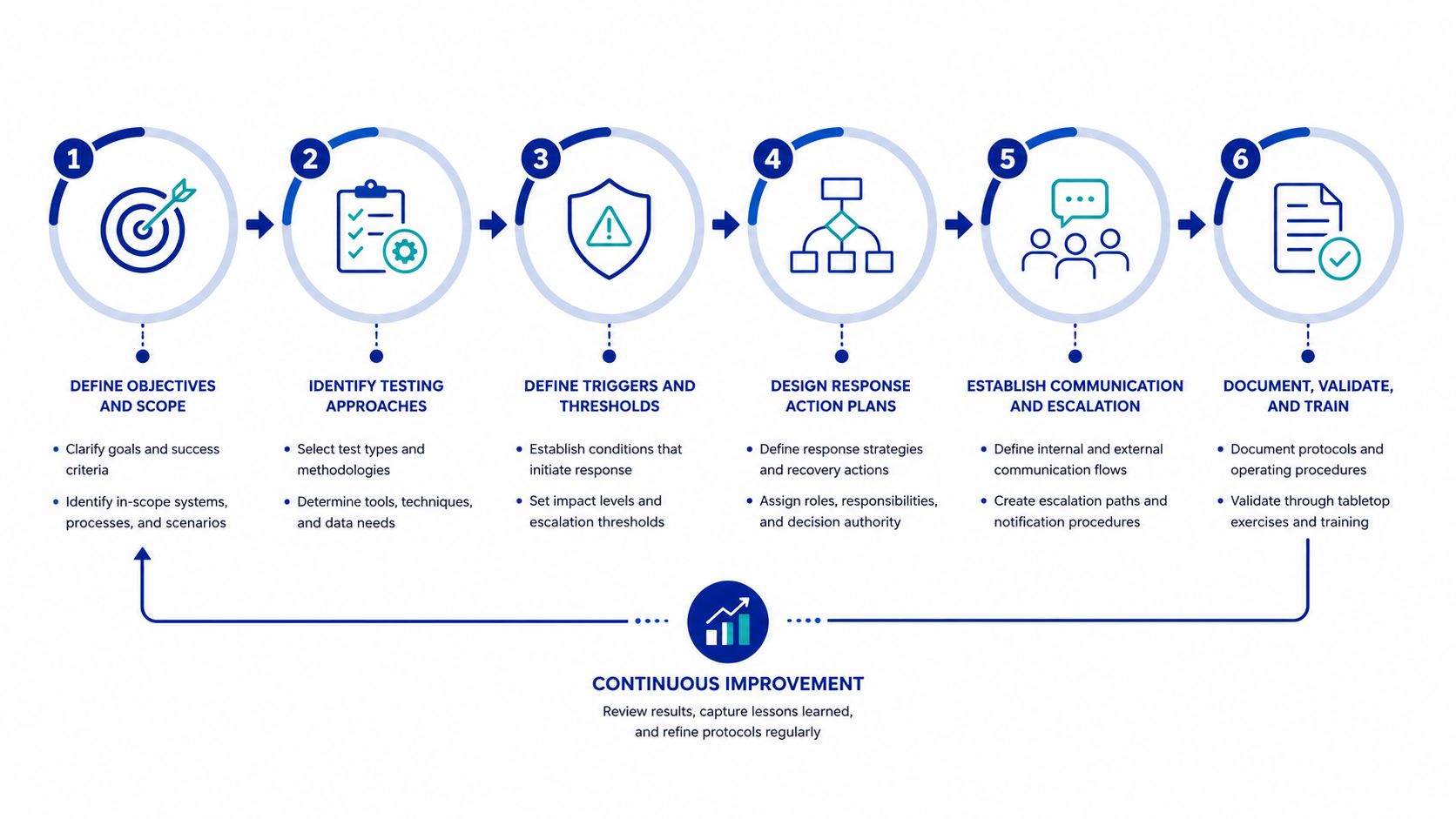
Reasonable suspicion cases rise or fall on what the manager saw, heard, and documented. The standard should never be "I had a feeling." It should be specific observations tied to work. Slurred speech, confusion during routine tasks, smell of alcohol, unsteady movement, unexplained near misses, erratic behavior, and inability to follow ordinary instructions are all examples of the type of facts managers should be trained to record if they occur.
Use a simple observation form. Include time, location, witnesses, direct behaviors, safety concerns, and immediate steps taken. If possible, have a second trained leader confirm the observations before a testing decision is made. That reduces subjectivity and gives the company a stronger factual record.
If a manager can't write down what they observed in plain language, they probably aren't ready to trigger a reasonable suspicion test.
Not every test serves the same purpose. A defensible process separates the trigger from the tool.
If your organization is building or reviewing procedures, it's helpful to compare your approach with practical guidance on drug screening services in Tampa and maintaining a drug-free workplace, especially for employers balancing operations with testing logistics.
The response should never begin and end with discipline. It should follow a decision framework. First, confirm that the collection, chain of custody, review process, and state-law prerequisites were handled correctly. Then evaluate role, risk, prior history, policy terms, accommodation issues, and whether the employee is eligible for a last chance arrangement or mandatory referral.
Relapse risk is one reason a single-event mindset fails. Relapse rates for substance use are estimated at 40% to 60%, comparable to chronic illnesses like diabetes, according to American Addiction Centers' review of recovery statistics. That doesn't excuse misconduct. It does mean your protocol should address aftercare, follow-up expectations, and what happens if the employee returns under conditions.
For some employers, outside assessment resources help clarify next steps when referral is appropriate. If you're reviewing what a structured evaluation can involve, you can learn about assessments from Georgia DUI Schools as a practical reference point for the type of intake and recommendation process leaders may encounter.
One of the most common failures is treating the incident as over once the employee completes an evaluation or short-term treatment. In a stronger system, the return-to-work decision includes written conditions.
A simple response table helps:
| Situation | Immediate action | Next step |
|---|---|---|
| Documented suspicion with safety concern | Remove from duty | HR review and testing decision |
| Confirmed policy violation | Apply interim discipline if warranted | Determine referral, final warning, or separation |
| Return after treatment or leave | Confirm fitness and conditions | Written follow-up and monitoring plan |
| Repeated concerns after return | Reassess facts and compliance | Escalate under last chance or disciplinary process |
Testing protects the business only when it sits inside a disciplined process. Without training, documentation, and follow-up, testing can become the most visible part of a weak system rather than the strongest part of a sound one.
A substance abuse policy that isn't rolled out properly can create more risk than having no policy at all. Once the company publishes a standard, employees and agencies can reasonably expect it to be applied in a consistent, understandable way. If managers don't know the steps, or if one location enforces the policy while another ignores it, the written document becomes evidence against the employer rather than protection for it.
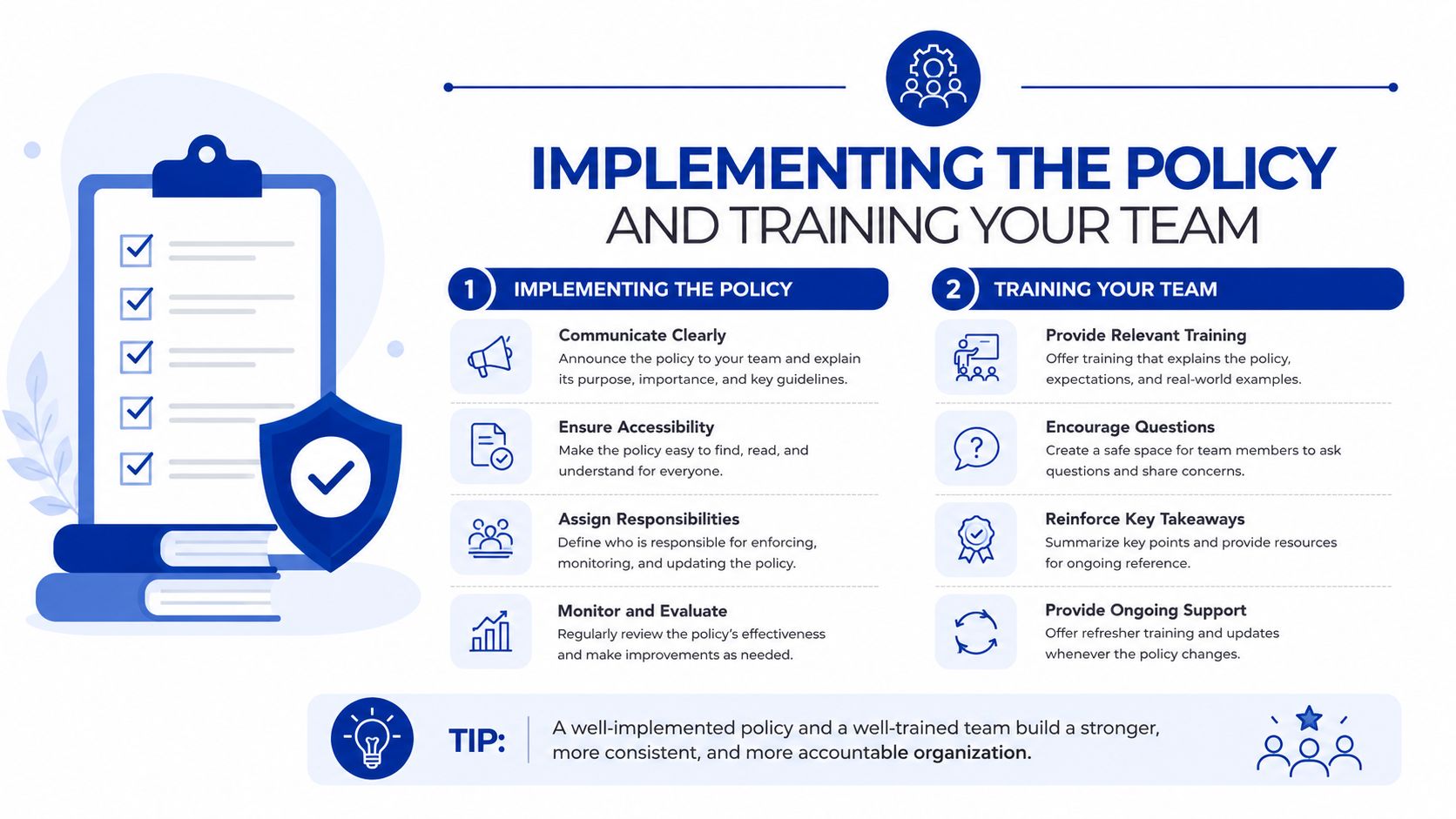
A strong rollout includes timing, communication, acknowledgment, and role-specific instruction. Sending a revised handbook by email and asking for electronic acknowledgment may satisfy an internal checklist, but it often doesn't prepare supervisors to act correctly in real situations.
Use a launch process that includes:
For multi-state organizations, handbook integration matters. Policy language should align with broader leave, accommodation, privacy, and discipline terms. If you're reviewing that larger framework, a state-specific handbook resource like employee handbook requirements by state can help identify where a standalone policy may conflict with the rest of your documents.
Most legal exposure develops at the supervisor level. A manager notices behavior, speaks to the employee, contacts HR, writes the first notes, and often becomes the main witness later. If that person hasn't been trained, the company is relying on instinct in a situation that demands procedure.
Manager training should cover practical skills, not just policy recitation:
Good manager training doesn't turn supervisors into investigators. It keeps them from becoming unreliable witnesses.
When organizations lose defensibility, it is often because similar incidents produce very different files. One employee has a detailed observation report, testing documentation, witness support, and follow-up notes. Another has a short email saying the manager was concerned and sent the employee home. Even if the company thought it was being flexible, the records tell a story of uneven standards.
That is why implementation should include file audits and refresher training. Review a sample of cases. Check whether observation forms are complete, whether approval steps were followed, and whether outcomes track the policy language. If they don't, rewrite the process before the next incident tests it.
A policy works when employees understand the expectation and managers understand the procedure. Without both, the document becomes symbolic. In a high-stakes workplace issue, symbolic compliance is not enough.
A defensible substance abuse policy is not a statement of values sitting in a handbook. It is a working decision system. It tells managers what to do when concerns arise, gives HR a repeatable investigation path, and helps leadership act with consistency across roles and locations.
The strongest policies share a few traits. They define conduct clearly. They separate observation from diagnosis. They account for testing, documentation, privacy, accommodation, and follow-up. Fundamental to their design, they are built recognizing that multi-state compliance is uneven and fact-specific.
That is why policy drafting alone isn't enough. A business also needs state-aware addenda, manager training, recordkeeping standards, and a response process that can be explained months later in an agency file, unemployment hearing, or lawsuit. If any part of that chain breaks, the policy becomes harder to defend even if the original concern was valid.
Leaders who handle this well don't treat substance abuse policy as a one-time project. They review it when operations expand, when states change their rules, when testing practices shift, and when a difficult case exposes a gap. That mindset changes the policy from a reactive document into a proactive risk management tool.
A well-built system also supports the workplace in a broader sense. It protects safety, gives employees fair notice, helps managers act without panic, and creates a path for support when support is appropriate. Those outcomes are good for culture, but they also matter because they produce better records and better decisions.
If your organization is reviewing an outdated policy, struggling with inconsistent manager response, or operating across multiple states with different testing and marijuana rules, outside guidance can help you tighten the framework before a live incident forces the issue.
If you're ready to build a defensible HR framework around substance abuse policy, investigations, documentation, and multi-state enforcement, Paradigm International Inc. can help you think through the practical decisions that protect both your business and your team.