A manager wants to terminate someone by Friday. Another employee just complained about pay practices in writing. Your company added staff quickly, and now a slowdown is forcing tougher calls. If you're running a Tampa Bay business, that combination is where employment risk stops being theoretical.
Most leaders looking for a Tampa Bay employment law advisor aren't looking for generic HR help. They're trying to make a hard decision without turning it into a wage claim, retaliation allegation, or discrimination filing six months later. Intent matters far less than the record you create, the timing you choose, and whether managers followed a consistent process.
That's the divide. Reactive HR support handles forms after the fact. Advisory support helps leadership decide what should happen, what shouldn't happen, and what must be documented before anyone acts. In Florida, that distinction matters because filing deadlines are long, retaliation rules are easy to underestimate, and multi-state employers often apply inconsistent standards without realizing it.
A common Tampa Bay scenario looks simple at first. An owner is frustrated with a supervisor who's lost confidence in an employee. Performance has slipped. Morale is off. Someone says, “Florida is at-will, let's move on.”
That's usually the moment risk starts rising.
If that same employee recently raised a wage concern, questioned manager conduct, requested leave, or complained about unfair treatment, the decision isn't just a termination anymore. It becomes a sequencing problem, a documentation problem, and often a retaliation-risk problem. The issue isn't whether leadership has business reasons. The issue is whether those reasons were documented clearly, applied consistently, and communicated by managers who understand what not to say.
A Tampa Bay employment law advisor should function like a risk filter for leadership. Before a discharge, discipline step, pay change, complaint response, or restructuring move happens, the advisor pressure-tests the facts. They look for timing issues, inconsistent records, manager emails that create exposure, and policy gaps that make a defensible decision look improvised.
Good advisory support doesn't just ask whether you can act. It asks whether your record will still hold up after a complaint is filed.
That's why timing matters so much. Once a manager has already promised one outcome, sent the wrong message, or skipped an investigation, your options narrow fast. The cleanest employment decisions are usually built days or weeks before the action itself.
Most SMB leaders don't need a lecture on basic at-will employment. They need practical guidance like:
If you're reading this because a people issue already feels high stakes, that instinct is probably right. The value of an advisor isn't paperwork. It's helping you make fewer avoidable mistakes when the facts are messy.
A Tampa Bay employment law advisor isn't an HR help desk. The role is closer to a spotter in a weight room. Management is still lifting the load, but the advisor helps keep the decision controlled, balanced, and far less likely to collapse under pressure.
That matters in terminations, investigations, wage complaints, leave issues, and manager misconduct concerns. These decisions usually don't fail because a company had no reason to act. They fail because the company acted unevenly, documented too little, or waited until after a complaint to get disciplined about process.
At the ground level, an advisor helps leaders make decisions that are both operationally sound and defensible if challenged later. That usually includes reviewing records, identifying missing facts, standardizing manager communication, and setting a clean escalation path.
Practical rule: Involve advisory support before the meeting, not after the reaction.
If you only call someone after the termination, after the complaint spread, or after a manager sent an emotional email, the work becomes damage control. The better use of advisory support is upstream.
The highest-value work usually happens in gray areas:
A lot of teams benefit from broad resources like essential employment law guidance from LeaveWizard. But broad guidance only gets you to the starting line. Once a real employee issue involves timing, credibility, or conflicting records, you need judgment, not just a checklist.
Defensible practice is usually boring. That's a good sign.
It looks like contemporaneous notes, consistent manager escalation, disciplined policy use, documented investigations, and leadership that doesn't overtalk in sensitive meetings. It also means someone is checking whether the company is treating similar issues in similar ways.
Some firms provide this through retained advisory support. Others do it through project work tied to investigations, audits, or executive coaching. Paradigm International Inc. is one example of an advisory-first firm that supports SMB leadership teams on high-stakes people decisions, investigations, documentation standards, and multi-state compliance questions.
A Tampa Bay manager wants to cut hours after an employee complains about pay. An owner wants a fast termination because "the fit is gone." A COO wants to tighten payroll, hiring, and headcount at the same time. Those are not routine HR tasks. They are legal risk events, and Florida timing, documentation, and retaliation exposure can turn a simple business decision into a claim.
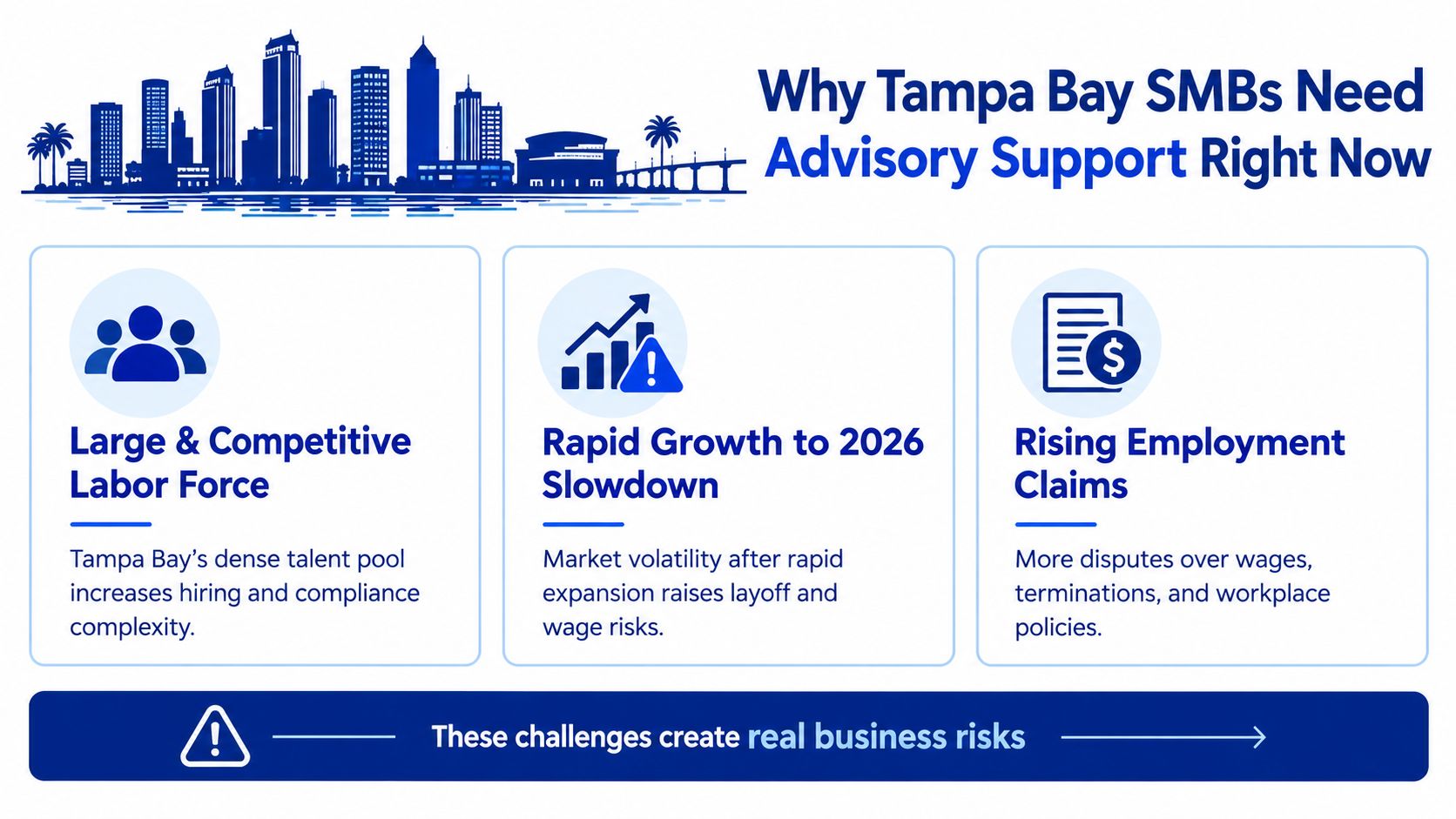
Tampa Bay employers are making those calls in a labor market with less margin for sloppy process. The Tampa metro area showed a civilian labor force of 1,202.5 thousand, 1,142.1 thousand employed, 60.4 thousand unemployed, and an unemployment rate near 5% in the BLS monthly data referenced here (BLS Tampa metro data). That kind of market does not excuse delay or panic. It punishes inconsistency.
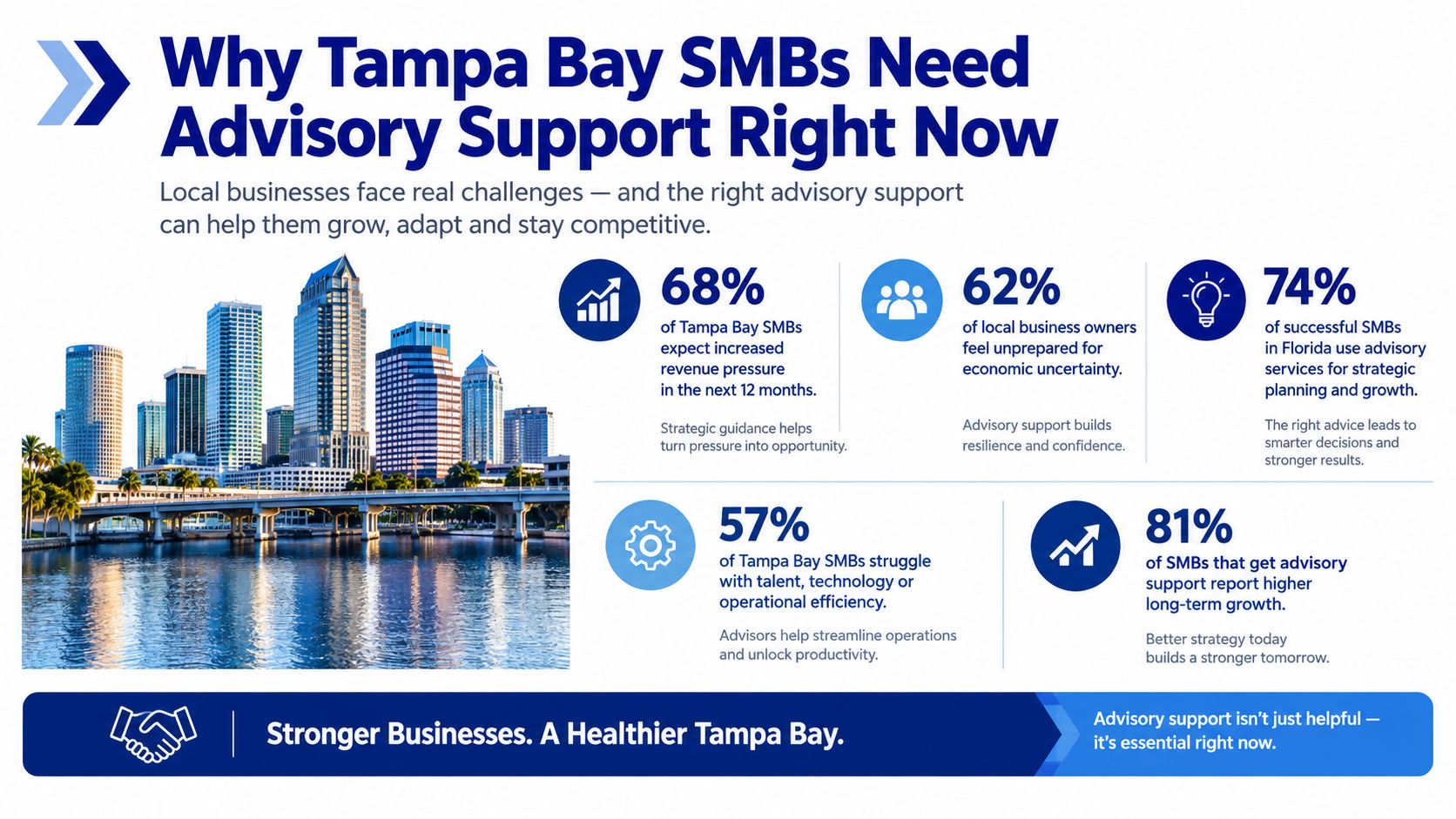
Recent growth also distorted judgment. Tampa MSA nonfarm employment increased from 1,405,600 in 2021 to 1,551,500 in 2025, and Hillsborough County rose from 713,110 to 791,916 over the same period (Tampa Bay EDC labor market report). During expansion, a business can get away with uneven manager habits, late write-ups, and vague pay practices. Tighten the market and those same habits become evidence.
That is why advisory support matters now. The advisor's job is not to answer policy trivia after the fact. The job is to help leadership make decisions they can defend before the complaint, demand letter, agency response, or lawsuit arrives.
For Tampa Bay SMBs, the pressure usually shows up in four places:
Generic HR support does not solve this. Administrative help keeps forms moving. Advisory support builds a record, tests the rationale, and forces consistency before a manager says too much or writes the wrong thing.
If you are deciding what kind of support you need, review examples of Tampa HR consulting for small business and separate administrative coverage from true risk advisory. They are different purchases. Treating them as interchangeable is how SMBs end up under-documented in the cases that matter most.
The practical standard is simple. If a decision affects pay, hours, complaints, discipline, leave, or termination, leadership should expect a defensible process, not just a fast answer.
Not every business needs the same advisory model. A ten-person firm with no HR lead has different needs than a multi-state operator with managers in three jurisdictions. The mistake is buying support based on convenience instead of risk exposure.
Some leaders want an on-call sounding board. Others need a partner who will shape manager process, review terminations, and standardize complaint handling over time. Both can work. What matters is whether the model matches the speed and complexity of your people decisions.
| Engagement Model | Best For | Responsiveness | Cost Structure |
|---|---|---|---|
| On-call advisory | Owners with occasional high-risk decisions | Moderate, depends on availability | Usually variable and issue-based |
| Retainer-based partnership | SMBs with recurring employee relations, manager, or compliance questions | Higher and more predictable | Recurring monthly or periodic fee |
| Project-based guidance | Handbook updates, audits, investigations, manager training, or restructuring support | Focused during project window | Scoped fee tied to deliverables |
On-call advisory works when your issue volume is low but your risk tolerance is also low. You don't want to carry a full internal HR function, but you do want someone reviewing the hard calls. The downside is obvious. If you only engage support occasionally, your advisor may know the issue but not your culture, managers, or historical inconsistency patterns.
Retainer support is usually the strongest fit for companies that keep running into the same kinds of decisions. Terminations, wage questions, leave concerns, complaint reviews, and manager coaching all benefit from continuity. This model also helps when leadership wants escalation standards, not just one-off answers.
Project work is best when you have a clear need with a start and end point. That might be an HR risk assessment, a handbook review, an internal investigation, or a manager training cycle. It's efficient, but it won't replace ongoing judgment if your leaders face frequent gray-area decisions.
Don't reduce the decision to hourly price. Cheap support gets expensive when it produces vague advice, no documentation framework, and no follow-through. The better question is whether the engagement improves decision quality.
Look for these value drivers:
If you're comparing budget approaches, HR consultant fees and costs can help frame what you're buying. But cost only becomes meaningful after you define the risk profile you're trying to manage.
Most advisors sound competent in a sales conversation. The difference shows up when you ask how they handle a messy wage complaint, a poorly documented discharge, or a supervisor who's already said too much. Ask precise questions. Vague answers now usually become expensive ambiguity later.
Ask for methodology, not just experience. Experience without structure often means inconsistent advice.
Some warning signs are easy to miss because they sound reassuring.
A strong advisor usually sounds calm, specific, and process-driven. They'll talk about documentation discipline, timing, consistency, complaint handling, and decision sequencing. They won't promise that every clean process prevents claims. They'll focus on making your position more defensible if one happens.
That's the standard to use. Not charisma. Not volume. Not how many policies they can send in a folder.
A Tampa manager gets a written pay complaint on Monday, pushes termination paperwork on Wednesday, and assumes at-will status will carry the decision. That is how a routine employee issue turns into a retaliation file, a wage dispute, and months of avoidable defense work.
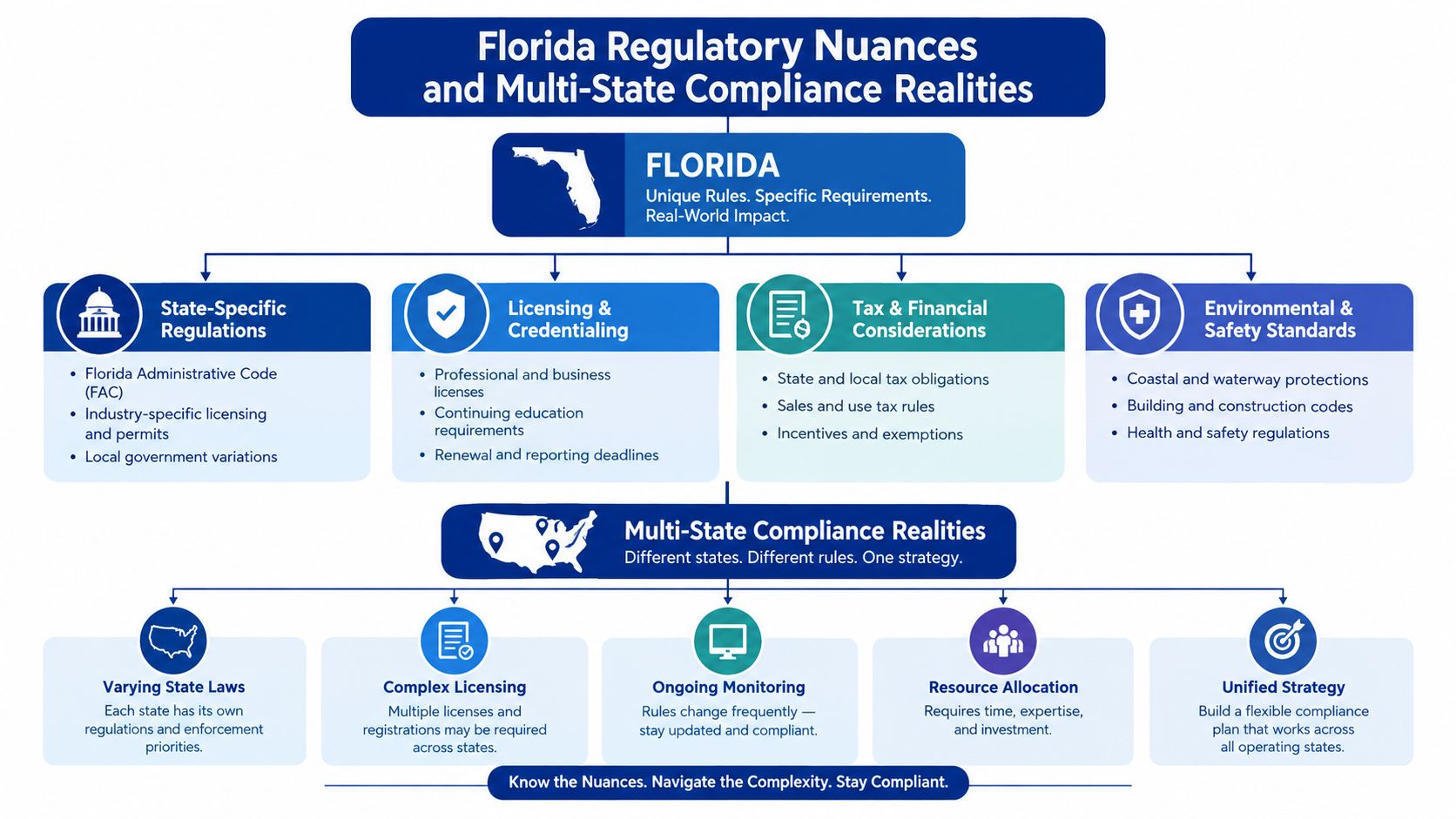
Florida is not a state where employers can rely on broad generalizations. The exposure sits in timing, documentation, manager conduct, and the gap between Florida rules and the rules in your other states. A strong advisor closes that gap before a complaint turns into a filing.
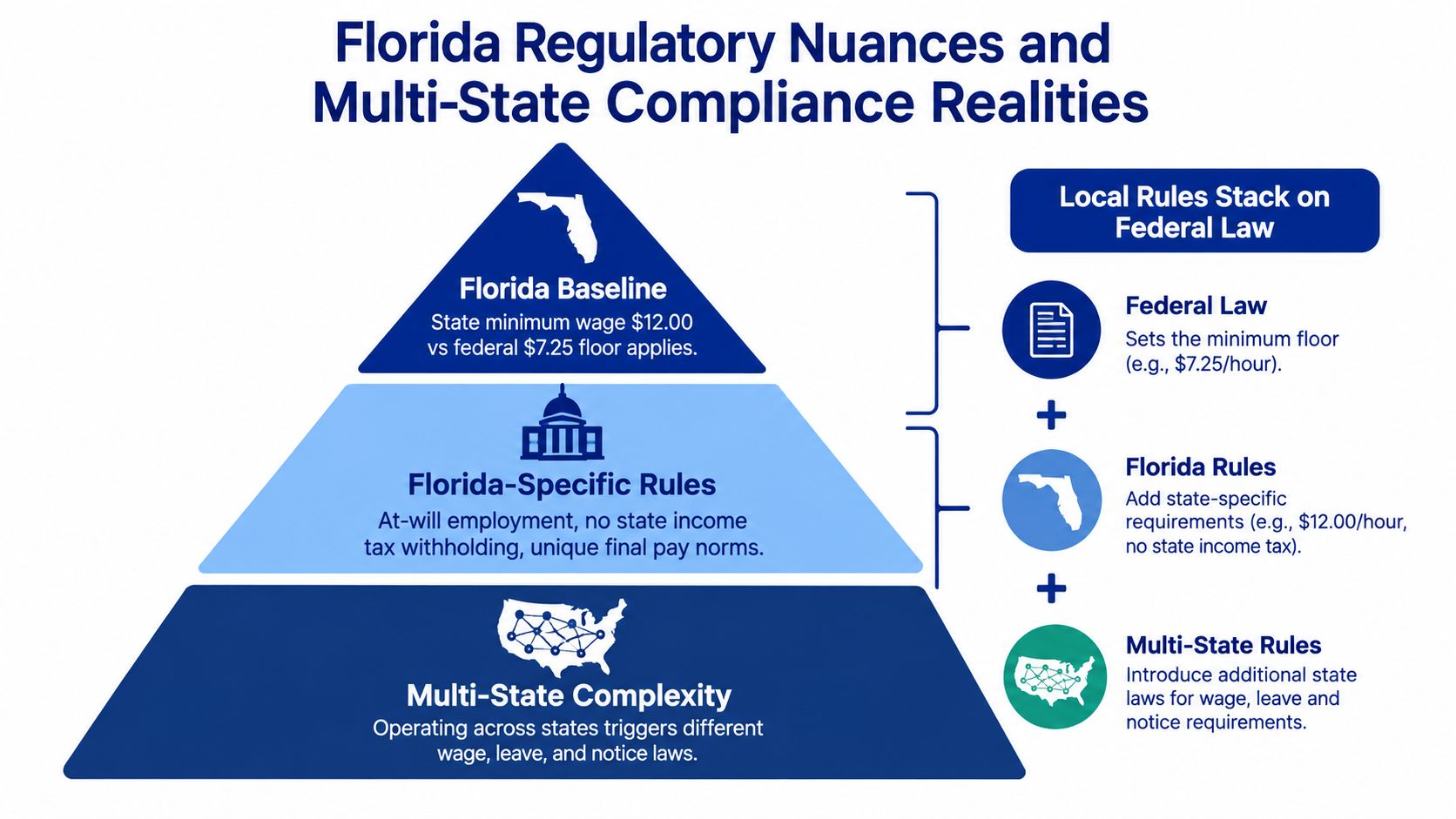
Florida's minimum wage is $12.00 per hour, while the federal FLSA minimum wage remains $7.25 (Florida wage baseline guidance). Employers that still think in federal-only terms create preventable payroll errors. Then they make the problem worse by reacting badly when an employee raises the issue.
That sequence matters. A wage complaint often becomes a retaliation problem because the documentation starts late, the manager gets defensive, or the company changes course without a clean record of why.
Florida also has a moving wage floor. The state minimum wage is scheduled to rise to $15.00 per hour on September 30, 2026, if the current statute remains in effect (Florida labor law overview with statutory context). Multi-state employers should not wait for that date to test payroll codes, overtime practices, and exempt classification decisions across locations.
Florida's private-sector whistleblower law adds another risk point that owners often miss. Employees who report violations are protected only after they first put the issue in writing to the employer and give a reasonable chance to correct it (Florida whistleblower statute). Once that written complaint arrives, your process needs to tighten immediately. Preserve the record, control manager communications, and document each response step.
Florida is a deferral state for discrimination claims. In the Tampa area, an employee generally has 300 days from the alleged act to file with the EEOC, rather than the default federal 180-day window (Tampa employment-law guidance on EEOC timing). Under Florida's state process, a worker generally has 365 days to file with the Florida Commission on Human Relations, and some matters may be dual-filed or cross-filed with the EEOC (Florida discrimination filing deadlines and dual filing; Florida dual-filing framework).
That changes the advisor's job. This is not cleanup after the fact. It is decision partnership built around records that still need to hold up many months later.
A separation meeting may feel finished internally. The legal timeline often says otherwise.
Longer filing windows punish casual documentation. If your notes are thin, inconsistent, or spread across inboxes and text messages, your defense weakens fast.
Florida does not require paid family leave or paid sick leave for private-sector employers. Federal FMLA coverage begins at 50 or more employees, and the law also requires 50 employees within a 75-mile radius, with employee eligibility tied to 12 months of service and 1,250 hours worked in the prior year (Florida leave baseline and FMLA thresholds). Coverage also depends on whether the employer had 50 or more employees in 20 or more workweeks in the current or previous calendar year, and that count includes part-time, temporary, and seasonal workers on payroll (U.S. Department of Labor FMLA employer guide).
For multi-state employers, the handbook is not a formality. It is operating control. If your Florida handbook language is copied into states with broader leave, wage notice, or policy requirements, managers will apply the wrong rule with confidence.
Start by reviewing state-specific employee handbook requirements. Then align complaint intake, pay practices, leave administration, and approval authority so your documentation works the same way across every location. That is the difference between generic HR support and defensible advisory work.
A supervisor in Clearwater wants to fire an employee by Friday. The employee complained about pay two weeks ago, asked for time off last month, and now says the write-ups are selective. If you bring in advisory support after the termination is announced, you are already defending a weak record.
Use an advisor before the decision hardens.
The right engagement gives ownership a defensible process for retaliation risk, wage issues, filing deadlines, and multi-state documentation. That is the value. You are not buying extra HR capacity. You are buying better judgment, cleaner records, and fewer avoidable mistakes when facts turn hostile.
Start with a full risk file, not scattered documents across inboxes and shared drives. Put the employment record in one place so your advisor can test the decision path, spot timing problems, and see whether managers are creating exposure through inconsistent notes or off-script comments.
Then set the engagement terms clearly. Define response times, who contacts the advisor, what requires same-day review, and what the final work product looks like. If those rules stay vague, managers will improvise under pressure.
A strong advisory relationship reduces noise. Leaders know when to stop. HR knows what must be documented. Managers know that “I was just trying to help” is not a defense.
For Tampa Bay companies with growth, turnover, or multi-state headcount, this is operating discipline with legal consequences.
Paradigm International Inc. advises owners, COOs, and HR leaders on terminations, investigations, wage and hour concerns, manager conduct, and multi-state compliance. For direct support on defensible people decisions, visit Paradigm International Inc. or use their contact page.