


Discover how a pay equity audit can help HR leaders identify compensation disparities, ensure compliance, and promote fairness in the workplace.
A pay equity audit is a structured, statistically grounded review of compensation that identifies unexplained pay disparities across protected classes, and it is often the first step employers take to evaluate compliance with equal-pay laws. Before pulling any sensitive data, your first decision is whether to conduct the audit under outside counsel’s direction to preserve attorney-client privilege, or as an operational compliance review. Appoint a project lead immediately. The Equal Pay Act (EPA), EEOC enforcement authority, and a growing body of state pay-transparency laws all create legal exposure that rewards early, deliberate action. Paradigm’s HR risk and decision advisory services offer a vetted path for organizations that need structured, defensible support from the start.
A defensible pay equity audit requires a deliberate privilege decision, a complete dataset, a statistically sound methodology, and a funded remediation plan tied to governance changes that prevent recurrence.
| Point | Details |
|---|---|
| Decide privilege posture first | Engage outside counsel before extracting data if legal risk is present; privilege cannot be applied retroactively. |
| Collect a complete dataset | Include compensation, job, employment history, and demographic fields; document annualization rules and exclusions before analysis. |
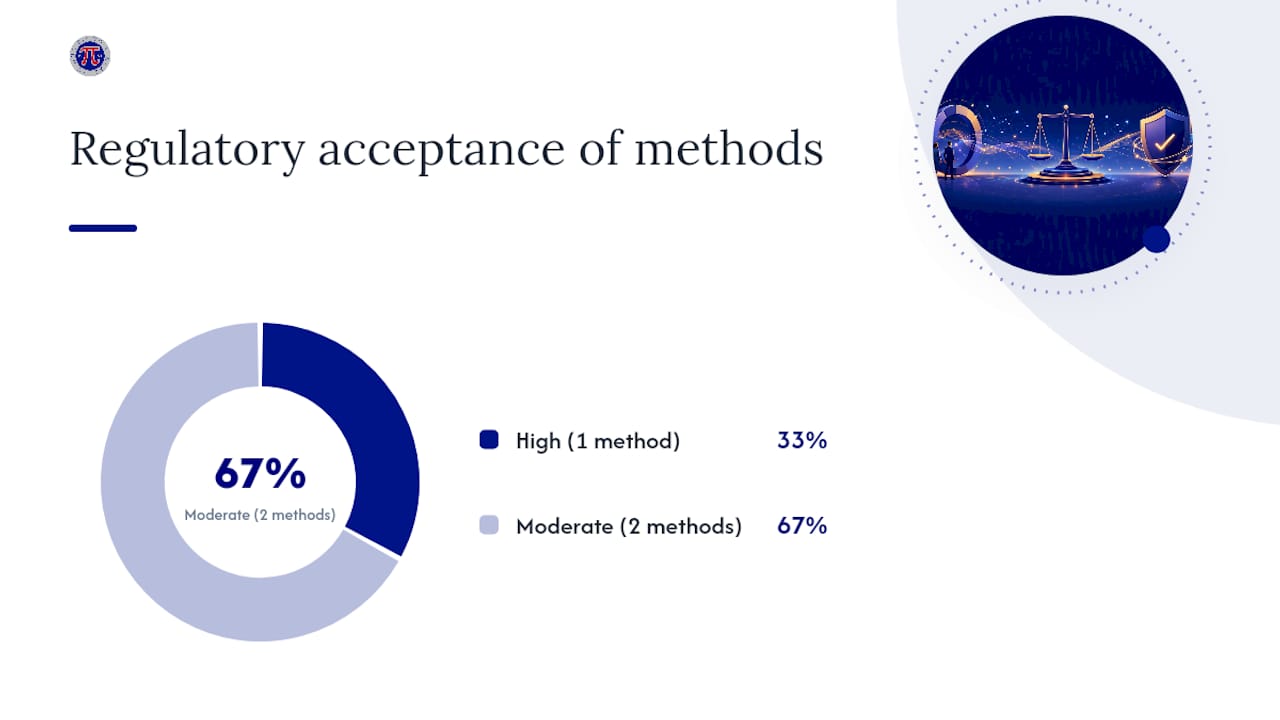
| Use regression as the primary method | Multiple regression controls for legitimate pay factors and is the method most accepted by the EEOC and courts. |
| Prioritize remediation by risk and scope | Address statistically significant gaps affecting multiple employees in Year 1; use prospective band corrections for lower-severity findings. |
| Paradigm advisory | Paradigm provides scoping, analysis, remediation budgeting, and governance implementation for organizations that need structured pay equity support. |
A salary equity assessment examines more than base pay. The full scope includes base salary, bonuses and variable compensation, equity awards, pay-setting practices, promotion decisions, and hiring outcomes. Each element can reveal a different dimension of pay disparity, and regulators increasingly expect employers to address all of them.
The U.S. legal framework creates overlapping obligations. The Equal Pay Act prohibits wage differentials based on sex for substantially equal work. Title VII, enforced by the EEOC, extends protections to race, color, religion, national origin, and sex. Federal contractors face additional scrutiny from the OFCCP, which can audit compensation data as part of compliance reviews. At the state level, pay-transparency and pay-data reporting laws in California, Colorado, Illinois, New York, and others add reporting requirements that make a documented audit process a practical necessity.
The business case is equally compelling. Leading employers use pay equity audits strategically to recruit, retain, and build workforce trust, not simply to satisfy a compliance checkbox. AAUW’s analysis recommends regular audits and pay-transparency practices as core employer actions for closing pay gaps, alongside removing salary-history reliance and publishing pay ranges.
Pro Tip: Time your audit to run two to three months before your annual merit cycle. That window gives you remediation data before pay decisions are locked, and it aligns with most state pay-data reporting deadlines.
Run a full compensation fairness review at least annually, and immediately after any of the following triggers:
For high-risk populations or organizations under active regulatory scrutiny, quarterly interim monitoring of compa-ratios by protected class is a defensible supplement to the annual full analysis. The compliance rationale for regular HR audits is well established: irregular or reactive reviews leave gaps that regulators and plaintiffs’ counsel are trained to find.
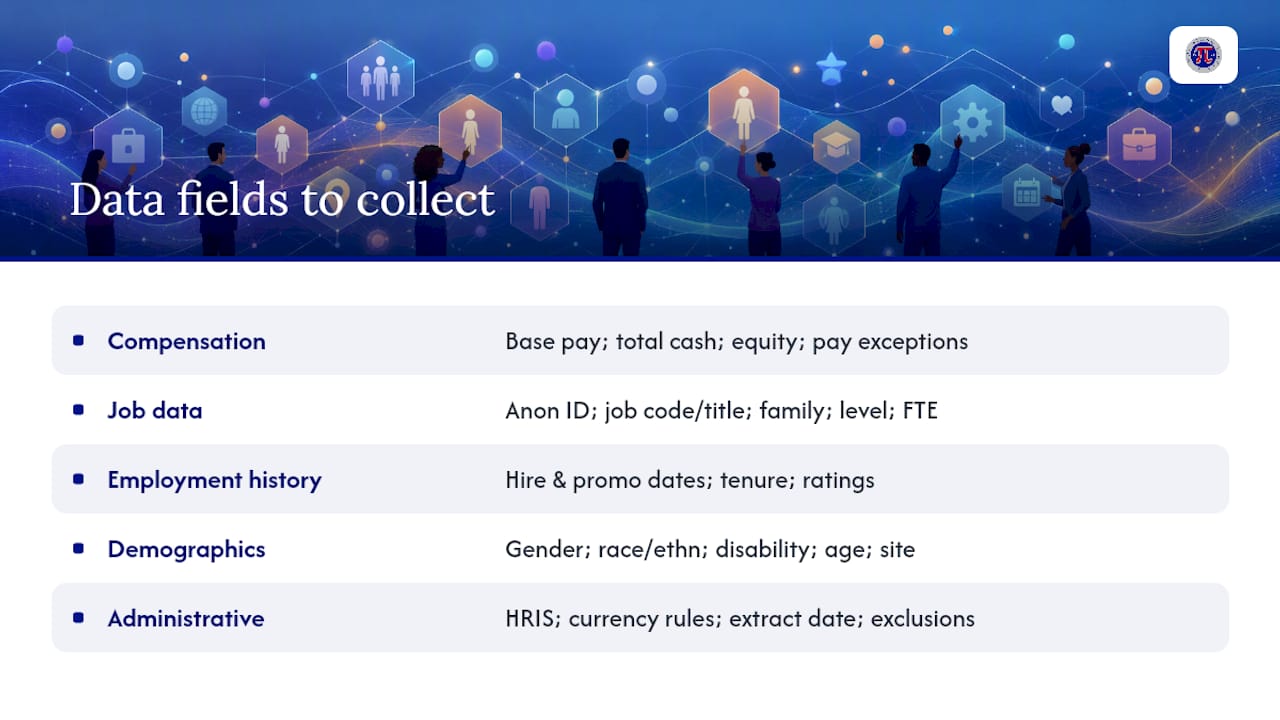
A defensible dataset requires precision at the field level. Assemble the following before analysis begins:
Compensation fields: annualized base salary, total cash (including bonuses and commissions), equity awards, and documented pay exceptions such as retention adjustments or market premiums.
Job data: employee identifier (anonymized), job code, job title, job family, level or grade, FLSA classification, and hours or FTE status.
Employment history: hire date, promotion dates, tenure in current role, and performance ratings for the most recent cycle.
Demographic fields: gender, race and ethnicity, disability status (where voluntarily and lawfully collected), age, work location, and remote status.
Administrative fields: HRIS as the source of record, currency and annualization rules, date of extract, and explicit exclusions such as non-U.S. employees or independent contractors.
Data privacy obligations apply to demographic fields. Skadden’s practice guidance notes that collection and storage of employee demographic data raises privacy considerations under both U.S. law and, for organizations with EU-based employees, GDPR.
Pro Tip: Use anonymized identifier columns in your analytic dataset and maintain a secure key file separately, accessible only to counsel and the project lead. Export data as CSV or Parquet for compatibility with statistical tools, and confirm your sample size before analysis: groups smaller than 30 employees typically require pooled models or qualitative review rather than standalone regression.
The most defensible approach uses a structured, repeatable methodology that documents comparator group construction, control variables, and statistical technique before the analysis runs.
Comparator group construction is the most consequential decision. Groups must be narrow enough to capture genuinely similar jobs, yet broad enough to support statistical validity. Job family, level, and function are the standard anchors; location adjustments are added when pay varies materially by geography.
Multiple regression is the gold standard for producing adjusted pay gaps, controlling for legitimate pay factors such as tenure, performance, and level. Compa-ratio analysis and cohort analysis serve as complementary techniques for validation and for communicating findings to non-technical audiences.
| Method | Best use case | Strengths | Minimum sample | Regulatory acceptance |
|---|---|---|---|---|
| Multiple regression | Full adjusted gap analysis | Controls for multiple factors simultaneously | 30+ per group | High; preferred by EEOC and courts |
| Compa-ratio analysis | Monitoring and manager reporting | Simple, intuitive, easy to track over time | 30+ per group | Moderate; useful as a supplement |
| Cohort analysis | Promotion and hiring equity | Isolates decision points | 30+ per cohort | Moderate; strong for pattern evidence |
Intersectional analysis, examining pay gaps at the intersection of race and gender rather than each dimension separately, is increasingly expected by regulators and reflects real-world pay patterns more accurately than single-axis models.
Pro Tip: When a comparator group falls below the minimum sample threshold, do not force a regression output. Escalate to a pooled model that borrows strength from adjacent groups, or flag the population for qualitative review. A statistically unreliable finding is more damaging than no finding at all.
Prioritize by legal exposure first: statistically significant unexplained gaps affecting multiple employees represent the highest-risk findings and require immediate remediation planning. Gaps that are directionally concerning but not statistically significant warrant monitoring and a root-cause review.
A practical priority matrix uses two axes: severity (gap size and statistical confidence) and scope (number of affected employees). Findings in the high-severity, high-scope quadrant belong in Year 1 remediation budgets. Lower-severity findings with narrow scope can be addressed through prospective pay-band corrections.
Remediation options include:
Pro Tip: Prepare a one-page justification memo for each adjustment before communicating with managers. The memo should state the analytic basis, the approved adjustment amount, and the talking points for the employee conversation. Managers who understand the rationale are far less likely to undermine the message.
Pair every remediation action with a governance change, or the disparity will return within two to three merit cycles. The implementation sequence matters.
Paradigm’s employee compensation and rewards advisory supports the governance design work that makes remediation durable.
Pro Tip: Configure your HRIS to require a documented pay-justification field on every offer and promotion record. These controls catch drift before it compounds.
Structure the audit with counsel when legal risk is present. Attorney-client privilege is not automatic: it must be intentionally established by engaging outside counsel to direct the audit from the outset, as Skadden’s practice note makes clear. An audit conducted without that structure may be fully discoverable.
Key legal touchpoints for U.S. employers:
Retain all methodology documentation, variable-selection rationale, and model outputs in a secure, counsel-controlled file. Do not commingle analytic datasets with identifiable demographic data.
Pro Tip: For organizations with employees in multiple countries, engage privacy counsel before collecting or transferring demographic data across borders. GDPR and equivalent frameworks impose consent and transfer restrictions that can invalidate a dataset if not addressed before extraction.
Most pay equity audits that fail to produce durable results share the same operational failures, not methodological ones.
The most common pitfall is poor comparator group construction: groupings that are too broad dilute real disparities, while groupings that are too narrow produce statistically unreliable results. Either outcome is defensible only if the rationale is documented before the analysis runs.
Incomplete data is the second recurring problem. Missing performance ratings, undocumented pay exceptions, or inconsistent annualization rules introduce noise that undermines findings and invites challenge. A data-quality review before analysis is not optional.
The third failure is the absence of a remediation budget. Organizations that conduct a thorough wage equality study and then cannot fund the corrections create a documented record of known disparities without resolution, which is a worse legal position than not having audited at all.
Success looks different. Organizations that sustain pay equity over multiple cycles share three characteristics: repeatable monitoring built into the compensation calendar, visible pay bands that managers are trained to use, and accountability metrics that tie manager performance reviews to pay-decision documentation. Reduced complaint volume follows from those structural changes, not from the audit itself.
For HR leaders who need a structured, legally defensible pay equity process without building the capability in-house, Paradigm provides end-to-end HR risk and decision advisory that covers every phase of the work.
Service scope includes data preparation and hygiene review, statistical analysis structured for audit readiness, remediation budgeting tied to model outputs, manager training on pay-setting governance, and documentation packages suitable for regulatory review. Paradigm’s HR audits and reviews service integrates directly with ongoing compliance programs, so findings translate into governance changes rather than one-time corrections.
A typical engagement runs two to three weeks for scoping and data review, six to ten weeks for full analysis depending on organization size, and quarterly rollouts for phased remediation. Ongoing monitoring is structured to align with your merit cycle and state reporting deadlines.
To discuss your organization’s pay equity risk posture and determine the right scope for your audit, request a risk advisory conversation with Paradigm’s team.
The following sources support the legal, methodological, and business-case dimensions of pay equity work:
This article is general information, not a substitute for advice from a qualified lawyer. Consult a qualified legal professional about your own circumstances before acting on anything here.